Planetary Pendant Light
CN → US| HS Code | Tariff Rate | Origin | Destination | Doc |
|---|---|---|---|---|
| 9405194020 | 38.9% | CN | US | Official Doc |
| 9405196010 | 42.6% | CN | US | Official Doc |
Product Images
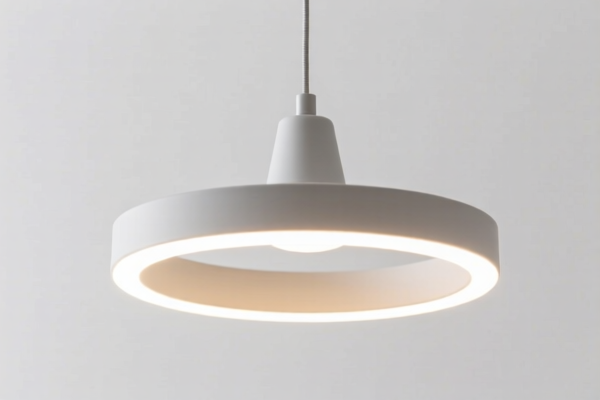
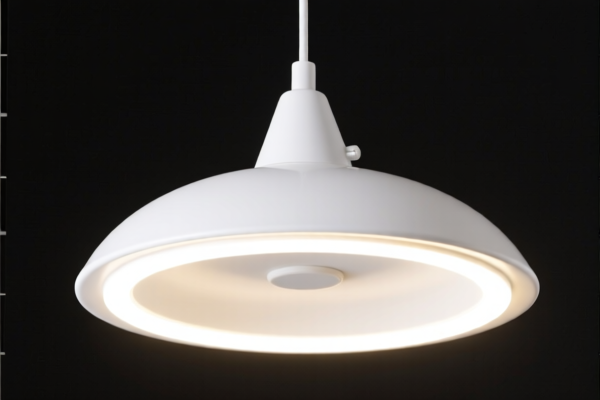
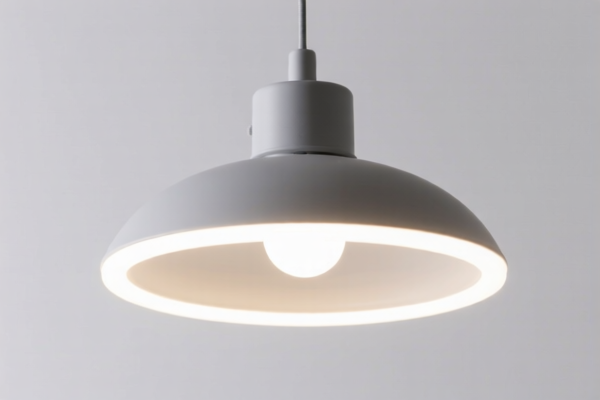
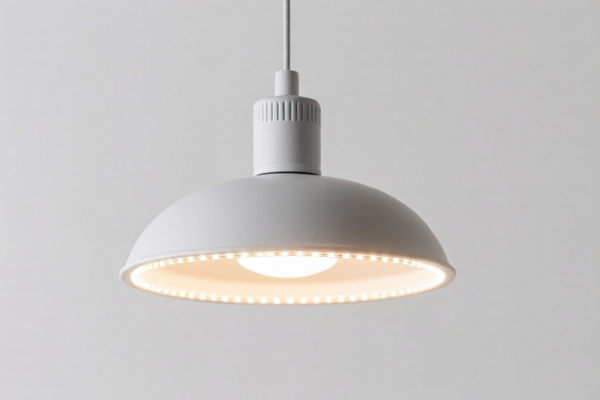
AI Analysis
🌌 Planetary Pendant Light (Suspended Lighting Fittings)
🌐 HS Code Reference & Clearance Guide | 2026 Latest Tariff Analysis | Professional Customs Strategy 📌 I. Product Definition & Classification: Is It a "Chandelier" or a "Sign"?
Planetary Pendant Lights are decorative suspended lighting fixtures, often featuring globe-shaped shades or orbital designs, used for interior illumination in homes, hotels, and commercial spaces. In international trade, the classification hinges on two critical factors: material composition and specific use case.
The Core Distinction: 1. Chandeliers & Ceiling/Wall Fittings (HS 9405.19): General decorative lighting, including "planet-style" pendants, if made of base metals (like brass) or other materials not specified elsewhere. These are considered "lighting fittings." 2. Illuminated Signs/Nameplates (HS 9405.92/90): If the light fixture is primarily an illuminated sign, nameplate, or has a permanently fixed light source for advertising/identification purposes, it falls under different headings. However, for standard planetary pendant lights used for ambient lighting, HS 9405 is the primary chapter.
⚠️ Key Classification Point:
- If the fixture is a decorative chandelier/pendant (even if planet-themed) and made of brass/base metal, it likely falls under 9405.19.
- If it is classified as "Household" use vs. "Other" (commercial/non-household), the HS code subheading changes.
- "Of brass" is a specific material classification under base metals.
📦 II. HS Code Classification Details (2026 Latest Tariff Authority Comparison)
Based on the provided data, here are the two most relevant HS Codes for Planetary Pendant Lights:
| HS Code | Product Description | Application Scenario | Material/Type |
|---|---|---|---|
9405.19.40.20 |
Chandeliers and other electric ceiling or wall lighting fittings... Other: Of base metal: Of brass: Other | Decorative planetary pendants made of brass, for general interior use (not exclusively household, or general "other" category). | ✅ Brass (Base Metal) |
9405.19.60.10 |
Chandeliers and other electric ceiling or wall lighting fittings... Other: Of base metal: Household | Planetary pendants explicitly designed for household use (e.g., home dining rooms, bedrooms), regardless of material (if not brass-specific subcategory). | ✅ Household Use |
🔍 Important Reminder:
- Both codes fall under HS 9405.19 (Chandeliers and other electric ceiling or wall lighting fittings, excluding those for public spaces).
- The difference lies in the sub-category:40.20specifies "Of brass" (a subset of base metal), while60.10specifies "Household" use.
- Do not confuse with "Illuminated Signs" (9405.92) unless the product is literally an illuminated nameplate or sign.
💰 III. 2026 Latest Tariff Rate Details (Including Additional Taxes & Policy Add-ons)
✅ Applicable Country: United States (US)
✅ Origin: China (CN)
✅ Effective Time: 2025 onwards (including subsequent imports)
🎯 1. 9405.19.40.20 – Chandeliers/Pendants, Of Brass, Other
| Item | Content |
|---|---|
| Base Tariff | 3.9% (Ad Valorem) |
| Additional Tariff (Section 301) | +25.0% |
| Total Tariff Rate | 28.9% |
| Tax Calculation | CIF Value × 28.9% |
| De Minimis Exemption | ❌ Not Eligible (Deny de minimis for Section 301 goods) |
| Legal Basis Path | HTSUS:9405.19.40.20 → Section 301 Footnote → Total 28.9% |
📌 Explanation:
- Base Tariff (3.9%): Standard most-favored-nation (MFN) rate for chandeliers/pendants of brass.
- Additional Tariff (25%): Imposed under U.S. Trade Law Section 301 against Chinese goods.
- Total (28.9%): High tariff burden. Must be factored into pricing.
- No De Minimis: Items valued under $800 cannot bypass these duties.
🎯 2. 9405.19.60.10 – Household Lighting Fittings, Of Base Metal
| Item | Content |
|---|---|
| Base Tariff | 7.6% (Ad Valorem) |
| Additional Tariff (Section 301) | +25.0% |
| Total Tariff Rate | 32.6% |
| Tax Calculation | CIF Value × 32.6% |
| De Minimis Exemption | ❌ Not Eligible (Deny de minimis for Section 301 goods) |
| Legal Basis Path | HTSUS:9405.19.60.10 → Section 301 Footnote → Total 32.6% |
📌 Note:
- Base Tariff (7.6%): Higher than the brass-specific code due to broader "household" categorization.
- Additional Tariff (25%): Same Section 301 penalty applies.
- Total (32.6%): Highest tariff rate among the two options.
- Why Higher? The "Household" subheading may be subject to higher base duties due to domestic industry protection policies, in addition to the 301 tariff.
🛠️ IV. Clearance Practical Advice (Combat Pitfall Guide)
✅ 1. Preparation Checklist (No Exceptions)
| Document | Required? | Notes |
|---|---|---|
| ✅ Product Specifications | ✔️ | Include dimensions, weight, material (specify "Brass" vs. "Other Base Metal"), lumens, voltage. |
| ✅ Material Declaration | ✔️ | Critical: Must state "Brass" if claiming 9405.19.40.20. If it's zinc alloy or steel, it falls under "Other Base Metal." |
| ✅ Usage Statement | ✔️ | Declare if for "Household" or "Commercial/General" use. Misclassification here leads to penalties. |
| ✅ Commercial Invoice | ✔️ | Clearly describe as "Planetary Pendant Light, Decorative Lighting Fitting, Not for Public Outdoors." |
| ✅ Origin Certificate | ✔️ | Confirm Chinese origin to apply 301 tariffs correctly (or claim exemption if eligible under specific exclusions). |
| ✅ Photos | ✔️ | Show the fixture, labels, and any brand/nameplates to prove it's not an "Illuminated Sign." |
✅ 2. Declaration Tips (Key Mnemonics)
🔥 "Material First, Use Second, Not for Public Spaces!"
| Scenario | Correct HS Code | Risk if Wrong |
|---|---|---|
| Brass Planet Pendant | 9405.19.40.20 (28.9%) |
If declared as "Household" (60.10) → 32.6% (Overpaid!) |
| Household Planet Pendant (Non-Brass) | 9405.19.60.10 (32.6%) |
If declared as "Brass" (40.20) → 28.9% (Underpaid, Penalty!) |
| Lighted Sign/Nameplate | 9405.92 (Different Chapter) |
If declared as 9405.19 → Misclassification, Potential Seizure |
| Outdoor/Public Space Light | 9405.40 (Different Heading) |
If declared as 9405.19 → Misclassification |
✅ 3. Special Cases Handling
| Situation | Advice |
|---|---|
| Mixed Materials (Brass + Glass + Plastic) | Declare as "Of Brass" if brass is the primary structural material. If not, use "Other Base Metal." |
| OEM/White Label | Ensure the invoice describes the product generically but accurately ("Pendant Light, Decorative"). |
| Kit vs. Assembled | If shipped as parts, still classified as the finished article if "essential character" is intact. |
| Illuminated Nameplate | If the light is part of a business sign, NOT 9405.19. It may be 9405.92 or 8531.20. |
🌍 V. Global Market Clearance Comparison (2026 Latest)
| Country/Region | Recommended HS Code | Tariff (China Origin) | Certification Required | Notes |
|---|---|---|---|---|
| 🇺🇸 USA | 9405.19.40.20 / 9405.19.60.10 |
28.9% or 32.6% | UL/ETL (for safety), FCC (if electronic) | High Tariff. Plan for cost. |
| 🇨🇳 China | 9405.19 |
~5-7% (Import Duty) | CCC (if applicable) | Domestic consumption tax may apply. |
| 🇪🇺 EU | 9405.19 |
4-6.5% | CE, RoHS, WEEE | No Section 301 equivalent. |
| 🇬🇧 UK | 9405.19 |
4-6.5% | UKCA, RoHS | Post-Brexit rules apply. |
| 🇦🇺 Australia | 9405.19 |
5% | RCM, SAA | Low tariff environment. |
📌 Conclusion:
- The USA is the most expensive market due to Section 301 tariffs (25% extra).
- EU/UK/AU offer significantly lower tariff burdens (4-7% total).
- For US imports, consider supply chain diversification (e.g., Vietnam, India) if volume is high.
📌 VI. Common Mistakes & Pitfall Guide (Lessons Learned)
❌ Mistake 1: Declaring "Brass" when it's "Zinc Alloy"
👉 Consequence: Underpayment of duties → Penalty + Back Taxes.
❌ Mistake 2: Declaring "Household" for Commercial Hotel Fixtures
👉 Consequence: Overpayment of duties (32.6% vs 28.9%) → Lost Profit.
❌ Mistake 3: Calling it "Illuminated Sign" when it's a "Pendant Light"
👉 Consequence: Wrong HS Code → Customs Delay/Inspection.
❌ Mistake 4: Ignoring Section 301 Applicability
👉 Consequence: Failure to declare additional 25% → Seizure & Fine.
✅ Correct Approach:
"Planetary Pendant Light, Decorative Ceiling Fitting, Brass Body, Glass Shade, 120V, UL Listed, Model XYZ"
🎯 VII. Conclusion: Professional Declaration, Save Cost, Ensure Compliance!
🎯 Remember the Key Rules:
🔹 "Brass = 28.9%, Household = 32.6%"
🔹 "Not for Public Spaces = 9405.19"
🔹 "Section 301 = +25% on Top!"
🔹 "No De Minimis Exemption for China Origin!"
📌 Pro Tip:
If your planetary pendant lights are manufactured in Vietnam, Mexico, or Thailand, you MAY avoid the 25% Section 301 tariff, reducing your total duty to just the Base Rate (3.9% or 7.6%).
✅ Recommendation: Apply for Advance Ruling with US CBP to confirm classification and explore duty mitigation strategies.
📣 Immediate Action:
📞 Consult a Licensed Customs Broker + Provide Product Photos + Verify Material Composition
🚀 Optimize your HS Code declaration to minimize duties and accelerate clearance!
✨ Professional Clearance Starts with Accurate Classification!
💼 Every Percent of Duty Saves You Money!
Customer Reviews
About HS Code Classification
The Harmonized System (HS) is an internationally standardized nomenclature developed by the World Customs Organization (WCO) to classify traded products. Over 200 countries use the HS system as the basis for customs tariffs, trade statistics, and import/export regulations.
Each HS code follows a hierarchical structure:
- Chapter (2 digits) — Broad category of goods (e.g., Chapter 84: Machinery and Mechanical Appliances)
- Heading (4 digits) — More specific grouping within the chapter
- Subheading (6 digits) — Internationally standardized breakdown, used by all WCO member countries
- National subdivisions (8-10 digits) — Country-specific extensions for further classification, such as US HTSUS 10-digit codes
Correct HS code classification is essential for smooth customs clearance, accurate duty payment, and compliance with trade regulations. Misclassification can lead to customs delays, overpayment of duties, or penalties.
When importing from CN to US, the applicable tariff rates may include:
- Most-Favored-Nation (MFN) rate — The standard duty rate applied to WTO members
- General rate — Applied to countries without trade agreements
- Trade remedy duties — Additional tariffs such as Section 301 (anti-dumping), Section 232 (national security), or countervailing duties
The information provided on this page is for reference purposes only. For official classification, please consult with your local customs authority or a licensed customs broker.