Plant Specimen Album
CN → US| HS Code | Tariff Rate | Origin | Destination | Doc |
|---|---|---|---|---|
| 4820500000 | 35.0% | CN | US | Official Doc |
| 4820900000 | 35.0% | CN | US | Official Doc |
| 4911914040 | 17.5% | CN | US | Official Doc |
| 4911911500 | 17.5% | CN | US | Official Doc |
| 9705290000 | 10.0% | CN | US | Official Doc |
| 9705390040 | 17.5% | CN | US | Official Doc |
Product Images

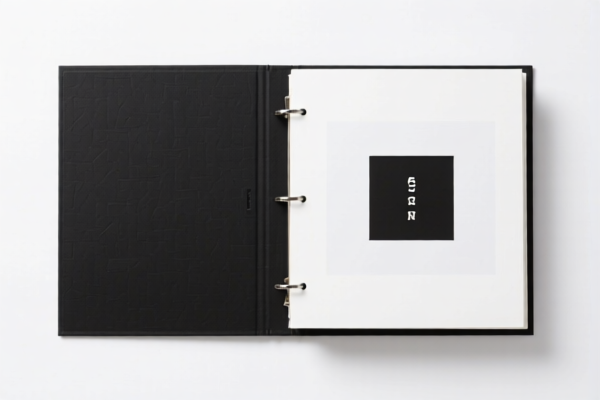
AI Analysis
🌿 Botanical Specimen Album (Plant Specimen Album)
🌐 HS Code Reference & Customs Clearance Guide | 2026 Latest Tariff Analysis | Professional Entry Strategy
📌 Part I: Product Definition and Classification: What Exactly is a "Botanical Specimen Album"?
A Botanical Specimen Album is a specialized collection of pressed plants, leaves, flowers, or seeds, typically mounted on paper or cardboard sheets and bound into a book-like format. In international trade, the classification depends heavily on what is inside the album (the content) and the primary function of the item.
⚠️ Key Distinction:
- If the album contains educational/historical botanical collections (pressed plants) intended for study or collection → It is classified as a Collector’s Piece of Botanical Interest (Chapter 97).
- If the album is empty or contains generic printed images/illustrations of plants (not actual specimens) for general stationery use → It is classified as Stationery/Paper Goods (Chapter 48).
- If it contains printed pictures/illustrations exceeding 20 years old or specific art prints → It may fall under Printed Matter (Chapter 49).
📦 Part II. HS Code Classification Details (2026 Latest Tariff Authority Comparison)
| HS Code | Product Description | Application Scenario | Tax Rate (Total) |
|---|---|---|---|
9705.29.00.00 |
Collections of botanical interest (preserved plants, pressed flowers) | Real dried plant specimens, herbariums, scientific collections | 0.0% |
4820.50.00.00 |
Registers, account books, notebooks, diaries, blotting pads, binders... | Empty albums, notebook covers, or stationery items for general use | 25.0% |
4820.90.00.00 |
Other stationery articles of paper/paperboard | Filled with generic printed plant illustrations (not specimens), decorative paper collections | 25.0% |
4911.91.40.40 |
Other printed matter: Pictures/photographs printed not over 20 years ago | Art books with plant illustrations, commercially printed botanical prints (not collections) | 7.5% |
4911.91.15.00 |
Printed matter suitable for use in production of articles of heading 4901 | Printed sheets for binding into books (manufacturing stage) | 0.0% |
9705.39.00.40 |
Numismatic interest (coins) - Included for contrast | N/A for botanical items, but shows 7.5% tax for non-botanical collector items >100 yrs | 7.5% |
🔍 Key Reminder:
- Real Plants? → Go to 9705.29.00.00 (0% Tax).
- Paper/Stationery/Empty? → Go to 4820.50.00.00 or 4820.90.00.00 (25% Tax).
- Printed Art/Photos? → Go to 4911.91.40.40 (7.5% Tax).
💰 Part III. 2026 Latest Tariff Rate Details (Including Additional Taxes)
✅ Applicable Country: United States (US)
✅ Origin: China (CN)
✅ Effective Date: 2025年11月10日起 (Including subsequent imports)
🎯 1. 9705.29.00.00 —— Botanical Specimen Collections (Real Plants)
| Item | Content |
|---|---|
| Base Tariff | 0% (ad valorem) |
| USITC Additional Tax | 0% |
| IEEPA Additional Tax | 0% |
| Total Tax Rate | 0.0% |
| Tax Calculation | CIF Value × 0% = $0 |
| De Minimis Eligibility | ✅ Yes (if applicable under general rules, though collector items may be scrutinized) |
| Legal Basis Path | USITC:9705.29.00.00 → Exempt from Section 301/IEEPA |
📌 Explanation:
- Chapter 97 (Collections and Collectors’ Pieces) is generally exempt from the high punitive tariffs imposed on industrial goods.
- Botanical collections are considered cultural/educational items, not industrial products.
- Zero Tax Advantage: This is the most favorable classification for genuine botanical herbariums.
🎯 2. 4820.50.00.00 —— Stationery/Notebook Albums (Empty or Generic Paper Goods)
| Item | Content |
|---|---|
| Base Tariff | 0% |
| USITC Additional Tax | +25% (under Section 301) |
| IEEPA Additional Tax | 0% (Not listed in IEEPA footnote for this specific subheading in the provided data) |
| Total Tax Rate | 25.0% |
| Tax Calculation | CIF Value × 25% |
| De Minimis Eligibility | ❌ No (Subject to high tariffs) |
| Legal Basis Path | USITC:4820.50.00.00 → FOOTNOTE:301 |
📌 Warning:
- If the album is empty and sold as a "notebook" or "binder," it is treated as paper stationery.
- 25% Tax is applied due to Section 301 tariffs on Chinese-origin goods.
- Common mistake: Importing empty botanical-themed notebooks and paying 25% instead of 0% by failing to declare them as "stationery" correctly.
🎯 3. 4820.90.00.00 —— Other Stationery (e.g., Decorative Paper Collections)
| Item | Content |
|---|---|
| Base Tariff | 0% |
| USITC Additional Tax | +25% |
| Total Tax Rate | 25.0% |
| Tax Calculation | CIF Value × 25% |
| Legal Basis Path | USITC:4820.90.00.00 → FOOTNOTE:301 |
📌 Note:
- If the album contains printed plant illustrations (not real specimens) and is classified as paper goods, it falls here.
- 25% Tax applies.
🎯 4. 4911.91.40.40 —— Printed Pictures/Photographs (Art Books)
| Item | Content |
|---|---|
| Base Tariff | 0% |
| USITC Additional Tax | +7.5% (Specific footnote for this subheading) |
| Total Tax Rate | 7.5% |
| Tax Calculation | CIF Value × 7.5% |
| Legal Basis Path | USITC:4911.91.40.40 |
📌 Note:
- If the item is a commercially printed book of plant illustrations (not a collection of real specimens), it is classified as printed matter.
- 7.5% Tax is lower than stationery (25%) but higher than real specimens (0%).
🛠️ Part IV. Customs Clearance Practical Advice (Avoid Pitfalls)
✅ 1. Document Checklist (Missing Documents Can Cause Delays)
| Document | Required | Explanation |
|---|---|---|
| ✅ Product Description | ✔️ | Must clearly state: "Botanical Specimen Album - Contains Real Dried Plants" vs. "Empty Notebook - Paper Stationery" |
| ✅ Photos of Contents | ✔️ | Show actual pressed plants, labels, and mounting style to prove it’s a collector’s item (Chapter 97) |
| ✅ Invoice | ✔️ | Clearly distinguish between "Specimen Collection" and "Stationery" |
| ✅ Packing List | ✔️ | List items accurately. Do not list "Plants" as "Paper Products" |
| ✅ Phytosanitary Certificate | ✔️ | Crucial for Chapter 97 (Real Plants). U.S. Customs and USDA require proof that dried plants are pest-free. |
✅ 2. Declaration Tips (Key Mnemonic)
🔥 "Real Plants = Chapter 97 (0%); Paper/Empty = Chapter 48 (25%); Art Books = Chapter 49 (7.5%)"
| Scenario | Correct HS Code | Wrong Action |
|---|---|---|
| Real dried plants mounted on paper | 9705.29.00.00 |
Declare as "Notebook" → 25% Tax + Phytosanitary Rejection |
| Empty album with botanical cover | 4820.50.00.00 |
Declare as "Specimen Collection" → Smuggling Risk |
| Printed book of plant photos | 4911.91.40.40 |
Declare as "Stationery" → 25% Tax (Overpaid) |
✅ 3. Special Cases
| Scenario | Handling Advice |
|---|---|
| Mixed Contents (Real plants + printed inserts) | Declare as Collector’s Piece if plants are the primary value; provide detailed description |
| Young Plants (Not Dried) | ❌ Prohibited without strict USDA import permits for live plants. Dried is standard for "specimens." |
| Historical Collections (>100 years) | May qualify for additional exemptions under Chapter 97, but must provide provenance documents |
🌍 Part V. Global Market Comparison (2026 Latest)
| Country/Region | Recommended HS Code | Tariff | Certification | Remarks |
|---|---|---|---|---|
| 🇺🇸 USA | 9705.29.00.00 |
0% | Phytosanitary Cert. | Best for real specimens |
| 🇨🇳 China | 9705.29.00.00 |
0% | N/A | No additional tariffs |
| 🇪🇺 EU | 9705.29.00.00 |
0% | CITES (if endangered species) | Check CITES for rare plants |
| 🇬🇧 UK | 9705.29.00.00 |
0% | N/A | Post-Brexit rules apply |
📌 Conclusion:
- USA offers 0% tariff for genuine botanical specimens, but strict phytosanitary controls.
- Stationery/Empty Albums face 25% tariffs in the USA due to Section 301.
- Always declare the content accurately to avoid 25% overpayment or customs seizure.
📌 Part VI. Common Mistakes & Pitfalls (Lessons Learned)
❌ Mistake 1: Declaring real dried plants as "Paper Notebooks" to avoid phytosanitary checks
👉 Consequence: Seizure by USDA/CBP + Fines. Do not do this!
❌ Mistake 2: Declaring empty botanical-themed notebooks as "Specimen Collections"
👉 Consequence: 25% Tariff Avoided? No, but if caught, fraud penalties. If not caught, you paid 0% but the goods are legally stationery. Correct: Declare as Stationery (4820.50.00.00) and pay 25%.
❌ Mistake 3: Ignoring Phytosanitary Certificates for Chapter 97 items
👉 Consequence: Detained at Border until certified or destroyed.
✅ Correct Approach:
"Botanical Specimen Album, Contains Dried Plant Specimens (Herbarium), Mounted on Paper, Phytosanitary Certificate Attached, HS Code 9705.29.00.00"
🎯 Part VII. Conclusion: Professional Declaration, Cost Savings, Smooth Clearance!
🎯 Remember the Mnemonic:
🔹 "Real Plants = 0% (Phytosanitary!); Empty Paper = 25% (Section 301); Art Books = 7.5%."
🔹 "HS Code Determines Fate, Tax Difference is 25 Points, Declaration Step by Step, Save Thousands!"
📌 Pro Tip:
If your plant specimens are from endangered species, ensure you have CITES permits. Even though the tariff is 0%, illegal wildlife trade laws apply strictly in the USA and EU.
📣 Immediate Action:
📞 Contact a licensed customs broker + Provide Photos of Specimens + Apply for Phytosanitary Certificate
🚀 Let your botanical album, Clear Customs Smoothly, Export Efficiently, Profit Maximized!
✨ Professional Customs Clearance Starts with Accurate Classification!
💼 Every Cent of Your Cost Deserves Precise Calculation!
Customer Reviews
About HS Code Classification
The Harmonized System (HS) is an internationally standardized nomenclature developed by the World Customs Organization (WCO) to classify traded products. Over 200 countries use the HS system as the basis for customs tariffs, trade statistics, and import/export regulations.
Each HS code follows a hierarchical structure:
- Chapter (2 digits) — Broad category of goods (e.g., Chapter 84: Machinery and Mechanical Appliances)
- Heading (4 digits) — More specific grouping within the chapter
- Subheading (6 digits) — Internationally standardized breakdown, used by all WCO member countries
- National subdivisions (8-10 digits) — Country-specific extensions for further classification, such as US HTSUS 10-digit codes
Correct HS code classification is essential for smooth customs clearance, accurate duty payment, and compliance with trade regulations. Misclassification can lead to customs delays, overpayment of duties, or penalties.
When importing from CN to US, the applicable tariff rates may include:
- Most-Favored-Nation (MFN) rate — The standard duty rate applied to WTO members
- General rate — Applied to countries without trade agreements
- Trade remedy duties — Additional tariffs such as Section 301 (anti-dumping), Section 232 (national security), or countervailing duties
The information provided on this page is for reference purposes only. For official classification, please consult with your local customs authority or a licensed customs broker.