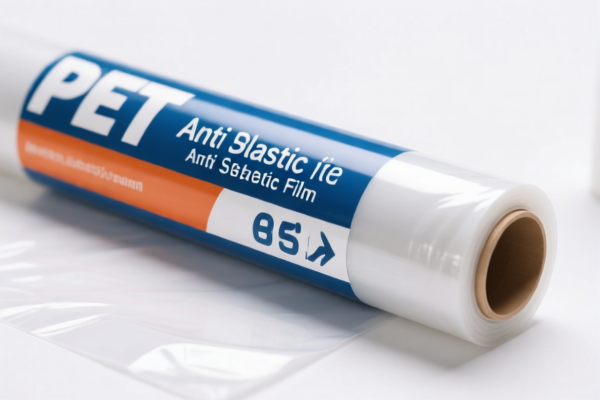
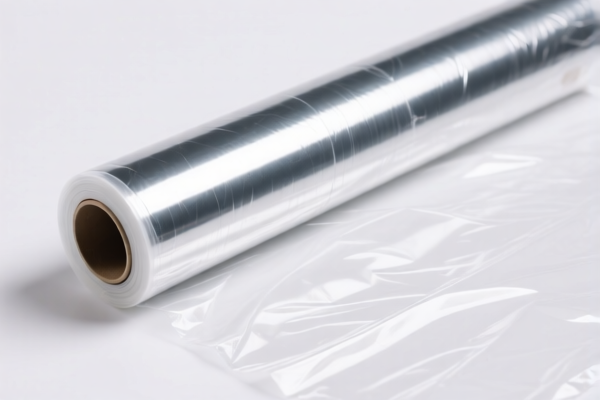
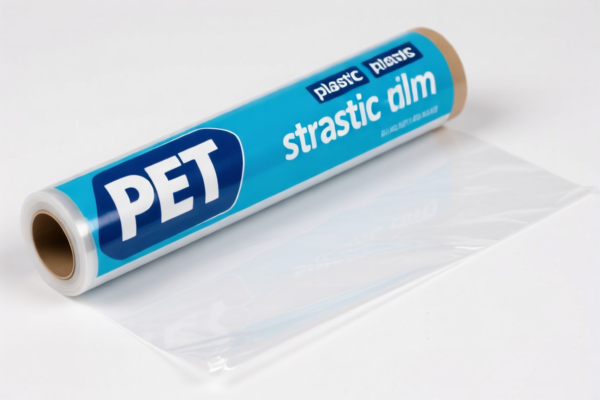
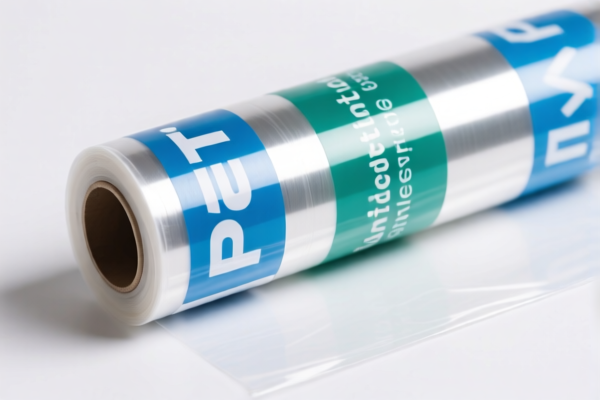
Plastic Anti static Film
CN → US| HS Code | Tariff Rate | Origin | Destination | Doc |
|---|---|---|---|---|
| 3919905060 | 40.8% | CN | US | Official Doc |
| 3926909989 | 22.8% | CN | US | Official Doc |
| 3919102055 | 40.8% | CN | US | Official Doc |
| 3926909400 | 35.0% | CN | US | Official Doc |
| 3920992000 | 39.2% | CN | US | Official Doc |
Product Images
AI Analysis
🛡️ Plastic Anti-Static Film (Electrostatic Dissipative Film)
🌐 HS Code Classification & Duty Analysis | 2026 US Import Guide | Anti-Static Plastic Films
📌 Product Category: Plastic Articles / Self-Adhesive Films / Flexible Sheets
🎯 Target Market: United States (US)
🇨🇳 Origin: China (CN)
⚠️ Critical Risk: High additional tariffs (Section 301 + IEEPA) due to Chinese origin.
📦 Product Definition: What is "Anti-Static Film"?
Plastic anti-static film is a flexible polymeric sheet designed to prevent the accumulation of static electricity, which can damage sensitive electronic components. It is commonly used in: * Electronics Packaging: Wrapping PCBs, chips, and circuit boards. * Industrial Manufacturing: Protecting surfaces during assembly. * Food & Pharma: Sometimes used for static control in specific processing lines.
Key Characteristics for Classification: 1. Material: Plastic (Polyethylene, PVC, PET, etc.). 2. Form: Roll/film (self-adhesive or non-adhesive). 3. Function: Electrostatic dissipation/protection. 4. Shape: Flat, flexible, non-rigid.
⚠️ Critical Distinction:
- Is it self-adhesive (has glue/coating)? → Look at 3919.
- Is it non-adhesive (plain film) or specialized sheet? → Look at 3926 or 3920.
📋 HS Code Classification Breakdown (Strictly Based on Provided Data)
Below are the 5 possible HS Codes from your data, ranked by likelihood and duty impact.
| HS Code | Product Description (Summary) | Key Classification Criteria | Total Duty Rate | Tax Details |
|---|---|---|---|---|
| 3919.90.50.60 | Plastic, Self-Adhesive Film | Fits definition of plastic self-adhesive film. Likely if the anti-static film has a glue layer or is a "self-adhesive tape/film" variant. | 40.8% | Base: 5.8% Section 301: 25.0% 122 Clause: 10% |
| 3919.10.20.55 | Plastic, Flat Self-Adhesive Film | Fits definition of plastic flat-shaped self-adhesive film. Similar to above, but specifies "flat shape". | 40.8% | Base: 5.8% Section 301: 25.0% 122 Clause: 10% |
| 3920.99.20.00 | Plastic, Non-Celled, Non-Reinforced Flexible Film | Fits definition of non-cellular, non-reinforced flexible plastic film. Likely if it is a plain anti-static film (no glue). | 39.2% | Base: 4.2% Section 301: 25.0% 122 Clause: 10% |
| 3926.90.94.00 | Plastic Articles, Specific Sheets | Fits definition of plastic articles and specific sheet properties. Used if it doesn't fit strictly as "film" under 3920/3919 but as a "sheet/article". | 35.0% | Base: 0.0% Section 301: 25.0% 122 Clause: 10% |
| 3926.90.99.89 | Plastic Articles, Other | Fits definition of plastic articles category. Catch-all for plastic items not specified elsewhere. | 22.8% | Base: 5.3% Section 301: 7.5% 122 Clause: 10% |
🔍 Analysis Note:
- The lowest duty (22.8%) is under 3926.90.99.89, but this is a "catch-all" for plastic articles. It requires proving the item is not a "film" (3920) or "self-adhesive" (3919).
- The highest duty (40.8%) applies to self-adhesive films (3919).
- The 3920 and 3926.94 codes represent non-adhesive films/sheets with moderate duties.
💰 Detailed Duty Structure Explanation
All HS Codes from the provided data include the following components:
-
Base Tariff (MFN Rate):
- Varies from 0.0% to 5.8% depending on the specific subheading.
- This is the standard WTO Most Favored Nation rate.
-
Section 301 Additional Tariff (China-Specific):
- 25.0% for HS Codes 3919 and 3920/3926.94.
- 7.5% for HS Code 3926.90.99.89.
- Reason: Retaliatory tariffs imposed by the US on Chinese goods under Section 301 of the Trade Act.
-
"122 Clause" Tariff (IEEPA/Executive Order):
- 10% for all listed codes.
- Reason: Additional tariffs imposed under specific executive orders targeting Chinese imports (often referred to as "122" in internal systems).
📊 Total Effective Duty Rate Summary
| HS Code | Base | Sec 301 | 122 Clause | TOTAL |
|---|---|---|---|---|
| 3919.90.50.60 | 5.8% | 25.0% | 10% | 40.8% |
| 3919.10.20.55 | 5.8% | 25.0% | 10% | 40.8% |
| 3920.99.20.00 | 4.2% | 25.0% | 10% | 39.2% |
| 3926.90.94.00 | 0.0% | 25.0% | 10% | 35.0% |
| 3926.90.99.89 | 5.3% | 7.5% | 10% | 22.8% |
⚠️ Warning:
- The 22.8% rate is the lowest but is only applicable if the item is not classified as a "film" (3920) or "self-adhesive" (3919).
- Misclassification can lead to penalties, interest, and retroactive duties.
🛠️ Customs Clearance Recommendations & Best Practices
✅ 1. Documentation Requirements
| Document | Purpose | Key Details to Include |
|---|---|---|
| Product Description | Clear identification | "Anti-Static Plastic Film", "Electrostatic Dissipative Sheet", Material (e.g., PE, PVC), Thickness, Width, Length. |
| Technical Data Sheet | Justify HS Code | Must specify: 1. Adhesive? (Yes/No) 2. Cellular? (Yes/No) 3. Reinforced? (Yes/No) |
| Commercial Invoice | Valuation & Origin | Must clearly state: - HS Code (preliminary) - Country of Origin: China - Total Value (CIF) |
| Packing List | Quantity & Weight | Net weight, gross weight, dimensions. |
| Bill of Lading/Air Waybill | Transport | Carrier info, vessel/flight details. |
| Certificate of Origin (CO) | Prove Origin | Mandatory for Chinese goods to verify Section 301 applicability. |
✅ 2. Classification Strategy: How to Choose the Right HS Code
🎯 Scenario A: Self-Adhesive Anti-Static Film
(e.g., Anti-static tape, film with glue backing)
Likely HS Code: 3919.90.50.60 or 3919.10.20.55
Duty: 40.8%
Why: The presence of adhesive places it in Chapter 39, Heading 3919.
Action: Confirm if the film has a pressure-sensitive adhesive layer.
🎯 Scenario B: Non-Adhesive, Flexible Plastic Film
(e.g., Plain anti-static polyethylene film, no glue)
Likely HS Code: 3920.99.20.00
Duty: 39.2%
Why: It is a "non-cellular, non-reinforced flexible plastic film".
Action: Provide material composition (e.g., "Low-Density Polyethylene, LDPE").
🎯 Scenario C: Anti-Static "Sheet" or "Article"
(e.g., Rigid anti-static sheets, or items not fitting "film" definition)
Likely HS Code: 3926.90.94.00 or 3926.90.99.89
Duty: 35.0% or 22.8%
Why: If it is not a "film" (too thick? rigid?) or not "self-adhesive", it may fall under "Other Plastic Articles".
Action:
- For 3926.90.94.00 (35%): Argue it fits "specific sheet properties".
- For 3926.90.99.89 (22.8%): Argue it is a "plastic article" not specified elsewhere. Note: This is the lowest duty, but highest risk of challenge. Use only if the item is clearly not a film or self-adhesive.
✅ 3. Clearance Tips to Avoid Delays
-
Avoid Ambiguous Descriptions:
- ❌ Bad: "Plastic Film"
- ✅ Good: "Anti-Static Electrostatic Dissipative Polyethylene Film, Non-Adhesive, Roll Form, Width 50cm"
-
Declare Material Composition:
- Customs officers need to know if it is "cellular" (foam) or "non-cellular". Anti-static films are typically non-cellular.
-
Highlight Non-Adhesive Status (If Applicable):
- If using 3920 or 3926, explicitly state "NON-ADHESIVE" on the invoice to avoid misclassification under 3919.
-
Prepare for Section 301 Scrutiny:
- Ensure the Certificate of Origin is valid and clearly states "China". Any ambiguity can lead to delays in applying the correct tariff.
-
Consider Pre-Ruling (Advance Ruling):
- If the duty savings between 3926.90.99.89 (22.8%) and 3920.99.20.00 (39.2%) are significant, apply for a CBP Pre-Ruling to get a binding classification decision.
🚫 Common Mistakes to Avoid
| Mistake | Consequence | Solution |
|---|---|---|
| Mislabeling Self-Adhesive as Non-Adhesive | Underpayment of duty (40.8% vs 39.2% or 22.8%) + Penalties | Clearly state "Self-Adhesive" or "Non-Adhesive" on invoice. |
| Using 3926.90.99.89 Without Justification | CBP may reclassify to 3919 or 3920, adding 17-18% in duties | Only use if the item is truly a "plastic article" and not a "film". |
| Omitting Material Composition | CBP may assign a "highest duty" default rate | Always include "Polyethylene", "PVC", etc. |
| Incorrect Country of Origin | Failure to apply Section 301 correctly → Audit risk | Ensure CO matches the product's actual manufacturing origin. |
📌 Conclusion & Final Recommendation
For Plastic Anti-Static Film:
- If Self-Adhesive: Expect 40.8% total duty (HS 3919).
- If Non-Adhesive Film: Expect 39.2% total duty (HS 3920).
- If Non-Adhesive Sheet/Article: Consider 35.0% (HS 3926.94) or 22.8% (HS 3926.99), but be prepared to justify why it is not a "film".
💡 Pro Tip:
The 22.8% rate (3926.90.99.89) is the most attractive but requires strong justification that the product is not a "film" or "self-adhesive". If your product is a standard flexible roll, it is likely classified under 3919 or 3920.Recommendation:
- If your product is plain anti-static film, use 3920.99.20.00 (39.2%).
- If your product has adhesive, use 3919.90.50.60 (40.8%).
- Only use 3926 codes if the product is a rigid sheet or has unique properties that exclude it from "film" definitions.
📣 Immediate Action:
📞 Contact your customs broker with the exact material composition and adhesive status of your anti-static film.
📄 Request a Pre-Ruling if the duty difference is significant.
🚀 Accurate classification saves thousands in duties.
✨ Professional Clearance Starts with Precision!
💼 Every percentage point counts in cross-border trade.
Customer Reviews
About HS Code Classification
The Harmonized System (HS) is an internationally standardized nomenclature developed by the World Customs Organization (WCO) to classify traded products. Over 200 countries use the HS system as the basis for customs tariffs, trade statistics, and import/export regulations.
Each HS code follows a hierarchical structure:
- Chapter (2 digits) — Broad category of goods (e.g., Chapter 84: Machinery and Mechanical Appliances)
- Heading (4 digits) — More specific grouping within the chapter
- Subheading (6 digits) — Internationally standardized breakdown, used by all WCO member countries
- National subdivisions (8-10 digits) — Country-specific extensions for further classification, such as US HTSUS 10-digit codes
Correct HS code classification is essential for smooth customs clearance, accurate duty payment, and compliance with trade regulations. Misclassification can lead to customs delays, overpayment of duties, or penalties.
When importing from CN to US, the applicable tariff rates may include:
- Most-Favored-Nation (MFN) rate — The standard duty rate applied to WTO members
- General rate — Applied to countries without trade agreements
- Trade remedy duties — Additional tariffs such as Section 301 (anti-dumping), Section 232 (national security), or countervailing duties
The information provided on this page is for reference purposes only. For official classification, please consult with your local customs authority or a licensed customs broker.