Plastic Coated Firefighter Clothing
CN → US| HS Code | Tariff Rate | Origin | Destination | Doc |
|---|---|---|---|---|
| 6210203000 | 13.8% | CN | US | Official Doc |
| 3926206000 | 35.0% | CN | US | Official Doc |
| 6210207000 | 13.3% | CN | US | Official Doc |
| 3921901500 | 41.5% | CN | US | Official Doc |
Product Images
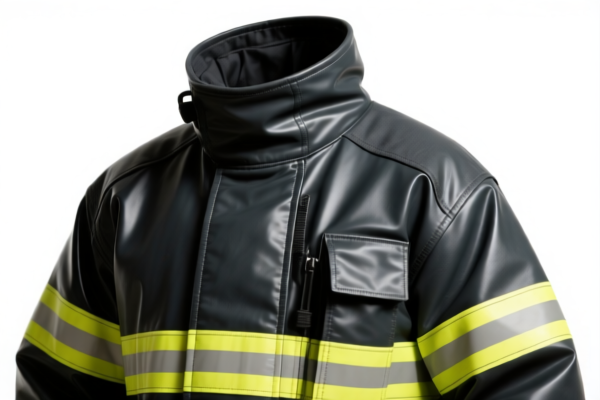
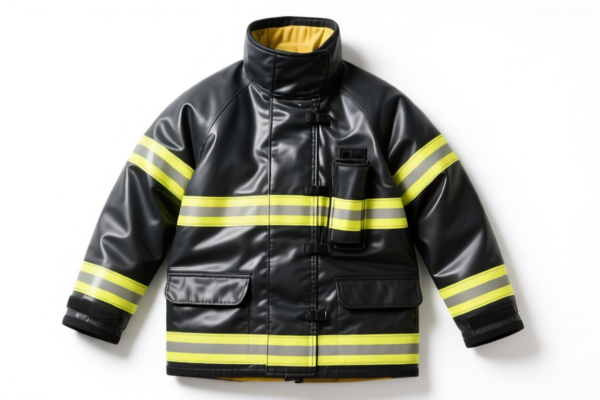
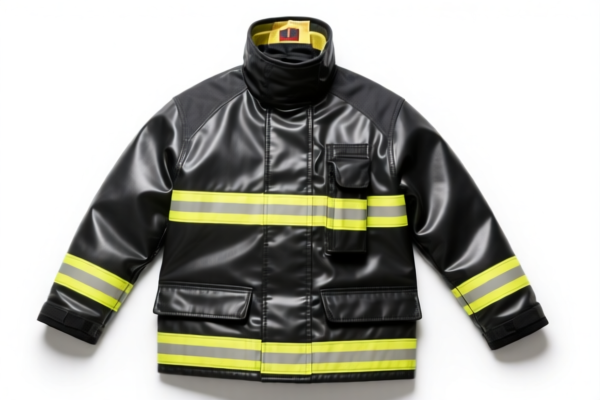
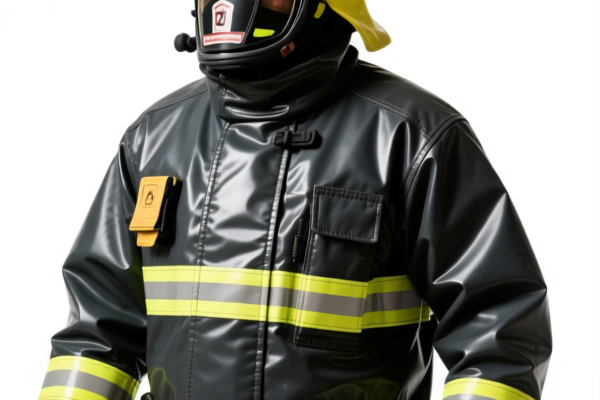
AI Analysis
🧯 Plastic Coated Firefighter Clothing (Protective Gear)
🌐 HS Code Reference & Customs Clearance Guide | 2026 Latest Tariff Analysis | Professional Compliance Strategy
📌 I. Product Definition & Classification: Is it a Garment or a Plastic Sheet?
"Plastic Coated Firefighter Clothing" represents a complex intersection of textile apparel and plastic manufacturing. In international trade, the classification hinges on whether the product is viewed primarily as a garment (Chapter 62) or as a plastic article (Chapter 39).
Key Distinctions: 1. Textile-Based (Chapter 62): The underlying structure is fabric (woven/knit), and the plastic coating/lamination is merely a surface treatment for protection. This is the most common and favorable classification for firefighter suits. 2. Plastic-Based (Chapter 39): The item is considered a finished plastic article, potentially with textile backing, but classified under "other" plastic goods due to specific material composition or lack of specific garment features.
⚠️ Critical Differentiator:
- If the item is conformed to garment shape (e.g., sleeves, collar, legs) and primarily used as clothing → Classify under 6210.20.
- If the item is a plastic sheet/cover with minimal textile integration or considered a generic "protective gear" not fitting specific textile definitions → Classify under 3926 or 3921.
📦 II. HS Code Classification Details (2026 Latest Tariff Authority Comparison)
| HS Code | Product Description | Application Scenario | Material Composition |
|---|---|---|---|
6210.20.30.00 |
Garment-type protective clothing: Plastic coated/laminated over textile fabric. | Standard firefighter suits, rain suits with textile base. | Plastic + Textile (Garment form) |
6210.20.70.00 |
Garment-type protective clothing: Outer surface covered with plastic material. | Firefighter suits where plastic coating is the dominant outer feature. | Plastic-covered Textile (Garment form) |
3926.20.60.00 |
Other plastic clothing/articles: General protective gear, not specifically textile garments. | Generic plastic coveralls, non-woven protective suits. | Primarily Plastic (Garment-like but plastic-focused) |
3921.90.15.00 |
Other plastic plates/sheets/film: Composite materials including textiles. | Plastic sheets combined with textiles, inferred as consumer goods. | Plastic + Textile (Not clearly garment-shaped) |
🔍 Important Reminder:
- Garment Shape is Key: Codes6210.20.30and6210.20.70apply only if the item is clearly a garment (sleeves, legs, etc.).
- Generic Protective Gear: If the item is a simple plastic cover or lacks specific textile garment features, it may fall under3926.20.60or3921.90.15.
- Misclassification Risk: Declaring a textile-based suit as a plastic sheet (3921) can lead to penalties; declaring a plastic sheet as a garment (6210) may be rejected if no textile base exists.
💰 III. 2026 Latest Tariff Rate Breakdown (Including Surtaxes & Policy Add-ons)
✅ Applicable Country: United States (US)
✅ Origin: China (CN)
✅ Effective Date: Post-November 2025 (Current Regulatory Environment)
🎯 1. 6210.20.30.00 & 6210.20.70.00 —— Garment-Type Protective Clothing (Favorable)
| Item | Content |
|---|---|
| Base Tariff | 3.3% - 3.8% (Ad Valorem) |
| Section 301 Surtax | 0.0% (No Section 301 for these subheadings) |
| Section 122 Tax | +10% (Retaliatory/Specific Policy Tax) |
| Total Effective Rate | 13.3% - 13.8% |
| Calculation Method | CIF Value × 13.3%~13.8% |
| De Minimis Eligibility | ❌ No (Deny De Minimis for Chapter 62 with Surtaxes) |
| Legal Basis Path | HTSUS:6210.20 → USITC Footnotes → Section 122 Directive |
📌 Explanation:
- Base Rate: Low (3.3-3.8%) because these are considered protective textiles.
- Section 301: Exempt from the 25% Section 301 tariff, which is a significant advantage over plastic sheets.
- Section 122: A 10% surtax is applied as part of specific trade measures.
- Total: 13.3% to 13.8%. This is the most cost-effective classification if the product is a true garment.
🎯 2. 3926.20.60.00 —— Other Plastic Clothing (High Risk)
| Item | Content |
|---|---|
| Base Tariff | 0.0% |
| Section 301 Surtax | +25.0% (High Surcharge) |
| Section 122 Tax | +10.0% |
| Total Effective Rate | 35.0% |
| Calculation Method | CIF Value × 35.0% |
| De Minimis Eligibility | ❌ No |
| Legal Basis Path | HTSUS:3926.20 → Section 301 List → Section 122 Directive |
📌 Warning:
- High Tariff Burden: Even though the base rate is 0%, the 25% Section 301 surtax applies to plastic articles from China.
- Total: 35.0%. This is more than double the garment classification.
- Risk: If customs determines the suit is primarily a "plastic article" rather than a "textile garment," you will pay this higher rate.
🎯 3. 3921.90.15.00 —— Plastic Textile Composites (Highest Risk)
| Item | Content |
|---|---|
| Base Tariff | 6.5% |
| Section 301 Surtax | +25.0% |
| Section 122 Tax | +10.0% |
| Total Effective Rate | 41.5% |
| Calculation Method | CIF Value × 41.5% |
| De Minimis Eligibility | ❌ No |
| Legal Basis Path | HTSUS:3921.90 → Section 301 List → Section 122 Directive |
📌 Warning:
- Highest Cost: This classification incurs both a high base tariff (6.5%) and the 25% Section 301 surtax.
- Total: 41.5%.
- Scenario: This applies if the product is deemed a "plastic sheet with textile" rather than a garment, or if the textile content is insufficient to justify Chapter 62.
🛠️ IV. Customs Clearance Practical Advice (Real-World Pitfall Avoidance)
✅ 1. Documentation Checklist (Non-Negotiable)
| Document | Required? | Explanation |
|---|---|---|
| ✅ Product Specification Sheet | ✔️ | Must detail: Layer structure (e.g., Outer Shell: PVC-coated Nylon; Lining: Mesh). |
| ✅ Material Composition Label | ✔️ | Clearly state % of textile vs. plastic. Textile dominance favors Chapter 62. |
| ✅ Product Photos (Worn & Flat) | ✔️ | Show garment features: Zippers, pockets, seams, collar, cuffs. Proves "Garment" status. |
| ✅ Third-Party Test Reports | ✔️ | Flame retardant, water resistance, tensile strength (for firefighter certification). |
| ✅ Commercial Invoice | ✔️ | Describe as "Firefighter Protective Garment" (NOT "Plastic Sheet" or "Coverall"). |
| ✅ Packing List | ✔️ | Ensure no separation of garment parts (e.g., don't ship jacket and pants separately if they form a suit). |
✅ 2. Declaration Strategy (Key Mantra)
🔥 “Garment Form, Textile Base, Declare as Clothing, Avoid Plastic Pit!”
| Scenario | Correct Declaration | Wrong Declaration |
|---|---|---|
| Suit with Nylon Base + PVC Coating | 6210.20.30.00 (Garment) | 3926.20.60.00 (Plastic) → Tax Jump 35% |
| Suit with Plastic Outer Layer + Mesh Lining | 6210.20.70.00 (Garment) | 3921.90.15.00 (Sheet) → Tax Jump 41.5% |
| Plain Plastic Raincoat (No Textile) | 3926.20.60.00 (Plastic) | 6210.20.30.00 (Garment) → Customs Rejection/Penalty |
| Firefighter Suit (Textile-Based) | 6210.20.30.00 or 70.00 | 3926.20.60.00 → Unnecessary 21-28% Extra Tax |
✅ 3. Special Cases & Mitigation
| Situation | Handling Advice |
|---|---|
| OEM Custom Fire Suits | Provide design blueprints showing textile layers. Emphasize "Protective Apparel" not "Plastic Gear." |
| Mixed Materials (e.g., Kevlar + PVC) | Still falls under 6210 if textile/fiber-based. Declare as "Textile-Based Protective Garment." |
| Plastic Overalls (No Fire Rating) | If no textile base, must use 3926. No avoidance possible; factor into cost. |
| Firefighter Helmets/Gloves | Often classified separately (e.g., 6506 for helmets). Do not lump into clothing if different Chapter. |
🌍 V. Global Market Customs Comparison (2026 Latest)
| Country/Region | Recommended HS Code | Tariff Rate (China Origin) | Key Certification | Note |
|---|---|---|---|---|
| 🇺🇸 USA | 6210.20.30 / 70 |
13.3% - 13.8% (with Surtaxes) | NFPA 1971, OSHA | Best rate if garment-shaped. Avoid Chapter 39. |
| 🇨🇳 China | 6210.20.30 |
5% - 8% (Import Tariff) | GB Standard | Lower base rate, no Section 301. |
| 🇪🇺 EU | 6210.10 / 20 |
0% - 4% (General MFN) | EN 469 (Fire) | No punitive surtaxes. Strict EN standards. |
| 🇬🇧 UK | 6210.20 |
0% - 4% | UKCA Mark | Post-Brexit rules apply. |
| 🇯🇵 Japan | 6210.20 |
0% - 12% | JIS Standards | Low base, but strict safety tests. |
📌 Conclusion:
- USA is the most complex market due to Section 301 and Section 122.
- Classification as Chapter 62 (Garment) saves 21-28% in duties compared to Chapter 39 (Plastic).
- Chapter 62 is the optimal path for firefighter suits if they are textile-based.
📌 VI. Common Errors & Pitfall Guide (Lessons Learned)
❌ Error 1: Describing the item as "Plastic Protective Coverall" in the commercial invoice.
👉 Consequence: Customs may default to 3926.20.60.00 → 35% Tax.
👉 Fix: Use "Protective Garment" or "Firefighter Suit".
❌ Error 2: Shipping unsewn plastic sheets and claiming they are garments.
👉 Consequence: Customs rejects Chapter 62 claim → Back taxes + Penalty.
👉 Fix: Ensure products are cut and sewn into garment shapes before export.
❌ Error 3: Ignoring Section 122 Tax.
👉 Consequence: Underpayment → Seizure or Delay.
👉 Fix: Account for the additional 10% in all cost calculations for Chapter 62.
❌ Error 4: Failing to provide NFPA/EN Certifications.
👉 Consequence: Clearance delay due to safety regulatory checks.
👉 Fix: Include test reports from accredited labs (e.g., UL, Intertek) showing fire/water resistance.
✅ Correct Practice:
“Firefighter Protective Garment, Class 1, NFPA 1971 Compliant, Outer Layer: PVC-Coated Nomex Fabric, Inner Lining: Moisture Barrier.”
🎯 VII. Conclusion: Precision Classification Saves Money!
🎯 Remember the Mantra:
🔹 “Garment Shape + Textile Base = Chapter 62”
🔹 “Plastic Sheet + No Sewing = Chapter 39”
🔹 Chapter 62 Tax: ~13.5% vs. Chapter 39 Tax: 35-41.5%
🔹 Save over $20,000 per $100,000 shipment by classifying correctly!
📌 Pro Tip:
- If your product has minimal textile content (e.g., <50% by weight), it might still be forced into Chapter 39.
- For high-value firefighter gear, invest in a Pre-Ruling (Advance Ruling) from US Customs (CBP) to confirm Chapter 62 status.
- Document the sewing process and material composition meticulously to withstand audits.
📣 Immediate Action:
📞 Consult a customs broker with expertise in textile/apparel classification.
📄 Prepare material composition certificates and garment structure diagrams.
🚀 Optimize your supply chain: Classify as Garment to minimize duty burden and ensure smooth clearance.
✨ Professional Clearance Starts with Accurate Classification!
💼 Every percentage point of duty affects your bottom line!
Customer Reviews
About HS Code Classification
The Harmonized System (HS) is an internationally standardized nomenclature developed by the World Customs Organization (WCO) to classify traded products. Over 200 countries use the HS system as the basis for customs tariffs, trade statistics, and import/export regulations.
Each HS code follows a hierarchical structure:
- Chapter (2 digits) — Broad category of goods (e.g., Chapter 84: Machinery and Mechanical Appliances)
- Heading (4 digits) — More specific grouping within the chapter
- Subheading (6 digits) — Internationally standardized breakdown, used by all WCO member countries
- National subdivisions (8-10 digits) — Country-specific extensions for further classification, such as US HTSUS 10-digit codes
Correct HS code classification is essential for smooth customs clearance, accurate duty payment, and compliance with trade regulations. Misclassification can lead to customs delays, overpayment of duties, or penalties.
When importing from CN to US, the applicable tariff rates may include:
- Most-Favored-Nation (MFN) rate — The standard duty rate applied to WTO members
- General rate — Applied to countries without trade agreements
- Trade remedy duties — Additional tariffs such as Section 301 (anti-dumping), Section 232 (national security), or countervailing duties
The information provided on this page is for reference purposes only. For official classification, please consult with your local customs authority or a licensed customs broker.