Plastic Medical Waste Containers (with Foot Pedal)
CN → US| HS Code | Tariff Rate | Origin | Destination | Doc |
|---|---|---|---|---|
| 3922900000 | 41.3% | CN | US | Official Doc |
| 3923900014 | 38.0% | CN | US | Official Doc |
| 3923900080 | 38.0% | CN | US | Official Doc |
Product Images
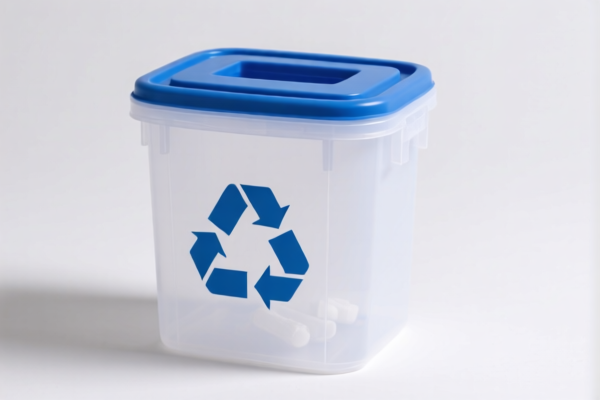
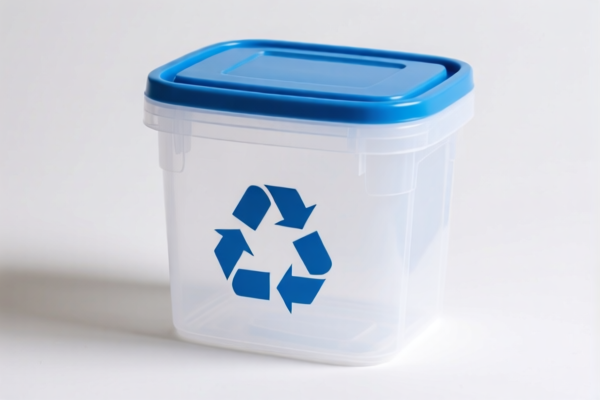
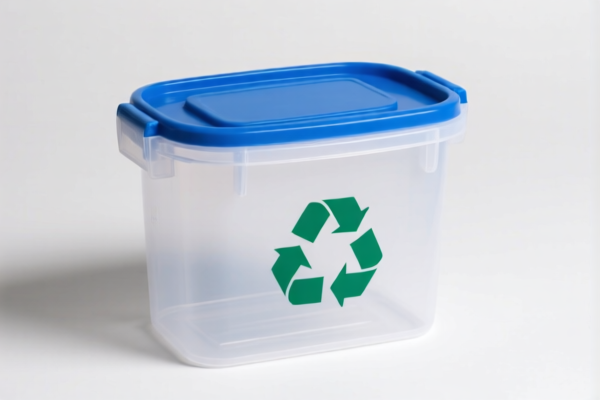
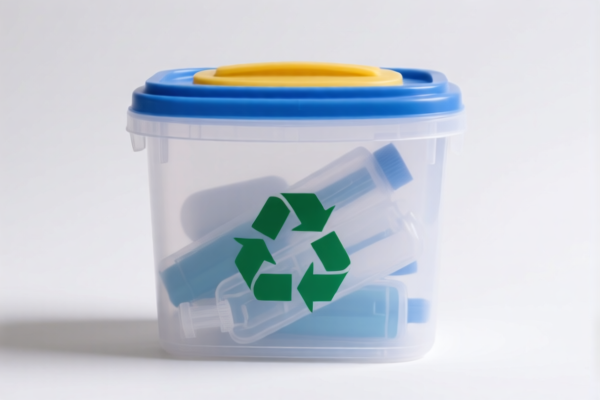
AI Analysis
🗑️ Plastic Medical Waste Containers (with Foot Pedal)
🌐 HS Code Reference & Customs Clearance Guide | 2026 Latest Tariff Analysis | Professional Compliance Strategy
📌 1. Product Definition & Classification: Do You Really Understand "Medical Waste Containers"?
Plastic medical waste containers (often equipped with foot pedals for hands-free operation) are critical hygiene and infection control devices used in healthcare settings. In international trade, their classification depends heavily on their primary function and structural design:
Hygiene/Fecal Waste Containers (Class 3922): Containers primarily designed for sanitary waste disposal, often resembling specialized toilet or lavatory fixtures.
General Packaging/Transport Containers (Class 3923): Containers designed for the transport, storage, or packaging of goods, where the "medical" aspect is a secondary application rather than defining the container's mechanical structure.
⚠️ Key Distinction Point:
- If the container is structurally similar to a sanitary fixture (like a pedal bin for toilet waste or specialized medical hygiene bins), it may fall under 3922.
- If it is a standard plastic box/canister with a lid and foot pedal, used generally for waste transport or storage (even in medical contexts), it typically falls under 3923 ("Bales, Boxes, Cans, Crates and Similar Containers").
📦 2. HS Code Classification Details (2026 Latest Tariff Authority Comparison)
| HS Code | Product Description | Applicable Scenario | Key Characteristic |
|---|---|---|---|
3922.90.00.00 |
Plastic medical waste containers (foot pedal type), material plastic, use as medical waste container, category: Sanitary Ware / Similar Vessels | Specialized hygiene bins, foot-pedal sanitary waste receptacles | ✅ Sanitary/Hygiene Focus |
3923.90.00.14 |
Plastic medical waste containers (with foot pedal), material plastic, use as article for transport/packaging of goods, with lid/sealing, category: Container extension application | Standard plastic waste bins with lids, often used for hazardous waste transport | ✅ Packaging/Transport Focus |
3923.90.00.80 |
Plastic medical waste containers (with foot pedal), material plastic, use as container for goods/items, category: General Containers | Generic plastic containers with foot pedals, no special sealing/lid mechanism emphasized | ✅ General Storage Focus |
🔍 Important Reminder:
- 3922 is for "Sanitary Ware" (e.g., sinks, toilets, bidets, and similar sanitary fixtures). If the waste bin is considered a "sanitary vessel," use this code.
- 3923 is for "Articles for the Conveyance or Packing of Goods." Most plastic waste bins with foot pedals are classified here as "containers."
- Do not mix codes: The presence of a "foot pedal" does not automatically change the code from 3923 to 3922; the primary purpose (hygiene fixture vs. general container) determines the chapter.
💰 3. 2026 Latest Tariff Rate Detailed Explanation (Including Surtaxes, Policy Add-ons)
✅ Applicable Country: United States (US)
✅ Country of Origin: China (CN)
✅ Effective Date: From November 10, 2025 (including subsequent imports)
🎯 1. 3922.90.00.00 —— Plastic Sanitary/Medical Waste Container (Hygiene Category)
| Item | Content |
|---|---|
| Basic Duty Rate | 6.3% (Ad Valorem) |
| USITC Surcharge (Section 301) | +25.0% |
| IEEPA Surtax (Section 122) | +10.0% |
| Total Effective Tax Rate | 41.3% |
| Tax Calculation | CIF Value × 41.3% |
| De Minimis Eligibility | ❌ No (denied_de_minimis) |
| Legal Authority Path | Base: 3922.90.00.00 → 301: 25% → IEEPA: 10% |
📌 Explanation:
- The 6.3% is the standard MFN (Most Favored Nation) duty for plastic sanitary ware.
- The 25% is the Section 301 tariff on Chinese-origin plastic products.
- The 10% is the additional IEEPA tariff (often referred to as "Section 122" in some contexts, but generally part of the broader China trade remedies).
- Total: 41.3%. This is a high-cost item for importers.
🎯 2. 3923.90.00.14 & 3923.90.00.80 —— Plastic Containers for Goods (Packaging/Storage Category)
| Item | Content |
|---|---|
| Basic Duty Rate | 3.0% (Ad Valorem) |
| USITC Surcharge (Section 301) | +25.0% |
| IEEPA Surtax (Section 122) | +10.0% |
| Total Effective Tax Rate | 38.0% |
| Tax Calculation | CIF Value × 38.0% |
| De Minimis Eligibility | ❌ No (denied_de_minimis) |
| Legal Authority Path | Base: 3923.90.00.xx → 301: 25% → IEEPA: 10% |
📌 Note:
- Both sub-headings3923.90.00.14and3923.90.00.80carry the same tax structure.
- The basic rate is lower (3.0% vs 6.3%) because these are classified as general packaging containers, not sanitary fixtures.
- Total: 38.0%. Still high, but 3.3% cheaper than the 3922 classification.
🛠️ 4. Customs Clearance Practical Advice (Real-World Pitfall Avoidance Guide)
✅ 1. Preparation Checklist (All Required)
| Document | Required | Explanation |
|---|---|---|
| ✅ Product Specification Sheet | ✔️ | Must detail: Material (PP/PE), Capacity, Foot Pedal Mechanism, Dimensions |
| ✅ Product Photos (Clear) | ✔️ | Must show foot pedal, lid, and interior. Avoid ambiguous images. |
| ✅ Commercial Invoice | ✔️ | Must clearly state: "Plastic Medical Waste Container with Foot Pedal" |
| ✅ Packing List | ✔️ | List units per carton, gross/net weight |
| ✅ Origin Certificate | ❌ (Optional but Recommended) | If not from China, can avoid surcharges. For China, not helpful for tax reduction. |
✅ 2. Declaration Tips (Key Mantra)
🔥 "Correct Description, Correct Code, Avoid 41.3%!"
| Scenario | Correct Declaration | Wrong Practice |
|---|---|---|
| Standard Plastic Bin with Foot Pedal | 3923.90.00.14 or 3923.90.00.80 (Tax: 38%) |
Misdeclare as 3922.90.00.00 → Tax: 41.3% (Overpay!) |
| Specialized Sanitary Waste Fixture | 3922.90.00.00 (Tax: 41.3%) |
Misdeclare as 3923 → Risk of Penalty for Undervaluation/Incorrect Code |
| Mixed Shipment (Medical + Non-Medical) | Separate lines with clear descriptions | Combine into one line → Customs Audit Risk |
✅ 3. Special Cases Handling
| Situation | Handling Advice |
|---|---|
| OEM for Hospital Chains | Provide contract showing intended use. If it’s a standard bin, stick to 3923. |
| With Special Liners/Seals | Still 3923. Liners are accessories, not changing the container’s nature. |
| Foot Pedal Made of Metal | If the plastic container is the primary component, still 3923. If the foot pedal mechanism is the main value, re-evaluate. |
| Small Quantity (Under $800) | ❌ De Minimis Exemption NOT Available due to Section 301/IEEPA surcharges. Full tax applies even for small parcels. |
🌍 5. Global Market Comparison (2026 Latest)
| Country/Region | Recommended HS Code | Total Tax Rate (CN Origin) | Certification | Notes |
|---|---|---|---|---|
| 🇺🇸 USA | 3923.90.00.14 |
38.0% | None Specific | High tax due to 301+IEEPA |
| 🇨🇳 China | 3923.90.00.14 |
5.0% | None | Low duty, no surcharge |
| 🇪🇺 EU | 3923.90.00.00 |
4.5% | CE (if applicable) | No additional surcharges |
| 🇬🇧 UK | 3923.90.00.00 |
4.0% | UKCA | Post-Brexit tariffs |
| 🇯🇵 Japan | 3923.90.00.00 |
6.0% | PSE (if electrical) | No surcharges |
📌 Conclusion:
- The USA is the most expensive market for Chinese plastic medical waste containers due to 38-41.3% total duties.
- Cost Optimization Tip: If possible, source from Vietnam, Thailand, or Mexico to avoid Section 301 tariffs (reduces US tax to ~0-5%).
- Clearance Tip: Always declare as 3923 unless the product is specifically designed as a sanitary fixture (like a toilet-integrated bin), to save 3.3% on the base duty.
📌 6. Common Mistakes & Pitfalls (Lessons from the Field)
❌ Mistake 1: Classifying all foot-pedal bins as 3922 (Sanitary)
👉 Consequence: Paying 41.3% instead of 38.0%.
👉 Solution: Verify if the product is a "sanitary vessel." Most plastic bins are packaging containers (3923).
❌ Mistake 2: Assuming "Medical" use qualifies for special tax exemptions
👉 Consequence: Customs rejects the claim. Medical use does not exempt plastic containers from Section 301 tariffs.
👉 Solution: Declare by material and function, not by end-use alone.
❌ Mistake 3: Combining small shipments to avoid declaration
👉 Consequence: De Minimis exemption is voided for China-origin goods under current rules.
👉 Solution: Declare accurately. Tax is unavoidable for small shipments from China.
❌ Mistake 4: Vague description "Plastic Bin"
👉 Consequence: Customs delays for classification review.
👉 Solution: Use precise terms: "Plastic Medical Waste Container with Foot Pedal, 30L, PP Material, Model XYZ."
✅ Correct Practice:
"Plastic Waste Container, 20L, with Foot Pedal, Polypropylene, for Medical/Household Use, No Electrical Components"
🎯 7. Conclusion: Professional Declaration, Cost Savings, Risk Mitigation!
🎯 Remember the Mantra:
🔹 "3923 for Bins, 3922 for Toilets; 38% vs 41%, Don't Overpay!"
🔹 "No De Minimis for China, Even for Small Bins!"
📌 Pro Tip:
If your container is originating from Vietnam, Malaysia, or Thailand, you may qualify for lower tariffs under USMCA or FTZ agreements.
Recommendation:
📞 Consult a licensed customs broker before shipping.
📦 Apply for an Advance Ruling if unsure about3922vs3923.
🚀 Clearance Success = Correct Code + Complete Documentation + Strategic Sourcing!
✨ Professional Clearance Starts with Precise Classification!
💼 Every Percentage Point Matters in Your Profit Margin!
Customer Reviews
About HS Code Classification
The Harmonized System (HS) is an internationally standardized nomenclature developed by the World Customs Organization (WCO) to classify traded products. Over 200 countries use the HS system as the basis for customs tariffs, trade statistics, and import/export regulations.
Each HS code follows a hierarchical structure:
- Chapter (2 digits) — Broad category of goods (e.g., Chapter 84: Machinery and Mechanical Appliances)
- Heading (4 digits) — More specific grouping within the chapter
- Subheading (6 digits) — Internationally standardized breakdown, used by all WCO member countries
- National subdivisions (8-10 digits) — Country-specific extensions for further classification, such as US HTSUS 10-digit codes
Correct HS code classification is essential for smooth customs clearance, accurate duty payment, and compliance with trade regulations. Misclassification can lead to customs delays, overpayment of duties, or penalties.
When importing from CN to US, the applicable tariff rates may include:
- Most-Favored-Nation (MFN) rate — The standard duty rate applied to WTO members
- General rate — Applied to countries without trade agreements
- Trade remedy duties — Additional tariffs such as Section 301 (anti-dumping), Section 232 (national security), or countervailing duties
The information provided on this page is for reference purposes only. For official classification, please consult with your local customs authority or a licensed customs broker.