Plastic Pipe Fitting Pressure Reducing Valve
CN → US| HS Code | Tariff Rate | Origin | Destination | Doc |
|---|---|---|---|---|
| 3917400095 | 40.3% | CN | US | Official Doc |
| 3917400080 | 40.3% | CN | US | Official Doc |
| 8479899599 | 87.5% | CN | US | Official Doc |
| 8479896500 | 20.3% | CN | US | Official Doc |
| 8481100090 | 37.0% | CN | US | Official Doc |
Product Images
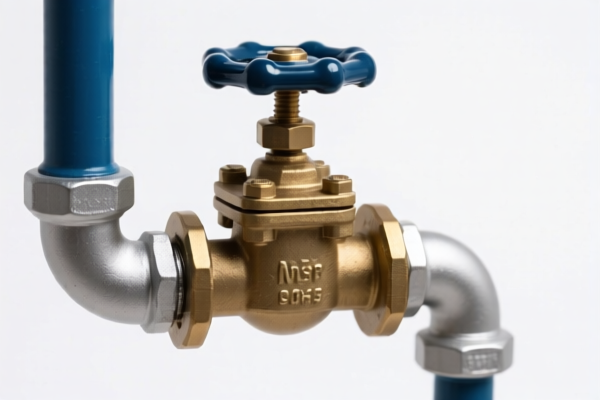
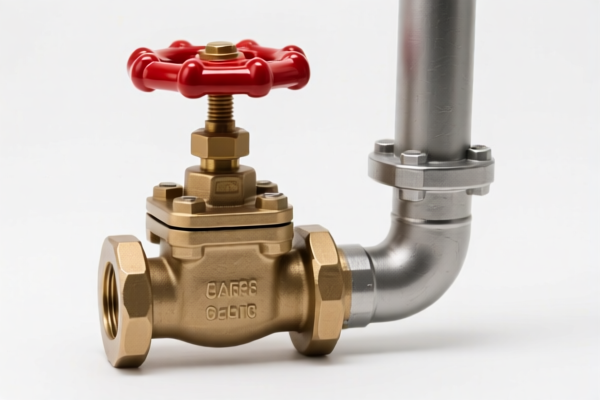
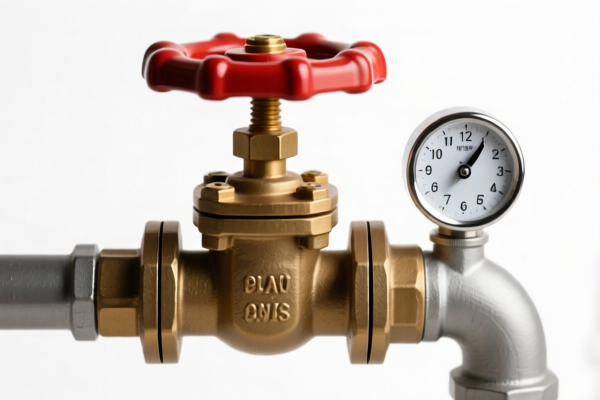
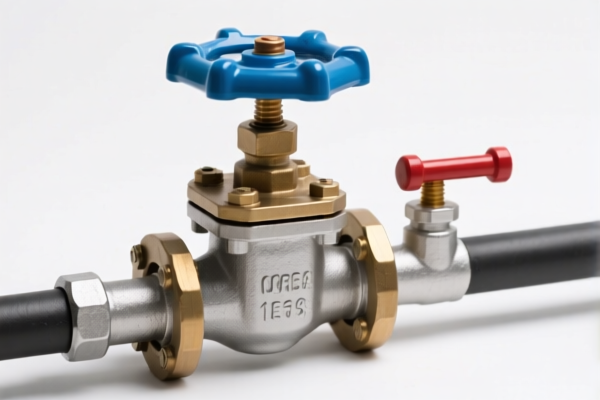
AI Analysis
🔧 Plastic Pipe Fitting Pressure Reducing Valve (PRV)
🌐 HS Code Reference & Customs Clearance Guide | 2026 Latest Tariff Analysis | Professional Strategy for US Imports
📌 Part 1: Product Definition & Classification: What Exactly Is a "Plastic PRV"?
A Plastic Pipe Fitting Pressure Reducing Valve is a critical component in fluid transport systems, designed to lower the pressure of a fluid (water, gas, or other liquids) flowing through plastic piping. In international trade, its classification depends heavily on its structure (is it just a connector or a mechanical device?) and function (does it have independent mechanical regulation capabilities?).
Key Distinction Points: * Simple Fitting: If it is primarily a static connector or a simple mechanical reducer without complex independent regulation mechanisms, it may fall under Plastic Pipe Accessories (Chapter 39). * Valve/Mechanical Device: If it contains independent mechanical components (like springs, diaphragms, or adjustable regulators) to actively control pressure, it may be classified under Machinery/Valves (Chapter 84).
⚠️ Critical Warning:
- Misclassifying a complex mechanical valve as a simple plastic fitting can lead to underpayment of duties and severe penalties.
- Over-classifying a simple fitting as a complex machine may lead to higher duties (though less risky than underpayment).
- Chapter 39 items generally attract high "Trade War" tariffs. Chapter 84 items vary significantly based on specific sub-headings.
📦 Part 2: HS Code Classification Details (Based on Provided Data)
Below are the 5 possible HS Codes derived from your specific dataset, along with their corresponding tax structures.
| HS Code | Product Description & Classification Logic | Total Tax Rate | Tax Breakdown |
|---|---|---|---|
| 3917.40.00.95 | Plastic Pipe Fitting Accessory Made of plastic, classified as a plastic pipe accessory. |
40.3% | Base: 5.3% + Section 301: 25.0% + Section 122: 10.0% |
| 3917.40.00.80 | Plastic Pipe Accessory Specifically categorized as an accessory for plastic pipes. |
40.3% | Base: 5.3% + Section 301: 25.0% + Section 122: 10.0% |
| 8479.89.95.99 | Other Mechanical Appliance Regarded as a mechanical device with specific functions, made of plastic. |
87.5% | Base: 2.5% + Section 301: 25.0% + Section 122: 10.0% + Steel/Aluminum/Copper Surtax: 50%* |
| 8479.89.65.00 | Independent Mechanical Device Has independent functional capabilities, classified as other independent mechanical appliances. |
20.3% | Base: 2.8% + Section 301: 7.5% + Section 122: 10.0% |
| 8481.10.00.90 | Valve Specifically classified as a valve/mechanical device for pressure reduction. |
37.0% | Base: 2.0% + Section 301: 25.0% + Section 122: 10.0% |
*Note on 8479.89.95.99: The dataset explicitly mentions a 50% surtax for Steel/Aluminum/Copper products. If the PRV contains significant metallic components (springs, stems, bodies), this rate may apply, making it the most expensive option.
💰 Part 3: Detailed Tax Rate Analysis (US Import Context)
✅ Applicable Country: United States (US)
✅ Origin: China (CN) (Assumed based on "Section 301" and "Section 122" references)
✅ Effective Time: 2025–2026 Current Trade Policies
🎯 1. The "Plastic Fitting" Route (HS: 3917.40.00.80/95)
- Total Duty: 40.3%
- Breakdown:
- Base Tariff: 5.3% (Standard MFN rate for plastic pipes/accessories)
- Section 301 Tariff: 25.0% (Trade War surcharge on Chinese goods)
- Section 122 Tariff: 10.0% (Specific national security/emergency surcharge)
- Analysis: This is the standard classification for plastic pipe components. It is predictable but costly due to the flat 25% Section 301 rate.
🎯 2. The "Valve" Route (HS: 8481.10.00.90)
- Total Duty: 37.0%
- Breakdown:
- Base Tariff: 2.0% (Lower base rate for valves)
- Section 301 Tariff: 25.0%
- Section 122 Tariff: 10.0%
- Analysis: Slightly cheaper than the plastic fitting route (3.3% savings). However, proving it is a "valve" and not a "fitting" requires demonstrating independent pressure-regulating mechanics.
🎯 3. The "Independent Mechanical Device" Route (HS: 8479.89.65.00) 💡 BEST RATE?
- Total Duty: 20.3%
- Breakdown:
- Base Tariff: 2.8%
- Section 301 Tariff: 7.5% (Significantly reduced from 25%!)
- Section 122 Tariff: 10.0%
- Analysis: This is the most cost-effective classification if applicable. The key is proving the device has "independent functional capabilities" separate from the pipe itself. If the PRV is a standalone mechanical unit, this route saves ~17-20% in duties compared to the plastic fitting route.
🎯 4. The "Other Mechanical Appliance" Route (HS: 8479.89.95.99) ⚠️ AVOID
- Total Duty: 87.5%
- Breakdown:
- Base Tariff: 2.5%
- Section 301 Tariff: 25.0%
- Section 122 Tariff: 10.0%
- Steel/Aluminum/Copper Surtax: 50%
- Analysis: Extreme Risk. If the customs authority determines the valve contains metal parts (which most pressure reducers do), this 50% surtax will destroy your margins. Only consider this if the product is 100% plastic with no metal components AND it doesn't fit the "Independent Device" criteria.
🛠️ Part 4: Customs Clearance Practical Advice (Real-World Pitfalls)
✅ 1. Preparation Checklist (Must-Have Documents)
| Document | Required? | Purpose |
|---|---|---|
| ✅ Technical Specification Sheet | ✔️ | Must detail: Pressure range, flow rate, material composition (plastic vs. metal parts), and regulation mechanism. |
| ✅ Product Photos | ✔️ | Show the entire assembly. Highlight any metallic springs, stems, or regulators. |
| ✅ Bill of Materials (BOM) | ✔️ | Crucial for HS 8479.89.95.99 avoidance. Prove if metal content is minimal or non-existent. |
| ✅ Commercial Invoice | ✔️ | Describe as "Plastic Pressure Reducing Valve for Pipe Systems" or "Mechanical Pressure Regulator." |
| ✅ Origin Certificate | ✔️ | To confirm Chinese origin and apply correct Section 301 rates. |
✅ 2. Classification Strategy (The "Valve" vs. "Fitting" Debate)
🔥 Golden Rule: "Function Defines Function, Material Defines Chapter!"
| Scenario | Recommended HS Code | Why? |
|---|---|---|
| 100% Plastic, Simple Reducer | 3917.40.00.95 |
It acts as a pipe connector/reducer. No moving parts for active regulation. |
| Plastic Body, Metal Spring/Regulator | 8481.10.00.90 |
It is functionally a Valve. Chapter 84 takes precedence for functional mechanical valves. |
| Complex Independent Regulator | 8479.89.65.00 |
If it has independent mechanical control features not typical of standard valves, try this for the 7.5% Section 301 rate. |
| Contains Significant Metal Parts | 8479.89.95.99 |
Avoid. High risk of 50% surtax unless you can prove exemption. |
✅ 3. Special Handling Tips
- For HS 8479.89.65.00 (20.3%): You must argue that the device is a "standalone mechanical appliance" with independent function. Provide diagrams showing the internal mechanism.
- For HS 3917.40.00 (40.3%): Ensure the product is clearly a pipe accessory. Do not emphasize "mechanical regulation" too strongly if you want to stay in Chapter 39 (though this is riskier if it clearly functions as a valve).
- Metal Content Alert: If the PRV has a metal spring or metal stem, customs may argue it falls under Chapter 84. Be prepared to justify whether it's a "valve" (8481) or "other machinery" (8479).
✅ 4. Common Mistakes & How to Avoid Them
❌ Mistake 1: Calling it "Plastic Pipe Fitting" when it has a complex internal regulator.
👉 Risk: Customs may reclassify to Chapter 84, potentially leading to the 87.5% rate if metal parts are detected, or at least the 37% valve rate.
❌ Mistake 2: Ignoring the "Section 122" 10% surcharge.
👉 Reality: All 5 HS codes in your data include a 10% Section 122 tariff. This is unavoidable for Chinese-origin goods under current policy. Factor it into your cost calculation.
❌ Mistake 3: Assuming "Plastic" means Chapter 39.
👉 Reality: If it functions as a valve, Chapter 84 prevails. Chapter 39 is for static fittings (elbows, tees, reducers) without active regulation.
🌍 Part 5: Global Market Comparison (2026)
| Country | Recommended HS Code | Est. Duty | Key Requirement |
|---|---|---|---|
| 🇺🇸 USA | 8479.89.65.00 |
20.3% | Prove "Independent Mechanical Function" |
| 🇨🇳 China | 8481.10.00.00 |
5-8% | Standard valve classification |
| 🇪🇺 EU | 8481.10.00.00 |
~3-5% | CE Marking required for pressure equipment |
| 🇯🇵 Japan | 8481.10.00.00 |
5-10% | JIS Standard compliance |
📌 US Advantage: While the EU and Japan have lower base rates, the US Section 301/122 structure makes the 8479.89.65.00 (20.3%) option relatively competitive if you can justify the "independent mechanical device" classification.
📌 Part 6: Final Recommendations & Action Plan
🎯 Step 1: Analyze Your Product
- Is it 100% plastic? → Consider
3917.40.00.95(40.3%) or8481.10.00.90(37.0%). - Does it have metal springs/stems? → Must go to Chapter 84.
- Is it a complex independent regulator? → Try to justify
8479.89.65.00(20.3%).
🎯 Step 2: Document Preparation
- Create a Technical Dossier explaining the pressure reduction mechanism.
- Highlight independent mechanical features to support
8479.89.65.00. - Clearly list material composition to avoid the 50% metal surtax under
8479.89.95.99.
🎯 Step 3: Customs Broker Consultation
- Before shipping, provide your broker with the Technical Dossier.
- Request an Advance Ruling if possible, to lock in the 20.3% rate if applicable.
🎯 Conclusion: Maximize Savings, Minimize Risk
🔹 Best Case Scenario: Classify as 8479.89.65.00 → 20.3% Total Duty.
🔹 Safe Scenario: Classify as 8481.10.00.90 → 37.0% Total Duty.
🔹 Worst Case Scenario: Misclassified as 8479.89.95.99 with metal parts → 87.5% Total Duty.
📌 Pro Tip:
If your PRV is purely plastic and functions as a simple reducer, 8481.10.00.90 (37.0%) is safer than 3917 (40.3%) because it’s functionally accurate. However, if you can prove it’s a complex independent mechanical device, 8479.89.65.00 (20.3%) is the gold standard for cost savings.
📣 Immediate Action:
📞 Contact your customs broker with the product specs.
📝 Prepare technical diagrams showing the internal mechanism.
🚀 Aim for the 20.3% rate through proper documentation!
✨ Smart Classification Saves Money!
💼 Every percentage point in duty matters!
Customer Reviews
About HS Code Classification
The Harmonized System (HS) is an internationally standardized nomenclature developed by the World Customs Organization (WCO) to classify traded products. Over 200 countries use the HS system as the basis for customs tariffs, trade statistics, and import/export regulations.
Each HS code follows a hierarchical structure:
- Chapter (2 digits) — Broad category of goods (e.g., Chapter 84: Machinery and Mechanical Appliances)
- Heading (4 digits) — More specific grouping within the chapter
- Subheading (6 digits) — Internationally standardized breakdown, used by all WCO member countries
- National subdivisions (8-10 digits) — Country-specific extensions for further classification, such as US HTSUS 10-digit codes
Correct HS code classification is essential for smooth customs clearance, accurate duty payment, and compliance with trade regulations. Misclassification can lead to customs delays, overpayment of duties, or penalties.
When importing from CN to US, the applicable tariff rates may include:
- Most-Favored-Nation (MFN) rate — The standard duty rate applied to WTO members
- General rate — Applied to countries without trade agreements
- Trade remedy duties — Additional tariffs such as Section 301 (anti-dumping), Section 232 (national security), or countervailing duties
The information provided on this page is for reference purposes only. For official classification, please consult with your local customs authority or a licensed customs broker.