Plastic Raw Material (Polyethylene)
CN → US| HS Code | Tariff Rate | Origin | Destination | Doc |
|---|---|---|---|---|
| 3901101000 | 41.5% | CN | US | Official Doc |
| 3901201000 | 41.5% | CN | US | Official Doc |
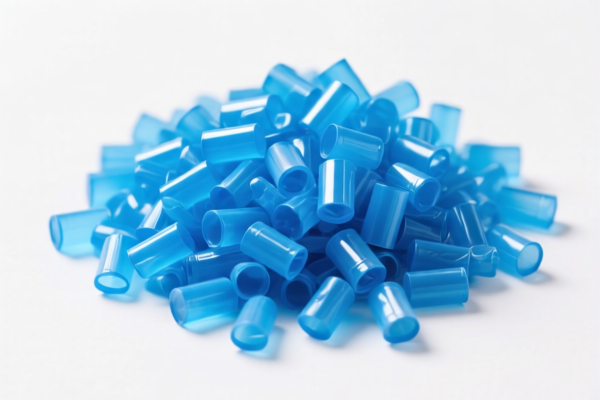
Product Images



AI Analysis
🧪 Plastic Raw Material (Polyethylene) – High-Density & Low-Density Grades
🌐 HS Code Reference & Customs Clearance Guide | 2026 Latest Tariff Analysis | Professional Customs Strategy
📌 I. Product Definition & Classification: What Exactly is "Polyethylene"?
Polyethylene (PE) is the most widely produced plastic in the world, used in everything from grocery bags to industrial piping. In international trade, it is categorized not by end-use, but by physical density and chemical viscosity.
Key Distinction Criteria:
1. Specific Gravity (Density):
- < 0.94: Known as LDPE (Low-Density Polyethylene) or LLDPE. Flexible, transparent, used for films, bags, and packaging.
- ≥ 0.94: Known as HDPE (High-Density Polyethylene). Rigid, opaque, used for bottles, crates, pipes, and caps.
2. Relative Viscosity:
- ≥ 1.44: Indicates a higher molecular weight polymer, typically used for extrusion blow molding or injection molding requiring higher strength.
- < 1.44: Lower molecular weight, often used for simpler film extrusion.
⚠️ Critical Classification Rule:
- If Specific Gravity < 0.94 AND Relative Viscosity ≥ 1.44 →归入 3901.10.10.00
- If Specific Gravity ≥ 0.94 AND Relative Viscosity ≥ 1.44 →归入 3901.20.10.00📌 Why it matters:
These two codes have identical tariff rates in the provided dataset, but misclassification can lead to customs audits, delays, or penalties if the physical properties (density/viscosity) do not match the declared HS code. Always have laboratory test reports (density/viscosity) ready.
📦 II. HS Code Classification Details (2026 Latest Tariff Authority)
| HS Code | Product Description | Key Characteristics | Typical Applications |
|---|---|---|---|
3901.10.10.00 |
Polymers of Ethylene: Polyethylene with Specific Gravity < 0.94 AND Relative Viscosity ≥ 1.44 | Low Density, High Viscosity | Flexible packaging films, heavy-duty bags, shrink films, geomembranes |
3901.20.10.00 |
Polymers of Ethylene: Polyethylene with Specific Gravity ≥ 0.94 AND Relative Viscosity ≥ 1.44 | High Density, High Viscosity | Bottles, crates, pipes, fittings, industrial containers, toys |
🔍 Important Note:
- Both codes require Relative Viscosity ≥ 1.44. If your polyethylene has a relative viscosity below 1.44, it falls under different subheadings (not listed in the provided data).
- "Primary Forms" means the material is in granules, pellets, flakes, or powder form. If it is already molded into shapes (e.g., pipes, sheets), it may fall under Chapter 39 other headings (e.g., 3917).
💰 III. 2026 Latest Tariff Rate Breakdown (Including Additional Duties)
✅ Applicable Country: United States (US)
✅ Origin: China (CN)
✅ Effective Date: Current rates as per provided data
🎯 1. 3901.10.10.00 – Low-Density Polyethylene (Viscosity ≥ 1.44)
| Item | Detail |
|---|---|
| Basic Tariff | 0.0% (ad valorem) |
| Additional Tariff (Section 301) | 0.0% |
| Total Tariff Rate | 0.0% |
| Tax Calculation | CIF Value × 0% = $0 |
| De Minimis Exemption | ✅ Applicable (if value < $800, no duty or entry fee) |
| Legal Basis | HTSUS 3901.10.10.00 |
📌 Explanation:
- This is a zero-duty classification for low-density polyethylene with high viscosity.
- Unlike electronics or certain plastics, PE in primary forms currently enjoys no Section 301 additional tariffs in this specific subheading.
- Cost Advantage: Importers can source LDPE from China at a significant cost advantage compared to countries subject to higher tariffs.
🎯 2. 3901.20.10.00 – High-Density Polyethylene (Viscosity ≥ 1.44)
| Item | Detail |
|---|---|
| Basic Tariff | 0.0% (ad valorem) |
| Additional Tariff (Section 301) | 0.0% |
| Total Tariff Rate | 0.0% |
| Tax Calculation | CIF Value × 0% = $0 |
| De Minimis Exemption | ✅ Applicable (if value < $800, no duty or entry fee) |
| Legal Basis | HTSUS 3901.20.10.00 |
📌 Explanation:
- Similarly, HDPE in primary forms with high viscosity is also zero-duty.
- This makes polyethylene resin a highly competitive commodity for importers.
- Note: While the duty is 0%, other fees (merchandise processing fee, harmonic system fee) may still apply, but they are typically small percentages.
🛠️ IV. Customs Clearance Practical Advice (Avoid Pitfalls)
✅ 1. Required Documentation Checklist
| Document | Mandatory? | Notes |
|---|---|---|
| ✅ Product Specification Sheet | ✔️ | Must include Specific Gravity and Relative Viscosity values from manufacturer |
| ✅ Certificate of Analysis (COA) | ✔️ | Lab-tested values for density and viscosity are crucial for verification |
| ✅ Commercial Invoice | ✔️ | Clearly state: "Polyethylene Resin, Primary Form, HDPE/LDPE" |
| ✅ Packing List | ✔️ | Show net/gross weight; ensure no mixed lots of different densities unless declared separately |
| ✅ Bill of Lading | ✔️ | Must match invoice description |
| ✅ Form E or Other FTA Docs | ❌ | Not applicable for US-China; but keep in mind if transshipped via other countries |
📌 Critical Tip:
- Do not just write "Polyethylene" on the invoice. You must specify:
- "Low-Density Polyethylene (LDPE), Specific Gravity < 0.94, Relative Viscosity ≥ 1.44"
- OR "High-Density Polyethylene (HDPE), Specific Gravity ≥ 0.94, Relative Viscosity ≥ 1.44"
- Vague descriptions lead to customs holds for reclassification.
✅ 2. Classification Strategy & Declaration Tips
| Scenario | Correct Declaration | Risk of Error |
|---|---|---|
| LDPE Granules | 3901.10.10.00 |
If density is actually >0.94, misclassified → possible penalty |
| HDPE Pellets | 3901.20.10.00 |
If viscosity <1.44, misclassified → wrong tariff code |
| Mixed Batch | Separate Line Items | Never mix LDPE and HDPE in one line; declare separately |
| Pre-formed Parts | ❌ Not 3901 | If already molded into pipes/sheets, may fall under 3917 or 3926 |
🔥 Pro Tip:
- "Viscosity ≥ 1.44" is a threshold. If your material is <1.44, it belongs to a different subheading (e.g., 3901.10.90 or 3901.20.90), which may have different duties.
- Always request the Relative Viscosity measurement from your supplier in kg/h or dL/g and confirm it meets ≥1.44.
✅ 3. Special Circumstances
| Situation | Handling Advice |
|---|---|
| Colorants/Additives | If >5% additives, still primary form? If yes, still 3901. If heavily compounded for specific use, may shift to 3902/3904. |
| Recycled PE | Must declare as "Recycled Polyethylene." May still qualify for 3901 if same physical properties, but origin rules may differ. |
| Bulk vs. Bagged | Duty applies regardless of packaging. Bulk (flexitanks) vs. bags (25kg) does not change HS code. |
| Section 301 Review | Monitor US Trade Representative (USTR) updates. While currently 0%, polyethylene is a frequently reviewed category. |
🌍 V. Global Market Comparison (2026 Snapshot)
| Country/Region | Recommended HS Code | Tariff Rate (China Origin) | Notes |
|---|---|---|---|
| 🇺🇸 USA | 3901.10.10.00 / 3901.20.10.00 |
0.0% | Highly competitive; zero-duty advantage |
| 🇨🇳 China | 3901.10.00 / 3901.20.00 | 0.0% | No import duty for PE resin |
| 🇪🇺 EU | 3901.10 / 3901.20 | 0.0% | Standard EU duty; VAT applies separately |
| 🇯🇵 Japan | 3901.10 / 3901.20 | 0.0% | CPTPP/EPA benefits may apply if origin qualifies |
| 🇬🇧 UK | 3901.10 / 3901.20 | 0.0% | Post-Brexit tariff schedule aligns with EU |
📌 Conclusion:
- Polyethylene is a global commodity with minimal import duties in most major markets.
- The US offers a significant advantage due to the absence of Section 301 tariffs on these specific subheadings.
- Logistics cost (shipping/freight) will likely exceed duty cost. Optimize shipping containers (20ft/40ft) to maximize volume.
📌 VI. Common Mistakes & Pitfalls (Lessons Learned)
❌ Mistake 1: Declaring only "Polyethylene" without density or viscosity.
👉 Consequence: Customs may reject the entry, require lab tests, or assign a higher-duty code.
👉 Fix: Always include specific gravity and viscosity in the commercial invoice and packing list.
❌ Mistake 2: Confusing LDPE and HDPE.
👉 Consequence: If HDPE is declared as LDPE, and density is found to be >0.94, it may be reclassified, but since both are 0%, the financial impact is low, but compliance risk remains.
👉 Fix: Verify density certificates.
❌ Mistake 3: Ignoring "Relative Viscosity < 1.44".
👉 Consequence: If viscosity is <1.44, the correct HS code is different (e.g., 3901.10.90.00). While the provided data shows 0% for both, other markets may tax low-viscosity PE differently.
👉 Fix: Check supplier data sheet for exact viscosity.
❌ Mistake 4: Mixing recycled and virgin PE in one shipment without declaration.
👉 Consequence: Customs may flag for origin or quality issues.
👉 Fix: Declare as "Virgin Polyethylene" or "Recycled Polyethylene" separately.
✅ Correct Declaration Example:
"POLYETHYLENE RESIN, LDPE, PRIMARY FORM, SPECIFIC GRAVITY 0.92, RELATIVE VISCOSITY 1.5, FOR FILM EXTRUSION, LOT NO. 12345"
🎯 VII. Conclusion: Professional Declaration, Zero Duty, Smooth Clearance!
🎯 Key Takeaways:
🔹 "Density < 0.94 = LDPE (3901.10.10.00)"
🔹 "Density ≥ 0.94 = HDPE (3901.20.10.00)"
🔹 "Viscosity ≥ 1.44 is required for these specific codes"
🔹 "Tariff is 0.0% – No additional Section 301 duties!"🔹 "Always declare Specific Gravity and Relative Viscosity explicitly!"
🔹 "Keep COA and lab reports ready for customs verification!"
📌 Pro Tip:
If your polyethylene has Relative Viscosity < 1.44, it falls under 3901.10.90.00 or 3901.20.90.00. While the provided data only lists the ≥1.44 cases, always verify the lower subheadings for your specific product, as duties may vary in other jurisdictions or future policy changes.
📣 Immediate Action:
📞 Contact your customs broker with the full specification sheet.
📄 Request a Certificate of Analysis (COA) from your supplier confirming Specific Gravity and Relative Viscosity.
🚀 Optimize your supply chain to take advantage of the 0.0% duty rate for polyethylene resin.
✨ Precision in declaration saves time, money, and headaches!
💼 For high-volume raw materials, accuracy is your biggest cost saver!
Customer Reviews
About HS Code Classification
The Harmonized System (HS) is an internationally standardized nomenclature developed by the World Customs Organization (WCO) to classify traded products. Over 200 countries use the HS system as the basis for customs tariffs, trade statistics, and import/export regulations.
Each HS code follows a hierarchical structure:
- Chapter (2 digits) — Broad category of goods (e.g., Chapter 84: Machinery and Mechanical Appliances)
- Heading (4 digits) — More specific grouping within the chapter
- Subheading (6 digits) — Internationally standardized breakdown, used by all WCO member countries
- National subdivisions (8-10 digits) — Country-specific extensions for further classification, such as US HTSUS 10-digit codes
Correct HS code classification is essential for smooth customs clearance, accurate duty payment, and compliance with trade regulations. Misclassification can lead to customs delays, overpayment of duties, or penalties.
When importing from CN to US, the applicable tariff rates may include:
- Most-Favored-Nation (MFN) rate — The standard duty rate applied to WTO members
- General rate — Applied to countries without trade agreements
- Trade remedy duties — Additional tariffs such as Section 301 (anti-dumping), Section 232 (national security), or countervailing duties
The information provided on this page is for reference purposes only. For official classification, please consult with your local customs authority or a licensed customs broker.