Plastic Rubber Band
CN → US| HS Code | Tariff Rate | Origin | Destination | Doc |
|---|---|---|---|---|
| 3926909905 | 22.8% | CN | US | Official Doc |
| 3926909905 | 22.8% | CN | US | Official Doc |
| 3926901000 | 20.9% | CN | US | Official Doc |
| 3926909905 | 22.8% | CN | US | Official Doc |
| 3926909905 | 22.8% | CN | US | Official Doc |
Product Images
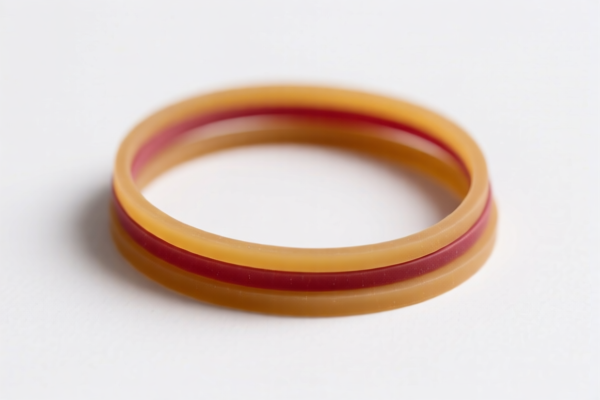
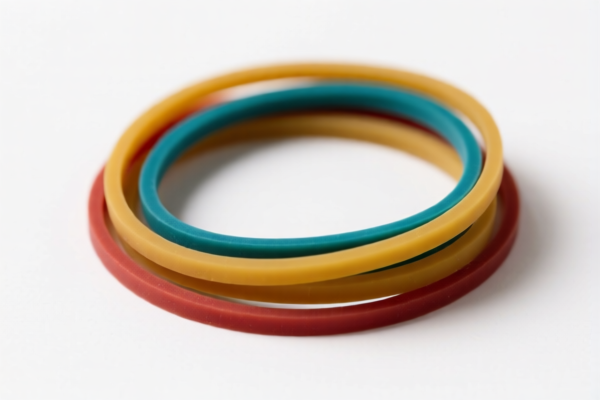
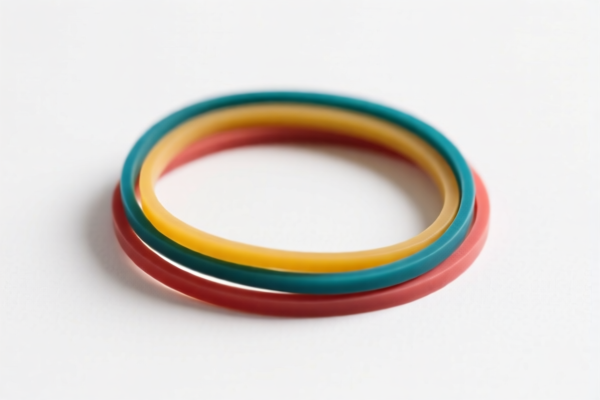
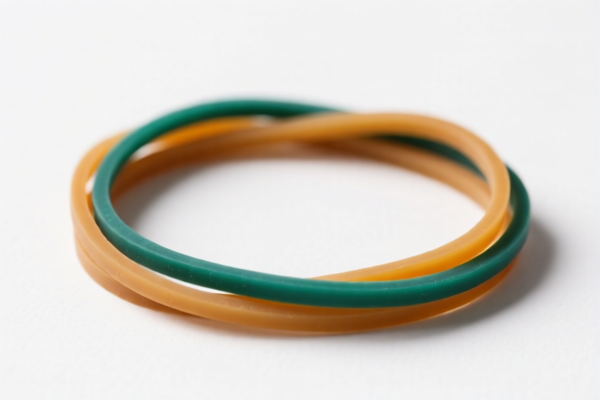
AI Analysis
🏷️ Plastic Rubber Bands (文具/办公用塑料弹性带)
🌐 HS Code Reference & Customs Clearance Guide | 2026 Latest Tariff Analysis | Professional Clearance Strategy
📌 I. Product Definition & Classification: What Exactly Is a "Plastic Rubber Band"?
Plastic rubber bands are elastic fastening devices made entirely of polymer materials. Unlike traditional latex rubber bands, these are 100% plastic-based, offering greater durability, resistance to tearing, and consistent tension.
In international trade, their classification hinges on two critical factors: 1. Material Composition: Must be fully plastic. 2. Usage/Intended Purpose: * Office/Stationery Use: Explicitly designed for bundling papers, documents, or office supplies. * General/Industrial Use: General-purpose elastic bands not specifically designated as stationery.
⚠️ Key Distinction:
- If the product is marketed as "Stationery" (文具) or used for document bundling → It falls under 3926.90.10.00.
- If it is a generic plastic elastic band without specific stationery designation → It falls under 3926.90.99.05.
📦 II. HS Code Classification Details (2026 Latest Tariff Authority Comparison)
| HS Code | Product Description | Applicable Scenario | Tax Rate (Total) |
|---|---|---|---|
3926.90.10.00 |
Plastic Rubber Bands (Stationery Category) | Office supplies, document bundlers, school stationery kits | 20.9% |
3926.90.99.05 |
Plastic Rubber Bands (General Elastic Bands) | General industrial, packaging, or non-stationery elastic bands | 22.8% |
🔍 Critical Note:
- Both codes fall under Chapter 39 (Plastics and Articles Thereof), specifically 3926 (Other articles of plastics).
- The difference lies in the sub-heading:
- 10.00 is reserved for stationery items.
- 99.05 is a "Other" category for general plastic elastic bands.
- Do not mix declarations: Mislabeling a stationery band as a general band (or vice versa) can lead to customs delays or penalties.
💰 III. 2026 Latest Tariff Rate Breakdown (Including Surtaxes & Policy Add-ons)
✅ Applicable Country: United States (US)
✅ Origin: China (CN)
✅ Effective Date: Post-2025 (Current Trade Environment)
🎯 1. 3926.90.10.00 — Plastic Rubber Bands (Stationery)
| Item | Detail |
|---|---|
| Base Tariff | 3.4% (Ad Valorem) |
| Section 301 Surtax | +7.5% |
| 122 Clause Tariff | +10% (Specific to certain plastic articles from China) |
| Total Tariff Rate | 20.9% |
| Tax Calculation | CIF Value × 20.9% |
| De Minimis Eligibility | ❌ Not Eligible (Due to 301 & 122 surtaxes, packages below $800 are generally taxed unless exempted under specific humanitarian/educational rules, which rarely apply to commercial stationery) |
| Legal Basis Path | USITC:3926.90.10.00 → Section 301:7.5% → 122 Clause:10% |
📌 Explanation:
- Base Rate 3.4%: Standard Most Favored Nation (MFN) rate for other plastic articles.
- Section 301 (+7.5%): Applied to goods from China under U.S. Trade Law Section 301.
- 122 Clause (+10%): A specific punitive tariff provision targeting certain Chinese plastic imports.
- Total 20.9%: This is the final landed cost rate for stationery-grade plastic rubber bands from China.
🎯 2. 3926.90.99.05 — Plastic Rubber Bands (General/Non-Stationery)
| Item | Detail |
|---|---|
| Base Tariff | 5.3% (Ad Valorem) |
| Section 301 Surtax | +7.5% |
| 122 Clause Tariff | +10% |
| Total Tariff Rate | 22.8% |
| Tax Calculation | CIF Value × 22.8% |
| De Minimis Eligibility | ❌ Not Eligible |
| Legal Basis Path | USITC:3926.90.99.05 → Section 301:7.5% → 122 Clause:10% |
📌 Explanation:
- Base Rate 5.3%: Slightly higher base rate than stationery items.
- Same Surtaxes: Section 301 (7.5%) and 122 Clause (10%) apply equally.
- Total 22.8%: Higher than stationery classification.
- Strategic Insight: If your product can be classified as stationery (e.g., packaged for offices, marketed to schools), 3926.90.10.00 is preferable due to the 1.9% tariff savings.
🛠️ IV. Customs Clearance Practical Advice (Battle-Proven Tips)
✅ 1. Documentation Checklist (Non-Negotiable)
| Document | Required? | Description |
|---|---|---|
| ✅ Product Specification Sheet | ✔️ | Must clearly state: 100% Plastic Material, Elastic Band Form, Intended Use (Stationery vs. General) |
| ✅ Commercial Invoice | ✔️ | Must match HS Code exactly. Avoid vague terms like "Rubber"; use "Plastic Elastic Band" |
| ✅ Packing List | ✔️ | Include net/gross weight, quantity, and dimensions |
| ✅ Labeling/Photos | ✔️ | Show packaging indicating office/stationery use (if claiming 3926.90.10.00) |
| ✅ Certificate of Origin | ✔️ | Confirm China Origin to apply correct 301/122 rates |
✅ 2. Declaration Strategy (Key Mantra)
🔥 "Stationery Gets Lower Rate, General Pays More! Be Specific!"
| Scenario | Correct HS Code | Risk if Incorrect |
|---|---|---|
| Office/School Bundlers | 3926.90.10.00 (20.9%) |
Misclassified as General → 22.8% (Overpayment) |
| Industrial/Packaging Bands | 3926.90.99.05 (22.8%) |
Misclassified as Stationery → Customs Audit/Rejection |
| Mixed Bundle (Office + Industrial) | Split Declaration | Combined → Customs Detention |
⚠️ Warning:
- If you declare as Stationery (3926.90.10.00) but the product is clearly for industrial packaging (e.g., heavy-duty, no office branding), customs may reclassify it to3926.90.99.05and demand the higher rate + penalties.
- Recommendation: If in doubt, provide marketing materials showing office/stationery context to support the 20.9% rate.
✅ 3. Special Cases & Mitigation
| Situation | Recommendation |
|---|---|
| Plastic Band with Rubber Core? | ❌ Not Eligible for these HS Codes. If any rubber component exists, it may fall under Chapter 40 (Rubber), changing the tariff structure entirely. |
| Packaged as Gift Sets? | Ensure the primary function is stationery. If it's a novelty item with no practical office use, it may still be scrutinized. |
| Origin: Vietnam/Malaysia? | ✅ Apply IEEPA Exemption: If sourced from Vietnam, Malaysia, Thailand, or Mexico, you may avoid 122 Clause and Section 301 surtaxes, reducing rates to 0-5%. |
🌍 V. Global Market Comparison (2026)
| Country/Region | Recommended HS Code | Tariff (China Origin) | Notes |
|---|---|---|---|
| 🇺🇸 USA | 3926.90.10.00 / 3926.90.99.05 |
20.9% / 22.8% | High due to 301 + 122 Clause |
| 🇨🇳 China | 3926.90.10.00 |
5.3% | Lower domestic tax |
| 🇪🇺 EU | 3926.90.90 |
0-6.5% | No Section 301/122 equivalent |
| 🇬🇧 UK | 3926.90.90 |
0-6.5% | Post-Brexit tariffs apply |
| 🇨🇦 Canada | 3926.90.90 |
0-6.5% | USMCA may apply if from US |
📌 Conclusion:
- USA is the most challenging market due to punitive tariffs (301 + 122).
- Cost Saving Tip: If possible, source from non-China origins (e.g., Vietnam) to bypass the 17.5% surtax, reducing costs by ~17-18%.
📌 VI. Common Mistakes & Pitfalls (Lessons Learned)
❌ Mistake 1: Using "Rubber Band" in Description Without Specifying "Plastic"
👉 Result: Customs may classify under Chapter 40 (Rubber), triggering different (potentially higher) tariffs or anti-dumping duties.
✅ Fix: Always use "Plastic Elastic Band" or "Synthetic Rubber Band (100% Plastic)".
❌ Mistake 2: Declaring Generic Bands as Stationery to Save 1.9%
👉 Result: If customs inspect and find industrial-grade bands, they will demand the 22.8% rate + back taxes + fines.
✅ Fix: Only use 3926.90.10.00 if the product is genuinely intended for office/stationery use.
❌ Mistake 3: Ignoring the 122 Clause
👉 Result: Many importers forget that 122 Clause (+10%) applies to plastic articles from China.
✅ Fix: Always calculate Total Tax = Base + 301 + 122. Do not assume only 301 applies.
🎯 VII. Conclusion: Smart Classification, Smarter Savings!
🎯 Remember the Mantra:
🔹 "Stationery = 20.9%, General = 22.8%. Difference is 1.9%, but Context is Key!"
🔹 "Plastic, Not Rubber! 100% Polymer!"
🔹 "China Origin? Expect 17.5% Surtax (301+122)!"
📌 Pro Tip:
If your volume is high, consider shifting supply chain to Vietnam or Malaysia to eliminate the 17.5% surtax, reducing total tax to ~0-5%. This can save thousands of dollars per container.
📣 Immediate Action:
📞 Contact a Customs Broker: Verify HS Code with product photos.
📄 Mark Up Invoices: Clearly state "Plastic Material, Stationery Use" (if applicable).
🚀 Optimize Tariff: Choose3926.90.10.00if eligible to save 1.9%.
✨ Professional Clearance Starts with Accurate Classification!
💼 Every Percentage Point Counts in Global Trade!
Customer Reviews
About HS Code Classification
The Harmonized System (HS) is an internationally standardized nomenclature developed by the World Customs Organization (WCO) to classify traded products. Over 200 countries use the HS system as the basis for customs tariffs, trade statistics, and import/export regulations.
Each HS code follows a hierarchical structure:
- Chapter (2 digits) — Broad category of goods (e.g., Chapter 84: Machinery and Mechanical Appliances)
- Heading (4 digits) — More specific grouping within the chapter
- Subheading (6 digits) — Internationally standardized breakdown, used by all WCO member countries
- National subdivisions (8-10 digits) — Country-specific extensions for further classification, such as US HTSUS 10-digit codes
Correct HS code classification is essential for smooth customs clearance, accurate duty payment, and compliance with trade regulations. Misclassification can lead to customs delays, overpayment of duties, or penalties.
When importing from CN to US, the applicable tariff rates may include:
- Most-Favored-Nation (MFN) rate — The standard duty rate applied to WTO members
- General rate — Applied to countries without trade agreements
- Trade remedy duties — Additional tariffs such as Section 301 (anti-dumping), Section 232 (national security), or countervailing duties
The information provided on this page is for reference purposes only. For official classification, please consult with your local customs authority or a licensed customs broker.