Plastic Sheet (HS 3920632000)
CN → US| HS Code | Tariff Rate | Origin | Destination | Doc |
|---|---|---|---|---|
| 3921905050 | 39.8% | CN | US | Official Doc |
| 3926909989 | 22.8% | CN | US | Official Doc |
| 3920594000 | 35.0% | CN | US | Official Doc |
| 3920598000 | 41.5% | CN | US | Official Doc |
| 3921190090 | 41.5% | CN | US | Official Doc |
Product Images
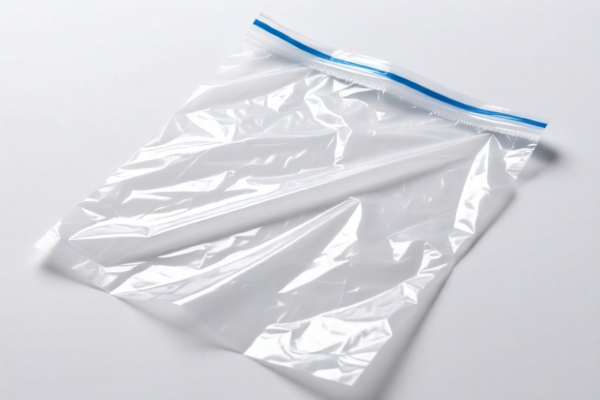
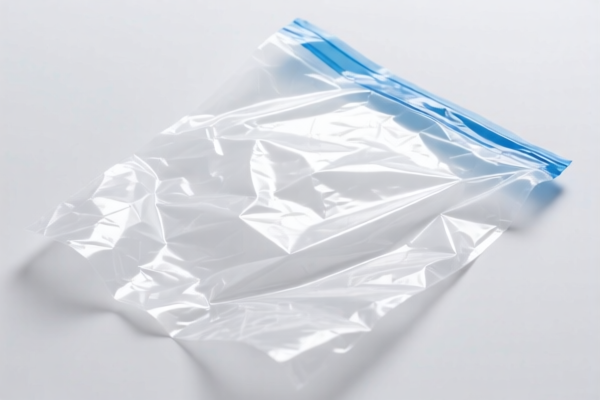
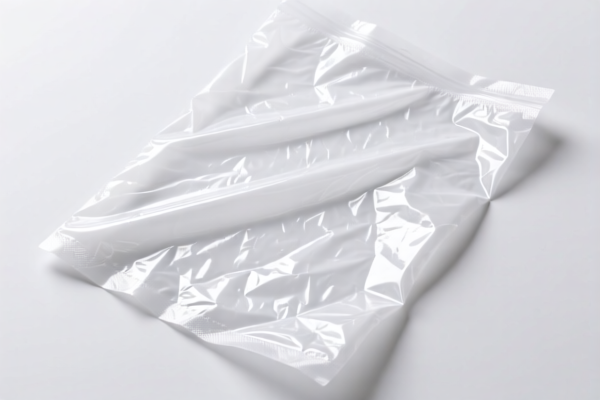
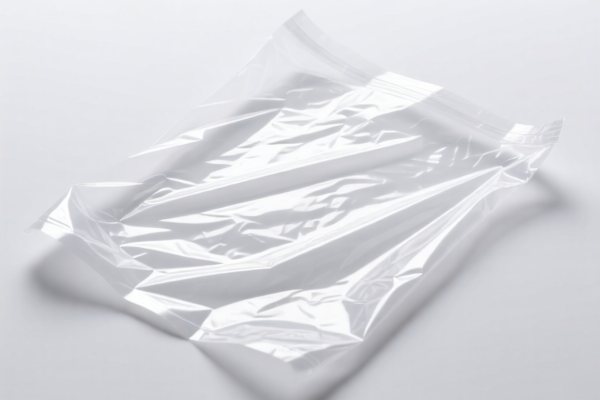
AI Analysis
🛡️ Plastic Sheets: Navigating the Complex US Tariff Landscape (HS 3920.63.20.00 vs. Alternatives)
🌐 HS Code Reference & Clearance Guide | 2026 Latest Tariff Analysis | Professional Customs Strategy
📌 I. Product Definition & Classification: What Exactly is a "Plastic Sheet"?
Plastic sheets are versatile industrial materials used in packaging, construction, electronics, and automotive applications. However, classification under the Harmonized Tariff Schedule (HTS) depends heavily on the specific polymer type and product form.
The user input specifies HS 3920.63.20.00 (Polyethylene Sheets), but the provided data (<DATA>) contains four distinct HS codes related to plastic plates, sheets, films, and other shapes (Chapter 39). To ensure accurate customs clearance and cost calculation, we must map the product to the most appropriate code from the available dataset, as misclassification can lead to severe penalties.
⚠️ Key Distinction:
- Polyethylene (PE): Often classified under3920or3921.
- Acrylic (PMMA): Specifically classified under3920.59.
- General Plastic Sheets/Films: May fall under3921.90or3926.90depending on specific use and form.
- Unspecified Plastic Articles: Falls under3926.90.
📦 II. HS Code Classification Details (Based on Provided Data)
The following HS codes are derived strictly from the provided <DATA>. Note that HS 3920.63.20.00 was not present in the provided JSON; therefore, the closest relevant alternatives from the data are analyzed below.
| HS Code | Product Description | Applicability | Material/Form Check |
|---|---|---|---|
3920.59.40.00 |
Acrylic Polymer Plastic Sheets | Acrylic/PMMA sheets without lead content | ✅ No lead mentioned, fits "other" category |
3920.59.80.00 |
Acrylic Polymer Plastic Plates/Sheets | Acrylic sheets/plates, fits classification | ✅ No material conflict |
3921.19.00.90 |
Plastic Plates, Sheets, Film, Foil, Strips | Highly consistent with plastic sheet form | ✅ Material & form match "other" category |
3921.90.50.50 |
Plastic Sheets (General) | Fits "plates, sheets, films, foil, strips" range | ✅ No material conflict |
3926.90.99.89 |
Plastic Articles (Unspecified) | Unclassified specific plastic products | ✅ No material conflict |
🔍 Critical Note:
- If your product is Polyethylene (PE) specifically, it typically falls under3920.63or3920.62. However, since this HS code is not in the<DATA>, you must verify if it can be classified under3921.19.00.90(Plastic sheets/films) or3921.90.50.50(Plastic sheets) based on the specific polymer and thickness.
- Acrylic products must use3920.59.40.00or3920.59.80.00.
- Unclassified/General items may use3926.90.99.89.
💰 III. 2026 Latest Tariff Rate Breakdown (Including Surcharges & Policy Add-ons)
✅ Applicable Country: United States (US)
✅ Origin: China (CN)
✅ Effective Date: From November 10, 2025 (including subsequent imports)
🎯 1. 3920.59.40.00 – Acrylic Polymer Plastic Sheets (No Lead)
| Item | Content |
|---|---|
| Base Tariff | 0.0% (ad valorem) |
| Section 301 Surcharge | +25.0% |
| Section 122 Surcharge | +10.0% |
| Total Tax Rate | 35.0% |
| Tax Calculation | CIF Value × 35% |
| De Minimis Eligibility | ❌ Not Eligible (deny_de_minimis) |
| Legal Basis Path | USITC:3920.59.40.00 → Section 301: 25% → Section 122: 10% |
📌 Explanation:
- Even though the base tariff is 0%, the combined surcharges bring the total to 35%.
- This applies to acrylic sheets that do not contain lead.
🎯 2. 3920.59.80.00 – Acrylic Polymer Plastic Plates/Sheets
| Item | Content |
|---|---|
| Base Tariff | 6.5% |
| Section 301 Surcharge | +25.0% |
| Section 122 Surcharge | +10.0% |
| Total Tax Rate | 41.5% |
| Tax Calculation | CIF Value × 41.5% |
| De Minimis Eligibility | ❌ Not Eligible |
| Legal Basis Path | USITC:3920.59.80.00 → Section 301: 25% → Section 122: 10% |
📌 Explanation:
- Higher base tariff (6.5%) results in a higher total burden.
- Suitable for acrylic plates/sheets that do not fit the "no lead" or other specific subcategories.
🎯 3. 3921.19.00.90 – Plastic Plates, Sheets, Film, Foil, Strips
| Item | Content |
|---|---|
| Base Tariff | 6.5% |
| Section 301 Surcharge | +25.0% |
| Section 122 Surcharge | +10.0% |
| Total Tax Rate | 41.5% |
| Tax Calculation | CIF Value × 41.5% |
| De Minimis Eligibility | ❌ Not Eligible |
| Legal Basis Path | USITC:3921.19.00.90 → Section 301: 25% → Section 122: 10% |
📌 Explanation:
- This is a broad category for plastic sheets/films.
- If your "Plastic Sheet" is polyethylene or another plastic not specified in3920.59, this is a likely candidate.
🎯 4. 3921.90.50.50 – Plastic Sheets (General)
| Item | Content |
|---|---|
| Base Tariff | 4.8% |
| Section 301 Surcharge | +25.0% |
| Section 122 Surcharge | +10.0% |
| Total Tax Rate | 39.8% |
| Tax Calculation | CIF Value × 39.8% |
| De Minimis Eligibility | ❌ Not Eligible |
| Legal Basis Path | USITC:3921.90.50.50 → Section 301: 25% → Section 122: 10% |
📌 Explanation:
- A middle-ground option for general plastic sheets that fit the "plates, sheets, films" description.
🎯 5. 3926.90.99.89 – Plastic Articles (Unclassified)
| Item | Content |
|---|---|
| Base Tariff | 5.3% |
| Section 301 Surcharge | +7.5% |
| Section 122 Surcharge | +10.0% |
| Total Tax Rate | 22.8% |
| Tax Calculation | CIF Value × 22.8% |
| De Minimis Eligibility | ❌ Not Eligible |
| Legal Basis Path | USITC:3926.90.99.89 → Section 301: 7.5% → Section 122: 10% |
📌 Explanation:
- Lowest Total Tax (22.8%) among the options.
- Applies to "other" plastic articles not specifically classified elsewhere.
- ⚠️ Risk: Misclassification risk is higher here. Only use if the product truly doesn't fit other specific categories.
🛠️ IV. Practical Clearance Advice (实战避坑指南)
✅ 1. Essential Documentation Checklist
| Document | Required | Explanation |
|---|---|---|
| ✅ Product Specification Sheet | ✔️ | Must specify polymer type (PE, PP, Acrylic, etc.), thickness, width, and application. |
| ✅ Material Safety Data Sheet (MSDS) | ✔️ | To confirm no lead content (for 3920.59.40.00). |
| ✅ Product Photos | ✔️ | Clear images of the sheet, labeling, and packaging. |
| ✅ Commercial Invoice | ✔️ | Must clearly state "Plastic Sheet" and correct HS Code. |
| ✅ Packing List | ✔️ | Detail weight, dimensions, and quantity. |
| ✅ Origin Certificate (CO) | ✔️ | If claiming exemptions or preferential treatment (not applicable for US-China here). |
✅ 2. Declaration Tips (Key Mnemonics)
🔥 "Material First, Form Second, Tax Third!"
| Scenario | Correct Declaration | Wrong Practice |
|---|---|---|
| Acrylic Sheet (No Lead) | 3920.59.40.00 (35%) |
Using 3920.59.80.00 (41.5%) → Overpaying 6.5% |
| General Plastic Sheet (PE/PP) | 3921.90.50.50 (39.8%) or 3921.19.00.90 (41.5%) |
Using 3926.90.99.89 (22.8%) → High Risk of Audit/Penalty |
| Unclassified Plastic Item | 3926.90.99.89 (22.8%) |
Misclassifying as "Plastic Sheet" under 3920 → Higher Tax & Delay |
✅ 3. Special Cases
| Case | Handling Advice |
|---|---|
| OEM Custom Sheets | Provide client orders + design specs to justify specific HS code. |
| Composite Materials | If the sheet has a metal layer or other materials, it may not belong in Chapter 39. Check Chapter 39 exclusions. |
| Reinforced Sheets | If reinforced with glass fibers, it may fall under a different heading. Verify with customs broker. |
🌍 V. Global Market Comparison (2026 Update)
| Country/Region | Recommended HS Code | Tariff Rate | Certification | Notes |
|---|---|---|---|---|
| 🇺🇸 USA | Varies (see above) | 22.8% – 41.5% | None specific | High Surcharges (301+122) apply to China origin. |
| 🇨🇳 China | 3920/3921 | 5% – 6.5% | CCC (if applicable) | No Section 301/122 surcharges. |
| 🇪🇺 EU | 3920/3921 | 0% – 6.5% | CE, REACH | No major surcharges for China origin. |
| 🇯🇵 Japan | 3920/3921 | 0% – 5.5% | PSE (if applicable) | Low tariffs, stable policy. |
📌 Conclusion:
- The US market is the most challenging due to combined surcharges (Section 301 + Section 122).
- China, EU, and Japan offer significantly lower tariff burdens.
- Cost Optimization: Consider sourcing from or routing through non-Chinese origins if possible to avoid US surcharges (subject to rules of origin).
📌 VI. Common Mistakes & Pitfalls (Lessons Learned)
❌ Mistake 1: Using 3926.90.99.89 (22.8%) for a standard plastic sheet without justification.
👉 Consequence: Customs audit, back taxes, penalties.
✅ Fix: Ensure the product truly doesn't fit more specific headings like 3920 or 3921.
❌ Mistake 2: Ignoring "Lead Content" for Acrylic Sheets.
👉 Consequence: Misclassification between 3920.59.40.00 (35%) and 3920.59.80.00 (41.5%).
✅ Fix: Provide MSDS confirming no lead to claim the lower base tariff (0% vs 6.5%).
❌ Mistake 3: Assuming "Plastic Sheet" is one HS Code.
👉 Consequence: Incorrect classification leading to overpayment or underpayment.
✅ Fix: Always specify Polymer Type (PE, PP, Acrylic, etc.) and Form (Sheet, Film, Plate).
🎯 VII. Conclusion: Professional Declaration, Save Time & Money
🎯 Remember the Mnemonic:
🔹 "Material Matters, Form Follows, Tax Adds Up!"
🔹 "Acrylic No Lead = 35%, General Sheet = 39.8%, Unclassified = 22.8% (Risky)!"
🔹 "HS Code Determines Fate, 20% Difference Can Make or Break Your Margin!"
📌 Pro Tip:
If your plastic sheets are originating from Vietnam, Mexico, Thailand, or Malaysia, you may avoid US Section 301 and 122 surcharges, reducing the tariff to just the base rate (0% – 6.5%).
Recommend applying for an Advance Ruling from US Customs to confirm the correct HS code before shipment.
📣 Immediate Action:
📞 Contact a Professional Customs Broker + Provide Product Specs + Apply for HS Code Advance Ruling
🚀 Ensure Smooth Clearance, Efficient Export, and Maximized Profit!
✨ Professional Clearance Starts with Accurate Classification!
💼 Every Penny of Cost Deserves Precise Calculation!
Customer Reviews
About HS Code Classification
The Harmonized System (HS) is an internationally standardized nomenclature developed by the World Customs Organization (WCO) to classify traded products. Over 200 countries use the HS system as the basis for customs tariffs, trade statistics, and import/export regulations.
Each HS code follows a hierarchical structure:
- Chapter (2 digits) — Broad category of goods (e.g., Chapter 84: Machinery and Mechanical Appliances)
- Heading (4 digits) — More specific grouping within the chapter
- Subheading (6 digits) — Internationally standardized breakdown, used by all WCO member countries
- National subdivisions (8-10 digits) — Country-specific extensions for further classification, such as US HTSUS 10-digit codes
Correct HS code classification is essential for smooth customs clearance, accurate duty payment, and compliance with trade regulations. Misclassification can lead to customs delays, overpayment of duties, or penalties.
When importing from CN to US, the applicable tariff rates may include:
- Most-Favored-Nation (MFN) rate — The standard duty rate applied to WTO members
- General rate — Applied to countries without trade agreements
- Trade remedy duties — Additional tariffs such as Section 301 (anti-dumping), Section 232 (national security), or countervailing duties
The information provided on this page is for reference purposes only. For official classification, please consult with your local customs authority or a licensed customs broker.