Plastic Sheet (HS 3921901950)
CN → US| HS Code | Tariff Rate | Origin | Destination | Doc |
|---|---|---|---|---|
| 3919905060 | 40.8% | CN | US | Official Doc |
| 3921131100 | 39.2% | CN | US | Official Doc |
| 3919102055 | 40.8% | CN | US | Official Doc |
| 3921131500 | 41.5% | CN | US | Official Doc |
| 3921901950 | 40.3% | CN | US | Official Doc |
Product Images
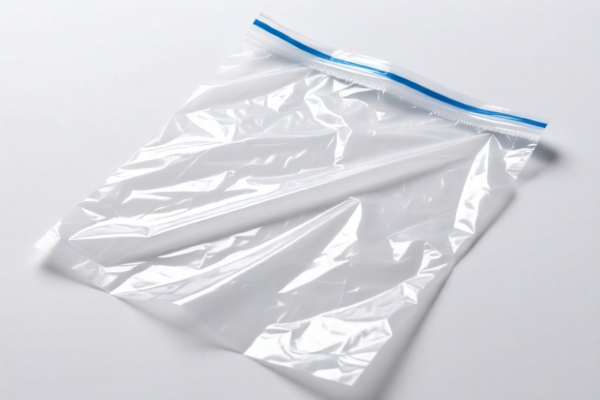
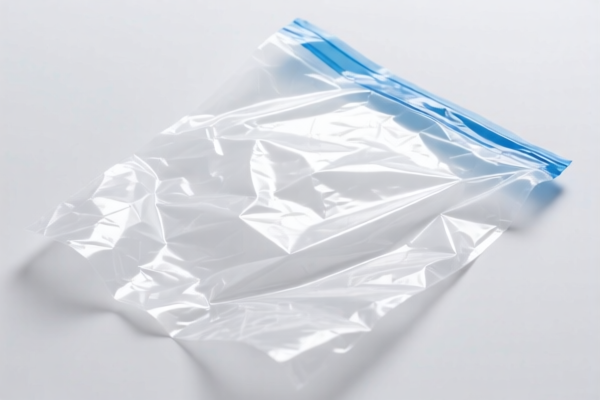
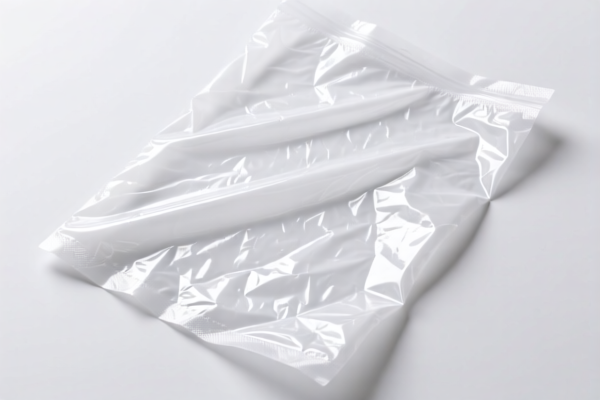
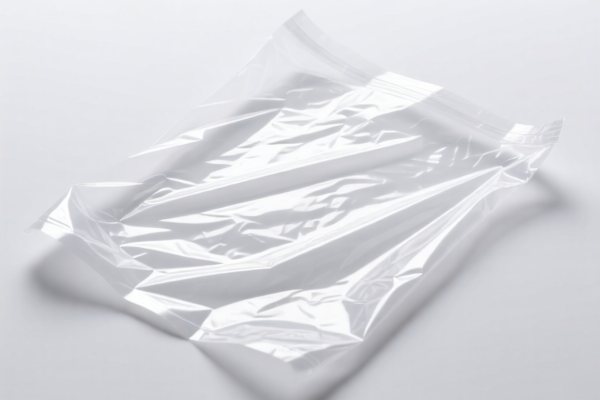
AI Analysis
🧊 Plastic Sheets & Films (HS Code Analysis & US Customs Strategy)
🌐 HS Code Reference & Clearance Guide | 2026 Latest Tariff Analysis | Professional Clearance Strategy
📌 I. Product Definition: What are "Plastic Sheets"?
"Plastic Sheets" (specifically referencing HS 3921.90.19.50 and related codes) are rigid or semi-rigid flat products made of plastics. In international trade, these materials are critical for packaging, construction, signage, and industrial lining.
Key Distinction: * Sheets/Films (3921): Rigid or semi-rigid plates, sheets, and films (not self-adhesive). * Self-Adhesive Plates/Films (3919): Sheets with backing, whether or not in rolls (stickers, tapes). * Fibers/Reinforced (3920 vs 3921): 3921 is for composite or laminated plastic products, or plastics not elsewhere specified.
⚠️ Critical Classification Point:
- If the product is self-adhesive (has glue/tape backing) → Likely 3919 (e.g.,3919.10,3919.90).
- If the product is rigid/semi-rigid sheets (PVC, PE, PP, PET) without adhesive → Likely 3921 (e.g.,3921.13).
- Material Conflict: If the sheet contains significant fiber reinforcement or specific resin blends, check if it fits3921.13(Plastic with other plastics) vs.3921.90(Other plastics).
📦 II. HS Code Classification Details (Based on Provided Data)
| HS Code | Product Description | Summary from Data | Tax Rate (Total) |
|---|---|---|---|
3919.90.50.60 |
Self-adhesive plastic sheets/films (Other) | "Material is plastic, form is sheet/film, fully consistent with classification explanation." | 40.8% |
3921.13.11.00 |
Plastic sheets/films, with surface layer of plastic | "Product name explicitly includes material (Plastic) and form (Sheets and Film), fully compliant." | 39.2% |
3919.10.20.55 |
Self-adhesive plastic sheets/films, in rolls <20cm | "Material is plastic, form is sheet/film, fits 3919 chapter characteristics for flat plastic shapes." | 40.8% |
3921.13.15.00 |
Plastic sheets/films, with surface layer of plastic (Other) | "Form matches (plates/sheets/films); Material matches (plastic). Highly consistent with plastic category despite unspecified fiber ratio." | 41.5% |
🔍 Key Observation:
The choice between 3919 (Self-adhesive) and 3921 (Non-adhesive Sheets) is the primary determinant of classification. Both are subject to high US tariffs due to Section 301 and IEEPA provisions.
💰 III. 2026 Latest Tariff Rate Breakdown (China-Origin Goods to US)
✅ Applicable Country: United States (US)
✅ Origin: China (CN)
✅ Effective Time: From November 10, 2025 onwards
🎯 1. HS Code 3919.90.50.60 – Self-Adhesive Plastic Sheets
| Item | Detail |
|---|---|
| Base Tariff | 5.8% (Ad valorem) |
| Section 301 (Add-on) | +25.0% |
| Section 122 (IEEPA Add-on) | +10.0% |
| Total Tax Rate | 40.8% |
| Calculation Base | CIF Value × 40.8% |
| De Minimis Exemption | ❌ Denied (deny_de_minimis) |
| Legal Path | USITC:3919.90.50.60 → FOOTNOTE:301 → IEEPA:9903.01.24 |
📌 Explanation:
- The 25% is the standard Section 301 tariff on Chinese plastic articles.
- The 10% is the additional IEEPA tariff imposed on Chinese products effective Nov 2025.
- Total 40.8% makes self-adhesive films extremely costly for low-margin goods.
🎯 2. HS Code 3921.13.11.00 – Plastic Sheets (Surface Layer Plastic)
| Item | Detail |
|---|---|
| Base Tariff | 4.2% (Ad valorem) |
| Section 301 (Add-on) | +25.0% |
| Section 122 (IEEPA Add-on) | +10.0% |
| Total Tax Rate | 39.2% |
| Calculation Base | CIF Value × 39.2% |
| De Minimis Exemption | ❌ Denied (deny_de_minimis) |
| Legal Path | USITC:3921.13.11.00 → FOOTNOTE:301 → IEEPA:9903.01.24 |
📌 Note:
- This code typically applies to non-self-adhesive rigid or semi-rigid sheets (e.g., PVC sheets, acrylic sheets).
- It offers a 1.6% lower total tariff than the self-adhesive variant (3919.90.50.60), but both are prohibitively high.
🎯 3. HS Code 3919.10.20.55 – Self-Adhesive Sheets (<20cm)
| Item | Detail |
|---|---|
| Base Tariff | 5.8% (Ad valorem) |
| Section 301 (Add-on) | +25.0% |
| Section 122 (IEEPA Add-on) | +10.0% |
| Total Tax Rate | 40.8% |
| Calculation Base | CIF Value × 40.8% |
| De Minimis Exemption | ❌ Denied (deny_de_minimis) |
📌 Explanation:
- Specific to narrow rolls (width ≤20cm). Often used for tapes or small stickers.
- Same high tariff structure as other self-adhesive plastics.
🎯 4. HS Code 3921.13.15.00 – Plastic Sheets (Other Surface Layer Plastic)
| Item | Detail |
|---|---|
| Base Tariff | 6.5% (Ad valorem) |
| Section 301 (Add-on) | +25.0% |
| Section 122 (IEEPA Add-on) | +10.0% |
| Total Tax Rate | 41.5% |
| Calculation Base | CIF Value × 41.5% |
| De Minimis Exemption | ❌ Denied (deny_de_minimis) |
| Legal Path | USITC:3921.13.15.00 → FOOTNOTE:301 → IEEPA:9903.01.24 |
📌 Explanation:
- This code has the highest base tariff (6.5%) among the options, leading to the highest total rate (41.5%).
- It may apply to more complex laminates or specific resin compositions not covered by3921.13.11.00.
🛠️ IV. Clearance Practical Advice (Avoid Pitfalls)
✅ 1. Documentation Checklist (Mandatory)
| Document | Required? | Notes |
|---|---|---|
| Product Specification Sheet | ✔️ | Must specify: Material (e.g., PVC, PE), Thickness, Width, Length, Adhesive Type (if any). |
| Composition Statement | ✔️ | Clearly state if the product is Self-Adhesive or Non-Adhesive. This is the #1 classifier. |
| Photos (Clear & Detailed) | ✔️ | Show roll/sheet structure, labels, and any adhesive backing. |
| Commercial Invoice | ✔️ | Description must match HS code definition (e.g., "Non-adhesive PVC Sheets" vs. "Self-Adhesive PVC Film"). |
| Packing List | ✔️ | Detail dimensions and weight per roll/sheet. |
✅ 2. Classification Strategy (Critical Rules)
🔥 Rule #1: Adhesive vs. Non-Adhesive
- If it sticks: Go to Chapter 3919 (Self-adhesive).
- If it doesn’t stick: Go to Chapter 3921 (Plastic Sheets/Films).
- Mistake: Declaring non-adhesive sheets as "stickers" to avoid 3921? → Customs will reject based on function.🔥 Rule #2: Width Matters
- Rolls <20cm may fall under3919.10(narrow self-adhesive).
- Rolls >20cm fall under3919.90(other self-adhesive) or3921.13(non-adhesive sheets).🔥 Rule #3: Material Consistency
- The summary states: "Material is plastic... fully consistent."
- Ensure the product is 100% plastic or primarily plastic. If it contains fabric reinforcement (e.g., fiberglass-reinforced plastic), it might be classified elsewhere (e.g., 3920), but the provided data assumes plastic classification is valid.
✅ 3. Special Circumstances
| Scenario | Recommendation |
|---|---|
| Low-Value Shipment (< $800) | ❌ No De Minimis! All codes listed have deny_de_minimis. You must pay full tariffs + duties + MPF/HMF. |
| Sample Shipments | ❌ No exemption. Treat as commercial cargo. |
| Origin Routing | If possible, source from Vietnam, Mexico, or Malaysia to avoid Section 301/IEEPA tariffs (0–5% rates). |
| Pre-Ruling | 📌 Highly Recommended. Request a US Customs Binding Tariff Information (BTI) ruling before shipping to confirm 3919 vs 3921. |
🌍 V. Global Market Comparison (2026)
| Market | HS Code Trend | Approx. Total Tariff (China Origin) | Notes |
|---|---|---|---|
| 🇺🇸 USA | 3919 / 3921 |
39.2% – 41.5% | High Section 301 + IEEPA taxes. No de minimis. |
| 🇨🇳 China | 3921 / 3919 |
~5% – 10% | Standard import duties. |
| 🇪🇺 EU | 3921 / 3919 |
0% – 6.5% | No Section 301 equivalents. May require EPR registration. |
| 🇬🇧 UK | 3921 / 3919 |
0% – 6.5% | Post-Brexit tariffs similar to EU. |
| 🇯🇵 Japan | 3921 / 3919 |
0% – 5% | Generally low tariffs for plastic sheets. |
📌 Conclusion:
- The US is the most expensive market for plastic sheets due to political tariffs.
- Cost Saving Strategy: Consider transshipment (legal rules apply) or sourcing from non-China origins to reduce landed cost by ~40%.
📌 VI. Common Errors & Pitfalls (Lessons Learned)
❌ Error 1: Declaring "Plastic Sheet" without specifying adhesive status.
👉 Result: Customs assigns highest duty rate (e.g., 41.5% instead of 39.2%) or demands additional inspection.
❌ Error 2: Assuming de minimis ($800) applies.
👉 Result: Cargo held at border, fines issued, and full 40%+ tax charged. Plastic sheets are explicitly excluded.
❌ Error 3: Misidentifying Composite Materials.
👉 Result: If the sheet is PVC on a fabric backing, it might be 3921 (composite), not 3919 (self-adhesive). Incorrect declaration leads to audits.
❌ Error 4: Ignoring Section 122 (IEEPA).
👉 Result: Budgeting only for 25% Section 301 and forgetting the extra 10% leads to unexpected costs of 40.8% total.
✅ Correct Action:
"Non-Adhesive PVC Sheet, 2mm thick, 120cm wide, roll, for industrial lining. Material: 100% PVC. No adhesive. Origin: China."
→ Target HS: 3921.13.11.00 (39.2% Total)
🎯 VII. Conclusion: Precision in Classification Saves Money
🎯 Key Takeaways:
🔹 "Adhesive = 3919 (40.8%) | Non-Adhesive = 3921 (39.2%-41.5%)"
🔹 "No De Minimis! Every shipment pays full tax."
🔹 "Document composition clearly to avoid 25%+10% surprises."
📌 Tip:
For high-volume imports, apply for an Advance Ruling from US Customs. Even a $200 ruling fee can save thousands in misclassification penalties and incorrect duty payments.
📣 Immediate Action Required:
📞 Contact Your Customs Broker: Confirm if your plastic sheets are adhesive or non-adhesive.
📊 Calculate Landed Cost: Include ~40% for US duties.
🚀 Explore Alternatives: Consider suppliers in Vietnam/Mexico to bypass US tariffs.
✨ Professional Clearance Starts with Accurate HS Codes!
💼 Your Profit Margin Depends on Precision!
Customer Reviews
About HS Code Classification
The Harmonized System (HS) is an internationally standardized nomenclature developed by the World Customs Organization (WCO) to classify traded products. Over 200 countries use the HS system as the basis for customs tariffs, trade statistics, and import/export regulations.
Each HS code follows a hierarchical structure:
- Chapter (2 digits) — Broad category of goods (e.g., Chapter 84: Machinery and Mechanical Appliances)
- Heading (4 digits) — More specific grouping within the chapter
- Subheading (6 digits) — Internationally standardized breakdown, used by all WCO member countries
- National subdivisions (8-10 digits) — Country-specific extensions for further classification, such as US HTSUS 10-digit codes
Correct HS code classification is essential for smooth customs clearance, accurate duty payment, and compliance with trade regulations. Misclassification can lead to customs delays, overpayment of duties, or penalties.
When importing from CN to US, the applicable tariff rates may include:
- Most-Favored-Nation (MFN) rate — The standard duty rate applied to WTO members
- General rate — Applied to countries without trade agreements
- Trade remedy duties — Additional tariffs such as Section 301 (anti-dumping), Section 232 (national security), or countervailing duties
The information provided on this page is for reference purposes only. For official classification, please consult with your local customs authority or a licensed customs broker.