Plastic Sheet (HS 3921904090)
CN → US| HS Code | Tariff Rate | Origin | Destination | Doc |
|---|---|---|---|---|
| 3919905060 | 40.8% | CN | US | Official Doc |
| 3921131100 | 39.2% | CN | US | Official Doc |
| 3919102055 | 40.8% | CN | US | Official Doc |
| 3921131500 | 41.5% | CN | US | Official Doc |
| 3921190090 | 41.5% | CN | US | Official Doc |
| 3926909400 | 35.0% | CN | US | Official Doc |
Product Images
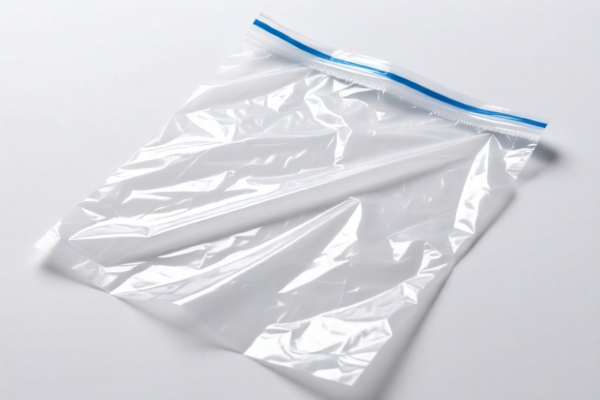
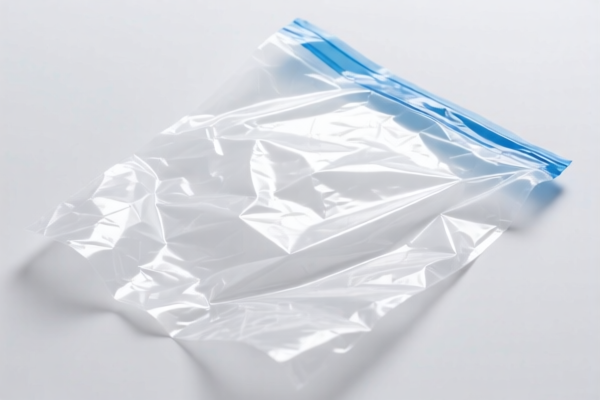
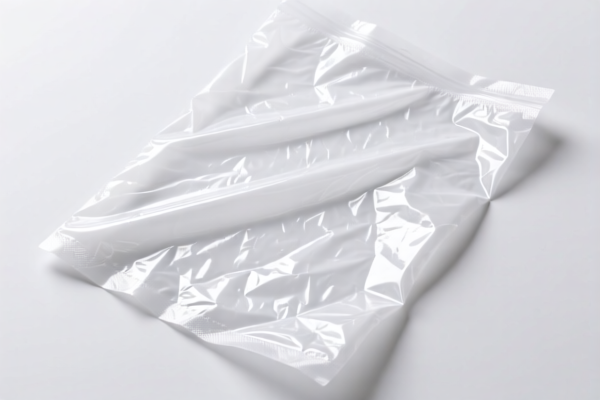
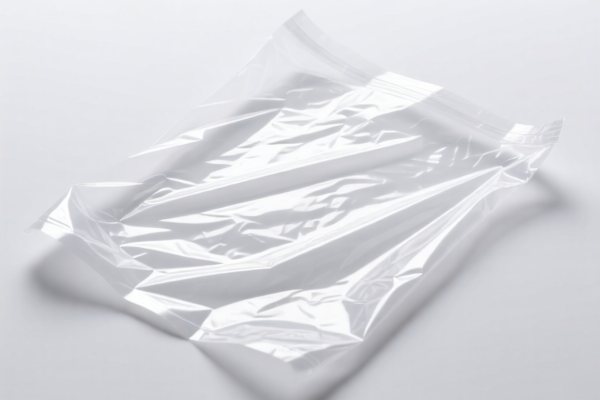
AI Analysis
🛡️ Plastic Sheet (Plastic Sheets & Films)
🌐 HS Code Reference & Customs Clearance Guide | 2026 Latest Tariff Analysis | Strategic Entry for US Market
📌 I. Product Definition & Classification: What is a "Plastic Sheet"?
In international trade, Plastic Sheets/Films are versatile materials used in packaging, construction, agriculture, and industrial applications. The key to correct classification lies in the material composition (Plastic) and the physical form (Sheets, Plates, Film) as defined in Chapter 39 of the HTSUS.
⚠️ Critical Distinction:
- 3919 Series: Self-adhesive plates, sheets, film, foil, strip, and other flat shapes, of plastics.
- 3921 Series: Other plates, sheets, film, foil and strip, of plastics (non-adhesive or specifically excluded from 3919).
- 3926 Series: Other articles of plastics and articles of other materials of headings 3901 to 3914 (e.g., finished plastic articles that are not just raw sheets).📌 Key Classification Logic:
- If the plastic sheet has an adhesive layer suitable for sticking without additional gluing → 3919
- If the plastic sheet is plain, laminated, or reinforced but NOT self-adhesive → 3921
- If the product is a specific finished good (like a plastic part) rather than a raw sheet/film → 3926
📦 II. HS Code Classification Details (Based on Provided Data)
| HS Code | Product Description | Classification Logic | Total Tax Rate |
|---|---|---|---|
| 3919.90.50.60 | Self-adhesive plastic sheets/films (Other) | Material: Plastic; Form: Sheets/Films. Matches classification explanation exactly. | 40.8% |
| 3921.13.11.00 | Plastic sheets/films, of polymers of ethylene | Name explicitly includes "Plastic" and "Sheets and Film". Perfect match for material and form. | 39.2% |
| 3919.10.20.55 | Self-adhesive plastic plates, sheets, film, etc. | Material: Plastic; Form: Flat shapes (sheets, films). Fits Chapter 39 characteristics. | 40.8% |
| 3921.13.15.00 | Other plastic sheets/plates/films (Ethylene polymers) | Form: Plates, Sheets, Films; Material: Plastic. High alignment with target code’s plastic category. | 41.5% |
| 3921.19.00.90 | Other plates, sheets, film, etc. of plastics | Product is a "plastic sheet," matching the "Plastic-made" material and "Sheet/Film" form requirements. | 41.5% |
| 3926.90.94.00 | Other plastic articles (Other) | Material: Plastic; Form: Thin sheets. Fits the description of plastic thin sheets without material conflict. | 35.0% |
🔍 Analysis:
- The data shows a cluster around 40.8% - 41.5% for self-adhesive (3919) and specific ethylene-based non-adhesive (3921.13) sheets.
- 3926.90.94.00 offers the lowest rate (35.0%) but requires the product to be classified as "Other articles" rather than raw sheets/films. This is a strategic loophole if the product can be argued as a finished article (e.g., pre-cut, labeled, or having specific functional shaping).
💰 III. 2026 Latest Tariff Rate Breakdown (Detailed Tax Clauses)
✅ Applicable Country: United States (US)
✅ Country of Origin: China (CN)
✅ Effective Date: From Nov 10, 2025 (for subsequent imports)
🎯 1. 3919.90.50.60 & 3919.10.20.55 — Self-Adhesive Plastic Sheets
(High Probability Classification for Adhesive Backed Plastics)
| Item | Details |
|---|---|
| Base Duty Rate | 5.8% (Ad Valorem) |
| Section 301 Additional Duty | +25.0% (USITC Footnote 9903.04.01 / 9903.04.02) |
| IEEPA Additional Duty | +10.0% (Targeting Chinese/HSR products, effective Nov 10, 2025) |
| Total Effective Rate | 40.8% |
| Tax Calculation | CIF Value × 40.8% |
| De Minimis Exemption | ❌ Not Eligible (deny_de_minimis applies) |
| Legal Basis Chain | USITC:3919.90.50.60 → FOOTNOTE:9903.04.01 → IEEPA:9903.01.25 |
📌 Explanation:
- Base 5.8%: Standard Most Favored Nation (MFN) rate for plastic self-adhesive articles.
- 25% Section 301: Retaliatory tariff on Chinese goods under US Trade Act Section 301.
- 10% IEEPA: New surcharge under International Emergency Economic Powers Act targeting specific Chinese imports.
- Total 40.8%: This is a very high cost. Importers must factor this into landed cost calculations.
🎯 2. 3921.13.11.00 — Plastic Sheets of Ethylene Polymers
(Non-Adhesive, Specific Polymer Type)
| Item | Details |
|---|---|
| Base Duty Rate | 4.2% |
| Section 301 Additional Duty | +25.0% |
| IEEPA Additional Duty | +10.0% |
| Total Effective Rate | 39.2% |
| Tax Calculation | CIF Value × 39.2% |
| De Minimis Exemption | ❌ Not Eligible |
| Legal Basis Chain | USITC:3921.13.11.00 → FOOTNOTE:9903.04.01 → IEEPA:9903.01.24 |
📌 Note:
- Slightly lower total rate than 3919 due to lower base rate (4.2% vs 5.8%).
- Applies specifically to polyethylene sheets. If your plastic is PVC, PP, or PS, this code may not apply.
🎯 3. 3921.13.15.00 & 3921.19.00.90 — Other Plastic Sheets
(Non-Adhesive, General or Other Polymers)
| Item | Details |
|---|---|
| Base Duty Rate | 6.5% |
| Section 301 Additional Duty | +25.0% |
| IEEPA Additional Duty | +10.0% |
| Total Effective Rate | 41.5% |
| Tax Calculation | CIF Value × 41.5% |
| De Minimis Exemption | ❌ Not Eligible |
| Legal Basis Chain | USITC:3921.13.15.00 / 3921.19.00.90 → FOOTNOTE:9903.04.01 → IEEPA:9903.01.24 |
📌 Analysis:
- Highest base rate (6.5%) among plastic sheets.
- Useful if the product is non-adhesive but does not fit into the specific ethylene polymer subheading.
🎯 4. 3926.90.94.00 — Other Plastic Articles
(Strategic Low-Rate Option)
| Item | Details |
|---|---|
| Base Duty Rate | 0.0% |
| Section 301 Additional Duty | +25.0% |
| IEEPA Additional Duty | +10.0% |
| Total Effective Rate | 35.0% |
| Tax Calculation | CIF Value × 35.0% |
| De Minimis Exemption | ❌ Not Eligible |
| Legal Basis Chain | USITC:3926.90.94.00 → FOOTNOTE:9903.04.01 → IEEPA:9903.01.24 |
📌 Strategic Insight:
- Lowest Total Rate: 35.0%.
- Risk: Customs may reclassify this as a "sheet" (3921/3919) if the product is essentially a raw sheet/film.
- Justification Needed: Must prove the item is an "article" (finished good) rather than a raw material. Examples: Pre-cut shapes, printed patterns, or specific functional forms.
🛠️ IV. Customs Clearance Practical Advice (Real-World Pitfall Guide)
✅ 1. Document Checklist (Mandatory)
| Document | Required | Description |
|---|---|---|
| ✅ Product Specification Sheet | ✔️ | Must detail: Material type (PE, PVC, PP, etc.), Thickness, Adhesive status, Dimensions. |
| ✅ Product Photos | ✔️ | Clear images showing the sheet/film, edges, and any adhesive backing. |
| ✅ Certificate of Origin (CO) | ✔️ | Essential for verifying Chinese origin to apply correct Section 301/IEEPA rates. |
| ✅ Commercial Invoice | ✔️ | Clearly state "Plastic Sheet" or "Plastic Film," NOT vague terms like "Plastic Material." |
| ✅ Packing List | ✔️ | Show gross/net weight, number of packages. |
| ✅ Third-Party Test Report | ✔️ | Optional but recommended to prove material composition (e.g., FTIR analysis). |
✅ 2. Declaration Tips (Key Mantra)
🔥 "Material First, Form Second, Adhesive Key, Finish vs. Raw!"
| Scenario | Correct Declaration | Wrong Action |
|---|---|---|
| Self-Adhesive Plastic Roll | 3919.90.50.60 (40.8%) | Declare as "Plastic Film" (3921) → Risk of reclassification & penalty |
| Plain PE Plastic Sheet | 3921.13.11.00 (39.2%) | Declare as "Plastic Part" (3926) → May be rejected if too raw |
| Pre-Cut Plastic Logo/Shape | 3926.90.94.00 (35.0%) | Declare as "Sheet" → Higher tax (40%+) |
| Laminated Plastic Sheet | 3921.19.00.90 (41.5%) | Declare as "Paper Product" → Wrong chapter entirely |
✅ 3. Special Situations
| Situation | Handling Advice |
|---|---|
| Mixed Materials | If the sheet has a non-plastic layer (e.g., metal foil), classification may shift to Chapter 76 or 85. Requires detailed lamination structure proof. |
| OEM Custom Sizes | If cut to specific dimensions for a customer, argue for 3926 to save 5-6% in tax, provided it’s not just a cut roll of raw film. |
| Printed Plastic Sheets | Printing doesn’t change classification from 3921/3919 unless it becomes a "picture/poster" (9611/4911). Generally still plastic. |
| Flexible vs. Rigid | "Film" is flexible (<0.15mm approx.); "Sheet/Plate" is more rigid. Customs may scrutinize thickness to differentiate 3921.13 from 3921.19. |
🌍 V. Global Market Comparison (2026 Latest)
| Country/Region | Recommended HS Code | Tariff (China Origin) | Certification | Note |
|---|---|---|---|---|
| 🇺🇸 USA | 3919.90.50.60 / 3921.13.11.00 |
39.2% - 41.5% | No special cert needed | High tax burden due to Section 301 + IEEPA |
| 🇨🇳 China | 3919.90 / 3921.13 |
5.8% - 6.5% | RoHS (for export back) | Low base duty, no additional tariffs |
| 🇪🇺 EU | 3920.10 / 3921.13 |
0% - 2% | CE (if applicable) | No Section 301 equivalent |
| 🇦🇺 Australia | 3921.13 |
5% | ACPRA | No additional surcharges |
| 🇯🇵 Japan | 3921.13 |
0% - 2.5% | PSE (if electrical) | Low tariffs, strict quality standards |
📌 Conclusion:
- USA is the most challenging market due to the ~40% total tariff.
- EU/Asia offer significant cost advantages.
- Strategy: If targeting the US, consider 3926.90.94.00 (35%) if the product can be legally argued as a finished "article" rather than a raw sheet.
📌 VI. Common Errors & Pitfalls (Blood Lessons)
❌ Error 1: Declaring "Plastic Sheet" as "Plastic Bag" (3923.20)
👉 Consequence: Wrong classification → Debt + Fine. Bags have different tax rates and usage restrictions.
❌ Error 2: Ignoring the Adhesive Layer
👉 Consequence: If adhesive exists, 3921 is wrong. Must use 3919. Misclassification leads to audits.
❌ Error 3: Using "Plastic Material" as Description
👉 Consequence: CBP (Customs) may request additional info, causing delays or detention.
❌ Error 4: Assuming De Minimis ($800) Applies
👉 Consequence: FAIL. Chinese plastic sheets are explicitly excluded from de minimis. All shipments, even small ones, are subject to full duties.
✅ Correct Practice:
"Polyethylene Plastic Film, Non-Adhesive, 0.1mm Thickness, Roll Form, Made in China"
OR
"Self-Adhesive Vinyl Sheet, For Graphic Applications, Made in China"
🎯 VII. Conclusion: Professional Declaration, Cost Control
🎯 Key Takeaways:
🔹 "Adhesive? → 3919. No Adhesive? → 3921. Finished Article? → 3926."
🔹 "Total Tax is ~40% in the US. Plan for high landed cost."
🔹 "De Minimis is OFF. Every shipment pays duty."
📌 Pro Tip:
If you are importing small quantities for sampling, consider using a bonded warehouse or FTZ (Free Trade Zone) to defer duties until sale.
For large volumes, consult a customs broker about HTSUS exceptions or exclusions (though Section 301 exclusions are rare now).
📣 Immediate Action:
📞 Contact a Licensed Customs Broker
📄 Prepare Product Specs & Photos
💡 Request an Advance Ruling (CBP Form 5511) to confirm HS Code before shipping!
✨ Professional clearance starts with precise classification!
💼 Every percentage point saved is pure profit!
Customer Reviews
About HS Code Classification
The Harmonized System (HS) is an internationally standardized nomenclature developed by the World Customs Organization (WCO) to classify traded products. Over 200 countries use the HS system as the basis for customs tariffs, trade statistics, and import/export regulations.
Each HS code follows a hierarchical structure:
- Chapter (2 digits) — Broad category of goods (e.g., Chapter 84: Machinery and Mechanical Appliances)
- Heading (4 digits) — More specific grouping within the chapter
- Subheading (6 digits) — Internationally standardized breakdown, used by all WCO member countries
- National subdivisions (8-10 digits) — Country-specific extensions for further classification, such as US HTSUS 10-digit codes
Correct HS code classification is essential for smooth customs clearance, accurate duty payment, and compliance with trade regulations. Misclassification can lead to customs delays, overpayment of duties, or penalties.
When importing from CN to US, the applicable tariff rates may include:
- Most-Favored-Nation (MFN) rate — The standard duty rate applied to WTO members
- General rate — Applied to countries without trade agreements
- Trade remedy duties — Additional tariffs such as Section 301 (anti-dumping), Section 232 (national security), or countervailing duties
The information provided on this page is for reference purposes only. For official classification, please consult with your local customs authority or a licensed customs broker.