Plastic Spool (Anti static)
CN → US| HS Code | Tariff Rate | Origin | Destination | Doc |
|---|---|---|---|---|
| 3926908300 | 40.3% | CN | US | Official Doc |
| 3926909989 | 22.8% | CN | US | Official Doc |
Product Images
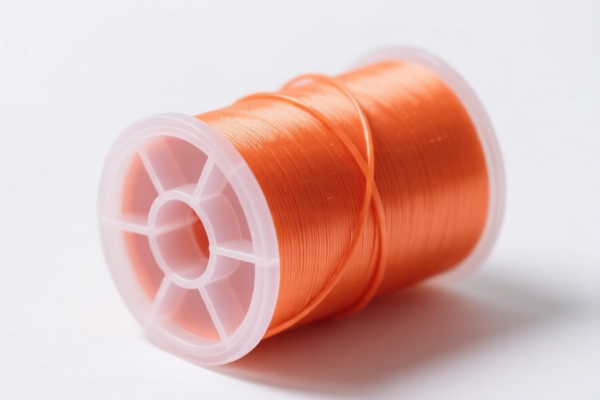
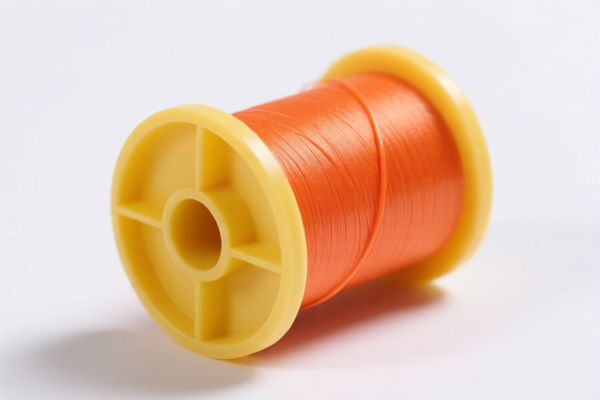
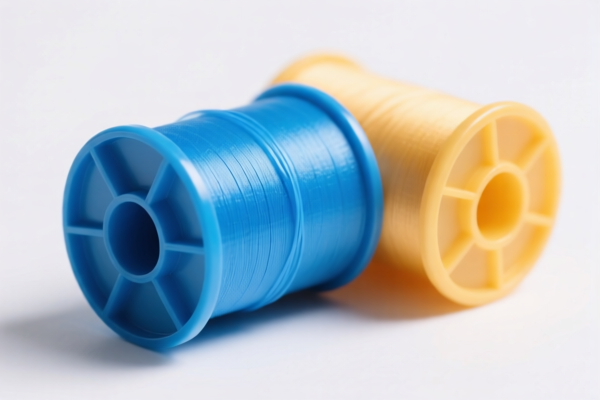
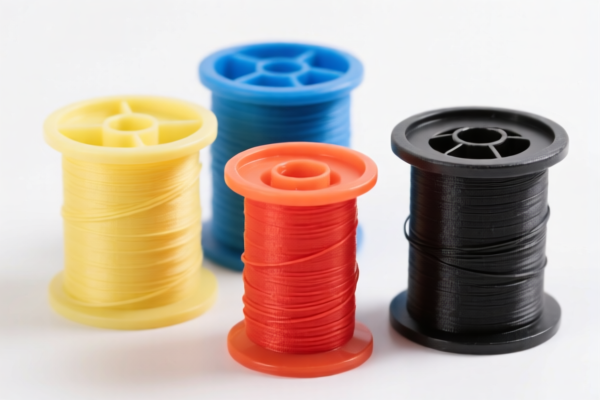
AI Analysis
🧵 Plastic Spool (Anti-Static) / Reel (Anti-Static)
🌐 HS Code Reference & Customs Clearance Guide | 2026 Latest Tariff Analysis | Professional Clearance Strategy 📌 Part 1: Product Definition & Classification: Do You Really Understand "Plastic Spools"?
Plastic Spools (Anti-Static) are essential auxiliary components used in the textile, electronics, and printing industries. They are typically made from engineering plastics (such as PBT, PA, or PC) to prevent static electricity accumulation, ensuring the safe storage, winding, and transportation of sensitive materials like electronic components, ribbon, wire, or thread.
In international trade, the classification depends heavily on material composition and specific function. While "plastic" is the primary material, specific uses can trigger different headings.
⚠️ Key Distinction Point: - If the item is specifically designed as an "Empty Cartridge/Cassette for Typewriter or Machine Ribbons" → It falls under 3926.90.83.00. - If the item is a general-purpose plastic spool/reel (e.g., for wires, general storage, or non-ribbon applications) → It falls under 3926.90.99.89 as a "Other" plastic article.
📦 Part 2: HS Code Classification Details (2026 Latest Tariff Authoritative Comparison)
| HS Code | Product Description | Applicable Scenario | Static Property |
|---|---|---|---|
3926.90.83.00 |
Empty cartridges and cassettes for typewriter and machine ribbons | Specifically designed casings/cassettes for ribbon printing mechanisms | ✅ Usually Anti-Static (for ribbon protection) |
3926.90.99.89 |
Other articles of plastics and articles of other materials of headings 3901 to 3914: Other | General plastic spools, reels, bobbins, or coils for wires, threads, or non-specific industrial use | ✅ Anti-Static Additive Added |
🔍 Critical Reminder: - "Spool" vs. "Cassette": The term "Spool" is generic. However, if the spool is specifically shaped and sized to function as a cartridge or cassette for a typewriter or machine ribbon, it must be classified under
3926.90.83.00. - If the spool is simply a cylindrical or flanged reel for holding wires, cables, textiles, or loose ribbons (not enclosed in a cassette mechanism), it is classified as a general plastic article under3926.90.99.89.
💰 Part 3: 2026 Latest Tariff Rate Details (Including Additional Taxes)
✅ Applicable Country: United States (US)
✅ Origin: China (CN)
✅ Effective Time: 2025/2026 (Based on current trade policies)
🎯 1. 3926.90.83.00 —— Empty Cartridges/Cassettes for Typewriter/Machine Ribbons
| Item | Content |
|---|---|
| Base Tariff | 0.0% |
| Additional Tariff (Section 301) | 0.0% |
| Total Tax Rate | 0.0% |
| Tax Calculation | CIF Value × 0% = $0 |
| De Minimis Eligibility | ✅ Yes (Generally eligible, subject to specific carrier rules) |
| Legal Basis Path | HTSUS:3926.90.83 → No Section 301 Footnote Exclusion for this specific subheading |
📌 Explanation: - This specific subheading for ribbon cassettes has historically enjoyed a 0% duty rate. - Crucially, it is NOT subject to the additional 7.5% Section 301 tariffs that apply to many other plastic articles from China. - This makes it a highly tax-efficient classification if the product strictly meets the definition of a "cartridge or cassette for typewriter/machine ribbons."
🎯 2. 3926.90.99.89 —— Other Plastic Articles (General Spools/Reels)
| Item | Content |
|---|---|
| Base Tariff | 5.3% (Ad Valorem) |
| Additional Tariff (Section 301) | 7.5% |
| Total Tax Rate | 12.8% |
| Tax Calculation | CIF Value × 12.8% |
| De Minimis Eligibility | ❌ No (Subject to full duty collection) |
| Legal Basis Path | HTSUS:3926.90.99 → Section 301: Footnote 9903.88.01 (Plastic articles) → IEEPA: Additional 7.5% |
📌 Explanation: - As a general plastic article, this code falls under the broad "Other plastics" category. - It is subject to both the base duty (5.3%) and the Section 301 additional duty (7.5%). - Total 12.8% is significantly higher than the 0% rate for ribbon cassettes. - Warning: Misclassifying a general spool as a "ribbon cassette" to avoid taxes is a high-risk compliance violation.
🛠️ Part 4: Customs Clearance Practical Advice (Battle-Tested Pitfall Avoidance)
✅ 1. Preparation Checklist (Indispensable)
| Document | Required | Description |
|---|---|---|
| ✅ Product Specification Sheet | ✔️ | Must clearly state: Material (e.g., PBT), Static Dissipative Properties (Resistivity value), Dimensions, and Intended Use. |
| ✅ Technical Drawing/3D Model | ✔️ | Crucial to prove if the shape matches "Cartridge/Cassette" (Enclosed, specific locking mechanism) vs. "Open Spool/Reel". |
| ✅ Anti-Static Test Report | ✔️ | Third-party lab report showing surface resistivity (e.g., $10^6 - 10^9$ ohms/sq) to justify "Anti-Static" claim. |
| ✅ Commercial Invoice | ✔️ | Description must be precise. E.g., "Plastic Cassette for Machine Ribbon, Model XYZ" vs. "Plastic Spool for Wire". |
| ✅ Packing List | ✔️ | Clearly separate units. |
✅ 2. Declaration Strategy (Key Mnemonics)
🔥 “Define the Function, Not Just the Shape”
| Scenario | Correct Declaration | Incorrect Declaration | Consequence |
|---|---|---|---|
| Enclosed Cassette for Ribbon | 3926.90.83.00 "Empty Cartridge for Typewriter Ribbon" |
3926.90.99.89 "Plastic Spool" |
Underpayment Risk: If misclassified as 99.89, you pay 12.8% instead of 0%. But if misclassified down to 83.00 when it's NOT a cassette, you face penalties + back taxes. |
| Open Reel/Spool for Wire/Thread | 3926.90.99.89 "Plastic Reel for Wire Storage" |
3926.90.83.00 "Ribbon Cassette" |
Audit Risk: CBP will reject this. Open spools do not function as "cassettes." |
| Mixed Batch | Split Declaration | Blurred Description | Delay: Customs will hold shipment for clarification. |
📌 Critical Tip: - The term "Spool" is ambiguous. Use "Cassette" or "Cartridge" ONLY if the item is an enclosed housing designed for a specific ribbon mechanism. - If it is an open reel (with flanges) for wrapping wires or threads, it is NOT a cassette. Use
3926.90.99.89.
✅ 3. Special Handling
| Situation | Recommendation |
|---|---|
| Anti-Static Claim | Ensure your invoice and specs mention "Static Dissipative" or "Anti-Static" to avoid questions about electronic components (though plastic spools are generally safe, clarity helps). |
| New Product Design | If your "spool" has a unique locking mechanism that mimics a ribbon cartridge, submit a Binding Ruling request to CBP before shipping. |
| Bulk vs. Retail | If shipped as accessories to ribbon cartridges, consider if they are part of the cartridge assembly. If so, they may follow the cartridge's classification. |
🌍 Part 5: Global Market Comparison (2026 Latest)
| Country/Region | Recommended HS Code | Tariff Rate | Certification | Notes |
|---|---|---|---|---|
| 🇺🇸 USA | 3926.90.83.00 (if Cassette) 3926.90.99.89 (if Spool) |
0% 12.8% |
None | Zero Duty is key! Verify "Cassette" definition strictly. |
| 🇨🇳 China | 3926.90.90.90 |
5.0% | None | No additional tariffs. |
| 🇪🇺 EU | 3926.90.97 |
6.0% | RoHS/REACH | Standard duty for plastic articles. |
| 🇬🇧 UK | 3926.90.97 |
6.0% | UKCA | Post-Brexit alignment with EU. |
📌 Conclusion: - The USA is the most critical market for this distinction. - The 12.8% vs. 0% difference is massive. A $10,000 shipment saves $1,280 if correctly classified as
3926.90.83.00. - However, misclassification carries high risks. Ensure the product is truly a "cartridge/cassette for ribbons."
📌 Part 6: Common Errors & Pitfalls (Lessons Learned)
❌ Error 1: Calling every plastic spool a "Ribbon Cassette" to get 0% duty.
👉 Result: CBP examines the product. If it’s an open reel for wire, they reclassify to 3926.90.99.89, charge 12.8%, plus penalties.
❌ Error 2: Ignoring the "Anti-Static" feature in documentation. 👉 Result: Customs may question if it contains electronic components (which could fall under Chapter 85), causing delays. Clarify it’s just plastic with anti-static additives.
❌ Error 3: Using vague descriptions like "Plastic Holder." 👉 Result: Ambiguity leads to higher scrutiny. Use precise terms: "Plastic Cassette for Machine Ribbon" or "Plastic Reel for Electrical Wire."
✅ Correct Approach:
"Plastic Empty Cartridge, Anti-Static, for Typewriter Ribbon, Model ABC, PBT Material" → 3926.90.83.00 (0%) "Plastic Spool/Reel, Anti-Static, for Wire Coiling, Model XYZ, PA6 Material" → 3926.90.99.89 (12.8%)
🎯 Part 7: Conclusion: Precision Saves Money!
🎯 Remember the Mnemonic:
🔹 "Cassette for Ribbon = 0% Duty"
🔹 "General Spool/Reel = 12.8% Duty"
🔹 "Shape and Function Define the Code!"
📌 Actionable Advice: 1. Audit Your Design: Is it truly a "cassette" (enclosed, specific mechanism) or just a "spool" (open, general purpose)? 2. Document Rigorously: Provide technical drawings that show the specific use for ribbons if claiming 0%. 3. Consider Advance Rulings: If your product is innovative, submit a Binding Ruling to CBP to secure the 0% rate legally.
📣 Immediate Action:
📞 Consult your freight forwarder with 3D models. 📝 Update your invoice descriptions to match the exact HS Code function. 🚀 Save 12.8% on every shipment by classifying correctly!
✨ Professional Customs Clearance Starts with Accurate Classification! 💼 Your Profit Margin Depends on These Details!
Customer Reviews
About HS Code Classification
The Harmonized System (HS) is an internationally standardized nomenclature developed by the World Customs Organization (WCO) to classify traded products. Over 200 countries use the HS system as the basis for customs tariffs, trade statistics, and import/export regulations.
Each HS code follows a hierarchical structure:
- Chapter (2 digits) — Broad category of goods (e.g., Chapter 84: Machinery and Mechanical Appliances)
- Heading (4 digits) — More specific grouping within the chapter
- Subheading (6 digits) — Internationally standardized breakdown, used by all WCO member countries
- National subdivisions (8-10 digits) — Country-specific extensions for further classification, such as US HTSUS 10-digit codes
Correct HS code classification is essential for smooth customs clearance, accurate duty payment, and compliance with trade regulations. Misclassification can lead to customs delays, overpayment of duties, or penalties.
When importing from CN to US, the applicable tariff rates may include:
- Most-Favored-Nation (MFN) rate — The standard duty rate applied to WTO members
- General rate — Applied to countries without trade agreements
- Trade remedy duties — Additional tariffs such as Section 301 (anti-dumping), Section 232 (national security), or countervailing duties
The information provided on this page is for reference purposes only. For official classification, please consult with your local customs authority or a licensed customs broker.