Plastic Spool (Recyclable)
CN → US| HS Code | Tariff Rate | Origin | Destination | Doc |
|---|---|---|---|---|
| 8448395000 | 21.2% | CN | US | Official Doc |
| 3923400050 | 40.3% | CN | US | Official Doc |
| 3926909989 | 22.8% | CN | US | Official Doc |
| 3926908300 | 40.3% | CN | US | Official Doc |
| 3923400010 | 40.3% | CN | US | Official Doc |
| 8448399000 | 17.5% | CN | US | Official Doc |
Product Images
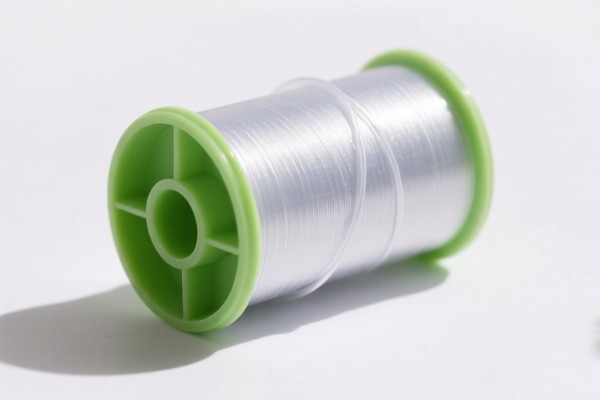
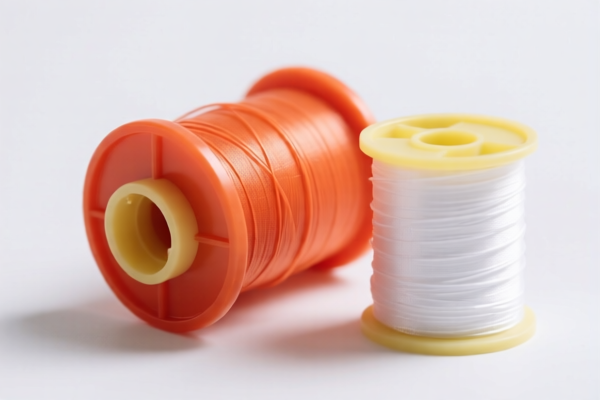


AI Analysis
🧵 Plastic Spool (Recyclable) — The Critical Classification Dilemma
🌐 HS Code Reference & Customs Clearance Guide | 2026 Latest Tariff Analysis | Professional Strategy
📌 I. Product Definition & Classification: What Exactly is a "Plastic Spool"?
The term "Plastic Spool" is a generic description that hides significant technical differences. In international trade, a spool’s classification depends entirely on its function, material, and integration with machinery.
For a Recyclable Plastic Spool, the key distinctions are:
1. Mechanical Component (Part of a Machine):
If the spool is an integral part of a winding, weaving, or textile machine (e.g., a bobbin holder, a yarn carrier), it is classified as a machine part. It is defined by its interaction with the machinery.
Key Feature:* Designed specifically for a machine function; often shaped to fit specific machine dimensions.
2. Standalone Packaging/Support Item:
If the spool is used to hold, wind, or transport materials (like wires, cables, tapes, or ribbons) and is not permanently attached to a machine, it is classified as a plastic article. It is defined by its material (plastic) and shape (support/holder).
Key Feature:* Sold as a consumable or reusable container; can be removed and reused independently of a machine.
⚠️ Critical Distinction:
- If the spool is part of a winding machine assembly →归入 8448 (Machine Parts)
- If the spool is used for winding/transporting goods independently → 归入 3923 or 3926 (Plastic Articles)
- Misclassification Risk: Declaring a machine part as a simple plastic spool (or vice versa) leads to huge tariff discrepancies (e.g., 17.5% vs 40.3%).
📦 II. HS Code Classification Details (2026 Latest Tariff Reference)
Based on the provided data, here are the 6 potential HS Codes for a "Plastic Spool," categorized by their logical basis:
| HS Code | Product Description (Summary from Data) | Category Logic | Total Tax Rate |
|---|---|---|---|
8448.39.50.00 |
Component of a winding device; plastic material; matches attributes of winding machine parts. | Machine Part (Textile/Winding Machinery) | 21.2% |
3923.40.00.50 |
Plastic material; shape is a spool/reel; fits under "Other Plastic Supports." | Plastic Support/Packaging | 40.3% |
3926.90.99.89 |
Matches plastic material and "Other" shape; belongs to plastic articles. | General Plastic Article | 22.8% |
3926.90.83.00 |
Plastic material; shape is a spool; belongs to plastic articles and other material articles. | Plastic Article (Specific Subcategory) | 40.3% |
3923.40.00.10 |
Plastic material; shape is a spool/reel; belongs to "Plastic Reels/Spools" category. | Plastic Reel/Spool (Packaging) | 40.3% |
8448.39.90.00 |
Shape is Shuttle/Spool; dedicated part/attachment for machines; plastic material; other category. | Machine Part (Other Machine Parts) | 17.5% |
🔍 Key Insight:
- The lowest tariff (17.5%) applies if the spool is strictly a machine part (8448.39.90.00).
- The highest tariffs (40.3%) apply if it is considered a plastic packaging/support item (3923.40.00.50,3926.90.83.00,3923.40.00.10).
- The middle ground (21.2%, 22.8%) applies to other machine parts or general plastic articles.
💰 III. 2026 Latest Tariff Rate Breakdown (Including Surcharges)
✅ Applicable Country: United States (US)
✅ Origin: China (CN)
✅ Effective Date: 2025/11/10 onwards (including subsequent imports)
🎯 1. 8448.39.90.00 —— Machine Part (Shuttle/Spool)
| Item | Content |
|---|---|
| Base Rate | 0.0% (ad valorem) |
| Section 301 Surcharge | +7.5% |
| Section 122 Surcharge | +10% |
| Total Tax Rate | 17.5% |
| Tax Calculation | CIF Value × 17.5% |
| De Minimis Exemption | ❌ Not Eligible (Deny) |
| Legal Path | USITC:8448.39.90.00 → Section 301: 7.5% → Section 122: 10% |
📌 Explanation:
- This is the most favorable rate among the options if the spool is truly a machine part.
- Crucial: You must prove it is a part of a machine (e.g., provided with the machine, specifically designed for it, used in the machine’s operation).
- If customs suspects it’s just a "plastic reel" for holding wire, they may reclassify it to 3923/3926, jumping the tax to 40.3%.
🎯 2. 8448.39.50.00 —— Winding Machine Component
| Item | Content |
|---|---|
| Base Rate | 3.7% |
| Section 301 Surcharge | +7.5% |
| Section 122 Surcharge | +10% |
| Total Tax Rate | 21.2% |
| Tax Calculation | CIF Value × 21.2% |
| De Minimis Exemption | ❌ Not Eligible (Deny) |
| Legal Path | USITC:8448.39.50.00 → Section 301: 7.5% → Section 122: 10% |
📌 Explanation:
- This is another machine part classification but with a higher base rate (3.7% vs 0%).
- It specifies "components of winding devices." If your spool is part of a yarn winder or textile machine, this might be more accurate than8448.39.90.00.
🎯 3. 3926.90.99.89 —— General Plastic Article (Other)
| Item | Content |
|---|---|
| Base Rate | 5.3% |
| Section 301 Surcharge | +7.5% |
| Section 122 Surcharge | +10% |
| Total Tax Rate | 22.8% |
| Tax Calculation | CIF Value × 22.8% |
| De Minimis Exemption | ❌ Not Eligible (Deny) |
| Legal Path | USITC:3926.90.99.89 → Section 301: 7.5% → Section 122: 10% |
📌 Explanation:
- A "catch-all" for plastic articles. If the spool doesn’t fit neatly into "packaging" (3923) or "reels" (3923.40), it falls here.
- Lower than 40.3% but higher than machine parts.
🎯 4. The High-Tax Group: 3923.40.00.50, 3926.90.83.00, 3923.40.00.10
| Item | Content |
|---|---|
| Base Rate | 5.3% |
| Section 301 Surcharge | +25.0% |
| Section 122 Surcharge | +10% |
| Total Tax Rate | 40.3% |
| Tax Calculation | CIF Value × 40.3% |
| De Minimis Exemption | ❌ Not Eligible (Deny) |
| Legal Path | USITC:3923.40/3926.90 → Section 301: 25% → Section 122: 10% |
📌 Explanation:
- These codes carry the heaviest penalty (25% Section 301 surcharge).
- This occurs because these specific subheadings for plastic reels/spools/supports are explicitly targeted by higher trade remedy duties.
- Avoid this rate if possible by proving the spool is a machine part (8448series).
🛠️ IV. Customs Clearance Practical Advice (Real-World Pitfall Guide)
✅ 1. Documentation Checklist (Mandatory)
| Document | Required? | Description |
|---|---|---|
| ✅ Technical Drawing | ✔️ | Must show dimensions, mounting holes, and interface with machinery. |
| ✅ Product Specification | ✔️ | Explicitly state: "Part for [Machine Model]," "Used in Winding Process," etc. |
| ✅ Photos | ✔️ | Show the spool installed in a machine or with machine parts. |
| ✅ Commercial Invoice | ✔️ | Description must be precise: e.g., "Plastic Spool for Textile Winding Machine, Part #XYZ." Avoid just "Plastic Spool." |
| ✅ Bill of Lading | ✔️ | Consistency with invoice is critical. |
| ✅ Certificate of Origin | ✔️ | Required for tariff calculation. |
✅ 2. Declaration Strategy (Key Tactics)
🔥 “Machine Part = Low Tax; Plastic Item = High Tax!”
| Scenario | Correct Declaration | Wrong Declaration | Consequence |
|---|---|---|---|
| Spool is part of a machine | 8448.39.90.00 (17.5%) |
"Plastic Spool" (Generic) | Risk of reclassification to 3923 → 40.3% |
| Spool is for packaging wire | 3923.40.00.10 (40.3%) |
"Machine Part" | Customs may accept 40.3%, but you overpaid? No, this is the correct high tax. |
| Spool is generic reusable reel | 3926.90.99.89 (22.8%) |
8448.39.90.00 |
Risk of penalty for misclassification. |
📌 Pro Tip:
- If you sell spools with a machine, declare them as machine parts.
- If you sell spools standalone, be honest. Declaring a standalone spool as a machine part to save 22.8% is high-risk and can lead to audits.
✅ 3. Special Cases
| Case | Handling Advice |
|---|---|
| OEM Spools | Provide the machine manufacturer’s part list to prove it’s a genuine part. |
| Recyclable Material | Emphasize "Recyclable Plastic" in specs, but do not change HS Code. Material type doesn’t lower tariff for plastic articles. |
| Mixed Shipment | If spools are shipped with machines, declare them together as "Parts of Machines." |
| Customs Audit | Keep records showing the spool’s functional role in a machine. |
🌍 V. Global Market Comparison (2026 Latest)
| Country/Region | Recommended HS Code | Tariff (China Origin) | Key Requirement | Note |
|---|---|---|---|---|
| 🇺🇸 USA | 8448.39.90.00 |
17.5% | Machine Part Proof | Best rate if proven as machine part. |
| 🇺🇸 USA | 3923.40.00.10 |
40.3% | None | Default for standalone spools. |
| 🇨🇳 China | 8448.39.50.00 |
3.7% | None | Lower base rate, no US surcharges. |
| 🇪🇺 EU | 8448.39.50.00 |
0% - 2% | CE Marking (if applicable) | Much lower than US. |
| 🇬🇧 UK | 8448.39.50.00 |
0% - 2% | UKCA Marking | Post-Brexit rules may vary. |
📌 Conclusion:
- The US market is the most punitive due to Section 301 and Section 122 tariffs.
- Proving "Machine Part" status is the single most important factor in reducing costs from 40.3% to 17.5%.
📌 VI. Common Mistakes & Pitfalls (Lessons Learned)
❌ Mistake 1: Calling a machine part a "Plastic Reel" to simplify the description.
👉 Consequence: Customs assigns 3923.40.00.10 → 40.3% tax instead of 17.5%. Loss: 22.8% of value!
❌ Mistake 2: Using "Recyclable" as a classification keyword.
👉 Consequence: No tax benefit. Plastic articles are taxed by material and function, not environmental impact.
❌ Mistake 3: Assuming all plastic spools are the same.
👉 Consequence: A spool for a looms (8448) is different from a spool for cable winding (3923). Misclassification leads to delays and penalties.
✅ Correct Approach:
"Plastic Winding Spool, Part No. XYZ, for Model ABC Textile Machine, Made of Recyclable Polypropylene"
→ HS Code: 8448.39.90.00
→ Tax: 17.5%
🎯 VII. Conclusion: Precision Saves Money!
🎯 Remember the Mantra:
🔹 "Machine Part = 17.5%; Plastic Item = 40.3%!"
🔹 "If it fits the machine, declare it as a part!"
🔹 "Don’t let 'Plastic Spool' cost you 22.8% extra!"
📌 Small Tip:
If you are importing spools from Vietnam or Mexico, check if they qualify for USMCA benefits (for Mexico) or GSP (though GSP is limited for China). Origin is key to avoiding surcharges.
📣 Immediate Action:
📞 Consult a licensed customs broker with technical drawings of the spool and its machine interface.
🚀 Request a Binding Ruling from US Customs if the classification is ambiguous.
💼 Your profit margin depends on this 22.8% difference!
✨ Professional Clearance, Starting with Accurate Classification!
💼 Every Dollar Saved is a Dollar Earned!
Customer Reviews
About HS Code Classification
The Harmonized System (HS) is an internationally standardized nomenclature developed by the World Customs Organization (WCO) to classify traded products. Over 200 countries use the HS system as the basis for customs tariffs, trade statistics, and import/export regulations.
Each HS code follows a hierarchical structure:
- Chapter (2 digits) — Broad category of goods (e.g., Chapter 84: Machinery and Mechanical Appliances)
- Heading (4 digits) — More specific grouping within the chapter
- Subheading (6 digits) — Internationally standardized breakdown, used by all WCO member countries
- National subdivisions (8-10 digits) — Country-specific extensions for further classification, such as US HTSUS 10-digit codes
Correct HS code classification is essential for smooth customs clearance, accurate duty payment, and compliance with trade regulations. Misclassification can lead to customs delays, overpayment of duties, or penalties.
When importing from CN to US, the applicable tariff rates may include:
- Most-Favored-Nation (MFN) rate — The standard duty rate applied to WTO members
- General rate — Applied to countries without trade agreements
- Trade remedy duties — Additional tariffs such as Section 301 (anti-dumping), Section 232 (national security), or countervailing duties
The information provided on this page is for reference purposes only. For official classification, please consult with your local customs authority or a licensed customs broker.