Plastic Spools (High Temperature Resistant)
CN → US| HS Code | Tariff Rate | Origin | Destination | Doc |
|---|---|---|---|---|
| 8448395000 | 21.2% | CN | US | Official Doc |
| 3923400050 | 40.3% | CN | US | Official Doc |
| 3926909989 | 22.8% | CN | US | Official Doc |
| 3923400010 | 40.3% | CN | US | Official Doc |
| 3926908300 | 40.3% | CN | US | Official Doc |
| 8448399000 | 17.5% | CN | US | Official Doc |
Product Images
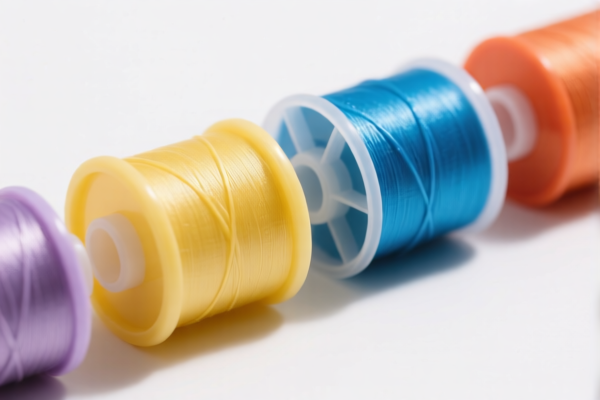
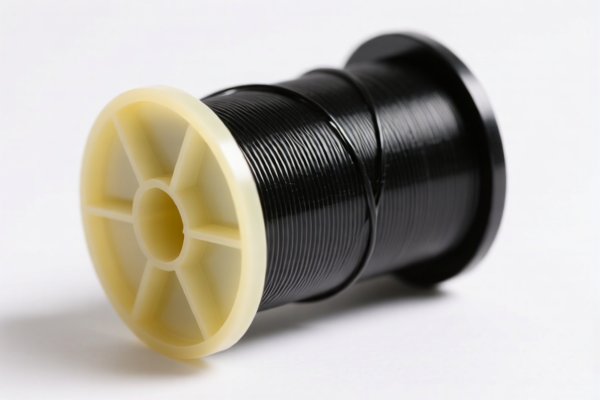
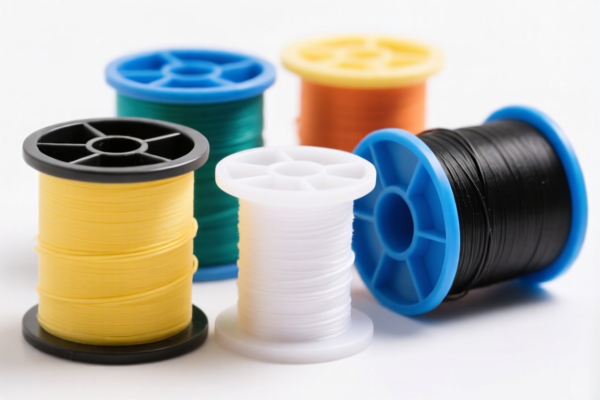
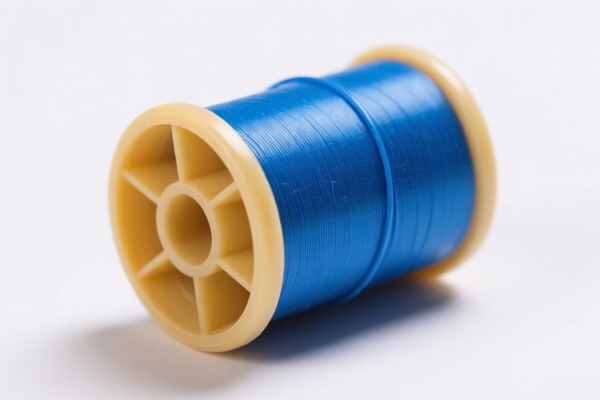
AI Analysis
🧵 Plastic Spools (High Temperature Resistant) – The Ultimate Classification & Customs Clearance Guide
🌐 HS Code Reference & Customs Clearance Guide | 2026 Latest Tariff Analysis | Professional Compliance Strategy
📌 Part I: Product Definition & Classification – Do You Really Know What a "Plastic Spool" Is?
Plastic Spools are essential components in textile, wiring, and manufacturing industries. They are used to wind and store threads, yarns, wires, or films. In international trade, their classification depends heavily on material (Plastic), form (Spool/Cone/Winder part), and function.
⚠️ Key Classification Logic:
- If the spool is a part of a winding machine → It may fall under Chapter 84 (Machinery Parts).
- If the spool is a standalone plastic product for general support/winding → It falls under Chapter 39 (Plastics and Articles Thereof).
- High-Temperature Resistance is a performance feature, not a separate HS Code category, but it helps justify specific material grades (e.g., PEEK, PTFE) within the plastic categories.
📦 Part II: HS Code Classification Details (2026 Latest Tariff Authority)
Based on the provided data, here are the 6 possible HS Codes, their descriptions, and why they apply.
| HS Code | Product Description | Why It Matches the Data | Tax Rate |
|---|---|---|---|
8448.39.50.00 |
Parts of Winding Machines | Classified as a component of a winding device (卷绕装置). Made of plastic, it matches the attribute of "machine parts." | 21.2% |
3923.40.00.50 |
Other Plastic Supports/Spools | Classified as a plastic spool (卷轴) acting as a support object. Fits "Other" under plastic supports. | 40.3% |
3926.90.99.89 |
Other Plastic Articles | Classified as a plastic article with no specific support/winding function defined in other chapters. General "other" plastic product. | 22.8% |
3923.40.00.10 |
Plastic Reels/Spools | Specifically categorized as plastic reels/spools (塑料制卷轴). Direct match for the form and material. | 40.3% |
3926.90.83.00 |
Plastic Articles: Spools | Another specific sub-category for plastic spools (塑料制品, 卷轴). Consistent with plastic material and spool form. | 40.3% |
8448.39.90.00 |
Other Machine Parts | Classified as a shuttle/spool (梭子/卷轴) used as a special machine part/accessory. Made of plastic, fits "Other" category. | 17.5% |
🔍 Critical Analysis:
- Chapter 84 (8448): Lower tax rates (17.5%–21.2%) apply if the spool is intended for use with a specific machine (winding/shuttling). Requires proof of being a "machine part."
- Chapter 39 (3923/3926): Higher tax rates (22.8%–40.3%) apply if the spool is treated as a general plastic product or support object.
- High-Temperature Resistance: Does not change the HS Code directly but supports the argument for industrial/machine-use classification (Chapter 84) if tied to machinery specs.
💰 Part III: 2026 Latest Tariff Rate Breakdown (Including Additional Duties)
✅ Applicable Country: United States (US)
✅ Origin: China (CN)
✅ Effective Date: November 10, 2025 (and subsequent imports)
🎯 1. 8448.39.50.00 — Parts of Winding Machines (Plastic Component)
| Item | Content |
|---|---|
| Base Tariff | 3.7% (ad valorem) |
| USITC Additional Duty (Section 301) | +7.5% |
| IEEPA Additional Duty (122 Clause) | +10% |
| Total Tariff Rate | 21.2% |
| Tax Calculation | CIF Value × 21.2% |
| De Minimis Exemption | ❌ Not Available (deny_de_minimis) |
| Legal Basis Path | USITC:8448.39.50.00 → Section 301: 7.5% → IEEPA:10% |
📌 Explanation:
- This is one of the lower tax options because it is classified as a machine part (Chapter 84), which has a lower base tariff (3.7%) compared to general plastics (5.3%).
- Still subject to Section 301 (7.5%) and IEEPA 122 Clause (10%).
🎯 2. 8448.39.90.00 — Other Machine Parts (Plastic Shuttle/Spool)
| Item | Content |
|---|---|
| Base Tariff | 0.0% |
| USITC Additional Duty (Section 301) | +7.5% |
| IEEPA Additional Duty (122 Clause) | +10% |
| Total Tariff Rate | 17.5% |
| Tax Calculation | CIF Value × 17.5% |
| De Minimis Exemption | ❌ Not Available (deny_de_minimis) |
| Legal Basis Path | USITC:8448.39.90.00 → Section 301: 7.5% → IEEPA:10% |
📌 Explanation:
- Lowest Total Tariff (17.5%) among all options.
- Base tariff is 0%, but still hits the 17.5% surcharge (7.5% + 10%).
- Best option if the spool can be clearly documented as a machine accessory/parts (e.g., for textile winding machines).
🎯 3. 3926.90.99.89 — Other Plastic Articles (General)
| Item | Content |
|---|---|
| Base Tariff | 5.3% |
| USITC Additional Duty (Section 301) | +7.5% |
| IEEPA Additional Duty (122 Clause) | +10% |
| Total Tariff Rate | 22.8% |
| Tax Calculation | CIF Value × 22.8% |
| De Minimis Exemption | ❌ Not Available (deny_de_minimis) |
| Legal Basis Path | USITC:3926.90.99.89 → Section 301: 7.5% → IEEPA:10% |
📌 Explanation:
- Mid-range tax rate.
- Used if the spool is not specifically for machinery and is just a general plastic article.
🎯 4. 3923.40.00.10 / 3923.40.00.50 / 3926.90.83.00 — Plastic Spools/Supports (High Tax)
| Item | Content |
|---|---|
| Base Tariff | 5.3% |
| USITC Additional Duty (Section 301) | +25.0% |
| IEEPA Additional Duty (122 Clause) | +10% |
| Total Tariff Rate | 40.3% |
| Tax Calculation | CIF Value × 40.3% |
| De Minimis Exemption | ❌ Not Available (deny_de_minimis) |
| Legal Basis Path | USITC:3923.40/3926.90 → Section 301: 25% → IEEPA:10% |
📌 Explanation:
- Highest Tax Rate (40.3%).
- Applies if classified as plastic supports, reels, or general plastic articles.
- Avoid this classification if possible. It incurs the highest Section 301 surcharge (25%).
🛠️ Part IV: Customs Clearance Practical Advice (Battle-Tested Pitfall Guide)
✅ 1. Preparation Checklist (All Required)
| Document | Must Provide | Purpose |
|---|---|---|
| ✅ Product Specification Sheet | ✔️ | Detail material (e.g., PEEK, PTFE, PP), dimensions, heat resistance temp, weight. |
| ✅ Usage Statement | ✔️ | Clearly state: "Used as a part of winding machines" vs. "General purpose storage." |
| ✅ Photos (Clear & Labeled) | ✔️ | Show spool attached to machine or in isolation. Label model number. |
| ✅ Commercial Invoice | ✔️ | Describe as "Plastic Winding Machine Part" or "Plastic Spool" consistently. |
| ✅ Packing List | ✔️ | Ensure no mixing of goods with different HS codes in same shipment. |
| ✅ Certificate of Origin | ✔️ | For China origin, subject to additional tariffs. |
✅ 2. Classification Strategy (Key Mantra)
🔥 "Machine Part vs. Plastic Article: Choose 8448 to Save 23%!"
| Scenario | Recommended HS Code | Tax Rate | Why? |
|---|---|---|---|
| Spool is interchangeable part of a winding machine | 8448.39.90.00 or 8448.39.50.00 |
17.5% – 21.2% | Lower base tariff (0–3.7%) + lower Section 301 (7.5%). |
| Spool is sold separately as a consumable storage item | 3923.40.00.10 or 3926.90.99.89 |
22.8% – 40.3% | Higher base tariff (5.3%) + higher Section 301 (7.5%–25%). |
| Spool is generic plastic reel for wires/thread | 3923.40.00.50 or 3926.90.83.00 |
40.3% | Avoid! Highest tax due to 25% Section 301. |
📌 Pro Tip:
- If your spools are specifically designed for a particular winding machine (e.g., textile looms, wire drawers), strongly argue for HS 8448.
- Provide machine compatibility lists or OE part numbers to prove they are "machine parts."
✅ 3. Special Cases & Handling
| Case | Handling Advice |
|---|---|
| High-Temperature Resistant Material | Highlight material specs (e.g., "PEEK, 260°C") in specs to justify industrial use, supporting Chapter 84 classification. |
| Mixed Shipment (Spools + Machines) | Declare spools as parts/accessories. Do not separate unless necessary. Bundling may help justify machine part status. |
| OEM Custom Spools | Provide customer design drawings. Custom spools for specific machines are more likely to be classified as machine parts (8448). |
| Generic White Label Spools | Riskier for 8448. May be forced into 3923/3926 (40.3%). |
🌍 Part V: Global Market Comparison (2026 Latest)
| Country/Region | Recommended HS Code | Total Tariff (China Origin) | Notes |
|---|---|---|---|
| 🇺🇸 USA | 8448.39.90.00 |
17.5% | Best rate. Avoid 3923/3926 (40.3%). |
| 🇺🇸 USA | 3923.40.00.10 |
40.3% | Worst case. High Section 301. |
| 🇪🇺 EU | 8448.39 |
~5–8% | No Section 301. Lower rates overall. |
| 🇨🇳 China | 8448.39 |
~5–7% | Domestic consumption or re-export. |
| 🇬🇧 UK | 8448.39 |
~5–8% | Post-Brexit, similar to EU. |
📌 Conclusion:
- USA is the most critical market for tariff optimization.
- Savings Potential: Choosing8448.39.90.00(17.5%) over3923.40.00.10(40.3%) saves 22.8% on CIF value.
- For a $100,000 shipment: Savings = $22,800!
📌 Part VI: Common Mistakes & Pitfalls (Lessons Learned)
❌ Mistake 1: Calling it "Plastic Spool" without context
👉 Result: Customs may classify as 3923/3926 → 40.3% tax.
✅ Fix: Add "For Winding Machine" or "Machine Part" in description.
❌ Mistake 2: Using generic HS Code 3926.90.99.89 when machine-specific
👉 Result: Overpaying taxes by 15–23%.
✅ Fix: Prove machine part status with specs/docs.
❌ Mistake 3: Ignoring High-Temp Material Specs
👉 Result: May be seen as low-value consumer good.
✅ Fix: Highlight industrial-grade materials (PEEK, PTFE, etc.).
❌ Mistake 4: Splitting Shipment to Avoid "Machine Parts"
👉 Result: Customs may still view as machine parts → Audit & penalties.
✅ Fix: Consistent documentation across all shipments.
🎯 Part VII: Conclusion – Smart Classification, Massive Savings!
🎯 Remember the Mantra:
🔹 "Machine Part is Key, 8448 Saves Big!"
🔹 "Plastic Article is Trap, 40% Tax Will Happen!"
🔹 "Docs Prove Intent, Avoid the 25% Surcharge!"
📌 Quick Tip:
If your spools are not made in China (e.g., Vietnam, Thailand), IEEPA 122 Clause (10%) may not apply. However, Section 301 (7.5% or 25%) may still apply depending on origin rules. Always verify Country of Origin carefully.
📣 Immediate Action:
📞 Contact Customs Broker + Provide Machine Compatibility List + Apply for Advance Ruling if unsure.
🚀 Optimize your HS Code today, save 22.8% tomorrow!
✨ Professional Clearance Starts with Precise Classification!
💼 Every Percentage Point Saved is Pure Profit!
Customer Reviews
About HS Code Classification
The Harmonized System (HS) is an internationally standardized nomenclature developed by the World Customs Organization (WCO) to classify traded products. Over 200 countries use the HS system as the basis for customs tariffs, trade statistics, and import/export regulations.
Each HS code follows a hierarchical structure:
- Chapter (2 digits) — Broad category of goods (e.g., Chapter 84: Machinery and Mechanical Appliances)
- Heading (4 digits) — More specific grouping within the chapter
- Subheading (6 digits) — Internationally standardized breakdown, used by all WCO member countries
- National subdivisions (8-10 digits) — Country-specific extensions for further classification, such as US HTSUS 10-digit codes
Correct HS code classification is essential for smooth customs clearance, accurate duty payment, and compliance with trade regulations. Misclassification can lead to customs delays, overpayment of duties, or penalties.
When importing from CN to US, the applicable tariff rates may include:
- Most-Favored-Nation (MFN) rate — The standard duty rate applied to WTO members
- General rate — Applied to countries without trade agreements
- Trade remedy duties — Additional tariffs such as Section 301 (anti-dumping), Section 232 (national security), or countervailing duties
The information provided on this page is for reference purposes only. For official classification, please consult with your local customs authority or a licensed customs broker.