plastic spools high temperature resistant
CN → US| HS Code | Tariff Rate | Origin | Destination | Doc |
|---|---|---|---|---|
| 3916903000 | 41.5% | CN | US | Official Doc |
| 3926909989 | 22.8% | CN | US | Official Doc |
| 3926906090 | 39.2% | CN | US | Official Doc |
| 8448399000 | 17.5% | CN | US | Official Doc |
| 3916905000 | 40.8% | CN | US | Official Doc |
Product Images
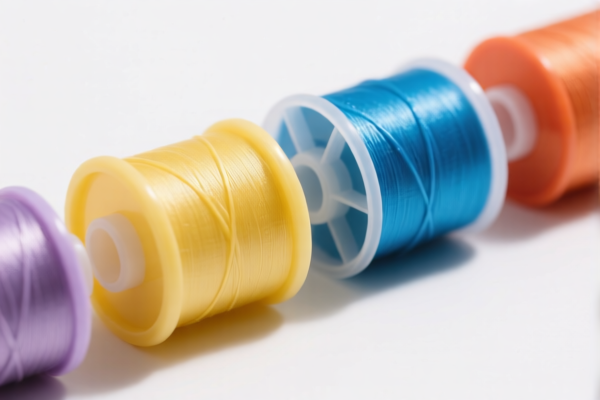
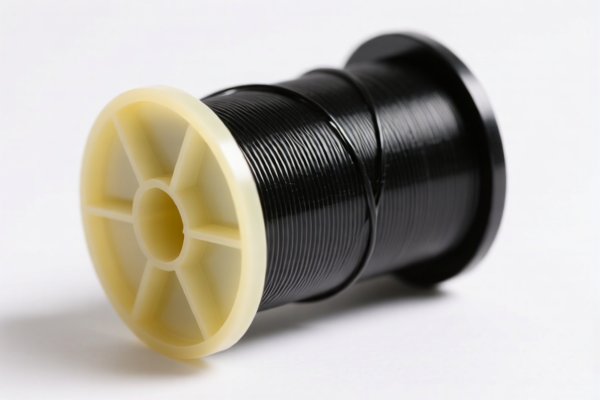
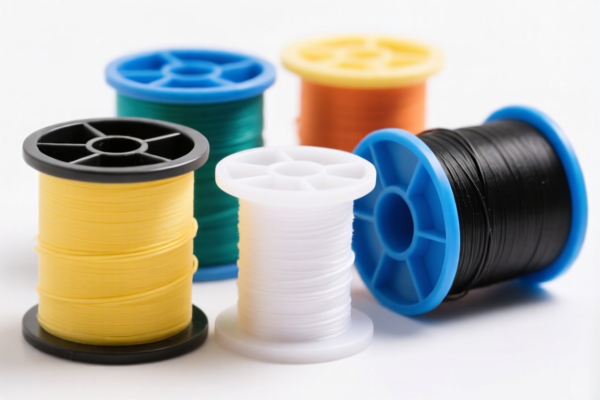
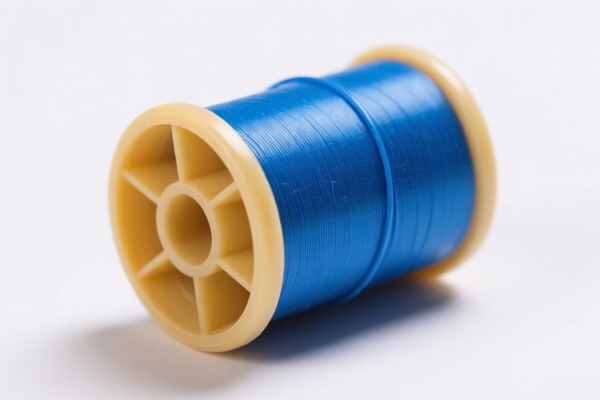
AI Analysis
🧵 Plastic Spools – High Temperature Resistant (高强度塑料线轴)
🌐 HS Code Reference & Customs Clearance Guide | 2026 Latest Tariff Analysis | Professional Clearance Strategy
📌 One, Product Definition: What are "High-Temperature Resistant Plastic Spools"?
High-temperature resistant plastic spools are industrial components used for winding, storing, and transporting monofilaments, rods, bars, or other extended materials. They are engineered with specialized polymers (such as PEEK, PTFE, or reinforced Nylon) to withstand thermal stress. In international trade, their classification depends heavily on their form factor (spool shape vs. general part) and function (general use vs. specific machinery accessory).
⚠️ Key Classification Logic:
- If the spool is primarily used for winding single filaments, rods, or bars, it may fall under Chapter 39 (Articles of Plastics) or Chapter 84 (Machinery Parts).
- If it is considered a part of textile machinery, it may fall under Chapter 84.
- If it is a general plastic article without a specific machinery function, it falls under Chapter 39.
📦 Two. HS Code Classification Details (2026 Latest Tariff Authority)
| HS Code | Product Description | Application Scenario | Tax Rate (Total) |
|---|---|---|---|
3916.90.30.00 |
Plastic spools for winding monofilaments, rods, bars, etc. | Industrial filament winding, material storage | 41.5% |
3926.90.99.89 |
Other plastic articles (Spools/Cylinders as spare parts) | General purpose plastic spools,轴/卷类零配件 | 22.8% |
3926.90.60.90 |
Other plastic articles (No mechanical belt conflict) | General plastic items, no specific machinery function | 39.2% |
8448.39.90.00 |
Auxiliary machinery/accessories for textile machines | Textile industry spools, no metal conflict | 17.5% |
3916.90.50.00 |
Other plastic products (Miscellaneous forms) | General plastic articles, no specific classification | 40.8% |
🔍 Key Distinction:
- Chapter 39 (Plastics): Applied when the spool is viewed as a material container or general plastic item.
- Chapter 84 (Machinery): Applied when the spool is strictly an accessory for textile or processing machinery.
- Tariff Volatility: The total tax rate ranges from 17.5% to 41.5%, driven heavily by Section 301 and IEEPA tariffs.
💰 Three. 2026 Latest Tariff Rate Breakdown (Including Surcharges)
✅ Applicable Country: United States (US)
✅ Origin: China (CN)
✅ Effective Date: From November 10, 2025 (and subsequent imports)
🎯 1. 3916.90.30.00 – Plastic Spools for Monofilaments/Rods
| Item | Details |
|---|---|
| Base Duty Rate | 6.5% (Ad Valorem) |
| Section 301 Surcharge | +25.0% |
| 122 Clause Tariff | +10.0% |
| Total Tax Rate | 41.5% |
| Tax Calculation | CIF Value × 41.5% |
| De Minimis Exemption | ❌ Not Allowed (deny_de_minimis) |
| Legal Basis Path | USITC:3916.90.30.00 → SECTION:301 → SECTION:122 |
📌 Explanation:
- This code covers spools specifically designed for winding monofilaments, rods, or bars.
- The 41.5% total rate is among the highest, combining the base tariff, the aggressive Section 301 tariff, and the 122 Clause.
- Warning: High cost impact. Ensure the product description explicitly mentions "for monofilaments/rods" to justify this code, or risk reclassification.
🎯 2. 3926.90.99.89 – Other Plastic Articles (Spools/Cylinders)
| Item | Details |
|---|---|
| Base Duty Rate | 5.3% (Ad Valorem) |
| Section 301 Surcharge | +7.5% |
| 122 Clause Tariff | +10.0% |
| Total Tax Rate | 22.8% |
| Tax Calculation | CIF Value × 22.8% |
| De Minimis Exemption | ❌ Not Allowed (deny_de_minimis) |
| Legal Basis Path | USITC:3926.90.99.89 → SECTION:301 → SECTION:122 |
📌 Note:
- This is a "catch-all" for plastic spools that don’t fit the specific "monofilament/rod" definition but are still axis/cylinder-shaped parts.
- Cost Saving: The Section 301 rate is only 7.5% (vs. 25% for others), making this the most economical classification for general plastic spools.
- Use this if the spool is not exclusively for textile machinery but is a general industrial plastic part.
🎯 3. 3926.90.60.90 – Other Plastic Articles (No Belt Conflict)
| Item | Details |
|---|---|
| Base Duty Rate | 4.2% (Ad Valorem) |
| Section 301 Surcharge | +25.0% |
| 122 Clause Tariff | +10.0% |
| Total Tax Rate | 39.2% |
| Tax Calculation | CIF Value × 39.2% |
| De Minimis Exemption | ❌ Not Allowed (deny_de_minimis) |
| Legal Basis Path | USITC:3926.90.60.90 → SECTION:301 → SECTION:122 |
📌 Explanation:
- This code applies to plastic articles that are not belts or belting.
- Despite a low base rate (4.2%), the 25% Section 301 surcharge pushes the total to 39.2%.
- Only use this if the spool doesn’t fit the "axis/cylinder" (3926.90.99.89) or "monofilament/rod" (3916.90.30.00) descriptions.
🎯 4. 8448.39.90.00 – Textile Machinery Accessories
| Item | Details |
|---|---|
| Base Duty Rate | 0.0% (Ad Valorem) |
| Section 301 Surcharge | +7.5% |
| 122 Clause Tariff | +10.0% |
| Total Tax Rate | 17.5% |
| Tax Calculation | CIF Value × 17.5% |
| De Minimis Exemption | ❌ Not Allowed (deny_de_minimis) |
| Legal Basis Path | USITC:8448.39.90.00 → SECTION:301 → SECTION:122 |
📌 Strategic Advantage:
- Lowest Tax Rate (17.5%)!
- If your plastic spools are used exclusively or predominantly in textile machinery (e.g., winding yarn, thread, or fibers for weaving/knitting), this is the best classification.
- Key Requirement: Must prove connection to textile machinery. No metal conflicts allowed.
🎯 5. 3916.90.50.00 – Other Plastic Products (Miscellaneous)
| Item | Details |
|---|---|
| Base Duty Rate | 5.8% (Ad Valorem) |
| Section 301 Surcharge | +25.0% |
| 122 Clause Tariff | +10.0% |
| Total Tax Rate | 40.8% |
| Tax Calculation | CIF Value × 40.8% |
| De Minimis Exemption | ❌ Not Allowed (deny_de_minimis) |
| Legal Basis Path | USITC:3916.90.50.00 → SECTION:301 → SECTION:122 |
📌 Note:
- This is a residual code for plastic products in Chapter 39, Heading 3916, that don’t fit other subheadings.
- High tax rate (40.8%) due to the 25% Section 301 surcharge. Avoid unless no other classification fits.
🛠️ Four. Customs Clearance Practical Advice (Pitfall Avoidance Guide)
✅ 1. Required Documentation Checklist
| Document | Mandatory? | Description |
|---|---|---|
| ✅ Product Specification Sheet | ✔️ | Must specify material (e.g., PEEK, PTFE), temperature resistance range, and dimensions. |
| ✅ Product Photos (Labeled) | ✔️ | Clear images showing the spool shape, winding format, and any labels. |
| ✅ Commercial Invoice | ✔️ | Must clearly state "Plastic Spool, High Temp Resistant" and HS Code. |
| ✅ Packing List | ✔️ | Detail quantity, weight, and packaging type. |
| ✅ Usage Declaration | ✔️ | Explain if used for textile machinery (for 8448.39.90.00) or general filament winding (for 3916). |
| ✅ Certificate of Origin | ✔️ | For potential future preferential claims (though currently limited for CN origin). |
✅ 2. Declaration Strategies (Critical Tips)
🔥 “Know the Use, Pick the Code, Save 20% Tax!”
| Scenario | Recommended HS Code | Reason |
|---|---|---|
| Textile Machine Part | 8448.39.90.00 |
Lowest tax (17.5%). Must prove textile use. |
| General Industrial Spool (Axis/Cylinder) | 3926.90.99.89 |
Moderate tax (22.8%). Good for general winding. |
| Spool for Monofilaments/Rods | 3916.90.30.00 |
High tax (41.5%). Specific to extended forms. |
| Other Plastic Articles | 3926.90.60.90 or 3916.90.50.00 |
High tax (39-41%). Avoid if possible. |
⚠️ Warning:
- Do Not Split Shipments: If a shipment contains both textile spools and general spools, do not mix declarations unless justified.
- Material Proof: High-temp resistance must be supported by material certificates (e.g., TDS, MSDS).
✅ 3. Special Cases
| Case | Handling Advice |
|---|---|
| Spools with Metal Axles | If metal parts are integral, the product may be classified under Chapter 73/76/83 (Metal) or remain plastic if metal is minor. Consult a specialist. |
| Custom-Designed Spools | Provide CAD drawings and client design specs to support specific HS Code justification. |
| Mixed Packaging | If spools are packed with cables/filaments, declare separately to avoid misclassification. |
🌍 Five. Global Market Comparison (2026 Latest)
| Country/Region | Recommended HS Code | Total Tax (CN Origin) | Certification | Notes |
|---|---|---|---|---|
| 🇺🇸 USA | 8448.39.90.00 (Best) |
17.5% | None Specific | Lowest rate for textile use. General plastic: 22.8%–41.5%. |
| 🇨🇳 China | 3916.90.30.00 or 8448.39.90.00 |
6.5%–10% | CCC (if applicable) | Base tax only. No Section 301. |
| 🇪🇺 EU | 3926.90.99 |
0%–6.5% | REACH, RoHS | Lower base tariffs. No US-style surcharges. |
| 🇬🇧 UK | 3926.90.99 |
0%–6.5% | UKCA, REACH | Post-Brexit rules similar to EU. |
| 🇯🇵 Japan | 3926.90.99 |
3%–5% | PSE (if electrical) | Competitive rates. |
📌 Conclusion:
- The US market is the most complex and costly due to Section 301 and 122 Clause tariffs.
- Strategic Move: If possible, classify as Textile Machinery Accessory (8448.39.90.00) to reduce tax to 17.5%.
- If not textile, use3926.90.99.89for 22.8% instead of the 40%+ options.
📌 Six. Common Errors & Pitfall Avoidance (Lessons Learned)
❌ Error 1: Declaring all plastic spools as 3916.90.30.00 (41.5%) without justification.
👉 Consequence: Overpayment of tax. If it’s a general plastic part, use 3926.90.99.89 (22.8%).
❌ Error 2: Misclassifying textile spools as general plastic (3926).
👉 Consequence: Under-declaration risk if customs audits and finds textile use. Use 8448.39.90.00 (17.5%) correctly.
❌ Error 3: Ignoring the 122 Clause Tariff (+10%).
👉 Consequence: Unexpected tax bill at customs. All Chinese plastic spools face this surcharge.
❌ Error 4: Failing to provide Material Certificates for high-temp resistance.
👉 Consequence: Customs may doubt the product description, leading to delays or reclassification.
✅ Correct Approach:
"High-Temperature Resistant Plastic Spool, Made of PEEK, for Textile Machinery Winding, Model XYZ, No Metal Components"
🎯 Seven. Conclusion: Professional Classification, Cost Optimization!
🎯 Key Takeaway:
🔹 "Textile Use = 17.5% | General Plastic Axis = 22.8% | Monofilament/Rod = 41.5%"
🔹 "Don’t pay 41.5% if you can pay 17.5%! Justify your use case!"
📌 Pro Tip:
- If your spools are shipped from Vietnam or Malaysia, check if they qualify for IEEPA exemptions or lower tariffs.
- Apply for an Advance Ruling with US Customs if you have a large, consistent shipment. This locks in the HS Code and tax rate, reducing audit risk.
📣 Immediate Action:
📞 Contact a professional customs broker.
📄 Prepare Product TDS and Usage Declaration.
🚀 Optimize your HS Code to save up to 24% in taxes!
✨ Smart Customs Clearance, From Accurate Classification!
💼 Every Percent Saved is Profit Earned!
Customer Reviews
About HS Code Classification
The Harmonized System (HS) is an internationally standardized nomenclature developed by the World Customs Organization (WCO) to classify traded products. Over 200 countries use the HS system as the basis for customs tariffs, trade statistics, and import/export regulations.
Each HS code follows a hierarchical structure:
- Chapter (2 digits) — Broad category of goods (e.g., Chapter 84: Machinery and Mechanical Appliances)
- Heading (4 digits) — More specific grouping within the chapter
- Subheading (6 digits) — Internationally standardized breakdown, used by all WCO member countries
- National subdivisions (8-10 digits) — Country-specific extensions for further classification, such as US HTSUS 10-digit codes
Correct HS code classification is essential for smooth customs clearance, accurate duty payment, and compliance with trade regulations. Misclassification can lead to customs delays, overpayment of duties, or penalties.
When importing from CN to US, the applicable tariff rates may include:
- Most-Favored-Nation (MFN) rate — The standard duty rate applied to WTO members
- General rate — Applied to countries without trade agreements
- Trade remedy duties — Additional tariffs such as Section 301 (anti-dumping), Section 232 (national security), or countervailing duties
The information provided on this page is for reference purposes only. For official classification, please consult with your local customs authority or a licensed customs broker.