Plastic textile wall fabric
CN → US| HS Code | Tariff Rate | Origin | Destination | Doc |
|---|---|---|---|---|
| 5903102090 | 35.0% | CN | US | Official Doc |
| 5603943000 | 35.0% | CN | US | Official Doc |
| 3921901100 | 39.2% | CN | US | Official Doc |
| 3921121100 | 39.2% | CN | US | Official Doc |
| 5603143000 | 35.0% | CN | US | Official Doc |
Product Images
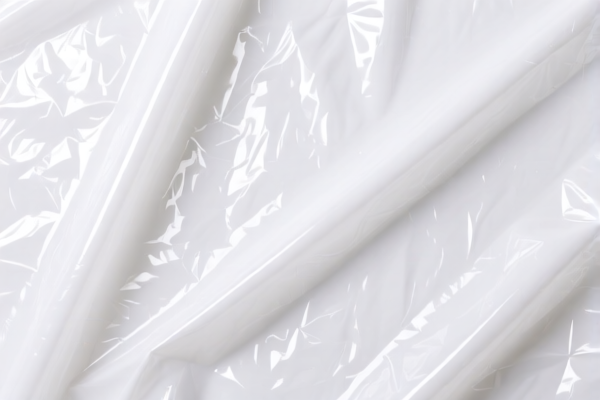
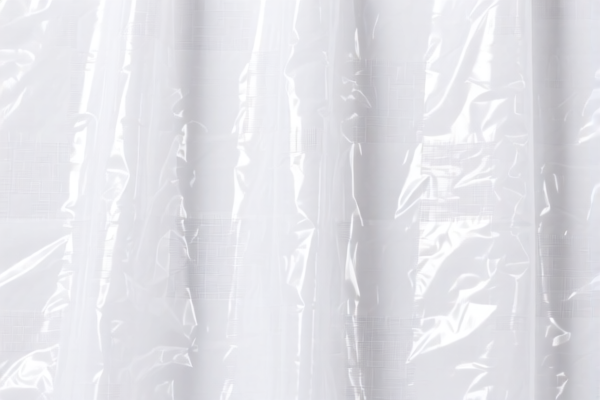
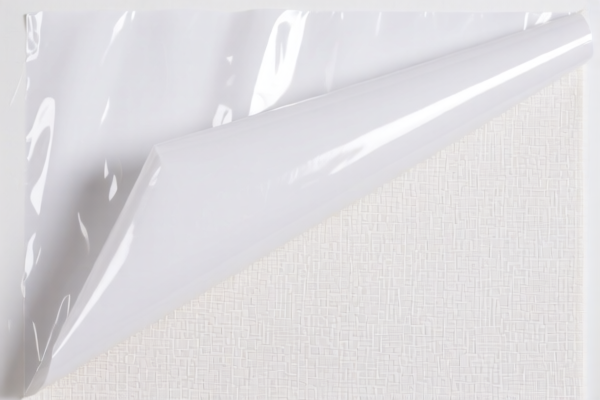
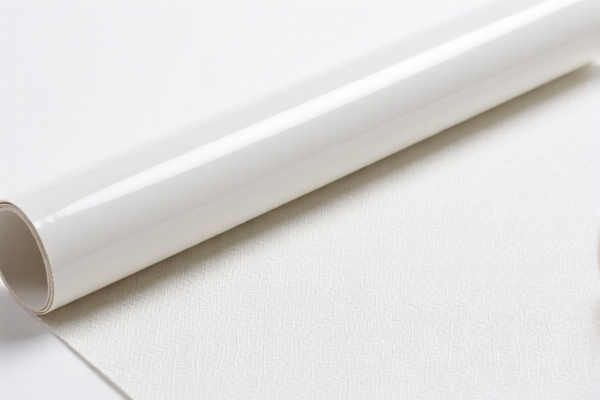
AI Analysis
🧱 Plastic-Reinforced Textile Wall Fabric (Plastic Wall Cloth)
🌐 HS Code Reference & Customs Clearance Guide | 2026 Latest Tariff Analysis | Professional Clearance Strategy
📌 Part 1: Product Definition & Classification: Do You Truly Understand "Plastic Wall Fabric"?
Plastic-Reinforced Textile Wall Fabric is a composite building material widely used for interior decoration. It combines the durability of textiles with the water-resistant and tear-resistant properties of plastics. In international trade, its classification is highly sensitive because it sits at the intersection of Chapter 59 (Impregnated/Coated Textiles) and Chapter 39 (Plastics).
Core Characteristics: * Structure: Textile fabric (woven or non-woven) + Plastic layer (PVC, PE, etc.) via impregnation, coating, or lamination. * Key Distinction: Is the textile the essential character (Chapter 59), or is the plastic coating defining the product's nature (Chapter 39)?
⚠️ Critical Classification Point:
- If the textile base determines the structure and the plastic is merely a surface treatment/coating → Likely Chapter 59.
- If the product is essentially a plastic sheet with a textile backing (composite sheet/film) → Likely Chapter 39.
- Note: The data below provides specific HS codes based on different structural interpretations and "catch-all" categories.
📦 Part 2: HS Code Classification Details (2026 Latest Tariff Authority Comparison)
| HS Code | Product Description | Applicability Scenario | Primary Material Logic |
|---|---|---|---|
5903.10.20.90 |
Plastic Wall Fabric (Textile Reinforced) (Textile base with impregnated/coated plastic) |
Textile reinforcement is dominant; plastic is applied to textile fabric. | Textile based (Other catch-all category). |
5603.94.30.00 |
Plastic Wall Fabric (Textile Reinforced) (Non-woven fabric formed by lamination/coating) |
Non-woven fabric base; formed through lamination or coating without material conflict. | Non-woven based. |
3921.90.11.00 |
Plastic Wall Fabric (Textile Reinforced) (Composite board/sheet/film) |
Form matches plastic sheets/films; combined with textile material, based on other catch-all categories. | Plastic based (Composite sheet). |
3921.12.11.00 |
Plastic Wall Fabric (Textile Reinforced) (Composite structure) |
Material is plastic; form is composite; fits characteristics of plastic-textile composites. | Plastic based (Composite). |
5603.14.30.00 |
Plastic Wall Fabric (Textile Reinforced) (Laminated/Coated non-woven) |
Has laminated/coated features; material inferred as plastic; fits non-woven classification logic. | Non-woven based. |
🔍 Key Reminder:
- The choice between Chapter 59 and Chapter 39 depends heavily on whether Customs views the item as a "Textile Product treated with Plastic" or a "Plastic Product backed with Textile."
- No material conflict interpretations (like5603.94.30.00) often carry lower base tariffs but require strict proof of non-woven formation.
- Plastic-centric codes (3921) often incur base tariffs due to the primary material classification.
💰 Part 3: 2026 Latest Tariff Rate Breakdown (Including Surtaxes & Policy Add-ons)
✅ Applicable Country: United States (US)
✅ Origin: China (CN)
✅ Effective Date: Post-2025 (Current trade war provisions apply)
🎯 1. 5903.10.20.90 & 5603.94.30.00 & 5603.14.30.00 —— Textile/Non-woven Based Categories
These codes share the same tax structure because they fall under textile/non-woven chapters which often benefit from lower base rates but face significant punitive tariffs.
| Item | Content |
|---|---|
| Base Tariff | 0.0% (Ad Valorem) |
| USITC Surtax (Section 301) | +25.0% |
| IEEPA Surtax (Section 122/Other) | +10.0% |
| Total Tariff Rate | 35.0% |
| Tax Calculation | CIF Value × 35% |
| De Minimis Exemption | ❌ Not Eligible (deny_de_minimis) |
| Legal Basis Path | USITC:5903.10.20.90 → FOOTNOTE:301 → IEEPA:122/301 |
📌 Explanation:
- Base 0%: Reflects the textile/non-woven classification advantage.
- +25% (Section 301): Standard punitive tariff on Chinese goods.
- +10% (122 Clause/Other): Additional policy surcharge applicable to these specific subcategories.
- Total 35%: High burden, but lower than plastic-centric alternatives.
🎯 2. 3921.90.11.00 & 3921.12.11.00 —— Plastic-Based Composite Categories
These codes classify the product primarily as a plastic sheet/film, triggering base tariffs on the plastic component.
| Item | Content |
|---|---|
| Base Tariff | 4.2% (Ad Valorem) |
| USITC Surtax (Section 301) | +25.0% |
| IEEPA Surtax (Section 122/Other) | +10.0% |
| Total Tariff Rate | 39.2% |
| Tax Calculation | CIF Value × 39.2% |
| De Minimis Exemption | ❌ Not Eligible (deny_de_minimis) |
| Legal Basis Path | USITC:3921.xxxxxxxx → FOOTNOTE:301 → IEEPA:122/301 |
📌 Explanation:
- Base 4.2%: Plastic products typically have a non-zero base duty.
- Total 39.2%: This is 4.2% higher than the textile-based codes.
- Why? The customs authority views the plastic as the essential character, incurring duties on the plastic material itself, plus the full punitive surtaxes.
🛠️ Part 4: Customs Clearance Practical Advice (Battle-Tested Pitfall Guide)
✅ 1. Documentation Checklist (None Can Be Omitted)
| Document | Mandatory? | Explanation |
|---|---|---|
| ✅ Product Specification Sheet | ✔️ | Must detail: Base fabric type (woven/non-woven), plastic type (PVC/PE), coating weight, lamination method. |
| ✅ Composition Analysis Report | ✔️ | Crucial: Prove whether textile or plastic is the "essential character." |
| ✅ Photographs (Clear & Detailed) | ✔️ | Show cross-section of the fabric to prove lamination/coating structure. |
| ✅ Commercial Invoice | ✔️ | Must clearly state: "Plastic-Reinforced Textile Wall Fabric" with precise HS Code. |
| ✅ Packing List | ✔️ | Show rolls/sheets dimensions and weight. |
| ✅ Certificate of Origin (CO) | ✔️ | Required for origin verification; China origin triggers surtaxes. |
✅ 2. Declaration Tips (Key Mnemonic)
🔥 “Textile Base = 0% Base + 35% Total; Plastic Sheet = 4.2% Base + 39.2% Total. Prove the Fabric!”
| Scenario | Correct Declaration Approach | Wrong Approach |
|---|---|---|
| Textile Fabric with Plastic Coating | Use 5903.10.20.90 or 5603.94.30.00 |
Misdeclare as 3921 → Pay 39.2% instead of 35% |
| Non-Woven Fabric with Plastic Layer | Use 5603.94.30.00 or 5603.14.30.00 |
Misdeclare as generic plastic sheet |
| Composite Plastic Sheet with Textile Backing | Use 3921.12.11.00 or 3921.90.11.00 |
Misdeclare as textile → Potential audit for undervaluation |
| Mixed Bundles (Fabric + Plastic) | Split Declaration | Combined declaration → Confusion & Delays |
✅ 3. Special Circumstances Handling
| Situation | Handling Advice |
|---|---|
| OEM Custom Wall Cloth | Provide customer design + material specs. Avoid vague terms like "Wall Decor." |
| Waterproof vs. Fire-Retardant | If fire-retardant chemicals are added, ensure no new chemical chapter applies. |
| Rolls vs. Cut Pieces | Declare as rolls if possible; cut pieces may trigger different handling rules but same HS. |
| Origin Transshipment | If shipped via Vietnam/Malaysia, ensure substantial transformation occurred to avoid USITC Section 301 surtaxes. |
🌍 Part 5: Global Market Customs Comparison (2026 Latest)
| Country/Region | Recommended HS Code | Tariff (China Origin) | Certification Req. | Notes |
|---|---|---|---|---|
| 🇺🇸 USA | 5903.10.20.90 |
35.0% | No specific, but accurate classification vital | High Surtax! 3921 codes hit 39.2%. |
| 🇨🇳 China | 5903.10.20.90 |
5-10% (Import) | CCC (if applicable) | Domestic trade not affected. |
| 🇪🇺 EU | 5903.10.29 |
0-4% | CE (if electrical, not applicable here) | Lower base tariffs, no punitive surtaxes. |
| 🇦🇺 Australia | 5903.10.00 |
5% | No surtaxes | Friendly trade terms. |
| 🇯🇵 Japan | 5903.10.00 |
0-6% | No surtaxes | Stable market. |
📌 Conclusion:
- USA is the most challenging market due to the 35%-39.2% effective tariff rate.
- EU/Asia/Australia are significantly more cost-effective, with rates under 10%.
- Strategy for US: Optimize supply chain (e.g., third-country processing) to avoid China-origin surtaxes if possible.
📌 Part 6: Common Errors & Pitfall Guide (Lessons Learned)
❌ Error 1: Declaring as "Plastic Sheet" (3921) when it is clearly "Textile Fabric" (5903)
👉 Consequence: Higher base tariff (4.2%) → Pay 4.2% extra unnecessarily.
👉 Fix: Provide cross-section photos proving textile dominance.
❌ Error 2: Declaring as "Textile" (5903) when it is a "Plastic Composite Sheet" (3921)
👉 Consequence: Customs audit → Back taxes + Penalties + Delays.
👉 Fix: Accurate material analysis is key. If plastic is the main structural element, use 3921.
❌ Error 3: Vague Description: "Wall Cloth"
👉 Consequence: Customs officer assigns default code → Uncertainty & Potential Higher Rate.
👉 Fix: Always specify "Plastic-impregnated Textile" or "Non-woven Fabric with Plastic Coating."
❌ Error 4: Ignoring Section 301 & IEEPA Surtaxes
👉 Consequence: Under-quoting duties → Seizure & Legal Action.
👉 Fix: Always calculate total landed cost including 35% or 39.2% rates.
✅ Correct Declaration Example:
"Textile Wall Fabric, Reinforced with PVC Coating, Non-Woven Base, Roll Form, 5903.10.20.90, Origin: China"
🎯 Part 7: Conclusion: Professional Declaration, Save Time, Cut Costs!
🎯 Remember the Mnemonic:
🔹 "Textile Base: 0% Base, 35% Total. Plastic Sheet: 4.2% Base, 39.2% Total. Prove the Fabric Structure!"
🔹 "HS Code Defines Your Cost. A 4.2% Difference Adds Up on Large Shipments."
📌 Pro Tip:
- If your wall fabric originates from Vietnam, Malaysia, or Thailand, you may apply for IEEPA/Section 301 Exemptions, reducing tariffs to 0%-5%.
- Consider applying for an Advance Ruling (Binding Tariff Information) from US Customs (CBP) before shipment to lock in the HS Code and mitigate risk.
📣 Immediate Action Required:
📞 Contact a Professional Customs Broker + Provide Product Cross-Section Photos + Apply for Pre-Ruling.
🚀 Ensure your Plastic Wall Fabric clears customs smoothly, efficiently, and profitably!
✨ Professional Clearance Starts with Accurate Classification!
💼 Every Penny of Cost Deserves Precise Calculation!
Customer Reviews
About HS Code Classification
The Harmonized System (HS) is an internationally standardized nomenclature developed by the World Customs Organization (WCO) to classify traded products. Over 200 countries use the HS system as the basis for customs tariffs, trade statistics, and import/export regulations.
Each HS code follows a hierarchical structure:
- Chapter (2 digits) — Broad category of goods (e.g., Chapter 84: Machinery and Mechanical Appliances)
- Heading (4 digits) — More specific grouping within the chapter
- Subheading (6 digits) — Internationally standardized breakdown, used by all WCO member countries
- National subdivisions (8-10 digits) — Country-specific extensions for further classification, such as US HTSUS 10-digit codes
Correct HS code classification is essential for smooth customs clearance, accurate duty payment, and compliance with trade regulations. Misclassification can lead to customs delays, overpayment of duties, or penalties.
When importing from CN to US, the applicable tariff rates may include:
- Most-Favored-Nation (MFN) rate — The standard duty rate applied to WTO members
- General rate — Applied to countries without trade agreements
- Trade remedy duties — Additional tariffs such as Section 301 (anti-dumping), Section 232 (national security), or countervailing duties
The information provided on this page is for reference purposes only. For official classification, please consult with your local customs authority or a licensed customs broker.