Plush Dog Mat
CN → US| HS Code | Tariff Rate | Origin | Destination | Doc |
|---|---|---|---|---|
| 6307909885 | 24.5% | CN | US | Official Doc |
| 6307907500 | 14.3% | CN | US | Official Doc |
| 3924905650 | 20.9% | CN | US | Official Doc |
| 3924905610 | 20.9% | CN | US | Official Doc |
| 4823908620 | 35.0% | CN | US | Official Doc |
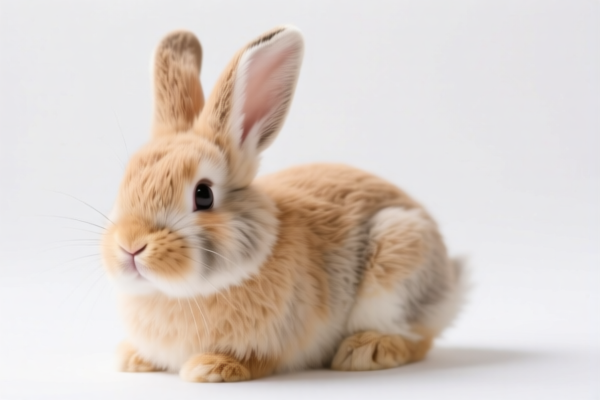
Product Images



AI Analysis
🐾 Plush Dog Mat (Dog Litter Tray / Pet Pad)
🌐 HS Code Reference & Customs Clearance Guide | 2026 Latest Tariff Analysis | Professional Clearance Strategy
📌 I. Product Definition & Classification: What exactly is a "Plush Dog Mat"?
A "Plush Dog Mat" typically refers to an absorbent, reusable, or disposable pad designed for pet hygiene (often used as a litter tray substitute or training pad). These products are generally made of textile materials (cotton, polyester, fiber) or composite materials (plastic, non-woven fabric, paper). In international trade, the classification depends heavily on the material composition and physical form.
⚠️ Key Distinction Points:
- If made of textile/fabric (cotton/polyester weave) → Falls under Chapter 63 (Other Made-Up Textile Articles).
- If made of plastic/rubber composites → Falls under Chapter 39 (Plastics and Articles Thereof).
- If made of paper/pulp → Falls under Chapter 48 (Paper and Paperboard).
📦 II. HS Code Classification Details (2026 Latest Tariff Authority Comparison)
Based on the provided data for "Plush Dog Mat", here are the specific HS Code mappings and tax implications:
| HS Code | Product Description | Material/Usage Analysis | Total Tax Rate |
|---|---|---|---|
6307.90.98.85 |
Textile Dog Mat | Made of cotton or fiber fabric. Fits "Other made-up textile articles." No material conflict. | 24.5% |
6307.90.75.00 |
Textile Pet Pad | Designed as pet supplies, made of textile materials. Fits "Textile pet products." No conflict. | 14.3% |
3924.90.56.50 |
Plastic/Non-Woven Hygiene Mat | Hygiene/cleaning supply. Composite of plastic/non-woven. Fits "Other plastic hygiene articles." | 20.9% |
3924.90.56.10 |
Plastic Pet Mat | Inferred plastic material. Fits "Pet-related plastic items" under栅栏 (fence/barrier) extensions. | 20.9% |
4823.90.86.20 |
Paper/Absorbent Fiber Mat | Inferred paper or absorbent fiber. Pad shape. Fits "Paper products." | 35.0% |
🔍 Critical Insight:
- The lowest tax rate (14.3%) applies to textile-based pet pads (6307.90.75.00).
- The highest tax rate (35.0%) applies to paper-based mats (4823.90.86.20).
- Plastic-based options hover around 20.9%.
💰 III. 2026 Latest Tariff Rate Breakdown (Including Surtaxes & Policy Surcharges)
✅ Applicable Country: United States (US)
✅ Origin: China (CN)
✅ Effective Date: 2025/2026 (Current Trade Policies)
🎯 1. 6307.90.98.85 —— Textile Dog Mat (Cotton/Fiber)
| Item | Details |
|---|---|
| Base Tariff | 7.0% |
| Section 301 Surtax | 7.5% |
| Section 122 Surcharge | 10.0% |
| Total Rate | 24.5% |
| Calculation | CIF Value × 24.5% |
| De Minimis Exemption | ❌ Not Eligible (Subject to high surtaxes) |
| Legal Basis | Base tariff + Section 301 + Section 122 |
📌 Explanation:
- This classification treats the mat as a general textile article.
- The 7.5% Section 301 tariff is a significant additional cost on Chinese textiles.
- The 10% Section 122 surcharge further increases the burden.
- Total: 24.5%. High cost, but lower than paper options.
🎯 2. 6307.90.75.00 —— Textile Pet Pad (Best Tax Rate)
| Item | Details |
|---|---|
| Base Tariff | 4.3% |
| Section 301 Surtax | 0.0% |
| Section 122 Surcharge | 10.0% |
| Total Rate | 14.3% |
| Calculation | CIF Value × 14.3% |
| De Minimis Exemption | ❌ Not Eligible (Due to Section 122) |
| Legal Basis | Base tariff + Section 122 |
📌 Note:
- This is the most tax-efficient classification for textile mats.
- Zero Section 301 surtax makes it significantly cheaper than other textile codes.
- Still subject to the 10% Section 122 surcharge (likely due to anti-circumvention measures).
- Total: 14.3%. Highly recommended if the product is purely textile.
🎯 3. 3924.90.56.50 & 3924.90.56.10 —— Plastic/Composite Mats
| Item | Details |
|---|---|
| Base Tariff | 3.4% |
| Section 301 Surtax | 7.5% |
| Section 122 Surcharge | 10.0% |
| Total Rate | 20.9% |
| Calculation | CIF Value × 20.9% |
| De Minimis Exemption | ❌ Not Eligible |
| Legal Basis | Base tariff + Section 301 + Section 122 |
📌 Note:
- Plastic-based mats face a higher total rate (20.9%) than textile mats (6307.90.75.00).
- However, they are cheaper than paper mats.
- Suitable if the product has a plastic backing or waterproof layer that defines its primary character.
🎯 4. 4823.90.86.20 —— Paper/Absorbent Fiber Mat (Highest Tax)
| Item | Details |
|---|---|
| Base Tariff | 0.0% |
| Section 301 Surtax | 25.0% |
| Section 122 Surcharge | 10.0% |
| Total Rate | 35.0% |
| Calculation | CIF Value × 35.0% |
| De Minimis Exemption | ❌ Not Eligible |
| Legal Basis | Base tariff + Section 301 + Section 122 |
📌 Warning:
- Despite a 0% base tariff, the 25% Section 301 surtax (highest among all categories) drives the total to 35.0%.
- Avoid this classification unless the product is strictly 100% paper and cannot be classified as textile.
🛠️ IV. Customs Clearance Practical Advice (Avoid Pitfalls)
✅ 1. Preparation Checklist (Non-Negotiable)
| Document | Required? | Explanation |
|---|---|---|
| ✅ Product Composition Report | ✔️ | Must specify % of cotton, polyester, plastic, or paper. Crucial for HS Code selection. |
| ✅ Product Photos | ✔️ | Show texture, thickness, and any packaging labels. |
| ✅ Commercial Invoice | ✔️ | Clearly state "Dog Mat" or "Pet Training Pad." Avoid vague terms like "Accessory." |
| ✅ Material Safety Data Sheet (MSDS) | ✔️ | If chemical treatments are used (e.g., antibacterial coatings). |
| ✅ Packaging List | ✔️ | Confirm weight and dimensions for duty calculation. |
✅ 2. Declaration Strategy (Key Tips)
🔥 "Material Defines Code, Code Defines Cost!"
| Scenario | Correct Declaration | Wrong Declaration |
|---|---|---|
| 100% Cotton/Polyester Weave | 6307.90.75.00 (14.3%) |
Misdeclare as 4823.90.86.20 → 35.0% |
| Plastic Backing + Textile Top | 6307.90.75.00 or 3924.90.56.50 |
Misdeclare as generic "Pet Supply" → Risk of reclassification |
| Paper-Based Absorbent Pad | 4823.90.86.20 (35.0%) |
Try to declare as textile → Seizure/Fine |
| Reusable Washable Mat | 6307.90.75.00 (14.3%) |
Declare as disposable paper → 35.0% |
📌 Critical Warning:
- Do not split shipments to avoid Section 301 tariffs. Customs can consolidate and assess all parts.
- Section 122 Surcharge (10%) applies to most of these codes regardless of classification, so focus on minimizing the Base + Section 301 components.
✅ 3. Special Case Handling
| Scenario | Recommendation |
|---|---|
| Mixed Materials | If the mat has both textile and plastic layers, argue for the primary character (usually textile for "plush" mats) to qualify for 6307.90.75.00. |
| OEM Custom Mats | Provide design specs showing fabric type. Avoid "paper" keywords in descriptions if using textiles. |
| Seasonal Imports | Pre-clearance rulings can lock in tax rates. Apply for Advance Ruling if unsure. |
🌍 V. Global Market Comparison (2026)
| Country | Recommended HS Code | Total Tax (China Origin) | Notes |
|---|---|---|---|
| 🇺🇸 USA | 6307.90.75.00 |
14.3% | Best rate for textiles. Avoid paper (35%). |
| 🇨🇳 China | 6307.90.98.85 |
~6-10% (Est.) | Lower duties, but focus on US export costs. |
| 🇪🇺 EU | 6307.90.98.85 |
~4-6% | No Section 122/301 equivalent, but different HS structure. |
| 🇬🇧 UK | 6307.90.98.85 |
~4-6% | Post-Brexit tariffs apply. |
📌 Conclusion:
- The US market is the most challenging due to Section 301 and Section 122 surcharges.
- Textile mats (6307.90.75.00) offer the best cost-saving opportunity at 14.3%.
- Paper mats (4823.90.86.20) are the most expensive at 35.0% due to high Section 301 rates.
📌 VI. Common Errors & Pitfalls (Lessons Learned)
❌ Error 1: Declaring a textile mat as paper to avoid Section 301.
👉 Result: Customs inspection reveals fabric → 35% duty + penalties.
❌ Error 2: Ignoring the Section 122 surcharge.
👉 Result: Unexpected 10% additional cost on top of base tariff.
❌ Error 3: Vague description "Pet Accessory."
👉 Result: Customs assigns worst-case HS Code → 35% or higher.
❌ Error 4: Assuming "De Minimis" ($800) exemption applies.
👉 Result: Section 122 and Section 301 tariffs apply even to small shipments. No exemption!
✅ Correct Practice:
"Reusable Cotton Pet Training Mat, Machine Made, Size 24x36, Pack of 10"
🎯 VII. Conclusion: Smart Classification Saves Money!
🎯 Key Takeaway:
🔹 Textile Mats (
6307.90.75.00): 14.3% Total Tax → Best Choice
🔹 Plastic Mats (3924.90.56.50): 20.9% Total Tax → Acceptable
🔹 Paper Mats (4823.90.86.20): 35.0% Total Tax → Avoid If Possible
📌 Pro Tip:
If your product is 100% textile, insist on 6307.90.75.00 to save 20.7% compared to paper and 6.6% compared to plastic.
If you have mixed materials, provide detailed composition reports to justify textile classification.
📣 Immediate Action:
📞 Consult a licensed customs broker.
📋 Submit material composition documents.
🚀 Optimize for6307.90.75.00to maximize profit margins!
✨ Precision in Classification, Profit in Clearance!
💼 Every percentage point matters in cross-border trade!
Customer Reviews
About HS Code Classification
The Harmonized System (HS) is an internationally standardized nomenclature developed by the World Customs Organization (WCO) to classify traded products. Over 200 countries use the HS system as the basis for customs tariffs, trade statistics, and import/export regulations.
Each HS code follows a hierarchical structure:
- Chapter (2 digits) — Broad category of goods (e.g., Chapter 84: Machinery and Mechanical Appliances)
- Heading (4 digits) — More specific grouping within the chapter
- Subheading (6 digits) — Internationally standardized breakdown, used by all WCO member countries
- National subdivisions (8-10 digits) — Country-specific extensions for further classification, such as US HTSUS 10-digit codes
Correct HS code classification is essential for smooth customs clearance, accurate duty payment, and compliance with trade regulations. Misclassification can lead to customs delays, overpayment of duties, or penalties.
When importing from CN to US, the applicable tariff rates may include:
- Most-Favored-Nation (MFN) rate — The standard duty rate applied to WTO members
- General rate — Applied to countries without trade agreements
- Trade remedy duties — Additional tariffs such as Section 301 (anti-dumping), Section 232 (national security), or countervailing duties
The information provided on this page is for reference purposes only. For official classification, please consult with your local customs authority or a licensed customs broker.