Pneumatic Tires for Industrial Handling
CN → US| HS Code | Tariff Rate | Origin | Destination | Doc |
|---|---|---|---|---|
| 4011802010 | 39.0% | CN | US | Official Doc |
| 4011808010 | 38.4% | CN | US | Official Doc |
Product Images
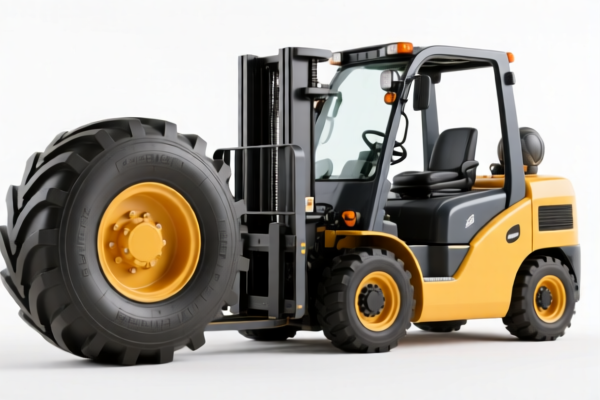
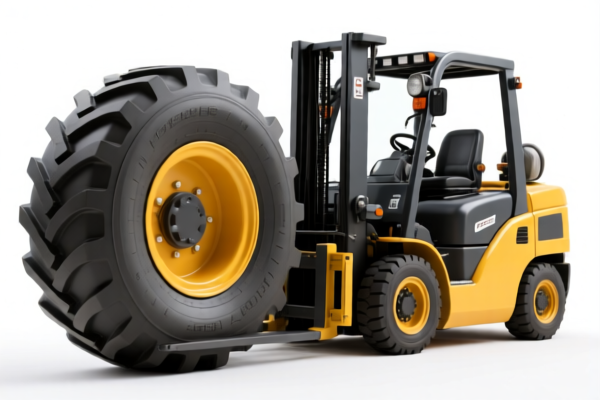
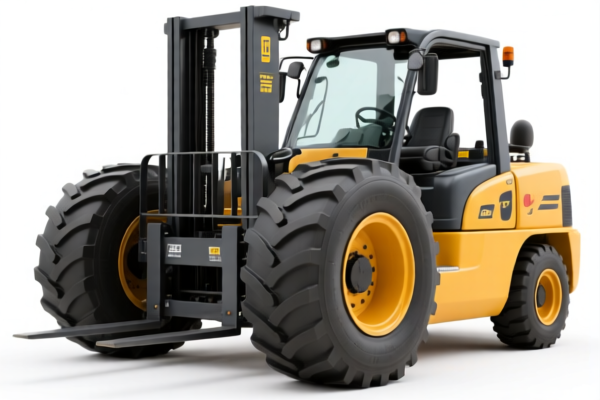
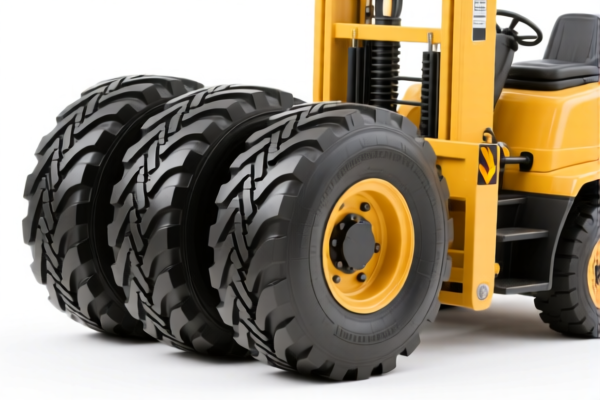
AI Analysis
🚛 Pneumatic Tires for Industrial Handling
🌐 HS Code Reference & Customs Clearance Guide | 2026 Latest Tariff Analysis | Professional Clearance Strategy
📌 I. Product Definition and Classification: Do You Really Understand "Industrial Tires"?
Pneumatic tires for industrial handling are the critical contact components for forklifts, pallet jacks, order pickers, and other material handling equipment. In international trade, they are strictly categorized based on rim size and construction type (Radial vs. Other).
Radial Tires: Constructed with casing plies running radially across the tire. Generally offers better fuel efficiency, heat dissipation, and tread life.
Other Tires (Bias/Belted Bias): Traditional construction where casing plies run diagonally across each other.
⚠️ Key Distinction Point:
- If the rim diameter is ≤ 61 cm (24 inches) and the tire is Radial → Classified under 4011.80.20.10
- If the rim diameter is ≤ 61 cm (24 inches) and the tire is NOT Radial (e.g., Bias) → Classified under 4011.80.80.10
- If the rim diameter is > 61 cm, these specific codes DO NOT APPLY.
📦 II. HS Code Classification Details (2026 Latest Tariff Authoritative Comparison)
| HS Code | Product Description | Applicable Scenario | Rim Size Constraint | Construction Type |
|---|---|---|---|---|
4011.80.20.10 |
New pneumatic tires, of rubber: Of a kind used on construction, mining or industrial handling vehicles and machines: Other: Radial Having a rim size not exceeding 61 cm | Forklifts, reach trucks, pallet trucks with small/medium wheels (≤24") | ≤ 61 cm | ✅ Radial |
4011.80.80.10 |
New pneumatic tires, of rubber: Of a kind used on construction, mining or industrial handling vehicles and machines: Other: Other Having a rim size not exceeding 61 cm | Forklifts, pallet trucks with small/medium wheels (≤24"), traditional bias-ply tires | ≤ 61 cm | ✅ Non-Radial (Bias/Belted) |
🔍 Key Reminder:
- Both codes apply ONLY to tires with a rim size not exceeding 61 cm.
- Larger industrial tires (e.g., for large rough-terrain forklifts with 26"+ rims) fall under different subheadings (e.g., 4011.80.20.20/80.20 depending on specific national extensions) and are NOT covered in this specific dataset.
- "Industrial handling vehicles" specifically refers to equipment designed for moving goods in warehouses, ports, and factories.
💰 III. 2026 Latest Tariff Rate Details (Including Additional Taxes, Policy Add-ons)
✅ Applicable Country: United States (US)
✅ Origin: China (CN)
✅ Effective Time: Current (Based on provided data)
🎯 1. 4011.80.20.10 —— Radial Pneumatic Tires (Rim ≤ 61 cm)
| Item | Content |
|---|---|
| Base Tariff Rate | 0.0% (ad valorem) |
| Section 301 Additional Tariff | 0.0% |
| IEEPA Additional Tariff | 0.0% |
| Total Tariff Rate | 0.0% |
| Tax Calculation | CIF Value × 0% = $0 |
| Can De Minimis Apply? | ✅ Yes (Subject to $800 threshold per person per day) |
| Legal Basis Path | HTSUS: 4011.80.20.10 → FTC/USITC General Rules |
📌 Explanation:
- Unlike many electronics or steel products, industrial handling tires (small rim size) currently enjoy zero tariffs in the US under the provided data.
- This includes both the base MFN (Most Favored Nation) rate and any additional trade remedy tariffs (Section 301 or IEEPA) are listed as 0.0%.
- Crucial for Costing: This is a high-margin opportunity for exporters compared to other rubber goods or machinery parts.
🎯 2. 4011.80.80.10 —— Other Pneumatic Tires (Non-Radial, Rim ≤ 61 cm)
| Item | Content |
|---|---|
| Base Tariff Rate | 0.0% (ad valorem) |
| Section 301 Additional Tariff | 0.0% |
| IEEPA Additional Tariff | 0.0% |
| Total Tariff Rate | 0.0% |
| Tax Calculation | CIF Value × 0% = $0 |
| Can De Minimis Apply? | ✅ Yes (Subject to $800 threshold per person per day) |
| Legal Basis Path | HTSUS: 4011.80.80.10 → FTC/USITC General Rules |
📌 Note:
- Same tariff treatment as radial tires in this specific category.
- Even though "Bias" tires are older technology, they are not subject to the additional punitive tariffs listed in this dataset.
- Ensure the description clearly states "Non-Radial" or "Bias Ply" to avoid misclassification disputes.
🛠️ IV. Customs Clearance Practical Advice (Battle-Tested Pitfall Avoidance Guide)
✅ 1. Documentation Checklist (Mandatory)
| Document | Mandatory? | Explanation |
|---|---|---|
| ✅ Product Specification Sheet | ✔️ | Must include: Rim size (in inches/cm), Tire size (e.g., 7.00-12), Type (Radial/Bias), Load Index, Speed Rating. |
| ✅ Commercial Invoice | ✔️ | Must explicitly state: "New Pneumatic Tires for Industrial Handling Vehicles," Rim Size, Construction Type. |
| ✅ Packing List | ✔️ | Detailed list of quantities, gross weight, net weight. |
| ✅ Certificate of Origin (CO) | ✔️ | Required to prove Chinese origin and apply correct tariff rates (though currently 0%, documentation is still standard). |
| ✅ Labeling/Marking | ✔️ | Tires must have proper branding, size, and safety marks. |
✅ 2. Declaration Skills (Key Mantra)
🔥 “Rim Size is King, Radial vs. Bias is Queen!”
| Situation | Correct Declaration Method | Wrong Practice |
|---|---|---|
| Rim size ≤ 61 cm (24") | 4011.80.20.10 (Radial) or 4011.80.80.10 (Other) |
Misclassifying as >61cm → Higher duty/Review |
| Rim size > 61 cm | NOT COVERED in this dataset → Use different HTSUS code | Using these codes → Seizure/Fine |
| Radial Tire | Clearly state "Radial Construction" | Vague description "Industrial Tire" |
| Bias Tire | Clearly state "Bias Ply" or "Non-Radial" | Mislabeling as Radial |
✅ 3. Special Case Handling
| Situation | Handling Advice |
|---|---|
| Mixed Shipments (Radial + Bias) | Separate line items in invoice. Do not lump together. Assign correct HS code to each. |
| Rim Size Ambiguity | Provide manufacturer’s technical drawing. 61 cm = 24.01 inches. Slight differences matter. |
| Used Tires | NOT COVERED. These codes are for NEW tires. Used tires have different regulations and often prohibitions. |
| Inner Tubes | If shipped separately, may be classified under 4010.39 or similar. Declare separately. |
🌍 V. Global Main Market Clearance Comparison (2026 Latest)
| Country/Region | Recommended HS Code | Tariff Rate | Certification Requirements | Notes |
|---|---|---|---|---|
| 🇺🇸 USA | 4011.80.20.10 / 4011.80.80.10 |
0.0% | None specific | Zero duty advantage |
| 🇨🇳 China | 4011.80.20.10 / 4011.80.80.10 |
~6-10% | CCC (if applicable) | Import duties apply |
| 🇪🇺 EU | 4011.80 series |
~4.5% | ECE Mark (for road use), but industrial may vary | Check national rules |
| 🇦🇺 Australia | 4011.80.20.10 |
~5% | None | Standard MFN |
| 🇯🇵 Japan | 4011.80 series |
~3.5-5% | JIS Mark (if applicable) | Standard MFN |
📌 Conclusion:
- The USA offers a 0% tariff advantage for these specific small-rim industrial tires, making it a highly competitive market for Chinese exporters.
- Ensure strict adherence to the ≤ 61 cm rim size requirement to qualify for these codes.
📌 VI. Common Mistakes & Pitfall Guide (Blood Lessons)
❌ Mistake 1: Misstating Rim Size
👉 Consequence: If rim is 25 inches (>61 cm) but declared as 24 inches → False Declaration, fines, and potential seizure.
❌ Mistake 2: Confusing "Industrial Handling" with "Automotive"
👉 Consequence: Automotive tires (4011.10/20) have different tariffs and safety standards. Misclassification leads to penalties.
❌ Mistake 3: Ignoring "New" Requirement
👉 Consequence: These codes specify NEW tires. Shipping used/retreaded tires under these codes is illegal.
❌ Mistake 4: Vague Description "Truck Tire"
👉 Consequence: Customs cannot determine if it's for road (automotive) or industrial (forklift). Causes delay and additional scrutiny.
✅ Correct Practice:
“New Radial Pneumatic Tires for Forklifts, Rim Size 20 Inches, Size 7.00-12, Load Index 10, Made in China”
🎯 VII. Conclusion: Professional Declaration, Save Time, Reduce Costs!
🎯 Remember the Mantra:
🔹 “Rim ≤ 61cm, Tariff is Zero!”
🔹 “Radial or Bias, Specify Clearly!”
🔹 “Industrial Handle, Not Road Car!”
📌 Pro Tip:
- If your tires are for large forklifts (rim > 61 cm), consult a customs broker for the correct HTSUS code (likely starting with 4011.80.20.20 or similar, which may have different rates).
- Pre-Arrangement (Advance Ruling): Consider applying for an FDA or Customs Pre-Ruling if you are unsure about the rim size classification to ensure smooth clearance.
📣 Immediate Action:
📞 Contact a professional customs broker + Provide Tire Specs (Rim Size, Type) + Apply for HS Code Pre-Ruling
🚀 Clear Customs Smoothly, Zero Duty Advantage, Maximize Profit!
✨ Professional Customs Clearance Starts with Accurate Classification!
💼 Every Dollar of Duty Saved is Pure Profit!
Customer Reviews
About HS Code Classification
The Harmonized System (HS) is an internationally standardized nomenclature developed by the World Customs Organization (WCO) to classify traded products. Over 200 countries use the HS system as the basis for customs tariffs, trade statistics, and import/export regulations.
Each HS code follows a hierarchical structure:
- Chapter (2 digits) — Broad category of goods (e.g., Chapter 84: Machinery and Mechanical Appliances)
- Heading (4 digits) — More specific grouping within the chapter
- Subheading (6 digits) — Internationally standardized breakdown, used by all WCO member countries
- National subdivisions (8-10 digits) — Country-specific extensions for further classification, such as US HTSUS 10-digit codes
Correct HS code classification is essential for smooth customs clearance, accurate duty payment, and compliance with trade regulations. Misclassification can lead to customs delays, overpayment of duties, or penalties.
When importing from CN to US, the applicable tariff rates may include:
- Most-Favored-Nation (MFN) rate — The standard duty rate applied to WTO members
- General rate — Applied to countries without trade agreements
- Trade remedy duties — Additional tariffs such as Section 301 (anti-dumping), Section 232 (national security), or countervailing duties
The information provided on this page is for reference purposes only. For official classification, please consult with your local customs authority or a licensed customs broker.