Polyamide Film Laminate
CN → US| HS Code | Tariff Rate | Origin | Destination | Doc |
|---|---|---|---|---|
| 5407410030 | 48.6% | CN | US | Official Doc |
| 3908100000 | 41.3% | CN | US | Official Doc |
| 3920920000 | 39.2% | CN | US | Official Doc |
| 3920991000 | 41.0% | CN | US | Official Doc |
| 3908907000 | 41.5% | CN | US | Official Doc |
Product Images
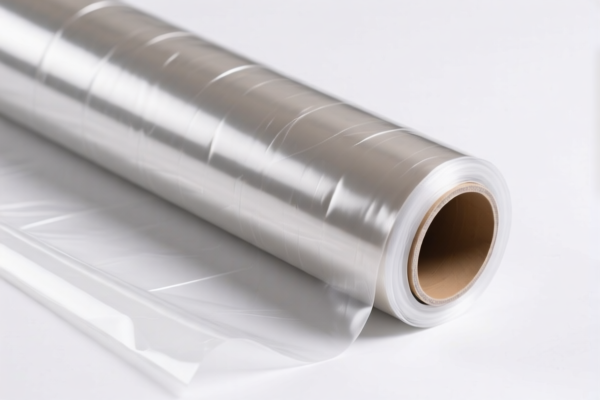
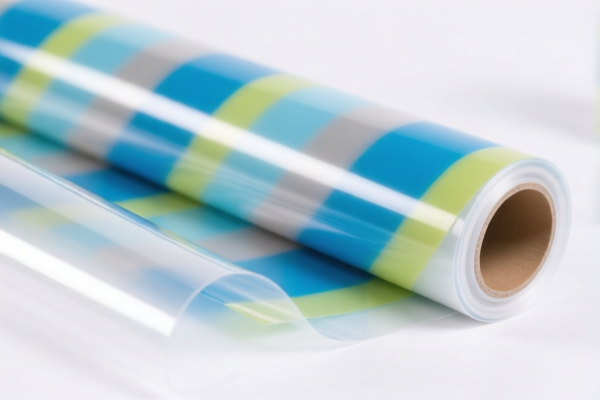
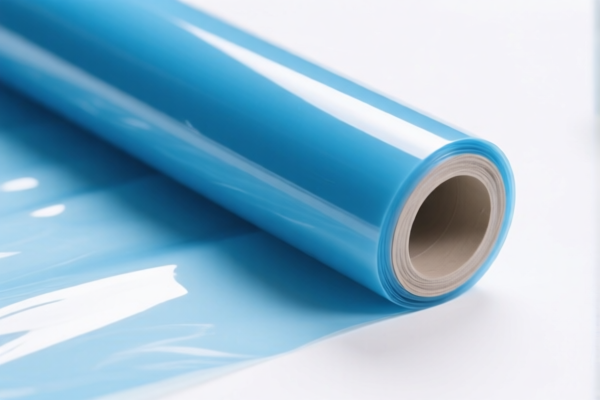

AI Analysis
🎞️ Polyamide Film Laminate (PA Film)
🌐 HS Code Reference & Customs Clearance Guide | 2026 Latest Tariff Analysis | Professional Clearance Strategy
📌 1. Product Definition & Classification: Do You Really Understand "Polyamide Film"?
Polyamide (PA) film, often referred to as Nylon film, is a high-performance plastic film known for its excellent mechanical strength, gas barrier properties, and heat resistance. In international trade, its classification depends heavily on its state (whether it is in a primary form/raw material or a processed product like fabric/sheet) and material composition.
Two Main Classification Paths: 1. Primary Forms (Raw Resins/Flakes): If the PA is in raw, unprocessed forms (even if technically a film precursor), it falls under Chapter 39 (Plastics). 2. Processed Films/Sheets: If the PA has been extruded, stretched, or processed into a specific film format for packaging or industrial use, it may fall under Chapter 54 (Synthetic Filament Yarn/Fabrics) or Chapter 39 (Other Plastic Films).
⚠️ Key Distinction:
- If the product is described as "Polyamide in primary forms" or generic "PA film" without specific fabric characteristics → Chapter 39 (Plastics)
- If the product is explicitly a "fabric/sheet" of synthetic filament yarn → Chapter 54 (Textiles/Fabrics)
- Note: Misclassification between Chapter 39 and 54 is a common customs error that triggers significant duty differences.
📦 2. HS Code Classification Details (2026 Latest Tariff Authority Comparison)
| HS Code | Product Description | Applicable Scenario | Material State |
|---|---|---|---|
5407.41.00.30 |
Polyamide Film, classified as fabric/sheet type | Processed polyamide film with fabric-like structure | ✅ Fabric/Sheet |
3908.10.00.00 |
Polyamide, primary form (filaments) | Raw PA resins, flakes, or primary film forms | ✅ Primary Form |
3920.92.00.00 |
Polyamide Film, plastic plate/sheet/film | General purpose PA film for packaging, lamination | ✅ Plastic Film |
3920.99.10.00 |
Other plates, sheets, film (Plastic) | Non-specified plastic films, generic PA films | ✅ Plastic Film |
3908.90.70.00 |
Polyamide, other primary forms | Other raw PA forms not specified elsewhere | ✅ Primary Form |
🔍 Key Reminder:
- Chapter 54 (5407.41.00.30) applies when the PA is considered a "fabric" or "sheet" of synthetic filament. This often carries higher duties due to textile-related tariffs.
- Chapter 39 (3908&3920) applies to plastics in primary forms or general plastic films. These are typically used for packaging, laminates, and industrial films.
- Material Consistency: Ensure the HS code matches the actual material. If it's purely polyamide, codes like3920.99.10.00(which says "plastic") are acceptable only if polyamide is classified under plastic in this context.
💰 3. 2026 Latest Tariff Rate Breakdown (Including Additional Taxes)
✅ Applicable Country: United States (US)
✅ Origin: China (CN)
✅ Effective Date: November 10, 2025 onwards (including subsequent imports)
🎯 1. 5407.41.00.30 —— Polyamide Film (Fabric/Sheet Type)
| Item | Content |
|---|---|
| Basic Duty Rate | 13.6% |
| Section 301 Additional Duty | +25.0% |
| 122 Clause Duty | +10.0% |
| Total Duty Rate | 48.6% |
| Tax Calculation | CIF Value × 48.6% |
| De Minimis Eligibility | ❌ Not Eligible |
| Legal Basis Path | Section 301: 9903.88.01 → 122 Clause → USITC:5407.41.00.30 |
📌 Explanation:
- The 13.6% basic rate is for synthetic filament fabric/film.
- The 25% Section 301 duty applies to Chinese-made textiles/synthetic films.
- The 10% 122 Clause duty is an additional safeguard tariff.
- Total 48.6% is a very high tariff, requiring careful cost planning.
🎯 2. 3908.10.00.00 —— Polyamide in Primary Forms
| Item | Content |
|---|---|
| Basic Duty Rate | 6.3% |
| Section 301 Additional Duty | +25.0% |
| 122 Clause Duty | +10.0% |
| Total Duty Rate | 41.3% |
| Tax Calculation | CIF Value × 41.3% |
| De Minimis Eligibility | ❌ Not Eligible |
| Legal Basis Path | Section 301 → 122 Clause → USITC:3908.10.00.00 |
📌 Note:
- If the polyamide is in primary form (e.g., raw pellets, flakes, or unprocessed film resin), it falls under Chapter 39.
- The basic duty is lower (6.3%) than the fabric classification, but the total 41.3% is still significant.
🎯 3. 3920.92.00.00 —— Polyamide Film (Plastic Film)
| Item | Content |
|---|---|
| Basic Duty Rate | 4.2% |
| Section 301 Additional Duty | +25.0% |
| 122 Clause Duty | +10.0% |
| Total Duty Rate | 39.2% |
| Tax Calculation | CIF Value × 39.2% |
| De Minimis Eligibility | ❌ Not Eligible |
| Legal Basis Path | Section 301 → 122 Clause → USITC:3920.92.00.00 |
📌 Advantage:
- This code offers the lowest total duty rate (39.2%) among the options.
- Suitable for laminated polyamide films used in packaging, where the material is clearly identified as a plastic film rather than a fabric.
🎯 4. 3920.99.10.00 —— Other Plastic Plates, Sheets, Film
| Item | Content |
|---|---|
| Basic Duty Rate | 6.0% |
| Section 301 Additional Duty | +25.0% |
| 122 Clause Duty | +10.0% |
| Total Duty Rate | 41.0% |
| Tax Calculation | CIF Value × 41.0% |
| De Minimis Eligibility | ❌ Not Eligible |
| Legal Basis Path | Section 301 → 122 Clause → USITC:3920.99.10.00 |
📌 Usage:
- Use this when the polyamide film does not fit specifically into3920.92(e.g., if it's a mixed plastic film or not clearly polyamide-only in customs view).
- Slightly higher than3920.92due to higher basic duty (6.0% vs 4.2%).
🎯 5. 3908.90.70.00 —— Other Polyamide in Primary Forms
| Item | Content |
|---|---|
| Basic Duty Rate | 6.5% |
| Section 301 Additional Duty | +25.0% |
| 122 Clause Duty | +10.0% |
| Total Duty Rate | 41.5% |
| Tax Calculation | CIF Value × 41.5% |
| > 📌 Note: | |
> - This is a "catch-all" for polyamide primary forms not specified in 3908.10. |
|
| > - Highest basic duty (6.5%) among Chapter 39 options, but still lower than Chapter 54. |
🛠️ 4. Practical Clearance Advice (Pitfall Avoidance Guide)
✅ 1. Required Documentation Checklist
| Document | Must Provide | Description |
|---|---|---|
| ✅ Product Spec Sheet | ✔️ | Material composition (100% PA or blend), thickness, width, application (packaging/industrial). |
| ✅ Photos of Product | ✔️ | Clear images showing film texture, edge cut, and any lamination layers. |
| ✅ Commercial Invoice | ✔️ | Clearly state "Polyamide Film Laminate" or "Nylon Film" with HS Code. |
| ✅ Certificate of Origin | ✔️ | To verify origin for Section 301 applicability. |
| ✅ Packing List | ✔️ | Include net/gross weight, number of rolls, dimensions. |
| ✅ Declaration of Non-Textile Use | ⚠️ If using Ch. 54 | If claiming Ch. 54, clarify if it's used as textile or industrial film. |
✅ 2. Declaration Tips (Key Mantra)
🔥 “Material First, Form Second, Code Choice Affects Cost!”
| Scenario | Correct HS Code | Incorrect Practice |
|---|---|---|
| Packaging Laminate Film | 3920.92.00.00 (39.2%) |
Misdeclare as 5407.41.00.30 → 48.6% |
| Raw PA Resin/Flakes | 3908.10.00.00 (41.3%) |
Misdeclare as finished film → 41.3% vs 39.2% |
| General Plastic Film | 3920.99.10.00 (41.0%) |
Use if specific PA classification is uncertain. |
| Fabric-like PA Film | 5407.41.00.30 (48.6%) |
Only if it meets textile/fabric definition. |
✅ 3. Special Cases Handling
| Case | Recommendation |
|---|---|
| Multi-layer Laminates | If PA is only one layer (e.g., PA/PE), classify based on essential character. If PA dominates, consider 3920.92. |
| Export vs. Domestic Use | Ensure the invoice states "For Industrial Use" or "Packaging Material" to avoid confusion with textile goods. |
| Pre-Ruling | Apply for Advance Ruling if unsure whether the film is classified as plastic (Ch. 39) or fabric (Ch. 54). |
| Origin Verification | Ensure Certificate of Origin clearly states "China" to confirm Section 301 applicability. |
🌍 5. Global Market Comparison (2026 Latest)
| Country/Region | Recommended HS Code | Duty Rate | Certification | Notes |
|---|---|---|---|---|
| 🇺🇸 USA | 3920.92.00.00 |
39.2% | No special certs | Highest complexity due to 301 + 122 clauses |
| 🇨🇳 China | 3920.92.00.00 |
~4-6% | None | Low duty for domestic use |
| 🇪🇺 EU | 3920.92.00.00 |
~4% | REACH + RoHS | No Section 301 equivalent |
| 🇯🇵 Japan | 3920.92.00.00 |
~6% | PSE (if electrical) | Stable tariff structure |
📌 Conclusion:
- USA is the most complex market for Polyamide Film due to additional tariffs.
- Choosing the right HS Code can save ~9.4% in duties (48.6% vs 39.2%).
- Chapter 39 (Plastics) is generally more favorable than Chapter 54 (Textiles) for polyamide films.
📌 6. Common Mistakes & Pitfall Guide (Lessons Learned)
❌ Mistake 1: Classifying packaging film as textile fabric (5407.41.00.30)
👉 Consequence: 48.6% duty instead of 39.2% → Overpayment!
❌ Mistake 2: Declaring raw PA resin as finished film
👉 Consequence: May trigger inspections for mismatched physical goods → Delays/Fines!
❌ Mistake 3: Ignoring 122 Clause applicability
👉 Consequence: Under-declaration → Back Taxes + Penalties!
❌ Mistake 4: Using generic "Plastic Film" without specifying Polyamide
👉 Consequence: Customs may reclassify to a higher duty code → Uncertainty!
✅ Correct Practice:
“Polyamide (PA) Film Laminate, 20 Micron, for Food Packaging, Material: 100% Polyamide, Origin: China”
🎯 7. Conclusion: Professional Declaration, Cost Reduction!
🎯 Key Takeaway:
🔹 “Plastic over Fabric: Save 9.4% on Duties!”
🔹 “HS Code Choice: 39.2% vs 48.6% – Know the Difference!”
🔹 “Always Declare Material & Form Accurately to Avoid Delays!”
📌 Pro Tip:
- If your polyamide film is not made in China, Section 301 duties may be exempt.
- Apply for Pre-Ruling if you are unsure about the fabric vs. plastic classification.
- Work with Experienced Customs Brokers to navigate Section 301 and 122 Clause complexities.
📣 Immediate Action:
📞 Contact your customs broker + Provide Product Specs + Confirm HS Code
3920.92.00.00
🚀 Clear Customs Smoothly, Reduce Costs, Maximize Profits!
✨ Professional Clearance Starts with Accurate Classification!
💼 Every Dollar Saved Counts in Global Trade!
Customer Reviews
About HS Code Classification
The Harmonized System (HS) is an internationally standardized nomenclature developed by the World Customs Organization (WCO) to classify traded products. Over 200 countries use the HS system as the basis for customs tariffs, trade statistics, and import/export regulations.
Each HS code follows a hierarchical structure:
- Chapter (2 digits) — Broad category of goods (e.g., Chapter 84: Machinery and Mechanical Appliances)
- Heading (4 digits) — More specific grouping within the chapter
- Subheading (6 digits) — Internationally standardized breakdown, used by all WCO member countries
- National subdivisions (8-10 digits) — Country-specific extensions for further classification, such as US HTSUS 10-digit codes
Correct HS code classification is essential for smooth customs clearance, accurate duty payment, and compliance with trade regulations. Misclassification can lead to customs delays, overpayment of duties, or penalties.
When importing from CN to US, the applicable tariff rates may include:
- Most-Favored-Nation (MFN) rate — The standard duty rate applied to WTO members
- General rate — Applied to countries without trade agreements
- Trade remedy duties — Additional tariffs such as Section 301 (anti-dumping), Section 232 (national security), or countervailing duties
The information provided on this page is for reference purposes only. For official classification, please consult with your local customs authority or a licensed customs broker.