Polycarbonate Automotive Interior Panel
CN → US| HS Code | Tariff Rate | Origin | Destination | Doc |
|---|---|---|---|---|
| 3920610000 | 40.8% | CN | US | Official Doc |
| 3921905050 | 39.8% | CN | US | Official Doc |
| 3921190090 | 41.5% | CN | US | Official Doc |
| 3920995000 | 40.8% | CN | US | Official Doc |
| 3921905050 | 39.8% | CN | US | Official Doc |
Product Images
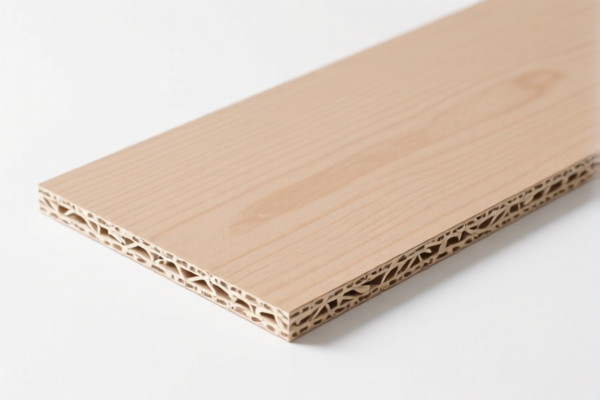
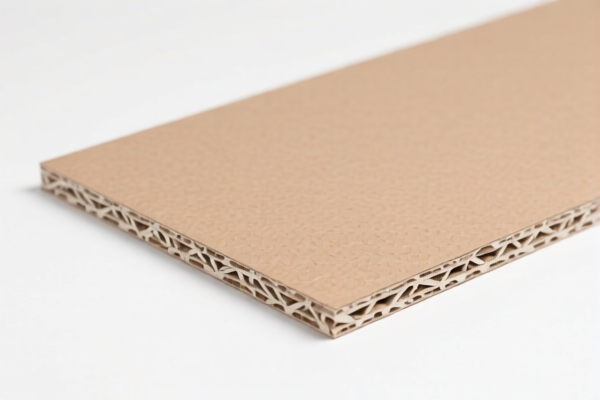
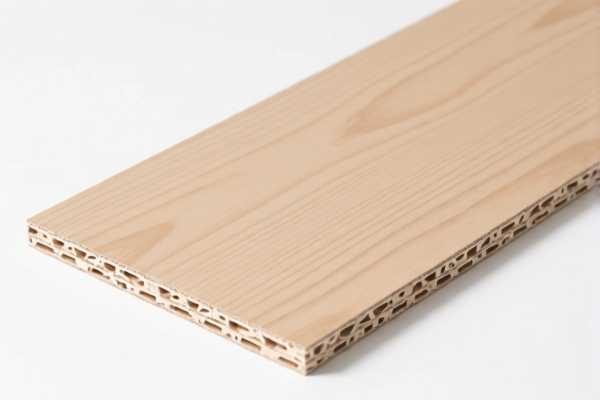
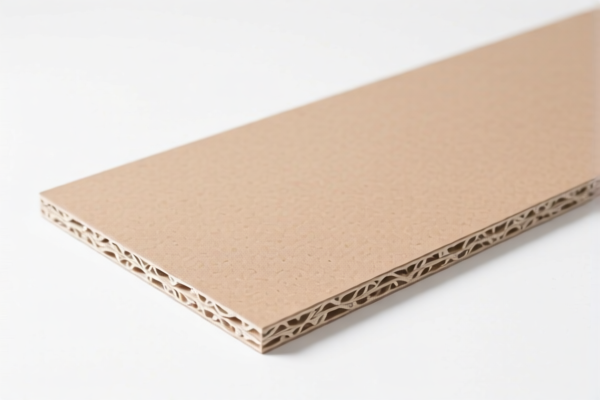
AI Analysis
🚗 Polycarbonate Automotive Interior Panel
🌐 HS Code Reference & Clearance Guide | 2026 Latest Tariff Analysis | Professional Customs Strategy
📌 One, Product Definition & Classification: Do You Really Understand "Plastic Panels"?
Polycarbonate (PC) and Polyamide (PA/Nylon) automotive interior panels are critical structural and aesthetic components in modern vehicles. In international trade, these are strictly classified under Chapter 39: Plastics and Articles Thereof.
The key distinction lies in the specific polymer type and general description: - Polycarbonate (PC) Panels: Often classified under Heading 3920 (Non-cellular plastics) or 3921 (Other plated/laminated/supported plastics), depending on specific sub-category definitions. - Polyamide (Nylon) Panels: Specifically noted in some descriptions as automotive interior trim, falling under 3921 (Other plastic plates/sheets).
⚠️ Key Classification Point:
- If the material is explicitly Polycarbonate and fits the description of "non-cellular plates," it may fall under 3920.99 or 3920.61.
- If it is a Polyamide (Nylon) or a general "other plastic" plate not elsewhere specified, it typically falls under 3921.90 or 3921.19.
- Do not confuse with finished automotive parts (Chapter 87); these are raw plastic plates/sheets intended for further processing into car interiors.
📦 Two, HS Code Classification Details (2026 Latest Tariff Authority Comparison)
| HS Code | Product Description | Application Scenario | Material Type |
|---|---|---|---|
3920.61.00.00 |
Polycarbonate plates, sheets, film, foil, and flat, in primary forms | PC-based interior trim panels, transparent/opaque PC sheets | ✅ Polycarbonate |
3921.90.50.50 |
Other plates, sheets, film, foil, and flat, of plastics; specifically Polyamide Automotive Interior Panels | Nylon/PA-based car door panels, dashboards, trim | ✅ Polyamide (Nylon) |
3921.19.00.90 |
Other plates, sheets, film, foil, and flat, of plastics; other plastic panels | General-purpose Polycarbonate or mixed plastic plates | ✅ Plastic (General) |
3920.99.50.00 |
Plates, sheets, film, foil, and flat, of other plastics; non-cellular, unreinforced | Other non-cellular Polycarbonate or plastic plates not elsewhere specified | ✅ Plastic (Non-cellular) |
🔍 Important Reminder:
- 3920.61.00.00 is specific to Polycarbonate. If your product is 100% PC, this is a strong candidate.
- 3921.90.50.50 explicitly mentions Polyamide (Nylon) automotive interior panels. If your panel is Nylon-based, this is the most accurate description.
- 3921.19.00.90 and 3920.99.50.00 are broader categories for "other plastics." Use these if the specific polymer isn't Polyamide or Polycarbonate, or if the specific sub-heading for PC doesn't perfectly fit your product's physical state (e.g., if it's laminated/coated).
💰 Three, 2026 Latest Tariff Rate Details (Including Surcharges, Policy Add-ons)
✅ Applicable Country: United States (US)
✅ Origin: China (CN)
✅ Effective Date: From November 10, 2025 (and subsequent imports)
🎯 1. 3920.61.00.00 —— Polycarbonate Plates (Polycarbonate Specific)
| Item | Content |
|---|---|
| Base Tariff Rate | 5.8% (ad valorem) |
| Section 301 Surcharge | +25.0% |
| Section 122 Tariff | +10.0% |
| Total Tariff Rate | 40.8% |
| Tax Calculation | CIF Value × 40.8% |
| De Minimis Exemption | ❌ Not Applicable |
| Legal Basis Path | USITC:3920.61.00.00 → Section 301 → Section 122 |
📌 Explanation:
- Base Rate 5.8%: Standard Most Favored Nation (MFN) rate for Polycarbonate plates.
- Section 301 (25%): Added tariff on Chinese goods under Trade Act of 1974, Section 301.
- Section 122 (10%): Additional tariff imposed under the International Emergency Economic Powers Act (IEEPA) or specific executive orders targeting Chinese imports.
- Total 40.8%: This is a high-cost category. Accurate material declaration is crucial to avoid misclassification penalties.
🎯 2. 3921.90.50.50 —— Polyamide (Nylon) Automotive Interior Panels
| Item | Content |
|---|---|
| Base Tariff Rate | 4.8% (ad valorem) |
| Section 301 Surcharge | +25.0% |
| Section 122 Tariff | +10.0% |
| Total Tariff Rate | 39.8% |
| Tax Calculation | CIF Value × 39.8% |
| De Minimis Exemption | ❌ Not Applicable |
| Legal Basis Path | USITC:3921.90.50.50 → Section 301 → Section 122 |
📌 Note:
- This HS Code explicitly covers Polyamide (Nylon) automotive interior panels.
- Base Rate 4.8%: Slightly lower than Polycarbonate due to different sub-heading classification.
- Total 39.8%: Still very high due to mandatory surcharges.
- Key Advantage: If your material is Nylon, this code is more descriptive and accurate than general "other plastics" codes.
🎯 3. 3921.19.00.90 —— Other Plastic Plates (General)
| Item | Content |
|---|---|
| Base Tariff Rate | 6.5% (ad valorem) |
| Section 301 Surcharge | +25.0% |
| Section 122 Tariff | +10.0% |
| Total Tariff Rate | 41.5% |
| Tax Calculation | CIF Value × 41.5% |
| De Minimis Exemption | ❌ Not Applicable |
| Legal Basis Path | USITC:3921.19.00.90 → Section 301 → Section 122 |
📌 Warning:
- This code has the highest total tariff (41.5%) among the options due to a higher base rate (6.5%).
- Use only if the product is a plastic plate but does not fit the specific descriptions of PC (3920.61) or Nylon Automotive Panels (3921.90.50.50).
- Avoid if possible due to higher cost, unless no other specific code applies.
🎯 4. 3920.99.50.00 —— Other Non-Cellular Plastic Plates
| Item | Content |
|---|---|
| Base Tariff Rate | 5.8% (ad valorem) |
| Section 301 Surcharge | +25.0% |
| Section 122 Tariff | +10.0% |
| Total Tariff Rate | 40.8% |
| Tax Calculation | CIF Value × 40.8% |
| De Minimis Exemption | ❌ Not Applicable |
| Legal Basis Path | USITC:3920.99.50.00 → Section 301 → Section 122 |
📌 Note:
- This code covers non-cellular, unreinforced plastic plates.
- If your Polycarbonate panel is not classified under 3920.61 (e.g., if it’s a composite or has specific treatments not covered by 3920.61), this may be the fallback.
- Total 40.8%: Same as PC-specific code, but with less descriptive accuracy. Ensure the product truly fits "non-cellular" and "unreinforced."
🛠️ Four, Customs Clearance Practical Advice (Pitfall Avoidance Guide)
✅ 1. Preparation Checklist (All Documents Required)
| Document | Required | Description |
|---|---|---|
| ✅ Product Specification Sheet | ✔️ | Must specify material (PC vs. PA/Nylon), dimensions, thickness, color, and finish. |
| ✅ Material Safety Data Sheet (MSDS) | ✔️ | To confirm chemical composition and ensure no restricted substances. |
| ✅ Product Photos | ✔️ | Clear images showing texture, edges, and any branding/mold marks. |
| ✅ Commercial Invoice | ✔️ | Must clearly state "Polycarbonate/Automotive Interior Panel" and HS Code. |
| ✅ Packing List | ✔️ | Detail weight, dimensions, and packaging type. |
| ✅ Certificate of Origin (CO) | ✔️ | Required for duty determination and potential exemption claims (if applicable). |
| ✅ Test Reports | ✔️ | If available, include flammability, durability, or chemical resistance tests relevant to automotive use. |
✅ 2. Declaration Tips (Key Mnemonics)
🔥 "Material First, Form Second, No De Minimis!"
| Scenario | Correct Declaration | Incorrect Practice |
|---|---|---|
| Polycarbonate Panel | 3920.61.00.00 or 3920.99.50.00 |
Declare as "Automotive Part" (Ch 87) → Severe Penalty |
| Nylon Panel | 3921.90.50.50 |
Declare as "General Plastic Plate" → 41.5% Tax |
| Laminated/Coated Panel | Check specific sub-headings | Assume all plastic plates are the same → Misclassification |
| Raw Sheets vs. Finished Parts | Clearly state "Plates/Sheets" | Call it "Car Door Trim" → Wrong Chapter |
📌 Critical Note:
- Do NOT declare these as "Automotive Interior Parts" (Chapter 87). They are raw plastic materials (Chapter 39).
- If you declare them as finished parts, you will face wrong HS code penalties and potentially different tariff rates (which may be higher or subject to different rules).
- Accuracy is Key: The difference between 39.8% and 41.5% is real money. Choose the most specific code.
✅ 3. Special Case Handling
| Scenario | Handling Advice |
|---|---|
| Mixed Materials | If the panel has metal inserts or other materials, it may no longer be a "plastic article." Consult a customs broker for potential Chapter 85/87 classification. |
| Sample Shipments | Even samples are subject to 40.8% tax. Do not declare as "Gift" or "Sample" to avoid customs seizure. |
| Re-export | If importing for manufacturing and re-exporting, consider Foreign Trade Zones (FTZ) or Bonded Warehouses to defer or reduce duties. |
| Pre-Ruling Request | For large volumes, request a Binding Tariff Information (BTI) or Ruling from CBP to confirm the correct HS code before shipment. |
🌍 Five, Global Market Comparison (2026 Latest)
| Country/Region | Recommended HS Code | Tariff (China Origin) | Certification Requirements | Notes |
|---|---|---|---|---|
| 🇺🇸 USA | 3920.61.00.00 / 3921.90.50.50 |
39.8% - 41.5% | None (Customs only) | High tariffs due to Section 301 & 122. |
| 🇨🇳 China | Same HS Codes | 5.8% - 6.5% | CCC (if applicable) | No Section 301 surcharges. |
| 🇪🇺 EU | 3920.61 / 3921.90 |
0% - 6.5% | REACH, RoHS | No major surcharges on plastics. |
| 🇲🇽 Mexico | 3920.61 / 3921.90 |
0% - 5% | NOM | USMCA may apply if origin is qualified. |
| 🇻🇳 Vietnam | 3920.61 / 3921.90 |
0% - 10% | Various | Potential supply chain diversification. |
📌 Conclusion:
- USA is the most challenging market due to high combined tariffs.
- Diversify Supply Chain: Consider sourcing from Vietnam, Mexico, or other non-China origins if targeting the US market to mitigate tariff risks.
- Cost Impact: A $10,000 shipment will incur $4,000+ in tariffs alone in the US.
📌 Six, Common Mistakes & Pitfalls (Lessons Learned)
❌ Mistake 1: Declaring plastic panels as "Automotive Parts" (Chapter 87)
👉 Consequence: Wrong classification, potential penalties of 100%+, and delays.
✅ Fix: Declare as "Plastic Plates/Sheets" (Chapter 39).
❌ Mistake 2: Ignoring the difference between Polycarbonate (PC) and Polyamide (PA)
👉 Consequence: Choosing the wrong HS Code (e.g., 3921.19.00.90 at 41.5% instead of 3921.90.50.50 at 39.8%).
✅ Fix: Verify material composition with the manufacturer.
❌ Mistake 3: Assuming De Minimis exemption applies to small shipments
👉 Consequence: Customs will assess full taxes on even small samples.
✅ Fix: Budget for taxes on all imports.
❌ Mistake 4: Incomplete Documentation
👉 Consequence: Customs hold, inspection delays, and storage fees.
✅ Fix: Provide detailed specs and material certifications.
🎯 Seven, Conclusion: Professional Declaration, Cost Optimization!
🎯 Remember the Mnemonics:
🔹 "PC is 40.8%, Nylon is 39.8%, Other is 41.5%."
🔹 "Plastic Plates, Not Car Parts! Avoid Chapter 87."
🔹 "Section 301 + Section 122 = High Cost. Plan Ahead."
📌 Pro Tip:
If you are importing large volumes, consider supply chain relocation to Vietnam or Mexico to benefit from lower tariffs or USMCA benefits.
Always request a Customs Ruling for your specific product to ensure compliance and avoid surprises.
📣 Immediate Action:
📞 Contact a licensed customs broker.
📄 Provide detailed product specifications.
🚀 Optimize your HS Code selection to minimize costs and ensure smooth clearance.
✨ Professional Customs Clearance Starts with Accurate Classification!
💼 Every Cent Saved is a Profit Gained!
Customer Reviews
About HS Code Classification
The Harmonized System (HS) is an internationally standardized nomenclature developed by the World Customs Organization (WCO) to classify traded products. Over 200 countries use the HS system as the basis for customs tariffs, trade statistics, and import/export regulations.
Each HS code follows a hierarchical structure:
- Chapter (2 digits) — Broad category of goods (e.g., Chapter 84: Machinery and Mechanical Appliances)
- Heading (4 digits) — More specific grouping within the chapter
- Subheading (6 digits) — Internationally standardized breakdown, used by all WCO member countries
- National subdivisions (8-10 digits) — Country-specific extensions for further classification, such as US HTSUS 10-digit codes
Correct HS code classification is essential for smooth customs clearance, accurate duty payment, and compliance with trade regulations. Misclassification can lead to customs delays, overpayment of duties, or penalties.
When importing from CN to US, the applicable tariff rates may include:
- Most-Favored-Nation (MFN) rate — The standard duty rate applied to WTO members
- General rate — Applied to countries without trade agreements
- Trade remedy duties — Additional tariffs such as Section 301 (anti-dumping), Section 232 (national security), or countervailing duties
The information provided on this page is for reference purposes only. For official classification, please consult with your local customs authority or a licensed customs broker.