Polycarbonate Optical Sheets
CN → US| HS Code | Tariff Rate | Origin | Destination | Doc |
|---|---|---|---|---|
| 3907400000 | 40.8% | CN | US | Official Doc |
| 3907610050 | 41.5% | CN | US | Official Doc |
| 3920610000 | 40.8% | CN | US | Official Doc |
| 3920690000 | 39.2% | CN | US | Official Doc |
Product Images

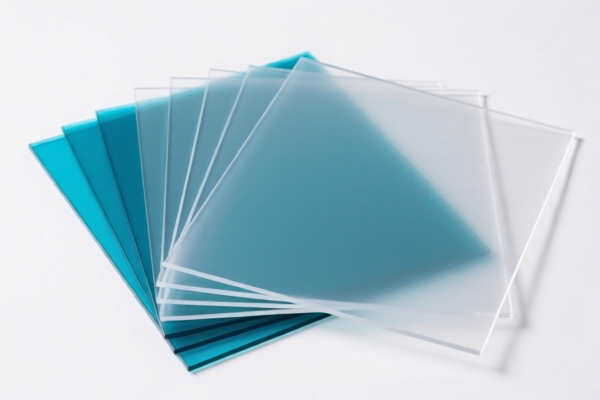

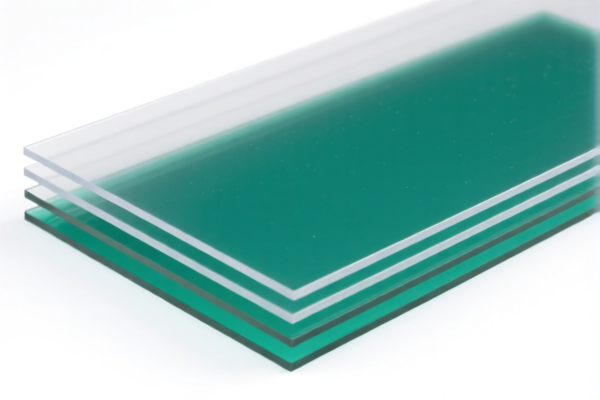
AI Analysis
🛡️ Polycarbonate Optical Sheets (Transparent Plastic Sheets)
🌐 HS Code Reference & Clearance Guide | 2026 Latest Tax Rates | Professional Entry Strategy
📌 I. Product Definition & Classification: Do you really understand "Polycarbonate Optical Sheets"?
Polycarbonate Optical Sheets are high-performance, transparent plastic plates made from polycarbonate (PC). They are characterized by: * Optical Clarity: High light transmission (often >88%). * Impact Resistance: 250x stronger than glass. * Thermal Stability: Withstands high temperatures without warping. * Applications: Used in LED diffusers, light guides, automotive headlight lenses, safety goggles, medical devices, and architectural glazing.
⚠️ Critical Classification Distinction: In international trade, these sheets are NOT classified as "Electronic Parts" or "Raw Resins." They fall under Plastic Sheets/Film (Chapter 39). * Scenario A: The sheet is made of Polycarbonate → HS 3920.61.00.00 (Base Tax 0%, US Add-on 0%) * Scenario B: The sheet is made of Other Polyesters (often confused with PC, but chemically different) → HS 3920.69.00.00 (Base Tax 4.2%, US Add-on 25%, Total 29.2%)
⚠️ Major Risk: Misidentifying "Polycarbonate" as "Other Polyester" or vice versa can lead to a 29.2% vs. 0% tax discrepancy!
📦 II. HS Code Classification Details (2026 Latest Tariff Schedule)
Based on the provided data, here are the precise classifications for Plastic Sheets involving Polycarbonates and Polyesters:
| HS Code | Product Description | Material Composition | Base Tariff | Add-on Tariff (Section 301) | Total Tax Rate |
|---|---|---|---|---|---|
3907.40.00.00 |
Polycarbonates (Primary Forms) (Raw Granules/Pellets) |
Pure Polycarbonate Resin | 0.0% | 0.0% | 0.0% |
3907.61.00.50 |
Acrylic Polymers (Primary Forms) (Raw Granules - "Other") |
PMMA / Acrylic Resin | 0.0% | 0.0% | 0.0% |
3920.61.00.00 |
Plastic Sheets (Polycarbonate) (Non-cellular, Not Reinforced) |
Polycarbonate | 0.0% | 0.0% | 0.0% |
3920.69.00.00 |
Plastic Sheets (Other Polyesters) (Non-cellular, Not Reinforced) |
Other Polyesters (Not PC) | 4.2% | 25.0% | 29.2% |
🔍 Key Analysis: * Primary Forms (
3907...): These apply if you are importing raw granules (pellets) to manufacture sheets yourself. Tax is 0%. * Finished Sheets (3920...): This applies to the final optical sheets. * If the chemical composition is strictly Polycarbonate →3920.61.00.00(0% tax). * If the sheet is Polyester (e.g., PET, PEN) or a blend not classified as PC →3920.69.00.00(29.2% tax).
💰 III. 2026 Tax Rate Breakdown & Policy Details
✅ Applicable Country: United States (US) ✅ Origin: China (CN) ✅ Regulation: Section 301 Trade Act & USITC Data
🎯 1. 3920.61.00.00 — Polycarbonate Sheets (The "Safe" Zone)
| Item | Content |
|---|---|
| Product | Non-cellular, non-reinforced sheets of Polycarbonates. |
| Base Tariff | 0.0% |
| Section 301 Add-on | 0.0% (No additional duties for PC sheets under this specific code) |
| Total Tax | 0.0% |
| Tax Calculation | CIF Value × 0% |
| De Minimis Exemption | N/A (Full tariff entry) |
| Legal Basis | Harmonized Tariff Schedule (HTSUS) Chapter 39, Subheading 61. |
📌 Interpretation: This is the Golden Classification for Polycarbonate Optical Sheets. As long as the material is chemically verified as Polycarbonate and not a generic polyester, you pay NO Customs Duties (neither base nor Section 301). This code offers maximum cost efficiency.
🎯 2. 3920.69.00.00 — Other Polyesters Sheets (The "Danger Zone")
| Item | Content |
|---|---|
| Product | Non-cellular, non-reinforced sheets of Other Polyesters. |
| Base Tariff | 4.2% |
| Section 301 Add-on | 25.0% |
| Total Tax | 29.2% |
| Tax Calculation | CIF Value × 29.2% |
| De Minimis Exemption | ❌ Not Eligible |
| Legal Basis | HTSUS Chapter 39, Subheading 69. |
📌 Interpretation: This is a High-Cost Trap. Many suppliers label products vaguely as "Engineering Plastic Sheets." If the chemical analysis shows the material is PET, PBT, or PEN (Polyesters) rather than Polycarbonate, the tariff spikes to 29.2%. * Difference: A $10,000 shipment could cost an extra $2,920 in duties if misclassified.
🛠️ IV. Clearance Practice Suggestions (Avoiding Pitfalls)
✅ 1. Essential Documentation Checklist
| Document | Requirement | Why It Matters |
|---|---|---|
| Material Safety Data Sheet (MSDS) | MUST HAVE | Must explicitly state "Polycarbonate (PC)" or "Polyester" as the resin type. |
| Certificate of Analysis (COA) | MUST HAVE | Laboratory test confirming chemical composition (FTIR spectrum). |
| Commercial Invoice | Must specify "Polycarbonate" | Do not write just "Plastic Sheet" or "Optical Sheet." Write: "Polycarbonate Optical Sheet, 3920.61". |
| Product Photographs | MUST HAVE | Show the clear, scratch-resistant nature typical of PC. |
| Declaration of Origin | MUST HAVE | Certify country of origin for Section 301 applicability. |
✅ 2. Declaration Strategy (The "PC vs. Polyester" Rule)
🔥 Golden Rule: "If it's Polycarbonate, declare 3920.61. If it's Polyester, declare 3920.69. Never guess!"
| Scenario | Correct Declaration | Consequence of Error |
|---|---|---|
| Product is PC | HS: 3920.61.00.00 |
✅ 0% Tax. Smooth clearance. |
| Product is PET/PEN | HS: 3920.69.00.00 |
✅ 29.2% Tax. Payable, no fraud. |
| Product is PC but labeled "Other Polyester" | HS: 3920.69.00.00 |
❌ Overpayment (Lost 29.2% profit). |
| Product is Polyester but labeled "Polycarbonate" | HS: 3920.61.00.00 |
❌ Underpayment/Fraud. → Seizure, 29.2% Back Tax + 20% Penalty + 10% Interest. |
✅ 3. Special Cases & Handling
| Situation | Action Plan |
|---|---|
| Blends (PC + Co-polymer) | If the blend contains <5% other materials, it may still qualify as PC. Get a chemical COA. |
| Laminated Sheets | If the PC sheet is laminated with a different film, it might change classification to 3921 or 3920.61 depending on the "essential character." |
| Reinforced/Supported | If the sheet has fiber reinforcement, it moves to 3920.90, not 3920.61. Verify "Non-reinforced". |
🌍 V. Global Market Comparison (2026)
| Region | Recommended HS Code | Tax Rate (China Origin) | Notes |
|---|---|---|---|
| 🇺🇸 USA | 3920.61.00.00 (PC) |
0.0% | Best case. If misclassified as Polyester (3920.69), rate is 29.2%. |
| 🇨🇳 China | 3920.61.00.00 |
~2.5% - 3% | Domestic export policies vary. |
| 🇪🇺 EU | 3920.61.00 |
0% (Mostly) | Generally low duty for engineering plastics. |
| 🇯🇵 Japan | 3920.61.00 |
0% | Low duty for optical sheets. |
📌 Conclusion: The USA is the only major market with a 25% Section 301 penalty on "Other Polyesters" (
3920.69), while Polycarbonates (3920.61) remain tax-free. Precision in chemical naming is your biggest cost-saving tool.
📌 VI. Common Mistakes & Avoidance Guide (Lessons Learned)
❌ Mistake 1: Using generic names like "High-Strength Plastic Sheets" on invoices.
👉 Consequence: Customs may default to the highest tax rate (3920.69 - 29.2%) due to ambiguity.
❌ Mistake 2: Assuming "Optical Sheet" = "Polycarbonate". 👉 Consequence: Many optical sheets are PET or PMMA. If you ship PET and claim PC, you face a massive back-tax bill and potential fraud investigation.
❌ Mistake 3: Ignoring the "Primary Forms" codes (3907).
👉 Consequence: If you are importing granules to make sheets, do not declare them as "Sheets." Declare as 3907.40.00.00 (0% tax). If declared as sheets, you might face inventory mismatch.
✅ Correct Declaration Format:
"Polycarbonate Optical Sheets, Non-cellular, Non-reinforced, Clear, 2mm thickness, Material: PC (Polycarbonate), HS Code: 3920.61.00.00"
🎯 VII. Final Verdict: Cost Optimization Strategy
🚀 Action Plan for Importers: 1. Verify Chemistry: Request a COA from the supplier confirming the resin is Polycarbonate, not Polyester. 2. Label Precisely: Ensure the commercial invoice explicitly states "Polycarbonate" and not just "Plastic". 3. Declare Correctly: Use
3920.61.00.00for PC sheets. Use3920.69.00.00ONLY if it is chemically confirmed as Other Polyester. 4. Save 29.2%: By correctly identifying Polycarbonate, you save nearly 30% of the product's value in duties compared to misclassified polyester.
📌 Pro Tip: If your supplier claims "It's a generic polymer," demand a chemical test report. In the US, the difference between 0% and 29.2% is a matter of a few grams of carbon and oxygen. Accuracy = Profit!
✨ Clearance Success Starts with the Right HS Code! 💼 💰 Don't let a 29.2% error kill your margin!
Customer Reviews
About HS Code Classification
The Harmonized System (HS) is an internationally standardized nomenclature developed by the World Customs Organization (WCO) to classify traded products. Over 200 countries use the HS system as the basis for customs tariffs, trade statistics, and import/export regulations.
Each HS code follows a hierarchical structure:
- Chapter (2 digits) — Broad category of goods (e.g., Chapter 84: Machinery and Mechanical Appliances)
- Heading (4 digits) — More specific grouping within the chapter
- Subheading (6 digits) — Internationally standardized breakdown, used by all WCO member countries
- National subdivisions (8-10 digits) — Country-specific extensions for further classification, such as US HTSUS 10-digit codes
Correct HS code classification is essential for smooth customs clearance, accurate duty payment, and compliance with trade regulations. Misclassification can lead to customs delays, overpayment of duties, or penalties.
When importing from CN to US, the applicable tariff rates may include:
- Most-Favored-Nation (MFN) rate — The standard duty rate applied to WTO members
- General rate — Applied to countries without trade agreements
- Trade remedy duties — Additional tariffs such as Section 301 (anti-dumping), Section 232 (national security), or countervailing duties
The information provided on this page is for reference purposes only. For official classification, please consult with your local customs authority or a licensed customs broker.