Polyester Blended Plain Weave Fabric
CN → US| HS Code | Tariff Rate | Origin | Destination | Doc |
|---|---|---|---|---|
| 5407820090 | 49.9% | CN | US | Official Doc |
| 5407810090 | 49.9% | CN | US | Official Doc |
| 5513110020 | 49.9% | CN | US | Official Doc |
| 5514210020 | 49.9% | CN | US | Official Doc |
| 5513210020 | 24.9% | CN | US | Official Doc |
| 5514110020 | 49.9% | CN | US | Official Doc |
Product Images
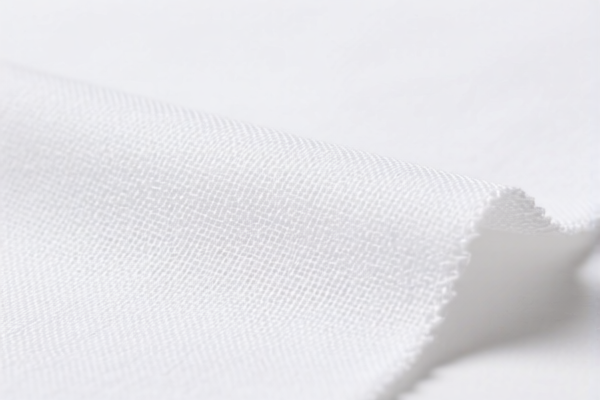
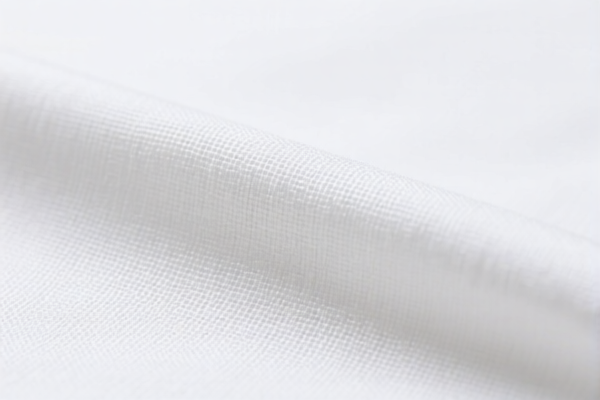
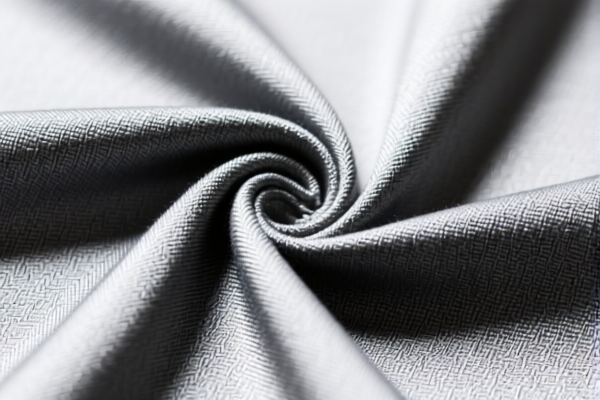

AI Analysis
🧵 Polyester Blended Plain Weave Fabric
🌐 HS Code Reference & Customs Clearance Guide | 2026 Latest Tariff Analysis | Professional Clearance Strategy
📌 I. Product Definition & Classification: What Exactly is "Polyester Blended Plain Weave Fabric"?
Polyester Blended Plain Weave Fabric refers to textiles primarily composed of synthetic fibers (polyester) and natural fibers (cotton), woven in a plain weave structure. In international trade, precise classification is critical because the fiber composition ratio determines the Harmonized System (HS) code and, consequently, the tariff burden.
⚠️ Key Distinction:
- If the fabric contains ≤ 85% synthetic fibers and is mainly or exclusively woven with cotton → It falls under different chapters (e.g., Chapter 55) with potentially lower附加 taxes.
- If the fabric contains > 85% synthetic fibers (or is mainly synthetic) but blended with cotton → It falls under Chapter 54, subject to higher additional tariffs (Section 301 & Section 122).
📦 II. HS Code Classification Details (2026 Latest Tariff Authority对照)
Based on the provided data, here are the specific HS codes applicable to Polyester-Cotton blended plain weave fabrics, categorized by their exact fiber characteristics and tax implications.
| HS Code | Product Description | Applicable Scenario | Fiber Content Key | Total Tax Rate |
|---|---|---|---|---|
5407.82.00.90 |
Polyester blended cotton fabric, synthetic fiber woven with cotton | General polyester-cotton blends where synthetic is dominant | Synthetic + Cotton Mix | 49.9% |
5407.81.00.90 |
Polyester-cotton woven fabric, matching synthetic-cotton blend characteristics | Standard poly-cotton plain weave | Synthetic + Cotton Mix | 49.9% |
5513.11.00.20 |
Polyester blended cotton plain weave fabric, requiring polyester staple fiber + cotton | Plain weave, polyester staple fiber specific | Polyester Staple + Cotton | 49.9% |
5514.21.00.20 |
Polyester-cotton woven fabric, mainly or exclusively woven with cotton | Blends where cotton is a significant component | Mainly Cotton Blend | 49.9% |
5513.21.00.20 |
Synthetic fiber < 85%, mainly/exclusively woven with cotton | Lower synthetic content (<85%) | Synthetic < 85% | 24.9% |
🔍 Critical Alert:
- Codes 5407.82, 5407.81, 5513.11, and 5514.21 all carry the highest combined tax rate of 49.9%.
- Only 5513.21.00.20 offers a reduced total tax rate of 24.9%, but this is strictly conditional on the synthetic fiber content being under 85%.
💰 III. 2026 Latest Tariff Rate Details (Including Surtaxes & Policy Surcharges)
✅ Applicable Country: United States (US)
✅ Origin: China (CN)
✅ Effective Time: Current (including subsequent imports)
🎯 1. High-Tax Category: 5407.82.00.90, 5407.81.00.90, 5513.11.00.20, 5514.21.00.20
| Item | Content |
|---|---|
| Base Duty Rate | 14.9% |
| Section 301 Surtax | +25.0% (US Trade Act Section 301) |
| Section 122 Surtax | +10.0% (Under U.S. Code Section 122) |
| Total Tax Rate | 49.9% |
| Tax Calculation | CIF Value × 49.9% |
| De Minimis Exemption | ❌ Not Applicable |
| Legal Basis Path | Base Tariff: 14.9% + Section 301: 25.0% + Section 122: 10.0% |
📌 Explanation:
- "Base Tariff 14.9%": Standard Most Favored Nation (MFN) rate for these textile categories.
- "Section 301 Surtax 25.0%": The punitive tariff imposed on Chinese goods under the Trump-era trade war, currently maintained.
- "Section 122 Surtax 10.0%": Additional tariff under Section 122 of the Trade Expansion Act, targeting specific textile imports.
- Total 49.9%: This is a prohibitive tax rate. Importers must factor this heavily into pricing strategies.
🎯 2. Lower-Tax Category: 5513.21.00.20
| Item | Content |
|---|---|
| Base Duty Rate | 14.9% |
| Section 301 Surtax | 0.0% (Exempt from Section 301 due to specific classification conditions) |
| Section 122 Surtax | +10.0% |
| Total Tax Rate | 24.9% |
| Tax Calculation | CIF Value × 24.9% |
| De Minimis Exemption | ❌ Not Applicable |
| Legal Basis Path | Base Tariff: 14.9% + Section 301: 0.0% + Section 122: 10.0% |
📌 Explanation:
- This code applies only if the synthetic fiber content is less than 85% AND it is mainly/exclusively woven with cotton.
- The 25% Section 301 surtax is waived for this specific subheading, resulting in a 50% tax reduction compared to other poly-cotton blends.
- Strict Compliance Required: Misclassifying a <85% synthetic blend into a >85% category will result in underpayment of 25%, leading to severe penalties.
🛠️ IV. Customs Clearance Operational Advice (Practical Pitfall Avoidance Guide)
✅ 1. Required Documentation Checklist (Non-negotiable)
| Document | Must Provide | Explanation |
|---|---|---|
| ✅ Composition Statement | ✔️ | Must explicitly state "% Polyester" and "% Cotton". Essential for determining if <85% (24.9%) or >85% (49.9%). |
| ✅ Weave Structure Confirmation | ✔️ | Confirm "Plain Weave" (one up, one down). Twill or Satin weaves may have different HS codes. |
| ✅ Product Photos | ✔️ | Clear images of the fabric surface to verify weave type and blend appearance. |
| ✅ Commercial Invoice | ✔️ | Must match the HS code description exactly. Do not use generic terms like "Cloth". |
| ✅ Packing List | ✔️ | Weight and dimensions must align with the declared value. |
| ✅ Lab Test Report | ✔️ | Recommended to prove fiber composition (e.g., from SGS, Intertek) if Customs questions the blend ratio. |
✅ 2. Declaration Tips (Key Mantras)
🔥 "Weave Type Check, Fiber Ratio Count, 85% Line is the Key, 25% Saved if Done Right!"
| Scenario | Correct Declaration | Wrong Practice |
|---|---|---|
| Polyester > 85% | 5407.82.00.90 or 5513.11.00.20 |
Mislabel as "Cotton-rich" → Underpayment Penalty |
| Polyester < 85% | 5513.21.00.20 |
Mislabel as generic poly-cotton → Pay 49.9% instead of 24.9% |
| Non-Plain Weave | Other HS Codes (e.g., 5513/5514 twill) | Declare as "Plain Weave" → Classification Error |
| Generic "Textile" | Specific HS Code + Description | Use "Other Textiles" → Highest Duty Rate Applied |
✅ 3. Special Situations Handling
| Situation | Handling Advice |
|---|---|
| OEM Custom Fabric | Provide customer order + design specs. Ensure the fiber blend is consistent with the declared HS code. |
| Mixed Shipment (Different Blends) | Separate Declarations Required. Do not combine <85% and >85% blends in one line item to avoid audit risks. |
| Dyed vs. Unbleached | If dyed, ensure the HS code accounts for finishing. Some codes are specific to unbleached; dyeing may shift classification. |
| Section 122 Applicability | Verify if the specific fabric type qualifies for the Section 122 exemption. Not all textiles are exempt. |
🌍 V. Global Main Market Clearance Comparison (2026 Latest)
| Country/Region | Recommended HS Code | Tariff (China Origin) | Certification Requirements | Notes |
|---|---|---|---|---|
| 🇺🇸 USA | 5513.21.00.20 (if <85%) |
24.9% | None specific | 49.9% if >85% synthetic. Section 301 is critical. |
| 🇨🇳 China | 5513.21.00.20 |
~5-10% (Variable) | None | Standard MFN or FTA rates may apply if from ASEAN. |
| 🇪🇺 EU | 5208/5513 range |
~0-9% | CE (if final product) | No Section 301 equivalent. Tariffs depend on exact fiber mix. |
| 🇬🇧 UK | 5513.21.00.20 |
~0-9% | UKCA (if final product) | Post-Brexit rules similar to EU but separate certification. |
| 🇨🇦 Canada | 5513.21.00.20 |
~0% (if under quota) | None | CUSMA may allow duty-free if meeting rules of origin. |
📌 Conclusion:
- The USA is the most challenging market due to the 25% Section 301 surtax on most poly-cotton blends.
- Optimization Strategy: If your product can be engineered to have <85% polyester, you save 25% in tariffs.
- Diversification: Consider sourcing from Vietnam or Bangladesh for US exports to avoid Section 301, though Section 122 may still apply depending on current trade laws.
📌 VI. Common Errors & Pitfall Avoidance Guide (Blood-teaching Lessons)
❌ Error 1: Assuming all "Polyester-Cotton" fabrics are taxed equally.
👉 Consequence: Paying 49.9% when you qualify for 24.9% due to misclassifying a <85% blend as >85%.
👉 Fix: Always verify the exact fiber percentage with a lab test.
❌ Error 2: Declaring "Plain Weave" when it is actually "Twill" or "Satin".
👉 Consequence: Customs rejects the entry, delays shipment, and imposes fines for misdeclaration.
👉 Fix: Provide weave structure diagrams or photos.
❌ Error 3: Ignoring Section 122 Tariffs.
👉 Consequence: Underestimating costs by 10%.
👉 Fix: Include the 10% Section 122 surtax in all cost calculations for US-bound textiles.
❌ Error 4: Using generic descriptions like "Fabric" or "Cloth".
👉 Consequence: Customs assigns the highest default duty rate or requests excessive documentation.
👉 Fix: Use precise descriptions: "100% Cotton Blended Plain Weave Fabric, Synthetic Fiber <85%".
✅ Correct Approach:
"Polyester-Cotton Blended Plain Weave Fabric, 65% Polyester, 35% Cotton, Unbleached, Model XYZ, Certified Composition"
🎯 VII. Conclusion: Precision Classification, Cost Control, Efficient Clearance!
🎯 Remember the Mantra:
🔹 "Weave plain? Check ratio. Under 85%? Save 25%. Over 85%? Brace for 49.9%!"
🔹 "HS Code defines your cost. A 1% composition shift can save thousands!"
📌 Pro Tip:
If your polyester content is close to 85%, consider blending adjustments or sourcing alternative fibers to stay under the threshold.
For US imports, always apply for an Advance Ruling if the classification is ambiguous to mitigate risk.
📣 Immediate Action:
📞 Contact your customs broker + Provide fabric composition report + Apply for HS Code Advance Ruling
🚀 Let your fabric clear smoothly, maximize profit, and expand globally!
✨ Professional Clearance Starts with Accurate Classification!
💼 Every cent of tax saved is pure profit!
Customer Reviews
About HS Code Classification
The Harmonized System (HS) is an internationally standardized nomenclature developed by the World Customs Organization (WCO) to classify traded products. Over 200 countries use the HS system as the basis for customs tariffs, trade statistics, and import/export regulations.
Each HS code follows a hierarchical structure:
- Chapter (2 digits) — Broad category of goods (e.g., Chapter 84: Machinery and Mechanical Appliances)
- Heading (4 digits) — More specific grouping within the chapter
- Subheading (6 digits) — Internationally standardized breakdown, used by all WCO member countries
- National subdivisions (8-10 digits) — Country-specific extensions for further classification, such as US HTSUS 10-digit codes
Correct HS code classification is essential for smooth customs clearance, accurate duty payment, and compliance with trade regulations. Misclassification can lead to customs delays, overpayment of duties, or penalties.
When importing from CN to US, the applicable tariff rates may include:
- Most-Favored-Nation (MFN) rate — The standard duty rate applied to WTO members
- General rate — Applied to countries without trade agreements
- Trade remedy duties — Additional tariffs such as Section 301 (anti-dumping), Section 232 (national security), or countervailing duties
The information provided on this page is for reference purposes only. For official classification, please consult with your local customs authority or a licensed customs broker.