Polyester Plasticizer Compound
CN → US| HS Code | Tariff Rate | Origin | Destination | Doc |
|---|---|---|---|---|
| 3824994900 | 41.5% | CN | US | Official Doc |
| 3824992100 | 35.0% | CN | US | Official Doc |
| 2917122000 | 41.5% | CN | US | Official Doc |
| 2917197020 | 14.0% | CN | US | Official Doc |
Product Images
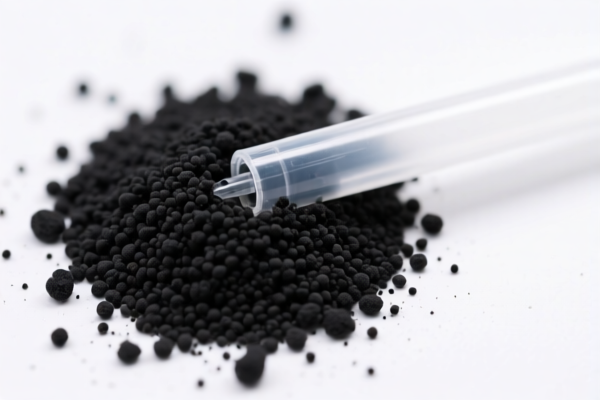
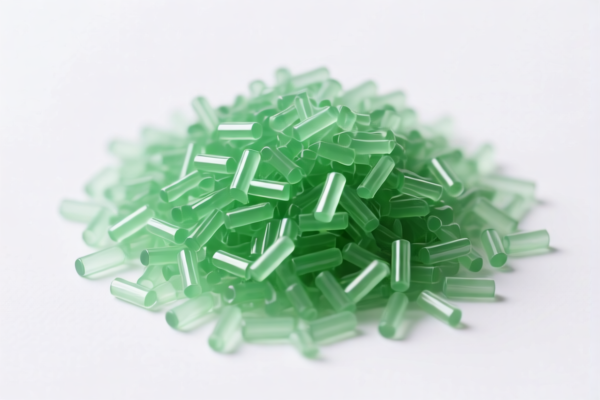
AI Analysis
🧪 Polyester Plasticizer Compound
🌐 HS Code Reference & Customs Clearance Guide | 2026 Latest Tariff Analysis | Professional Entry Strategy
📌 Part 1: Product Definition & Classification: What Exactly is a "Plasticizer Compound"?
A Polyester Plasticizer Compound is a specialized chemical mixture used primarily as a softening agent in the production of plastics, particularly PVC (Polyvinyl Chloride). In international trade, its classification is strictly dependent on its chemical composition and primary function. It is not a single HS code but falls into different categories based on whether it is defined as a general chemical preparation or a specific derivative of polycarboxylic acids.
⚠️ Key Classification Distinction:
- If the compound is considered a general chemical preparation containing hydrocarbons or other organic components without specific structural definition → It falls under Chapter 38.
- If the compound is chemically defined as a derivative of polycarboxylic acids (such as adipates or sebacates) used specifically as plasticizers → It may fall under Chapter 29 (Organic Chemicals).
📦 Part 2: HS Code Classification Details (2026 Latest Tariff Authority Cross-Reference)
| HS Code | Product Description | Application Scenario | Chemical Attribute |
|---|---|---|---|
3824.99.49.00 |
Plasticizer Compound, chemical industry preparation, material contains hydrocarbons or organic chemical components. | General plastic softening agents, mixed formulations. | Chapter 38: Miscellaneous Chemical Products |
3824.99.21.00 |
Plasticizer Compound, chemical product, fits description of chemical products and preparations under 3824.99. | Specific chemical preparations not elsewhere specified. | Chapter 38: Miscellaneous Chemical Products |
2917.12.20.00 |
Plasticizer Compound, function consistent with plasticizers, compound is a chemical substance, fits polycarboxylic acid derivatives material attribute. | Adipate-based plasticizers, specific organic acid derivatives. | Chapter 29: Organic Chemicals (Polycarboxylic Acids) |
2917.19.70.20 |
Plasticizer Compound, function consistent with plasticizers, compound fits chemical attribute description of aliphatic polycarboxylic acid derivatives. | Specific aliphatic acid derivatives, often lower tax base. | Chapter 29: Organic Chemicals (Other Polycarboxylic Acids) |
🔍 Important Reminder:
- Chapter 38 Codes (3824...) treat the product as a preparation/formulation. This is common for complex mixtures.
- Chapter 29 Codes (2917...) treat the product as a specific chemical substance (derivative of acid). This requires precise chemical composition disclosure.
- Misclassification between Chapter 38 and 29 can lead to significant duty differences due to the Section 301 (Add-on Tariff) variations.
💰 Part 3: 2026 Latest Tariff Rate Breakdown (Including Surcharges & Policy Add-ons)
✅ Applicable Country: United States (US)
✅ Origin: China (CN)
✅ Effective Time: 2025 November 10 onwards (for subsequent imports)
🎯 1. 3824.99.49.00 —— Plasticizer Compound (General Chemical Preparation)
| Item | Content |
|---|---|
| Base Tariff | 6.5% (ad valorem) |
| Section 301 Surtax | +25.0% (Additional Tariff under US Trade Law Section 301) |
| Section 122 Tariff | +10.0% (Specific trade remedy tariff) |
| Total Tariff | 41.5% |
| Tax Calculation | CIF Value × 41.5% |
| De Minimis Eligibility | ❌ Not Eligible (deny_de_minimis) |
| Legal Basis Path | USITC:3824.99.49.00 → Section 301: +25% → Section 122: +10% |
📌 Explanation:
- The Base Tariff (6.5%) is standard for miscellaneous chemical preparations.
- The 25% Surtax is the heavy Section 301 tariff applied to many Chinese chemical products.
- The 10% Section 122 Tariff is an additional layer for certain chemical imports.
- Total 41.5% is a high-cost barrier. Accurate classification is vital to avoid overpayment, but also to avoid penalties for under-declaration.
🎯 2. 3824.99.21.00 —— Plasticizer Compound (Specific Chemical Preparation)
| Item | Content |
|---|---|
| Base Tariff | 0.0% (ad valorem) |
| Section 301 Surtax | +25.0% (Additional Tariff under US Trade Law Section 301) |
| Section 122 Tariff | +10.0% (Specific trade remedy tariff) |
| Total Tariff | 35.0% |
| Tax Calculation | CIF Value × 35.0% |
| De Minimis Eligibility | ❌ Not Eligible (deny_de_minimis) |
| Legal Basis Path | USITC:3824.99.21.00 → Section 301: +25% → Section 122: +10% |
📌 Note:
- Savings Alert: Compared to3824.99.49.00, this code saves 6.5% on the base tariff.
- However, it still suffers the full 25% + 10% surcharges.
- Applicable if the product is specifically described as a chemical preparation under 3824.21.
🎯 3. 2917.12.20.00 —— Plasticizer Compound (Polycarboxylic Acid Derivative)
| Item | Content |
|---|---|
| Base Tariff | 6.5% (ad valorem) |
| Section 301 Surtax | +25.0% (Additional Tariff under US Trade Law Section 301) |
| Section 122 Tariff | +10.0% (Specific trade remedy tariff) |
| Total Tariff | 41.5% |
| Tax Calculation | CIF Value × 41.5% |
| De Minimis Eligibility | ❌ Not Eligible (deny_de_minimis) |
| Legal Basis Path | USITC:2917.12.20.00 → Section 301: +25% → Section 122: +10% |
📌 Explanation:
- Falls under Chapter 29 as an organic chemical.
- Base tariff matches3824.99.49.00.
- Same high surcharge burden. Suitable if the product is chemically defined as a specific adipate or similar derivative.
🎯 4. 2917.19.70.20 —— Plasticizer Compound (Aliphatic Polycarboxylic Acid Derivative)
| Item | Content |
|---|---|
| Base Tariff | 4.0% (ad valorem) |
| Section 301 Surtax | 0.0% (No Section 301 tariff applied to this specific subheading) |
| Section 122 Tariff | +10.0% (Specific trade remedy tariff) |
| Total Tariff | 14.0% |
| Tax Calculation | CIF Value × 14.0% |
| De Minimis Eligibility | ❌ Not Eligible (deny_de_minimis) |
| Legal Basis Path | USITC:2917.19.70.20 → Section 122: +10% |
📌 Crucial Insight:
- This is the LOWEST TARIFF CODE in the dataset.
- Why? It avoids the 25% Section 301 tariff entirely.
- Condition: The product MUST be strictly defined as an "aliphatic polycarboxylic acid derivative" under 2917.19.70.20. If customs determines it is a "preparation" (Chapter 38) or a different derivative, you risk penalties and back-taxes.
- Potential Savings: Compared to the 41.5% rate, this saves 27.5% on the total duty. This is a critical optimization opportunity for compliant shipments.
🛠️ Part 4: Customs Clearance Practical Advice (Combat Pit-Avoidance Guide)
✅ 1. Required Documentation Checklist (Non-negotiable)
| Document | Mandatory | Explanation |
|---|---|---|
| ✅ Certificate of Analysis (COA) | ✔️ | Must detail chemical composition (e.g., % of adipic acid derivatives). Essential for Chapter 29 classification. |
| ✅ Formula/Composition Sheet | ✔️ | Breakdown of all components. Distinguish between "mixture" (Ch 38) and "pure derivative" (Ch 29). |
| ✅ Product Photos (Label & Bulk) | ✔️ | Show packaging, hazard symbols, and chemical name. |
| ✅ Commercial Invoice | ✔️ | Must state: "Polyester Plasticizer Compound, Chemical Derivative, Not for Human Consumption." |
| ✅ Free Sale Certificate | ✔️ | Optional but helpful for proving industrial use. |
✅ 2. Declaration Strategy (Key Mantra)
🔥 “Know Your Chemistry: Derivative Saves Tax, Preparation Pays More!”
| Scenario | Correct Declaration | Wrong Approach |
|---|---|---|
| Product is a complex mixture of various esters | 3824.99.49.00 or 3824.99.21.00 |
Claiming 2917.19.70.20 without proof → Penalty + Back Duties |
| Product is a specific adipate/sebacate derivative | 2917.19.70.20 |
Declaring as 3824... → Overpaying by ~27.5% |
| Product is a "Plasticizer" generic term | Require COA to determine actual chemical nature | Guessing HS Code → Customs Audit Risk |
✅ 3. Special Handling Cases
| Case | Handling Advice |
|---|---|
| OEM/Private Label | Ensure the chemical name on the label matches the COA exactly. Mismatches cause delays. |
| Blended Shipment | If multiple plasticizers are mixed, the primary chemical function determines classification. Document the dominant component. |
| Dispute on Section 301 Exclusion | 2917.19.70.20 is excluded from 301. If customs challenges this, provide chemical structure diagrams and CAS numbers to prove it fits the subheading. |
| Section 122 Applicability | Note that all codes listed still bear the 10% Section 122 tariff. No exemption here. |
🌍 Part 5: Global Market Comparison (2026 Latest)
| Country/Region | Recommended HS Code | Total Tariff (China Origin) | Certification Req. | Notes |
|---|---|---|---|---|
| 🇺🇸 USA | 2917.19.70.20 (If applicable) |
14.0% | None specific for chemical entry | High potential for cost saving vs. Ch 38 |
| 🇺🇸 USA | 3824.99.49.00 (General) |
41.5% | None specific | Default if chemical structure is ambiguous |
| 🇨🇳 China | 3824.99.49.00 / 2917.19.70.20 |
0% - 5% | None | Import duty is low, but VAT applies |
| 🇪🇺 EU | 3824.99.98 / 2917.19.99 |
~5% | REACH Registration | REACH compliance is mandatory for chemicals |
| 🇯🇵 Japan | 3824.99.900 / 2917.19.900 |
0% - 4% | FSC (if hazardous) | Often exempt for industrial chemicals |
📌 Conclusion:
- USA is the most complex market due to layered tariffs (Base + 301 + 122).
- Chapter 29 (2917...) offers the best cost efficiency IF the product chemistry strictly qualifies.
- EU and Japan have much simpler and lower tariff structures, focusing more on regulatory compliance (REACH, FSC).
📌 Part 6: Common Errors & Pitfall Guide (Blood & Tears Lessons)
❌ Error 1: Using "Plasticizer" as the sole description without chemical details.
👉 Consequence: Customs defaults to the highest duty or holds cargo for classification review.
❌ Error 2: Claiming 2917.19.70.20 for a generic mixed compound to save tax.
👉 Consequence: Customs audit → Back-taxes of ~27.5% + Penalties + Potential seizure.
❌ Error 3: Ignoring Section 122 Tariff.
👉 Consequence: Under-declaration of duties. Even "tax-free" base tariffs still face 10% Section 122.
❌ Error 4: Failing to provide CAS Number or Chemical Structure.
👉 Consequence: Unable to verify Chapter 29 eligibility. Forced into Chapter 38 (higher tax).
✅ Correct Approach:
"Aliphatic Polycarboxylic Acid Derivative, Polyester Plasticizer, CAS #XXXX-XX-X, No Section 301 Applicable, 100% Pure Chemical Compound"
🎯 Part 7: Conclusion: Precise Classification Saves Millions!
🎯 Remember the Mantra:
🔹 "If it's a specific derivative, go Chapter 29: 14% Total. If it's a mix, Chapter 38: 35-41% Total."
🔹 "Chemical Proof is King: COA and CAS Numbers determine your tax fate."
🔹 "Section 122 is Universal: 10% on ALL codes here. Don't forget it."
📌 Pro Tip:
For
2917.19.70.20, ensure your COA explicitly states "Aliphatic Polycarboxylic Acid Derivative." If you can provide this, you save 27.5% compared to the standard Chapter 38 codes. This is worth the effort of precise chemical documentation.
📣 Immediate Action:
📞 Consult your chemical supplier for the exact CAS number and chemical structure.
📄 Prepare a detailed Composition Sheet.
🚀 Apply for an Advance Ruling if the shipment value is high.Your profit margin depends on this 10-digit code. Get it right!
✨ Professional Clearance Starts with Accurate Chemistry!
💼 Every percent of duty saved is pure profit.
Customer Reviews
About HS Code Classification
The Harmonized System (HS) is an internationally standardized nomenclature developed by the World Customs Organization (WCO) to classify traded products. Over 200 countries use the HS system as the basis for customs tariffs, trade statistics, and import/export regulations.
Each HS code follows a hierarchical structure:
- Chapter (2 digits) — Broad category of goods (e.g., Chapter 84: Machinery and Mechanical Appliances)
- Heading (4 digits) — More specific grouping within the chapter
- Subheading (6 digits) — Internationally standardized breakdown, used by all WCO member countries
- National subdivisions (8-10 digits) — Country-specific extensions for further classification, such as US HTSUS 10-digit codes
Correct HS code classification is essential for smooth customs clearance, accurate duty payment, and compliance with trade regulations. Misclassification can lead to customs delays, overpayment of duties, or penalties.
When importing from CN to US, the applicable tariff rates may include:
- Most-Favored-Nation (MFN) rate — The standard duty rate applied to WTO members
- General rate — Applied to countries without trade agreements
- Trade remedy duties — Additional tariffs such as Section 301 (anti-dumping), Section 232 (national security), or countervailing duties
The information provided on this page is for reference purposes only. For official classification, please consult with your local customs authority or a licensed customs broker.