Polyester Waterproof Backpack
CN → US| HS Code | Tariff Rate | Origin | Destination | Doc |
|---|---|---|---|---|
| 3926904800 | 13.4% | CN | US | Official Doc |
| 3926903300 | 16.5% | CN | US | Official Doc |
| 4202923900 | 52.6% | CN | US | Official Doc |
| 4202923120 | 52.6% | CN | US | Official Doc |
Product Images
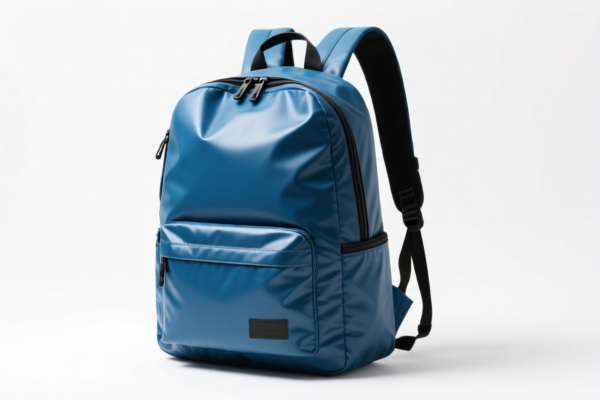
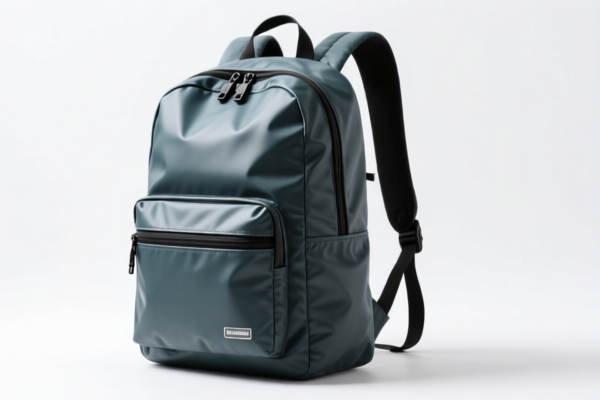
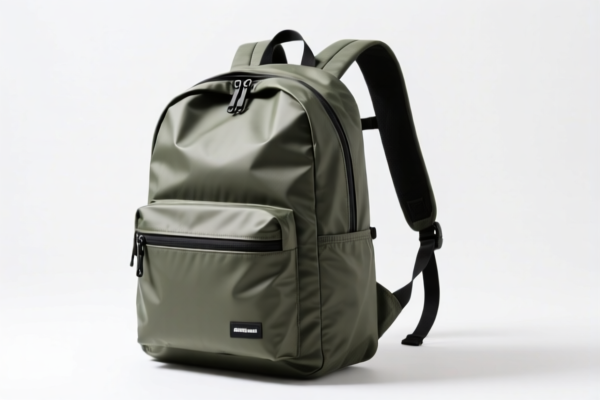
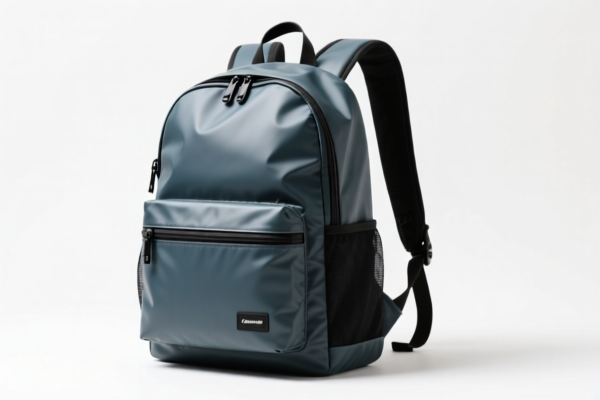
AI Analysis
🎒 Polyester Waterproof Backpack (聚酯防水背包)
🌐 HS Code Reference & Customs Clearance Guide | 2026 Latest Tariff Analysis | Professional Strategy
📌 Part 1: Product Definition & Classification: What Exactly Is a "Polyester Backpack"?
A Polyester Waterproof Backpack is a versatile carrying bag made from synthetic polymer fibers. In international trade, its classification depends heavily on the primary material of its outer surface and its intended use.
Key Distinction: 1. Plastic/Resin Article (Chapter 39): If the "polyester" refers to a rigid or semi-rigid plastic container, or if the product is considered a general plastic item rather than a textile bag, it falls under Chapter 39. 2. Textile Bag (Chapter 42): If the outer surface is made of woven or non-woven polyester fabric (textile), it is classified as a bag of textile materials, regardless of internal waterproof coatings or linings.
⚠️ Critical Classification Point:
- If the outer layer is woven/non-woven polyester fabric → Chapter 42 (Textiles)
- If the outer layer is solid plastic/resin or treated as a general plastic good → Chapter 39 (Plastics)
📦 Part 2: HS Code Classification Details (Latest 2026 Tariff Data)
Based on the provided data, here are the four possible HS Code classifications, ranging from low-duty plastic items to high-duty textile bags with significant trade penalties.
| HS Code | Product Description & Rationale | Applicable Scenario | Primary Material Classification |
|---|---|---|---|
3926.90.48.00 |
Other Plastic Articles: Polyester fibers considered as plastic/resin products; backpacks as other plastic finished goods. | General plastic items, non-textile interpretation. | ✅ Plastic/Resin |
3926.90.33.00 |
Other Plastic Articles: Polyester fibers categorized under polyester plastic articles; form is other plastic products. | Specific polyester plastic molds/components. | ✅ Plastic/Resin |
4202.92.39.00 |
Bag of Textile Materials: Polyester inferred as textile material; backpack fits "travel/sports bag with textile outer surface." | Standard polyester fabric backpacks. | ✅ Textile |
4202.92.31.20 |
Bag of Textile Materials: Backpack form; polyester fibers are synthetic fibers; fits travel/sports bag requirements. | Standard polyester fabric backpacks (specific sub-category). | ✅ Textile |
🔍 Important Note:
- Chapter 39 (HS 3926): Treats the product as a plastic article. This is rare for standard soft backpacks unless they are rigid containers or explicitly classified as plastic goods by local customs.
- Chapter 42 (HS 4202): Treats the product as a textile bag. This is the most common classification for fabric backpacks.
- Tax Disparity: The difference between Chapter 39 and Chapter 42 is massive due to Section 301 (Section 122) tariffs and Additional Duties.
💰 Part 3: 2026 Tariff Rate Breakdown (Including Surcharges & Policy Add-ons)
✅ Applicable Country: United States (US)
✅ Origin: China (CN)
✅ Effective Time: Current regulations including Section 301 and IEEPA penalties
🎯 1. 3926.90.48.00 & 3926.90.33.00 —— Plastic Articles (Low Duty)
| Item | Content |
|---|---|
| Base Tariff | 3.4% - 6.5% |
| Additional Tariff (Section 301) | 0.0% |
| Section 122 Tariff | 10% |
| Total Tariff Rate | 13.4% (for 3926.90.48.00) 16.5% (for 3926.90.33.00) |
| Tax Calculation | CIF Value × (13.4% or 16.5%) |
| De Minimis Exemption | ⚠️ Check Local Rules: Usually, Section 301 tariffs apply to de minimis, but Section 122 rules vary. Assume NO exemption for safety. |
| Legal Basis | 3926.90.48.00 → Base: 3.4% + 122: 10% |
📌 Explanation:
- Base Tariff: Low because it's classified as a general plastic item.
- Section 122: A 10% surcharge often applied to certain plastic goods.
- No Section 301: The data indicates 0% Additional Tariff, making this the cheapest option if correctly classified.
- ⚠️ Risk: Classifying a fabric backpack as "plastic" may be challenged by customs if the outer surface is clearly textile.
🎯 2. 4202.92.39.00 & 4202.92.31.20 —— Textile Bags (High Duty)
| Item | Content |
|---|---|
| Base Tariff | 17.6% |
| Additional Tariff (Section 301) | 25.0% |
| Section 122 Tariff | 10% |
| Total Tariff Rate | 52.6% |
| Tax Calculation | CIF Value × 52.6% |
| De Minimis Exemption | ❌ NOT Eligible (denied) |
| Legal Basis | 4202.92.39.00 → Base: 17.6% + 301: 25% + 122: 10% |
📌 Explanation:
- Base Tariff: Standard duty for textile bags.
- Section 301 (25%): The huge penalty on Chinese textiles.
- Section 122 (10%): Additional surcharge.
- Total 52.6%: This is a very high duty, significantly impacting profit margins.
- Note: Both4202.92.39.00and4202.92.31.20have the same total rate (52.6%).
🛠️ Part 4: Customs Clearance Practical Advice (Avoid Pitfalls)
✅ 1. Preparation Checklist (No Compromise)
| Document | Required | Reason |
|---|---|---|
| ✅ Product Photos | ✔️ | Must clearly show the outer surface material (fabric vs. plastic). |
| ✅ Material Composition Certificate | ✔️ | Specify: "Outer: 100% Polyester Woven Fabric," "Lining: Polyester," "Waterproof Coating: PU." |
| ✅ Commercial Invoice | ✔️ | Clearly state: "Polyester Backpack, Textile Outer Surface." |
| ✅ Bill of Lading/Packing List | ✔️ | Match descriptions precisely. |
| ✅ Proof of Non-Plastic Classification | ✔️ | If claiming HS 3926, provide evidence that it's not a textile bag. |
✅ 2. Declaration Strategy (Critical Rules)
🔥 Golden Rule: "If it's made of fabric, it's Chapter 42. Don't try to force it into Chapter 39 unless it's rigid plastic."
| Scenario | Correct Declaration | Risk if Wrong |
|---|---|---|
| Standard Fabric Backpack | 4202.92.39.00 or 4202.92.31.20 |
Low risk, but 52.6% duty. |
| Rigid Plastic Case/Briefcase | 3926.90.48.00 |
13.4% duty (Savings!). |
| Hybrid (Fabric + Plastic Hardware) | 4202.92.39.00 |
Duty applies to whole bag (textile prevails). |
| "Waterproof" Claim | N/A | Does not change classification. A waterproof fabric bag is still Chapter 42. |
⚠️ Warning:
- Do NOT declare a fabric backpack as3926.90.48.00to save taxes. Customs will likely reject it based on the outer material, leading to penalties, delays, and retroactive duties.
- Do NOT ignore the 25% Section 301 tariff if you choose Chapter 42. It is mandatory.
✅ 3. Special Cases
| Situation | Handling Advice |
|---|---|
| OEM Custom Backpacks | Provide design specs showing material composition. |
| Waterproofing Treatment | Mention "PU Coating" or "DWR Finish" in specs, but do not claim it makes it a "plastic article." |
| Small Samples (De Minimis) | High Risk: Even under $800, Section 301 and Section 122 tariffs may still apply. Assume tax applies. |
| Re-export/Transshipment | If goods are shipped via third countries, ensure origin certification is clear to avoid misdeclaration. |
🌍 Part 5: Global Market Comparison (2026)
| Country/Region | Recommended HS Code | Total Duty Rate | Key Requirement |
|---|---|---|---|
| 🇺🇸 USA | 4202.92.39.00 |
52.6% | High tariffs due to 301 + 122. |
| 🇺🇸 USA (Plastic Claim) | 3926.90.48.00 |
13.4% | Only if truly plastic. High audit risk. |
| 🇨🇳 China | 4202.92.39.00 |
~8-10% | Lower import duty for domestic sales. |
| 🇪🇺 EU | 4202.92.91 |
~4-12% | Depends on exact textile type. No Section 301. |
| 🇬🇧 UK | 4202.92.99 |
~12% | Post-Brexit tariffs apply. |
📌 Conclusion:
- The US market is the most expensive due to 52.6% effective duty for textile backpacks.
- Consider supply chain diversification (e.g., manufacturing in Vietnam/Mexico) to avoid Section 301 tariffs if possible.
- Pre-ruling: Apply for a binding tariff information (BTI) or pre-classification ruling from US CBP to confirm the HS code before shipping large volumes.
📌 Part 6: Common Mistakes & Pitfalls (Lessons Learned)
❌ Mistake 1: Declaring a fabric backpack as 3926.90.48.00 to save 39% in taxes.
👉 Consequence: Customs audit → Penalty + Back taxes + Legal fees.
❌ Mistake 2: Ignoring the 25% Section 301 tariff in cost calculations.
👉 Consequence: Unexpected 52.6% duty → Loss of profit margin.
❌ Mistake 3: Using "Waterproof" as the primary keyword for HS classification.
👉 Consequence: "Waterproof" is a feature, not a material. It doesn't change the HS code.
✅ Correct Approach:
"Polyester Backpack, 15L, Water-Resistant, Outer Material: 100% Polyester Woven Fabric, Lining: Polyester. HS Code: 4202.92.39.00."
🎯 Part 7: Final Recommendations for Cost Optimization
- Verify Material: Ensure the outer surface is truly polyester fabric. If it's a plastic shell, use
3926.90.48.00for 13.4% duty. - Calculate Total Landed Cost: Include 52.6% duty for Chapter 42 items.
Example: $100 backpack → $52.60 duty → $152.60 landed cost. - Explore Duty Mitigation:
- Section 301 Exclusions: Check if your specific HS code is eligible for any exclusions (rare for backpacks).
- Third-Country Sourcing: Manufacture in countries not subject to Section 301 (e.g., Vietnam, India) to reduce duty to ~17.6% (Base only).
- Apply for Pre-Ruling: Submit a binding ruling request to US CBP to confirm your HS code and avoid post-import disputes.
📣 Take Action Now:
📞 Contact a licensed customs broker to verify your product's material composition.
📄 Request a Tariff Ruling from CBP if shipping large volumes.
🚀 Optimize your supply chain to mitigate high US tariffs.
✨ Professional clearance starts with accurate classification!
💼 Every percentage point of duty counts – protect your profits!
Customer Reviews
About HS Code Classification
The Harmonized System (HS) is an internationally standardized nomenclature developed by the World Customs Organization (WCO) to classify traded products. Over 200 countries use the HS system as the basis for customs tariffs, trade statistics, and import/export regulations.
Each HS code follows a hierarchical structure:
- Chapter (2 digits) — Broad category of goods (e.g., Chapter 84: Machinery and Mechanical Appliances)
- Heading (4 digits) — More specific grouping within the chapter
- Subheading (6 digits) — Internationally standardized breakdown, used by all WCO member countries
- National subdivisions (8-10 digits) — Country-specific extensions for further classification, such as US HTSUS 10-digit codes
Correct HS code classification is essential for smooth customs clearance, accurate duty payment, and compliance with trade regulations. Misclassification can lead to customs delays, overpayment of duties, or penalties.
When importing from CN to US, the applicable tariff rates may include:
- Most-Favored-Nation (MFN) rate — The standard duty rate applied to WTO members
- General rate — Applied to countries without trade agreements
- Trade remedy duties — Additional tariffs such as Section 301 (anti-dumping), Section 232 (national security), or countervailing duties
The information provided on this page is for reference purposes only. For official classification, please consult with your local customs authority or a licensed customs broker.