Polyethylene Bag (Printed)
CN → US| HS Code | Tariff Rate | Origin | Destination | Doc |
|---|---|---|---|---|
| 6305330010 | 25.9% | CN | US | Official Doc |
| 3923290000 | 38.0% | CN | US | Official Doc |
| 3926909989 | 22.8% | CN | US | Official Doc |
| 6305330080 | 25.9% | CN | US | Official Doc |
| 3923210095 | 38.0% | CN | US | Official Doc |
Product Images
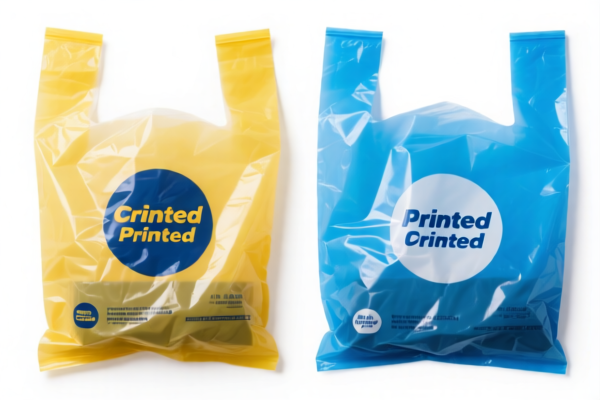
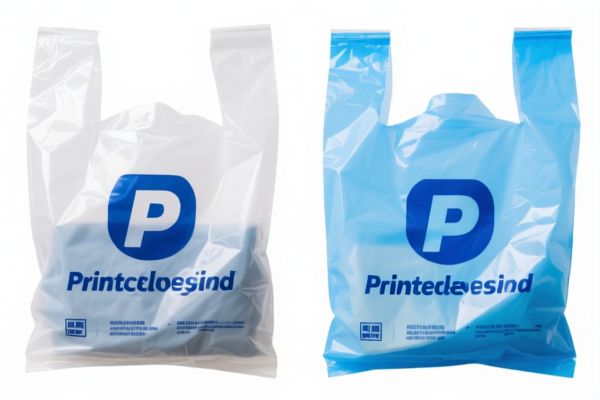
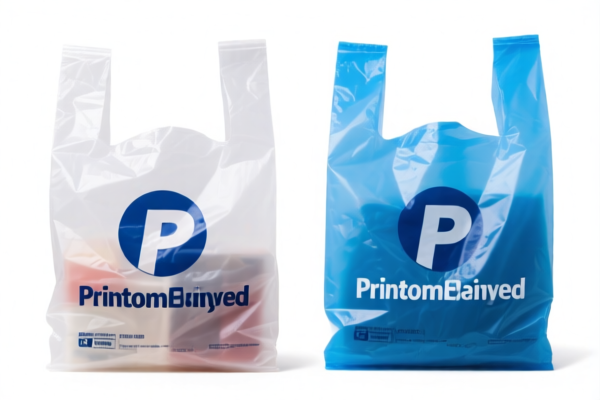
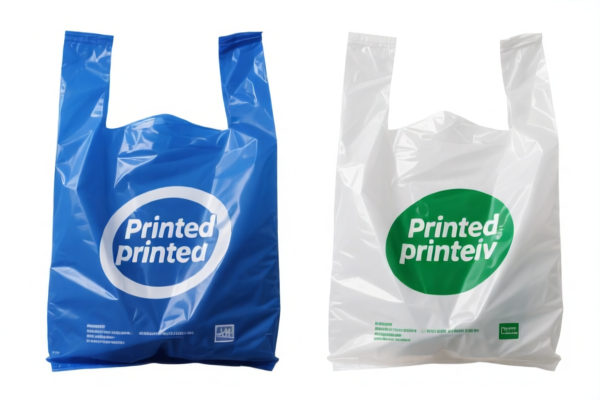
AI Analysis
🛍️ Polyethylene Bags (Printed) - Industrial Packaging Solutions
🌐 HS Code Reference & Customs Clearance Guide | 2026 Latest Tariff Analysis | Professional Strategy for US Imports
📌 I. Product Definition & Classification: What Exactly Are "Polyethylene Bags"?
Polyethylene bags, particularly those used in industrial settings, are versatile packaging materials. In international trade, they are categorized based on their material composition, specific use, and structural properties. For printed polyethylene bags, the key distinction lies in whether they are classified primarily as packaging goods (Chapter 39) or as textile articles made of artificial fibers/plastics (Chapter 63).
Industrial Polyethylene Bags: Typically used for bulk packaging of goods (e.g., chemicals, agricultural products, construction materials).
Packaging Articles: Focus on the function of enclosing and protecting products.
⚠️ Key Distinction Point:
- If the bag is primarily recognized as an "article of artificial textile materials" (often due to specific weaving or non-woven characteristics combined with plastic), it may fall under Chapter 63 (6305).
- If the bag is primarily recognized as a "packaging article of plastics" (flexible, simple structure), it falls under Chapter 39 (3923).
- "Other" or "Miscellaneous": If the specific type doesn't fit neatly into the primary descriptions, it may fall into a residual category (3926).
📦 II. HS Code Classification Details (2026 Latest Tariff Authority Comparison)
Based on the provided data, here are the five possible HS Codes for Polyethylene Bags (Printed) and their corresponding tax implications:
| HS Code | Product Description & Logic | Tax Rate (Total) | Tax Breakdown (US Import from China) |
|---|---|---|---|
6305.33.00.10 |
Polyethylene Bags, Industrial Use Classified as articles of artificial textile materials (plastics) for bag purposes. This classification views the bag as a "textile-like" item. |
25.9% | Base: 8.4% Add-on (Sec 301): 7.5% 122 Clause: 10% |
3923.29.00.00 |
Polyethylene Bags, Industrial Use Classified as other plastic packaging articles. This is a broader "catch-all" for plastic packaging that doesn't fit specific subheadings like shopping bags. |
38.0% | Base: 3.0% Add-on (Sec 301): 25.0% 122 Clause: 10% |
3926.90.99.89 |
Other Plastic Articles A residual category ("Other plastics and articles thereof") used when the bag doesn't fit other specific plastic packaging descriptions. |
22.8% | Base: 5.3% Add-on (Sec 301): 7.5% 122 Clause: 10% |
6305.33.00.80 |
Polyethylene Bags, Industrial Packaging Similar to .10 but potentially differing in specific material definition or minor structural detail within the "artificial textile" category. |
25.9% | Base: 8.4% Add-on (Sec 301): 7.5% 122 Clause: 10% |
3923.21.00.95 |
Ethylene Polymer Bags Classified as other closed bags or shopping bags made of plastics. Often used for lighter, consumer-facing or specific industrial closed bags. |
38.0% | Base: 3.0% Add-on (Sec 301): 25.0% 122 Clause: 10% |
🔍 Key Observation:
- Chapter 63 (6305.33.00.xx) offers a lower total tax rate (25.9%) because the base tariff is higher (8.4%) but the Section 301 add-on is lower (7.5%).
- Chapter 39 (3923.29.00.00 / 3923.21.00.95) has a higher total tax rate (38.0%) due to a high Section 301 add-on (25.0%), despite a lower base tariff (3.0%).
- Chapter 39 (3926.90.99.89) is the lowest total tax rate (22.8%) but is a "fallback" classification that must be justified as not fitting other specific plastic categories.
💰 III. 2026 Latest Tariff Rate Explanation (Including Add-ons & Policy Clauses)
✅ Applicable Country: United States (US)
✅ Origin: China (CN)
✅ Effective Time: Current US Trade Policy (2025-2026)
🎯 1. 6305.33.00.10 & 6305.33.00.80 – Artifacts of Artificial Textile Materials (Plastics)
| Item | Content |
|---|---|
| Base Tariff | 8.4% (ad valorem) |
| Section 301 Add-on | +7.5% |
| 122 Clause Tariff | +10% |
| Total Tax Rate | 25.9% |
| Tax Calculation | CIF Value × 25.9% |
| De Minimis Exemption | ❌ Not Applicable (High value threshold not met for these codes) |
| Legal Basis | USITC HTSUS 6305.33.00 + Section 301 Footnotes + Trade Act Section 122 |
📌 Explanation:
- Classification under Chapter 63 implies the bags are seen as "textile-like" (e.g., woven or non-woven polyethylene).
- The 7.5% Section 301 add-on is significantly lower than the 25% in Chapter 39, making this a favorable classification if the product characteristics support it.
🎯 2. 3923.29.00.00 & 3923.21.00.95 – Plastic Packaging Articles
| Item | Content |
|---|---|
| Base Tariff | 3.0% (ad valorem) |
| Section 301 Add-on | +25.0% |
| 122 Clause Tariff | +10% |
| Total Tax Rate | 38.0% |
| Tax Calculation | CIF Value × 38.0% |
| De Minimis Exemption | ❌ Not Applicable |
| Legal Basis | USITC HTSUS 3923.29/3923.21 + Section 301 Footnotes + Trade Act Section 122 |
📌 Explanation:
- These codes are for standard plastic bags (films, simple structures).
- The 25% Section 301 add-on is the highest penalty, driven by US trade policies targeting Chinese plastic products.
- Warning: Misclassifying a "textile-like" bag here will cost 12.1% more in taxes.
🎯 3. 3926.90.99.89 – Other Plastic Articles (Residual)
| Item | Content |
|---|---|
| Base Tariff | 5.3% (ad valorem) |
| Section 301 Add-on | +7.5% |
| 122 Clause Tariff | +10% |
| Total Tax Rate | 22.8% |
| Tax Calculation | CIF Value × 22.8% |
| De Minimis Exemption | ❌ Not Applicable |
| Legal Basis | USITC HTSUS 3926.90 + Section 301 Footnotes + Trade Act Section 122 |
📌 Explanation:
- This is the lowest total tax rate (22.8%).
- However, it is a residual category. You can only use this if the bags do not fit into3923(packaging) or3926specific subheadings.
- Risk: Customs may challenge this classification if the bags are clearly "packaging articles," forcing a reclassification to3923(38% tax).
🛠️ IV. Customs Clearance Practical Advice (Real-World Pitfall Guide)
✅ 1. Preparation Checklist (Non-negotiable)
| Document | Required | Description |
|---|---|---|
| ✅ Product Specification Sheet | ✔️ | Detail material (PE grade), thickness, dimensions, print design, and intended industrial use. |
| ✅ Material Composition Report | ✔️ | Proof of polyethylene content. If woven/non-woven, provide evidence to support Chapter 63 classification. |
| ✅ Product Photos (Printed Side) | ✔️ | Clear view of print, seams, and any closures (zippers, ties). |
| ✅ Commercial Invoice | ✔️ | Must specify "Industrial Polyethylene Bags" and avoid vague terms like "Plastic Wrappers." |
| ✅ Packing List | ✔️ | List quantity, weight, and dimensions. |
| ✅ Customs Ruling (If available) | ✔️ | Pre-existing CBP ruling supporting your HS Code choice. |
✅ 2. Declaration Strategy (Key Mnemonics)
🔥 "Material Defines Chapter, Use Defines Subheading, Print Adds Detail, Avoid 38% Penalty!"
| Scenario | Correct Declaration Approach | Wrong Practice |
|---|---|---|
| Woven/Non-Woven PE Bags | Declare as 6305.33.00.10 (25.9%) |
Declare as 3923.29 (38%) → Overpay by 12.1% |
| Simple Plastic Film Bags | Declare as 3923.29.00.00 (38%) |
Declare as 6305 → Customs Rejection/Penalty |
| Unusual/Complex Plastic Bags | Declare as 3926.90.99.89 (22.8%) with justification |
Declare as 3923 → Overpay by 15.2% |
| Shopping Bags for Retail | Declare as 3923.21.00.95 (38%) |
Declare as 6305 → Misclassification |
📌 Critical Note:
- Printed does not automatically change the chapter. It is a descriptive detail.
- Industrial Use is key to justifying6305.33(bags for goods) vs.6305.12(bags for textiles).
✅ 3. Special Circumstances
| Situation | Handling Advice |
|---|---|
| Woven vs. Non-Woven | If woven, strongly consider 6305.33. If simple film, 3923.29. |
| Large Bulk Bags (Jumbo Bags) | May be considered " sacks" under 6305.33 if woven. |
| Small Sachets/Pouches | Likely 3923.29 or 3923.21. |
| Print Design Origin | Ensure print plates/designs are not declared separately to avoid additional tariff issues. |
🌍 V. Global Market Comparison (2026 Latest)
| Country/Region | Recommended HS Code | Total Tax Rate (China Origin) | Notes |
|---|---|---|---|
| 🇺🇸 USA | 6305.33.00.10 or 3923.29.00.00 |
25.9% or 38.0% | High Section 301 impact. Choose 6305 if material allows. |
| 🇨🇳 China | 3923.29.00.00 |
~5-10% | Lower import tax, but focus on domestic sales. |
| 🇪🇺 EU | 3923.29.00.00 |
~2-4% | No Section 301. Standard EU customs duties apply. |
| 🇬🇧 UK | 3923.29.00.00 |
~2-4% | Post-Brexit tariffs similar to EU for general goods. |
| 🇯🇵 Japan | 3923.29.00.00 |
~0-5% | Low tariffs for packaging materials. |
📌 Conclusion:
- The US market is the most expensive for Chinese polyethylene bags due to Section 301 and 122 Clause tariffs.
- Strategic Advantage: If your bags are woven or non-woven, classifying them under6305.33.00.10(25.9%) instead of3923.29.00.00(38.0%) saves 12.1% in taxes.
- Caution: Do not force6305classification if the bags are simple plastic films; customs may penalize.
📌 VI. Common Errors & Pitfall Guide (Lessons Learned)
❌ Error 1: Classifying woven PE bags as 3923.29 (38%) when they qualify for 6305.33 (25.9%).
👉 Consequence: Overpayment of 12.1% on every shipment.
❌ Error 2: Classifying simple plastic films as 6305.33 (25.9%).
👉 Consequence: Customs Rejection, delays, and potential fines for misdeclaration.
❌ Error 3: Ignoring the 122 Clause (10%).
👉 Consequence: Even if you choose a lower base tariff, the 10% add-on applies to all Chinese polyethylene bags, so factor it into total cost.
❌ Error 4: Vague description "Plastic Bags" on the invoice.
👉 Consequence: Customs may select the highest applicable tariff (38%) for audit purposes.
✅ Correct Practice:
"Industrial Woven Polyethylene Bags, Printed, for Packaging of Construction Materials, HS 6305.33.00.10"
🎯 VII. Conclusion: Precise Classification Saves Money!
🎯 Remember the Mnemonic:
🔹 "Woven/Non-Woven? Go 6305 (25.9%). Simple Film? Go 3923 (38%). Residual? Go 3926 (22.8%) but justify!"
🔹 "122 Clause Adds 10%, Section 301 Adds 7.5% or 25%. Know your Chapter!"
📌 Pro Tip:
- If your polyethylene bags are woven, insist on 6305.33.00.10 for tax savings.
- If they are simple films, use 3923.29.00.00.
- Always get a Pre-Ruling from CBP if unsure, to avoid post-import audits and penalties.
📣 Immediate Action:
📞 Contact a Customs Broker + Provide Material Test Reports + Request HS Code Pre-Ruling
🚀 Optimize Your Tax Burden, Ensure Smooth Customs Clearance, and Maximize Profit Margins!
✨ Professional Customs Clearance Starts with Accurate Classification!
💼 Your Cost Savings Are Worth the Precision!
Customer Reviews
About HS Code Classification
The Harmonized System (HS) is an internationally standardized nomenclature developed by the World Customs Organization (WCO) to classify traded products. Over 200 countries use the HS system as the basis for customs tariffs, trade statistics, and import/export regulations.
Each HS code follows a hierarchical structure:
- Chapter (2 digits) — Broad category of goods (e.g., Chapter 84: Machinery and Mechanical Appliances)
- Heading (4 digits) — More specific grouping within the chapter
- Subheading (6 digits) — Internationally standardized breakdown, used by all WCO member countries
- National subdivisions (8-10 digits) — Country-specific extensions for further classification, such as US HTSUS 10-digit codes
Correct HS code classification is essential for smooth customs clearance, accurate duty payment, and compliance with trade regulations. Misclassification can lead to customs delays, overpayment of duties, or penalties.
When importing from CN to US, the applicable tariff rates may include:
- Most-Favored-Nation (MFN) rate — The standard duty rate applied to WTO members
- General rate — Applied to countries without trade agreements
- Trade remedy duties — Additional tariffs such as Section 301 (anti-dumping), Section 232 (national security), or countervailing duties
The information provided on this page is for reference purposes only. For official classification, please consult with your local customs authority or a licensed customs broker.