Polysulfide Thermosetting Block
CN → US| HS Code | Tariff Rate | Origin | Destination | Doc |
|---|---|---|---|---|
| 3911909150 | 41.5% | CN | US | Official Doc |
| 3911904500 | 40.8% | CN | US | Official Doc |
| 3208900000 | 38.2% | CN | US | Official Doc |
| 3208100000 | 38.7% | CN | US | Official Doc |
Product Images

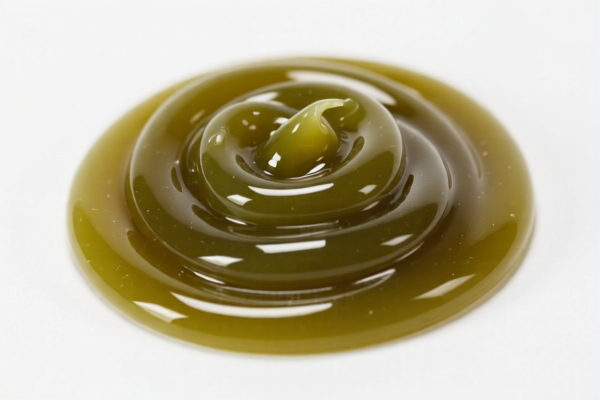
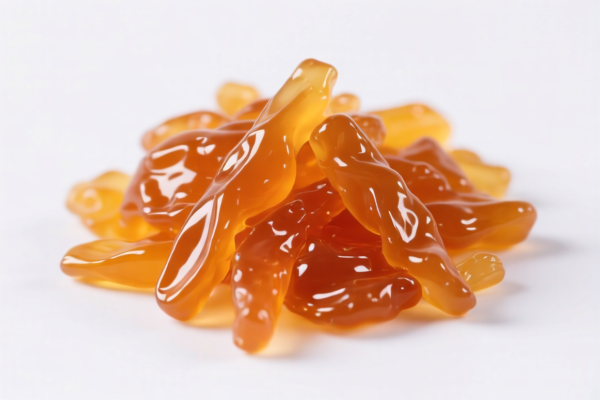
AI Analysis
🧪 Polysulfide Thermosetting Resin/Cure (Polysulfide Thermosetting Block)
🌐 HS Code Reference & Customs Clearance Guide | 2026 Latest Tariff Analysis | Professional-Level Strategy for Polysulfide Products
📌 I. Product Definition & Classification: Do You Truly Understand "Polysulfide"?
Polysulfide thermosetting resins (often referred to as "polysulfide blocks" or pre-polymers) are high-performance synthetic polymers known for exceptional chemical resistance, fuel tolerance, and weathering stability. In international trade, they are primarily classified based on their chemical nature and form.
Key Distinction:
Polysulfide Resins (HS 3911): If the product is primarily defined by its polysulfide chemical structure, it falls under Chapter 39 (Plastics).
Paints & Varnishes (HS 3208): If the polysulfide resin is dissolved or dispersed in a non-aqueous medium to form a coating ready for application, it may fall under Chapter 32 (Paints and Varnishes).
⚠️ Critical Classification Point:
- If the product is a pure or modified resin in block/paste form, intended for further processing (e.g., mixing with hardeners), it leans towards 3911.90.91.50 or 3911.90.45.00.
- If the product is a finished coating/paint with binders and solvents, it may be classified under 3208.90.00.00 or 3208.10.00.00.
📦 II. HS Code Classification Details (2026 Latest Tariff Reference)
Based on the provided data, here are the four potential HS Codes for "Polysulfide Thermosetting Block" products:
| HS Code | Product Description | Key Attributes | Primary Use Case |
|---|---|---|---|
3911.90.91.50 |
Polysulfide thermosetting paints, material is polysulfide, attribute is thermosetting | Material: Polysulfide; Attribute: Thermosetting | High-performance sealants, industrial coatings where resin identity is paramount |
3911.90.45.00 |
Polysulfide thermosetting paints, explicitly includes polysulfide and thermosetting attributes | Explicit inclusion of both polysulfide and thermosetting nature | Precise chemical classification for polysulfide pre-polymers |
3208.90.00.00 |
Polysulfide thermosetting paints, material is synthetic polymer, form is paint | Material: Synthetic Polymer; Form: Paint | General synthetic polymer-based coatings, less specific to polysulfide identity |
3208.10.00.00 |
Polysulfide thermosetting paints, based on synthetic polymer, dispersed/dissolved in non-aqueous medium | Basis: Synthetic Polymer; Medium: Non-aqueous | Liquid coatings, varnishes, or primers ready for application |
🔍 Important Note:
- The choice between 3911 (Plastics/Resins) and 3208 (Paints) depends heavily on the state of the product and commercial intent.
- If it’s a raw material (resin block) → 3911.
- If it’s a formulated coating (paint/liquid) → 3208.
💰 III. 2026 Latest Tariff Rate Breakdown (Including Surtaxes & Policy Surcharges)
✅ Applicable Country: United States (US)
✅ Origin: China (CN)
✅ Effective Date: 2025 November 10 onwards (for subsequent imports)
🎯 1. 3911.90.91.50 —— Polysulfide Thermosetting Paints (Resin Focus)
| Item | Details |
|---|---|
| Base Tariff | 6.5% |
| Section 301 Surtax | +25.0% |
| Section 122 Tariff | +10.0% |
| Total Tariff Rate | 41.5% |
| Tax Calculation | CIF Value × 41.5% |
| De Minimis Exemption | ❌ Not Eligible |
| Legal Basis Path | Section 301 → Section 122 → HTSUS 3911.90.91.50 |
📌 Explanation:
- Base 6.5%: Standard US MFN rate for plastic materials not elsewhere specified.
- 25% Section 301: Additional duty on Chinese goods under the Trade Promotion Authority.
- 10% Section 122: Additional duty under Section 122 of the Trade Expansion Act (national security provisions).
- Total 41.5%: A high-cost entry barrier for polysulfide resin imports from China.
🎯 2. 3911.90.45.00 —— Polysulfide Thermosetting Paints (Explicit Classification)
| Item | Details |
|---|---|
| Base Tariff | 5.8% |
| Section 301 Surtax | +25.0% |
| Section 122 Tariff | +10.0% |
| Total Tariff Rate | 40.8% |
| Tax Calculation | CIF Value × 40.8% |
| De Minimis Exemption | ❌ Not Eligible |
| Legal Basis Path | Section 301 → Section 122 → HTSUS 3911.90.45.00 |
📌 Note:
- Slightly lower base tariff (5.8%) compared to3911.90.91.50.
- Still subject to the full 35% in additional duties (25% + 10%).
- Total effective rate: 40.8%.
🎯 3. 3208.90.00.00 —— Polysulfide Thermosetting Paints (Synthetic Polymer Focus)
| Item | Details |
|---|---|
| Base Tariff | 3.2% |
| Section 301 Surtax | +25.0% |
| Section 122 Tariff | +10.0% |
| Total Tariff Rate | 38.2% |
| Tax Calculation | CIF Value × 38.2% |
| De Minimis Exemption | ❌ Not Eligible |
| Legal Basis Path | Section 301 → Section 122 → HTSUS 3208.90.00.00 |
📌 Explanation:
- Lower base tariff (3.2%) due to classification under paints/varnishes.
- Still bears the brunt of the 35% additional duties.
- Total effective rate: 38.2%.
🎯 4. 3208.10.00.00 —— Polysulfide Thermosetting Paints (Non-Aqueous Medium)
| Item | Details |
|---|---|
| Base Tariff | 3.7% |
| Section 301 Surtax | +25.0% |
| Section 122 Tariff | +10.0% |
| Total Tariff Rate | 38.7% |
| Tax Calculation | CIF Value × 38.7% |
| De Minimis Exemption | ❌ Not Eligible |
| Legal Basis Path | Section 301 → Section 122 → HTSUS 3208.10.00.00 |
📌 Note:
- Similar to3208.90.00.00, but specifically for non-aqueous dispersions/solutions.
- Base tariff is slightly higher (3.7%) than3208.90.00.00.
- Total effective rate: 38.7%.
🛠️ IV. Customs Clearance Practical Advice (Real-World Pitfall Avoidance Guide)
✅ 1. Required Documentation Checklist (Non-Negotiable)
| Document | Mandatory? | Description |
|---|---|---|
| ✅ Product Specification Sheet | ✔️ | Must detail chemical composition, molecular weight, cure type, and physical form (block/paste). |
| ✅ MSDS/SDS | ✔️ | Critical for hazardous material determination and safety handling. |
| ✅ Commercial Invoice | ✔️ | Must clearly describe the product as "Polysulfide Thermosetting Resin/Paint" and specify HS Code. |
| ✅ Certificate of Origin (CO) | ✔️ | Essential for determining origin-based surcharges (Section 301/122). |
| ✅ Packing List | ✔️ | Detailed list of contents, net/gross weights, and package dimensions. |
| ✅ Formulation Data | ✔️ | If classifying under 3208, provide proof of polymer concentration and solvent content. |
✅ 2. Declaration Strategy (Key Mnemonics)
🔥 “Resin vs. Paint: Form Defines Code, Code Defines Cost!”
| Scenario | Correct Declaration | Incorrect Approach |
|---|---|---|
| Pure Polysulfide Resin Block | 3911.90.91.50 or 3911.90.45.00 |
Misdeclare as "Paint" → Risk of misclassification penalty |
| Pre-mixed Polysulfide Sealant | 3208.90.00.00 or 3208.10.00.00 |
Misdeclare as "Plastic Resin" → May face duty discrepancies |
| Polysulfide Primer (Liquid) | 3208.10.00.00 |
General "Paint" without specifying medium → Delays |
| Raw Polysulfide Polymer | 3911.90.45.00 |
Vague "Chemical Material" → High scrutiny |
✅ 3. Special Cases Handling
| Scenario | Handling Advice |
|---|---|
| OEM Custom Polysulfide | Provide client contracts + technical data sheets to justify specific HS Code. |
| Polysulfide + Solvent Mix | If solvent content is high, lean towards 3208 (Paints). If resin content dominates, lean towards 3911. |
| Export from China to US | Prepare for 35% additional duties (25% + 10%). Factor this into pricing. |
| Third-Party Testing | Obtain third-party analysis confirming "Thermosetting" nature if challenging classification. |
🌍 V. Global Market Customs Comparison (2026 Latest)
| Country/Region | Recommended HS Code | Tariff (China Origin) | Certification Requirements | Notes |
|---|---|---|---|---|
| 🇺🇸 USA | 3911.90.91.50 |
41.5% | EPA Registration (if coating) | High tariffs due to Section 301 & 122 |
| 🇨🇳 China | 3911.90.91.50 |
~5-6% | CCC (if electrical) | Lower base tariff |
| 🇪🇺 EU | 3911.90.91.50 |
~5-6% | REACH Compliance | No Section 301/122 equivalent |
| 🇦🇺 Australia | 3911.90.91.50 |
~5% | AICIS Registration | Moderate tariffs |
| 🇯🇵 Japan | 3911.90.91.50 |
~0-3% | PSE (if applicable) | Low tariffs, strict safety standards |
📌 Conclusion:
- The US market imposes the highest tariff burden (38.2%–41.5%) on polysulfide products from China.
- EU, Japan, and Australia offer significantly more favorable tariff rates.
- Consider supply chain diversification or tariff engineering (e.g., slight formulation changes) if targeting the US market.
📌 VI. Common Errors & Pitfall Guide (Lessons Learned)
❌ Error 1: Declaring "Polysulfide Resin" as "General Plastic"
👉 Consequence: Misclassification, potential fines, and delayed customs clearance.
❌ Error 2: Ignoring Section 122 Tariffs
👉 Consequence: Underpayment of duties (10% missed) → Back taxes + penalties.
❌ Error 3: Confusing "Thermoplastic" with "Thermosetting"
👉 Consequence: Wrong HS Code selection → Incorrect duty calculation.
❌ Error 4: Failing to disclose "Non-Aqueous Medium" for Paints
👉 Consequence: Customs may reclassify under a different subheading → Higher duties.
✅ Correct Approach:
"Polysulfide Thermosetting Resin, Block Form, Chemical Resistance, Non-Aqueous Based, Model XYZ, SDS Attached, Origin: China"
🎯 VII. Conclusion: Professional Declaration, Cost Efficiency, Risk Mitigation!
🎯 Remember the Mnemonic:
🔹 "Resin is 3911, Paint is 3208, Check the Form, Check the Medium!"
🔹 "US Tariffs Hit Hard: 35% Extra, Total Over 38%, Plan Your Cost!"
📌 Pro Tip:
If your polysulfide product is originating from Vietnam, Mexico, or other non-China sources, you may avoid Section 301 and 122 surcharges, significantly reducing your total duty burden.
Recommend pre-ruling applications with US CBP for definitive HS Code classification before shipment.
📣 Immediate Action:
📞 Consult a licensed customs broker + Provide Product SDS + Apply for Advance Ruling
🚀 Ensure smooth clearance, cost control, and successful export of your polysulfide products!
✨ Professional Customs Clearance Starts with Accurate Classification!
💼 Every Cent of Duty Should Be Precisely Calculated!
Customer Reviews
About HS Code Classification
The Harmonized System (HS) is an internationally standardized nomenclature developed by the World Customs Organization (WCO) to classify traded products. Over 200 countries use the HS system as the basis for customs tariffs, trade statistics, and import/export regulations.
Each HS code follows a hierarchical structure:
- Chapter (2 digits) — Broad category of goods (e.g., Chapter 84: Machinery and Mechanical Appliances)
- Heading (4 digits) — More specific grouping within the chapter
- Subheading (6 digits) — Internationally standardized breakdown, used by all WCO member countries
- National subdivisions (8-10 digits) — Country-specific extensions for further classification, such as US HTSUS 10-digit codes
Correct HS code classification is essential for smooth customs clearance, accurate duty payment, and compliance with trade regulations. Misclassification can lead to customs delays, overpayment of duties, or penalties.
When importing from CN to US, the applicable tariff rates may include:
- Most-Favored-Nation (MFN) rate — The standard duty rate applied to WTO members
- General rate — Applied to countries without trade agreements
- Trade remedy duties — Additional tariffs such as Section 301 (anti-dumping), Section 232 (national security), or countervailing duties
The information provided on this page is for reference purposes only. For official classification, please consult with your local customs authority or a licensed customs broker.