Polyurethane Textile Composite Antibacterial Coating Board
CN → US| HS Code | Tariff Rate | Origin | Destination | Doc |
|---|---|---|---|---|
| 5903202500 | 42.5% | CN | US | Official Doc |
| 3921131950 | 40.3% | CN | US | Official Doc |
| 5903202000 | 35.0% | CN | US | Official Doc |
| 3921131500 | 41.5% | CN | US | Official Doc |
| 6810990080 | 35.0% | CN | US | Official Doc |
Product Images
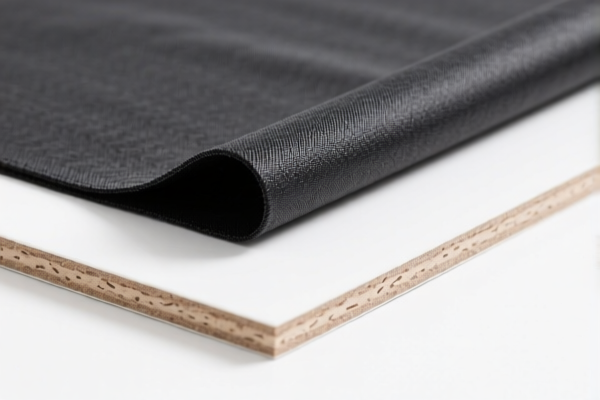
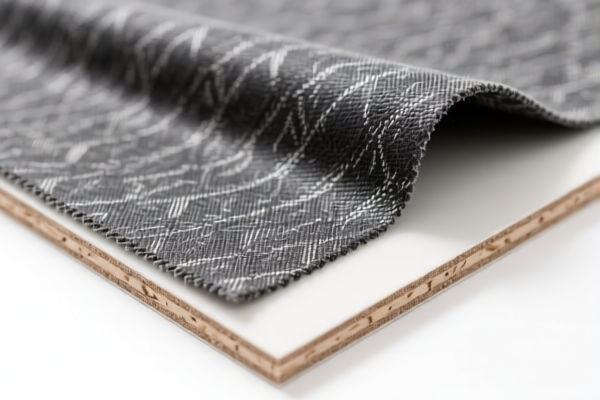
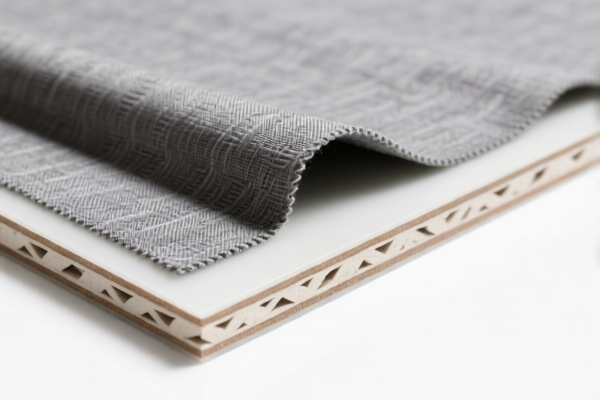

AI Analysis
🛡️ Polyurethane Textile Composite Antibacterial Coating Board
🌐 HS Code Reference & Customs Clearance Guide | 2026 Latest Tariff Analysis | Professional Clearance Strategy
📌 I. Product Definition & Classification: What Exactly Is This Board?
This product is a specialized construction material featuring a polyurethane (PU) base or composite, reinforced with textile materials (fibers/fabrics), and treated with an antibacterial coating. In international trade, the critical classification challenge lies in determining whether the primary character is derived from the textile aspect (impregnated/coated fabric) or the plastic aspect (rigid plastic board/sheet).
Key Distinction Points: - Textile-Based (Chapter 59): If the fabric provides the structural integrity and the PU acts as an impregnating or coating agent, it is classified as Artificial Fiber Textile Fabric. The "board" form is considered a downstream application or composite form of the fabric. - Plastic-Based (Chapter 39): If the PU forms a solid, rigid sheet/plate that is simply reinforced with textile fibers internally, it may be classified as a Plastic Plate/Sheet. - Non-Textile/Other (Chapter 68): If the PU is considered a minor additive to a concrete/cementitious base (rare for this specific name, but possible in broad "construction board" interpretations), it might fall under Cement/Concrete/Artificial Stone.
⚠️ Critical Classification Risk:
- Misclassifying a textile-based board as a plastic board can lead to higher base tariffs (7.5% vs 0%).
- Misclassifying a plastic board as a textile fabric can lead to complex origin verification issues.
- The term "Antibacterial" is a functional description and does not change the HS Code unless it creates a distinct new product category (which it generally does not in these chapters).
📦 II. HS Code Classification Details (2026 Latest Tariff Authority Comparison)
Based on the provided data, here are the four potential classifications with their tax implications.
| HS Code | Product Description | Application/Logic | Tax Rate |
|---|---|---|---|
5903.20.25.00 |
Textile-Based Composite: Polyurethane-impregnated/coated artificial fiber textile fabric, in board-like form. | Matches "Polyurethane" + "Textile" form. "Construction board" is the end-use, not the material definition. | 42.5% |
3921.13.19.50 |
Plastic-Based Plate: Other plates, sheets, film, foil of polyurethane, combined with textile materials, for construction. | Matches "Polyurethane" + "Plate/Sheet" form. Emphasizes the rigid plastic nature. | 40.3% |
5903.20.20.00 |
Textile-Based Composite (Lower Base Tariff): Polyurethane-impregnated/coated artificial fiber textile fabric. | Best Match if Fabric Dominant: Same as above but potentially different sub-heading for specific textile type. Lowest Base Tariff (0%). | 35.0% |
3921.13.15.00 |
Plastic-Based Plate (Specific): Plates, sheets, etc., of polyurethane, combined with textile materials. | Matches "Polyurethane" + "Composite Board" + "Construction". Requires assumption of textile layer inclusion. | 41.5% |
6810.99.00.80 |
Non-Concrete Construction Board: Other articles of cement, concrete, or artificial stone. | Least Likely: Assumes PU is a minor additive to a cementitious base. No direct mention of quartz/concrete in name, but "Construction Board" triggers this inference. | 35.0% |
🔍 重点提醒 (Key Reminders):
- Why 5903 vs 3921? If the textile fabric is the primary structure and PU is just the coating/impregnant → 5903. If the PU plate is the primary structure and textile is just a reinforcing mesh inside → 3921.
- Why 6810? Only if the board is fundamentally a cement/concrete product with PU added for water resistance or antibacterial properties. Given the name "Polyurethane Textile Composite," this is less likely unless specified otherwise.
- Antibacterial Coating: This is a surface treatment. It does not alter the fundamental nature of the material (Polyurethane or Textile).
💰 III. 2026 Latest Tariff Rate Breakdown (Including Additional Duties & Policy Surcharge)
✅ Applicable Country: United States (US)
✅ Country of Origin: China (CN)
✅ Effective Date: November 10, 2025 onwards (including subsequent imports)
🎯 1. 5903.20.25.00 —— Polyurethane Textile Fabric (Board Form)
| Item | Content |
|---|---|
| Base Tariff | 7.5% (ad valorem) |
| Section 301 Tariff (USITC) | +25.0% (Footnote 9903.88.01) |
| IEEPA Tariff | +10.0% (For Chinese products) |
| 122 Clause Tariff | +10.0% (Specific provision mentioned in data) |
| Total Effective Rate | 42.5% |
| Tax Calculation | CIF Value × 42.5% |
| De Minimis Exemption | ❌ Not Eligible (deny_de_minimis) |
| Legal Basis Path | IEEPA:9903.01.25 → IEEPA:9903.01.24 → USITC:5903.20.25.00 → FOOTNOTE:9903.88.01 |
📌 Explanation:
- High base tariff due to textile classification.
- Total 42.5% is extremely high. Requires strict documentation to prove textile nature if challenged.
🎯 2. 3921.13.19.50 —— Polyurethane Plastic Plate/Sheet
| Item | Content |
|---|---|
| Base Tariff | 5.3% (ad valorem) |
| Section 301 Tariff (USITC) | +25.0% |
| IEEPA Tariff | +10.0% |
| 122 Clause Tariff | +10.0% |
| Total Effective Rate | 40.3% |
| Tax Calculation | CIF Value × 40.3% |
| De Minimis Exemption | ❌ Not Eligible |
| Legal Basis Path | IEEPA:9903.01.25 → IEEPA:9903.01.24 → USITC:3921.13.19.50 → FOOTNOTE:9903.88.01 |
📌 Note:
- Lower base tariff than textile classification (5.3% vs 7.5%).
- Total 40.3% is slightly lower than 5903.20.25.00.
- Classification depends on whether the "Plate" structure is primary.
🎯 3. 5903.20.20.00 —— Polyurethane Textile Fabric (Optimal Textile Choice)
| Item | Content |
|---|---|
| Base Tariff | 0.0% (ad valorem) |
| Section 301 Tariff (USITC) | +25.0% |
| IEEPA Tariff | +10.0% |
| 122 Clause Tariff | +10.0% |
| Total Effective Rate | 35.0% |
| Tax Calculation | CIF Value × 35.0% |
| De Minimis Exemption | ❌ Not Eligible |
| Legal Basis Path | IEEPA:9903.01.25 → IEEPA:9903.01.24 → USITC:5903.20.20.00 → FOOTNOTE:9903.88.01 |
📌 Best Case for Textile Classification:
- Lowest Total Tax (35.0%) among all options.
- Crucial: Must prove the product is primarily a textile fabric (impregnated/coated) and not a rigid plastic board.
- If customs accepts this classification, you save 7.5% compared to5903.20.25.00.
🎯 4. 3921.13.15.00 —— Polyurethane Plastic Plate/Sheet (Specific Subheading)
| Item | Content |
|---|---|
| Base Tariff | 6.5% (ad valorem) |
| Section 301 Tariff (USITC) | +25.0% |
| IEEPA Tariff | +10.0% |
| 122 Clause Tariff | +10.0% |
| Total Effective Rate | 41.5% |
| Tax Calculation | CIF Value × 41.5% |
| De Minimis Exemption | ❌ Not Eligible |
| Legal Basis Path | IEEPA:9903.01.25 → IEEPA:9903.01.24 → USITC:3921.13.15.00 → FOOTNOTE:9903.88.01 |
📌 Note:
- Base tariff 6.5% is higher than3921.13.19.50(5.3%).
- Total 41.5% is higher than3921.13.19.50(40.3%).
- Less favorable than3921.13.19.50for plastic classification.
🎯 5. 6810.99.00.80 —— Other Construction Articles (Cement/Concrete Assumption)
| Item | Content |
|---|---|
| Base Tariff | 0.0% (ad valorem) |
| Section 301 Tariff (USITC) | +25.0% |
| IEEPA Tariff | +10.0% |
| 122 Clause Tariff | +10.0% |
| Total Effective Rate | 35.0% |
| Tax Calculation | CIF Value × 35.0% |
| De Minimis Exemption | ❌ Not Eligible |
| Legal Basis Path | IEEPA:9903.01.25 → IEEPA:9903.01.24 → USITC:6810.99.00.80 → FOOTNOTE:9903.88.01 |
📌 Risk Warning:
- Lowest Base Tariff (0%), but Highest Classification Risk.
- The name "Polyurethane Textile Composite" contradicts the definition of "Cement/Concrete."
- Customs may reject this classification, leading to reclassification to 5903 or 3921 and penalties.
- Only use if the board is >50% cement/concrete by weight/volume.
🛠️ IV. Customs Clearance Practical Advice (Real-World Pitfall Guide)
✅ 1. Preparation Checklist (Mandatory)
| Document | Required | Explanation |
|---|---|---|
| ✅ Product Specification Sheet | ✔️ | Must detail: PU content %, Textile fiber type (Polyester/Nylon/etc.), Antibacterial agent type, Board thickness/density. |
| ✅ Material Composition Statement | ✔️ | Explicitly state: Is the primary structure Textile (impregnated) or Plastic (reinforced)? This determines 5903 vs 3921. |
| ✅ Product Photos | ✔️ | Clear images of cross-section showing layer structure (e.g., fabric layers vs solid PU). |
| ✅ Third-Party Test Report | ✔️ | Include tensile strength, PU coating weight, and antibacterial efficacy. |
| ✅ Commercial Invoice | ✔️ | Must clearly state: "Polyurethane Impregnated Textile Fabric for Construction Use" OR "Polyurethane Reinforced Plastic Board". Avoid vague terms like "Composite Board" without explanation. |
| ✅ Certificate of Origin (CO) | ✔️ | Required for IEEPA and Section 301 calculations. |
| ✅ Packing List | ✔️ | Detail dimensions and weight. |
✅ 2. Declaration Strategy (Key Tips)
🔥 “Structure Defines Classification, Not End-Use!”
| Scenario | Correct Declaration | Wrong Declaration | Risk |
|---|---|---|---|
| Primary Structure: Fabric | "Polyurethane-impregnated Polyester Fabric, Board Form" → 5903.20.20.00 (35%) |
"Construction Board" → 6810.99.00.80 (35% but rejected) |
High rejection rate for 6810. |
| Primary Structure: PU Plate | "Polyurethane Plate with Textile Reinforcement" → 3921.13.19.50 (40.3%) |
"Textile Fabric" → 5903.20.25.00 (42.5%) |
Higher tax if misclassified. |
| Antibacterial Claim | Add "with Antibacterial Treatment" to description. | Claim "Medical Device" → 9018/9021 |
Wrong Chapter! Antibacterial is just a coating. |
📌 Pro Tip:
- If you can prove the fabric layer is the load-bearing component, argue for 5903.20.20.00 (35%). This is the lowest total tax.
- If the PU plate is rigid and holds its shape without the fabric, argue for 3921.13.19.50 (40.3%).
✅ 3. Special Cases Handling
| Case | Handling Suggestion |
|---|---|
| OEM Custom Board | Provide client specs and material breakdown to prove classification basis. |
| Mixed Shipments | Declare separately. Do not mix textile fabrics with plastic plates in one HS Code. |
| Antibacterial Certification | Provide test reports to prove the coating is superficial and doesn’t change the material nature. |
| Origin Transshipment | If shipped via Vietnam/Malaysia, ensure substantial transformation occurs. Otherwise, IEEPA 10% still applies if origin is China. |
🌍 V. Global Market Customs Comparison (2026 Latest)
| Country/Region | Recommended HS Code | Base Tariff | Additional Taxes (China) | Total Est. Rate | Notes |
|---|---|---|---|---|---|
| 🇺🇸 USA | 5903.20.20.00 (Textile) |
0% | 25% (301) + 10% (IEEPA) + 10% (122) | 35% | Best Option if Textile. |
| 🇺🇸 USA | 3921.13.19.50 (Plastic) |
5.3% | 25% (301) + 10% (IEEPA) + 10% (122) | 40.3% | Alternative if Plastic. |
| 🇨🇳 China | 5903.20.20.00 |
5% | None | 5% | No IEEPA/301. |
| 🇪🇺 EU | 5903.20.00 |
0% | None | 0% | No additional tariffs. |
| 🇬🇧 UK | 5903.20.00 |
0% | None | 0% | Post-Brexit tariffs low. |
| 🇯🇵 Japan | 5903.20.00 |
0% | None | 0% | No additional tariffs. |
📌 Conclusion:
- USA is the most challenging market due to multiple layers of tariffs (301, IEEPA, 122).
- EU, UK, Japan have 0% base tariffs for textile composites.
- Strategic Advice: If importing to USA, optimize for 5903.20.20.00 to achieve 35% total. Avoid6810.99.00.80due to high rejection risk.
📌 VI. Common Errors & Pitfall Guide (Blood & Tears Lessons)
❌ Mistake 1: Using "Construction Board" as the primary name without material detail.
👉 Consequence: Customs may assign 6810.99.00.80 (35%) but then reject it due to lack of cement content, causing delays.
❌ Mistake 2: Claiming "Antibacterial" as a medical device.
👉 Consequence: Incorrect classification → Penalties + Interest. Antibacterial is just a coating.
❌ Mistake 3: Misclassifying Plastic Board as Textile Fabric to save tax.
👉 Consequence: If customs inspects and finds rigid PU structure, they will reclassify to 3921 (40.3%) and charge back taxes + penalties.
❌ Mistake 4: Ignoring the 122 Clause Tariff (10%).
👉 Consequence: Underpayment → Seizure. The 122 clause applies to many Chinese imports.
✅ Correct Approach:
"Polyurethane-Impregnated Polyester Textile Fabric, Antimicrobial Treated, Cut to Board Size, for Wall Paneling" →
5903.20.20.00
🎯 VII. Conclusion: Precision in Classification Saves Money!
🎯 Remember the Golden Rules:
🔹 "Textile Structure = 5903 (35% Optimal)"
🔹 "Plastic Plate = 3921 (40.3% or 41.5%)"
🔹 "Cement Board = 6810 (35% but High Risk)"
🔹 "Antibacterial = Coating, Not New Product"
🔹 "122 Clause 10% + 301 25% + IEEPA 10% = High Total Tax!"
📌 Pro Tip:
If your product is substantially transformed in a third country (e.g., Vietnam, Malaysia) after acquiring PU and textile properties, you may avoid IEEPA 10%. However, simple assembly or cutting does not count.
📞 Action Step:
1. Confirm Material Dominance: Is it Textile or Plastic?
2. Prepare Technical Docs: Material breakdown, structure photos.
3. Apply for Advance Ruling: If value is high, get pre-approval from CBP.
4. Calculate Total Landed Cost: Include 35-42.5% tariff + freight + insurance.
📣 Immediate Action:
📞 Contact your customs broker with detailed material specs.
🚀 Optimize for 5903.20.20.00 (35%) if textile-based.
💼 Your profit margin depends on this 7.5% difference!
✨ Professional Clearance Starts with Accurate Classification!
💼 Every percentage point saved is pure profit!
Customer Reviews
About HS Code Classification
The Harmonized System (HS) is an internationally standardized nomenclature developed by the World Customs Organization (WCO) to classify traded products. Over 200 countries use the HS system as the basis for customs tariffs, trade statistics, and import/export regulations.
Each HS code follows a hierarchical structure:
- Chapter (2 digits) — Broad category of goods (e.g., Chapter 84: Machinery and Mechanical Appliances)
- Heading (4 digits) — More specific grouping within the chapter
- Subheading (6 digits) — Internationally standardized breakdown, used by all WCO member countries
- National subdivisions (8-10 digits) — Country-specific extensions for further classification, such as US HTSUS 10-digit codes
Correct HS code classification is essential for smooth customs clearance, accurate duty payment, and compliance with trade regulations. Misclassification can lead to customs delays, overpayment of duties, or penalties.
When importing from CN to US, the applicable tariff rates may include:
- Most-Favored-Nation (MFN) rate — The standard duty rate applied to WTO members
- General rate — Applied to countries without trade agreements
- Trade remedy duties — Additional tariffs such as Section 301 (anti-dumping), Section 232 (national security), or countervailing duties
The information provided on this page is for reference purposes only. For official classification, please consult with your local customs authority or a licensed customs broker.