Polyurethane Textile Composite Electronic Film
CN → US| HS Code | Tariff Rate | Origin | Destination | Doc |
|---|---|---|---|---|
| 3005901000 | 10.0% | CN | US | Official Doc |
| 3921131500 | 41.5% | CN | US | Official Doc |
| 3005905090 | 10.0% | CN | US | Official Doc |
| 5906912500 | 42.5% | CN | US | Official Doc |
| 3921131500 | 41.5% | CN | US | Official Doc |
Product Images
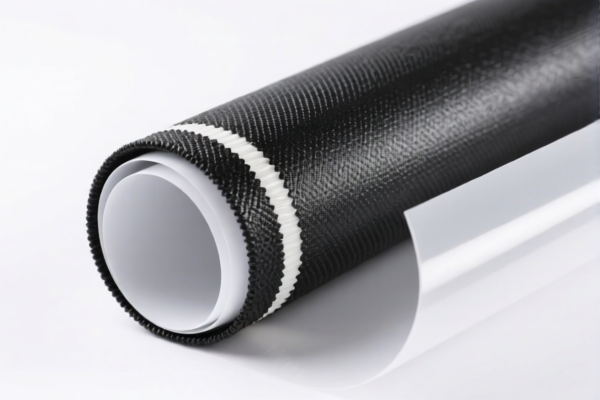
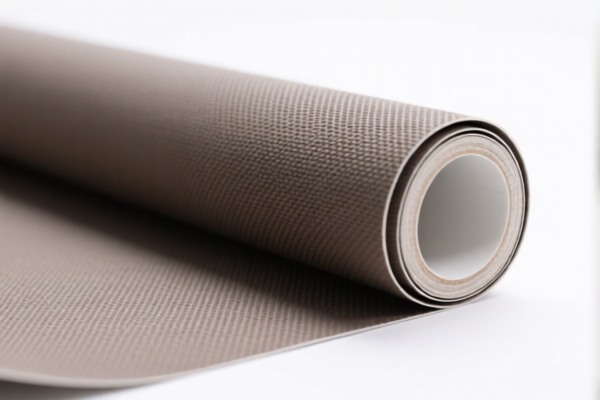
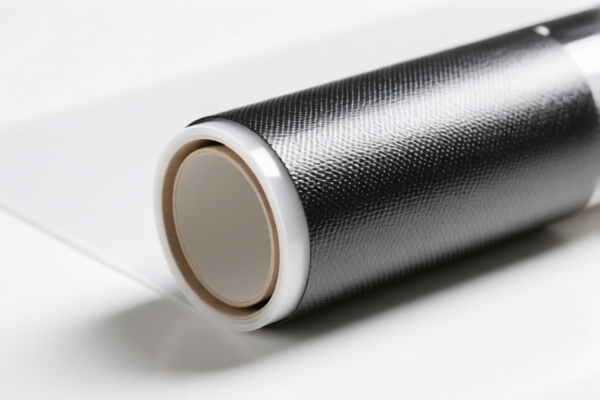
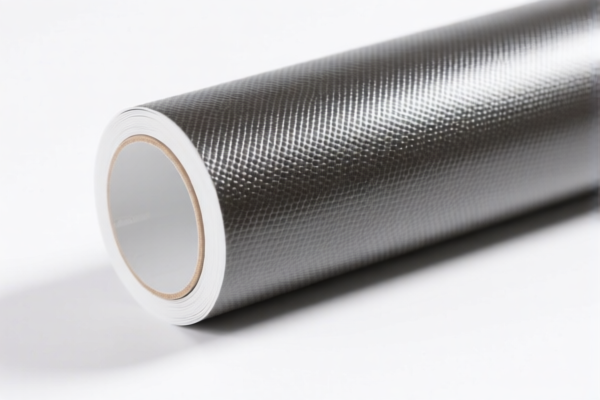
AI Analysis
🧬 Polyurethane (PU) Textile Composite Electronic Film
🌐 HS Code Reference & Customs Clearance Guide | 2026 Latest Tariff Analysis | Professional Classification Strategy
📌 I. Product Definition & Classification: What Exactly Is This "Electronic Film"?
Polyurethane Textile Composite Electronic Film refers to a layered material where polyurethane (PU) is bonded with textile fabrics. While the user input specifies "Electronic Film," the provided data indicates that the classification depends heavily on the specific end-use and structural composition. It is not a single HS Code but rather a bifurcated classification path:
- Medical Use (Highly Regulated): If the composite is used for medical dressings or surgical purposes, it falls under Chapter 30 (Pharmaceuticals/Medical Supplies).
- Industrial/General Use (Standard Composite): If used for general purposes (e.g., packaging, industrial lining, or non-medical electronics backing), it falls under Chapter 39 (Plastics) or Chapter 59 (Impregnated Textile Fabrics).
⚠️ Critical Distinction Point:
- If the primary function is medical care (covering wounds, surgical use) → Chapter 30 (Lower Duty, ~10%).
- If the primary function is general textile/plastic composite (even if used in electronic manufacturing as a backing) → Chapter 39 or 59 (Higher Duty, ~41.5%-42.5%).
- Note: The term "Electronic Film" is ambiguous. If it is purely a functional electronic component (like a sensor), it might belong elsewhere, but based strictly on the provided data, it is classified as either a Medical Dressing or a Composite Plastic/Textile Material.
📦 II. HS Code Classification Details (Based on Provided Data)
| HS Code | Product Description | Application Scenario | Duty Rate (Total) | Key Characteristics |
|---|---|---|---|---|
3005.90.10.00 |
Medical Dressing: PU Textile Composite Medical Film | Wound care, surgical dressings, medical bandages | 10.0% | Specifically for medical use; basic tariff 0%. |
3005.90.50.90 |
Medical Surgical Articles: PU Textile Composite Medical Film | Similar medical articles, surgical uses | 10.0% | For "similar articles" of a surgical nature; basic tariff 0%. |
3921.13.15.00 |
Composite Plastic Film: PU & Textile Composite | General industrial use, packaging, non-medical backing | 41.5% | Classified as plastic products with textile content; high duty. |
5906.91.25.00 |
Impregnated Textile Fabric: Rubberized PU Textile Fabric | Industrial textiles, apparel lining, general composite | 42.5% | Classified as textile fabric impregnated/coated with rubber/PU; highest duty. |
🔍 Key Insight:
- Medical vs. Non-Medical: The duty rate difference is massive (10% vs. ~42%). Misclassifying a medical product as a general industrial film can lead to underpayment of duties and penalties. Conversely, classifying a general film as medical might be rejected if medical certification is missing. - Duplicate Entry:3921.13.15.00appears twice in the source data with the same summary and tax rate, confirming its role as the primary non-medical classification for this composite structure.
💰 III. 2026 Latest Tariff Rate Breakdown (Detailed Tax Clauses)
✅ Applicable Country: United States (US)
✅ Origin: China (CN)
✅ Effective Date: Current tariffs include Section 301 and IEEPA surcharges.
🎯 1. Medical Classifications (3005.90.10.00 & 3005.90.50.90)
| Item | Content |
|---|---|
| Base Tariff | 0.0% (ad valorem) |
| Additional Tariff (Section 301 / USITC) | 0.0% |
| IEEPA Additional Tariff (Section 122 / China-specific) | +10.0% |
| Total Tax Rate | 10.0% |
| Tax Calculation | CIF Value × 10% |
| De Minimis Eligibility | ❌ No (Generally, medical goods are excluded from $800 de minimis if regulated by FDA, but check specific carrier policies) |
| Legal Basis Path | IEEPA:9903.01.24 (10% surcharge) + USITC:3005.xxxx |
📌 Explanation:
- Medical dressings (3005) generally enjoy 0% base tariff and 0% Section 301 surcharge.
- The 10% total comes solely from the IEEPA 122 Clause (or similar China-specific executive order).
- Advantage: This is the lowest tax scenario. If the product is truly for medical use, obtaining FDA classification support is crucial to secure this rate.
🎯 2. General Composite Film (3921.13.15.00)
| Item | Content |
|---|---|
| Base Tariff | 6.5% |
| Additional Tariff (Section 301) | +25.0% |
| IEEPA Additional Tariff (Section 122 / China-specific) | +10.0% |
| Total Tax Rate | 41.5% |
| Tax Calculation | CIF Value × 41.5% |
| De Minimis Eligibility | ❌ No |
| Legal Basis Path | IEEPA:9903.01.24 → USITC:3921.13.15.00 → FOOTNOTE:301 |
📌 Explanation:
- Base 6.5%: Standard tariff for plastic plates/sheets/film/foil.
- 25% Section 301: Significant surcharge for Chinese-origin plastic composites.
- 10% IEEPA: Additional China-specific surcharge.
- Risk: High duty impact on profit margins.
🎯 3. Rubberized/Impregnated Textile (5906.91.25.00)
| Item | Content |
|---|---|
| Base Tariff | 7.5% |
| Additional Tariff (Section 301) | +25.0% |
| IEEPA Additional Tariff (Section 122 / China-specific) | +10.0% |
| Total Tax Rate | 42.5% |
| Tax Calculation | CIF Value × 42.5% |
| De Minimis Eligibility | ❌ No |
| Legal Basis Path | IEEPA:9903.01.24 → USITC:5906.91.25.00 → FOOTNOTE:301 |
📌 Explanation:
- This is the highest duty rate. It applies if customs views the material primarily as a textile (Chapter 59) impregnated with polyurethane (treated as rubber-like), rather than a plastic film.
- Risk: High. Requires strong justification if trying to classify here, as it is the most expensive.
🛠️ IV. Customs Clearance Practical Advice (Avoiding Pitfalls)
✅ 1. Preparation Checklist (Non-Negotiable)
| Document | Required | Explanation |
|---|---|---|
| ✅ Product Specification Sheet | ✔️ | Must detail layers: "PU Layer + Textile Layer." Specify if "Electronic" part is conductive, resistive, or just structural. |
| ✅ Intended Use Declaration | ✔️ | Critical: Is it for Medical (dressings) or Industrial/Electronic? This dictates Chapter 30 vs. 39/59. |
| ✅ Composition Breakdown | ✔️ | Percentage of PU vs. Textile. If PU > 50% by weight, supports 3921. If textile dominates, supports 5906. |
| ✅ FDA Documentation (if Medical) | ✔️ | If claiming 3005, provide FDA clearance or intent for medical use. |
| ✅ Commercial Invoice | ✔️ | Clear description: "PU Textile Composite Film for [Medical/Industrial] Use." |
| ✅ Photos of Cross-Section | ✔️ | Visual proof of the composite structure. |
✅ 2. Classification Strategy & Naming Tips
🔥 "Medical or Not? That is the Question! Classify Correctly, Save 30%!"
| Scenario | Recommended HS Code | Why? |
|---|---|---|
| Product is sold as a Wound Dressing | 3005.90.10.00 |
Chapter 30 covers medical dressings. Low duty (10%). |
| Product is for Surgical Instruments | 3005.90.50.90 |
Similar to dressings, low duty (10%). |
| Product is for General Electronics Packaging | 3921.13.15.00 |
Chapter 39 covers plastic films. High duty (41.5%). |
| Product is an Industrial Textile Lining | 5906.91.25.00 |
Chapter 59 covers impregnated textiles. Highest duty (42.5%). |
📌 Warning:
- Do not use generic terms like "Electronic Film" in the invoice if it triggers ambiguity. Be specific:
- ✅ Good: "Polyurethane-Textile Composite Medical Dressing"
- ❌ Bad: "Electronic PU Film" (This may lead to random classification, often towards higher tariffs like3921).
✅ 3. Special Cases
| Situation | Handling Advice |
|---|---|
| OEM for Medical Device Co. | Provide Letter of Authorization from the medical device company stating the film is for their medical product. |
| Hybrid Use (Medical & Non-Medical) | Separate Shipments! Do not mix. If one shipment contains both, customs may apply the highest duty to the entire lot or audit the whole shipment. |
| Conductive Electronic Film | If the "electronic" aspect involves sensors/circuits, it might not fit 3005 or 3921. However, based on the provided data, stick to 3921 if non-medical. Consult a specialist if it contains active electronic components. |
🌍 V. Global Market Comparison (2026)
| Region | Recommended HS Code (Based on Data) | Estimated Total Duty (China Origin) | Key Notes |
|---|---|---|---|
| 🇺🇸 USA | 3005.90.10.00 (Medical) or 3921.13.15.00 (Non-Medical) |
10% (Medical) / 41.5% (Non-Medical) | IEEPA 10% + Section 301 25% (if non-medical). |
| 🇨🇳 China | 3005 or 3921 |
Varies (Generally lower base rates) | Check China Import Tariff Schedule for MFN rates. |
| 🇪🇺 EU | 3005 or 3921 |
VAT + Duty (0-6.5% usually) | No Section 301. IEEPA does not apply. Duty depends on specific heading. |
| 🇬🇧 UK | 3005 or 3921 |
VAT + Duty (0-6.5% usually) | Post-Brexit tariffs mirror EU but no Section 301. |
📌 Conclusion:
- USA is the most punitive market for non-medical polyurethane composites due to the 25% Section 301 + 10% IEEPA combination.
- Medical classification offers a significant tariff advantage (10% vs 41.5%). Ensure your product genuinely meets medical standards to claim this benefit.
📌 VI. Common Errors & Pitfalls (Lessons Learned)
❌ Error 1: Classifying a medical dressing as "Plastic Film" (3921).
👉 Result: Paying 41.5% instead of 10%. Lost Profit!
👉 Fix: Ensure marketing and invoices clearly state "Medical Use."
❌ Error 2: Using "Electronic Film" as the sole description.
👉 Result: Customs ambiguity → Delayed release → Demurrage charges.
👉 Fix: Use precise terms: "PU-Textile Composite for [Specific Use]."
❌ Error 3: Mixing Medical and Non-Medical units in one shipment.
👉 Result: Customs may audit the entire shipment and apply the highest duty or reject the low-duty items.
👉 Fix: Ship separately with distinct invoices.
✅ Correct Approach:
"PU Textile Composite Medical Dressing, Sterile, 10x10cm, for Wound Care, Model XYZ."
🎯 VII. Conclusion: Precision in Classification Saves Money!
🎯 Remember the Mantra:
🔹 "Medical? Go 3005. Industrial? Go 3921. Don't Mix! Don't Guess!"
🔹 "10% vs 41.5%: The Choice is Yours. Specify the Use!"
📌 Pro Tip:
If your "Electronic Film" is not for medical use, consider if it can be substantially transformed in a third country (e.g., Vietnam, Mexico) to change the origin and potentially avoid Section 301/IEEPA tariffs. However, simple composite processing may not qualify.
Recommendation: Apply for an Advance Ruling (PBG) from US Customs if the classification is ambiguous. This provides legal certainty before shipment.
📣 Action Item:
📞 Consult a Customs Broker: Provide your product's intended end-use and material breakdown.
🚀 Optimize Your Supply Chain: If high duty is unavoidable, evaluate packaging or origin strategies.
✨ Professional Classification, Predictable Costs, Smooth Clearance!
💼 Every percent of duty saved is pure profit added!
Customer Reviews
About HS Code Classification
The Harmonized System (HS) is an internationally standardized nomenclature developed by the World Customs Organization (WCO) to classify traded products. Over 200 countries use the HS system as the basis for customs tariffs, trade statistics, and import/export regulations.
Each HS code follows a hierarchical structure:
- Chapter (2 digits) — Broad category of goods (e.g., Chapter 84: Machinery and Mechanical Appliances)
- Heading (4 digits) — More specific grouping within the chapter
- Subheading (6 digits) — Internationally standardized breakdown, used by all WCO member countries
- National subdivisions (8-10 digits) — Country-specific extensions for further classification, such as US HTSUS 10-digit codes
Correct HS code classification is essential for smooth customs clearance, accurate duty payment, and compliance with trade regulations. Misclassification can lead to customs delays, overpayment of duties, or penalties.
When importing from CN to US, the applicable tariff rates may include:
- Most-Favored-Nation (MFN) rate — The standard duty rate applied to WTO members
- General rate — Applied to countries without trade agreements
- Trade remedy duties — Additional tariffs such as Section 301 (anti-dumping), Section 232 (national security), or countervailing duties
The information provided on this page is for reference purposes only. For official classification, please consult with your local customs authority or a licensed customs broker.