Polyurethane Textile Composite Protective Film
CN → US| HS Code | Tariff Rate | Origin | Destination | Doc |
|---|---|---|---|---|
| 3005901000 | 10.0% | CN | US | Official Doc |
| 3921131500 | 41.5% | CN | US | Official Doc |
| 3005905090 | 10.0% | CN | US | Official Doc |
| 5906912500 | 42.5% | CN | US | Official Doc |
| 3005901000 | 10.0% | CN | US | Official Doc |
Product Images
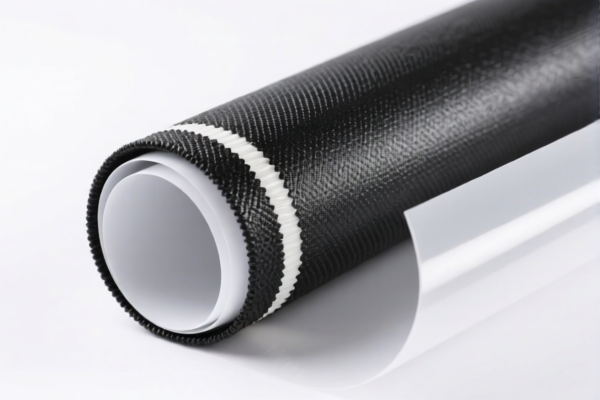
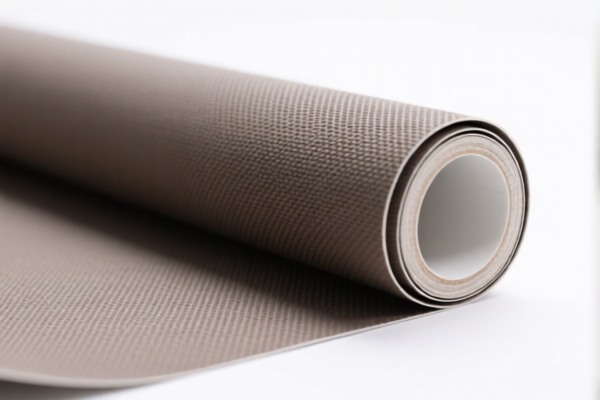
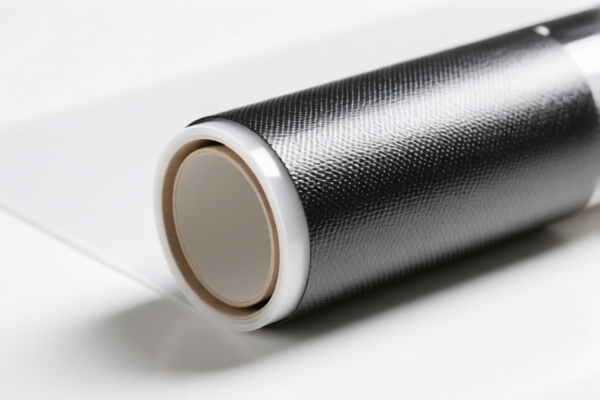
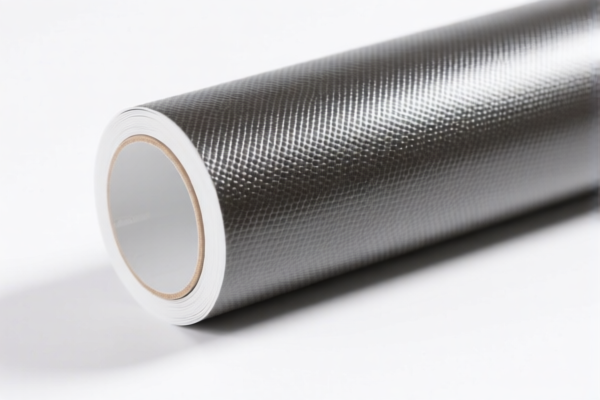
AI Analysis
🧬 Polyurethane Textile Composite Protective Film (PU-TCF)
🌐 HS Code Reference & Customs Clearance Guide | 2026 Tariff Analysis for Polyurethane Composite Films
📌 I. Product Definition & Classification: What is "Polyurethane Textile Composite Protective Film"?
Polyurethane Textile Composite Protective Film is a hybrid material combining polyurethane (PU) resin with textile fibers (woven, non-woven, or knit) to form a flexible, durable composite sheet.
In international trade, its classification depends heavily on its primary function and structure: 1. Medical Dressings: If designed for wound care, surgical use, or medical hygiene → Classified under Chapter 30 (Pharmaceutical Products). 2. Industrial/Commercial Films: If used for packaging, protection, or general industrial purposes → Classified under Chapter 39 (Plastics) or Chapter 59 (Textile Fabrics Impregnated with Plastic).
⚠️ Critical Distinction:
- Medical Use → Chapter 30 (Lower Base Tariff, but subject to Section 301/IEEPA penalties).
- Non-Medical/Industrial Use → Chapter 39 or 59 (Higher Base Tariff + Section 301/IEEPA penalties).
- Misclassification Risk: Declaring a medical film as an industrial film (or vice versa) can lead to severe penalties, duty evasion charges, or shipment refusal.
📦 II. HS Code Classification Matrix (2026 Latest Tariff Schedule)
Based on the provided data, here are the 5 possible HS Codes for this product, categorized by application:
| HS Code | Summary Description | Primary Category | Key Characteristics |
|---|---|---|---|
3005.90.10.00 |
PU Textile Composite Medical Film | Medical Dressings | Used for medical/wound care; thin film structure. |
3921.13.15.00 |
PU + Textile Composite Film | Plastics & Articles | Industrial/commercial composite; PU + textile structure. |
3005.90.50.90 |
PU Film for Medical/Surgical Use | Medical/Surgical | Specific medical/surgical application; PU material. |
5906.91.25.00 |
Rubberized Textile Fabric (PU) | Textile Fabrics | Artificial fiber rubberized fabric; other material attributes. |
3005.90.10.00 |
PU Textile Composite Medical Film | Medical Dressings | Alternative code for medical dressings; matches film morphology. |
🔍 Note:
-3005.90.10.00appears twice because it covers similar medical dressing articles.
-5906.91.25.00is distinct: it classifies the textile as rubberized fabric, not necessarily a "film" for protection.
-3921.13.15.00is for general composite films, not medical-grade.
💰 III. 2026 Tariff Rate Breakdown (China → USA)
✅ Applicable Country: United States (US)
✅ Origin: China (CN)
✅ Effective Date: Post-November 10, 2025 (Includes Section 301 & IEEPA tariffs)
🎯 1. Medical Grade: 3005.90.10.00 & 3005.90.50.90
| Item | Details |
|---|---|
| Base Tariff | 0.0% (Ad valorem) |
| Additional Duty (Section 301) | 0.0% (Exempt or not applicable for this specific subheading under current rules) |
| IEEPA Penalty (122 Clause) | +10% |
| Total Tax Rate | 10.0% |
| Calculation | CIF Value × 10% |
| De Minimis Exemption | ❌ Not Applicable (Medical goods usually excluded from $800 de minimis if declared formally) |
| Legal Basis | IEEPA:9903.01.25 (122 Clause Tariff for Chinese Imports) |
📌 Explanation:
- Medical dressings (3005) enjoy a 0% base tariff.
- However, due to the 122 Clause (IEEPA), an additional 10% is imposed on Chinese-origin goods.
- No Section 301 (25%) applies to this specific medical subheading, making it significantly cheaper than industrial alternatives.
🎯 2. Industrial/Commercial Grade: 3921.13.15.00
| Item | Details |
|---|---|
| Base Tariff | 6.5% |
| Additional Duty (Section 301) | +25% |
| IEEPA Penalty (122 Clause) | +10% |
| Total Tax Rate | 41.5% |
| Calculation | CIF Value × 41.5% |
| De Minimis Exemption | ❌ Not Applicable |
| Legal Basis | USITC:3921.13.15.00 + Section 301: Footnote 9903.88.01 + IEEPA:9903.01.25 |
📌 Explanation:
- This is a composite plastic article.
- Base rate is 6.5%.
- Section 301 adds 25% (standard for many Chapter 39 goods from China).
- IEEPA adds 10%.
- Total: 41.5% — A high-cost classification for non-medical use.
🎯 3. Rubberized Textile: 5906.91.25.00
| Item | Details |
|---|---|
| Base Tariff | 7.5% |
| Additional Duty (Section 301) | +25% |
| IEEPA Penalty (122 Clause) | +10% |
| Total Tax Rate | 42.5% |
| Calculation | CIF Value × 42.5% |
| De Minimis Exemption | ❌ Not Applicable |
| Legal Basis | USITC:5906.91.25.00 + Section 301 + IEEPA |
📌 Explanation:
- Classified as textile fabric impregnated with rubber/plastic.
- Higher base rate (7.5%) compared to medical films.
- Same Section 301 and IEEPA penalties apply.
- Total: 42.5% — The most expensive option among the listed codes.
🛠️ IV. Customs Clearance Practical Advice (Avoid Pitfalls)
✅ 1. Documentation Checklist (Mandatory)
| Document | Requirement | Purpose |
|---|---|---|
| Product Specification Sheet | Must clearly state composition (PU % vs. Textile %) | Determines if it’s Chapter 30, 39, or 59. |
| Intended Use Declaration | Explicitly state: “For Medical/Wound Care” OR “For Industrial Protection” | Critical for correct HS Code selection. |
| Medical Device License (if applicable) | FDA 510(k) clearance or CE Mark for medical goods | Required for 3005 codes. |
| Composition Certificate | Third-party lab test confirming PU and textile layers | Prevents misclassification by Customs. |
| Commercial Invoice | Describe as: “Polyurethane Textile Composite Medical Film, for wound dressing” | Avoid generic terms like “Plastic Sheet.” |
| Packing List | Net weight, gross weight, dimensions | Standard requirement. |
✅ 2. Strategic Classification Tips
🔥 “Medical Claim, Medical Code, 10% Tax; Industrial Claim, Industrial Code, 42% Tax!”
| Scenario | Recommended HS Code | Why? |
|---|---|---|
| Wound Dressing / Surgical Pad | 3005.90.10.00 |
Lowest Tax (10%). Must provide medical use evidence. |
| Surgical Tape / Medical Film | 3005.90.50.90 |
Lowest Tax (10%). Specific medical/surgical use. |
| Packaging Film / Protective Cover | 3921.13.15.00 |
High Tax (41.5%). No medical function. |
| Rubberized Textile Sheet | 5906.91.25.00 |
Highest Tax (42.5%). Classified as fabric, not film. |
⚠️ Warning:
- If you declare a medical film as3921.13.15.00, you pay 41.5% instead of 10%.
- If you declare an industrial film as3005.90.10.00, Customs may reject it for lack of medical documentation, leading to delays and penalties.
✅ 3. Special Cases & Exceptions
| Case | Advice |
|---|---|
| Dual-Use Products | If used for both medical and industrial purposes, declare the primary intended use. Provide separate SKUs if possible. |
| OEM for Medical Brands | Must provide Letter of Authorization from the medical brand. Customs will verify medical claims. |
| Non-Medical Textile Composite | Do not use “Medical” in the description. Use terms like “Protective Composite Sheet” or “Industrial PU Laminated Fabric”. |
| Origin Diversification | If shipped from Vietnam, Thailand, or Mexico, IEEPA 10% may be waived. Verify Free Trade Agreement (FTA) benefits. |
🌍 V. Global Market Comparison (2026)
| Region | Recommended HS Code | Tariff (China Origin) | Key Requirements |
|---|---|---|---|
| 🇺🇸 USA | 3005.90.10.00 (Medical) |
10% | FDA compliance, IEEPA 10% applies. |
| 🇺🇸 USA | 3921.13.15.00 (Industrial) |
41.5% | No medical claims allowed. |
| 🇪🇺 EU | 3005.90 (Medical) |
0–2% | CE Mark, MDR/IVDR compliance. |
| 🇨🇳 China | 3005.90 (Medical) |
1–2% | NMPA Registration required. |
| 🇯🇵 Japan | 3005.90 (Medical) |
0% | PMDA approval for medical devices. |
📌 Key Insight:
- USA imposes IEEPA 10% on all Chinese-origin goods, even if base tariff is 0%.
- EU/China/Japan do not apply Section 301 or IEEPA tariffs, making medical imports cheaper in these markets.
- Industrial PU films face high tariffs globally due to trade wars and protectionism.
📌 VI. Common Errors & Pitfalls (Learn from Mistakes)
❌ Error 1: Calling a medical film “Plastic Composite Sheet”
👉 Result: Customs reclassifies to 3921.13.15.00 → Tax jumps from 10% to 41.5% → Refund delay & audit risk.
❌ Error 2: Using “Medical” for a non-medical product
👉 Result: Customs requests FDA documentation → Shipment held for 30+ days → Storage fees & penalties.
❌ Error 3: Ignoring the 122 Clause (IEEPA)
👉 Result: Underpaying 10% on medical goods → Back taxes + interest upon audit.
❌ Error 4: Misclassifying as 5906.91.25.00
👉 Result: Highest tax rate (42.5%) for a simple film → Unnecessary cost increase.
✅ Best Practice:
“Be Specific: ‘Medical’ or ‘Industrial’. Provide Proof. Pay the Right Tax.”
🎯 VII. Conclusion: Strategic Sourcing & Compliance
🎯 Key Takeaways:
1. Medical Classification (3005) is highly favored for cost savings (10% total vs. 41.5–42.5%).
2. Documentation is King: You must prove medical use (FDA, CE, specs) to get the 10% rate.
3. IEEPA 10% is Unavoidable for Chinese-origin goods, regardless of HS Code.
4. Avoid Generic Descriptions: Use precise terms like “Polyurethane Textile Composite Medical Film”.
📌 Pro Tip:
If your product is not strictly medical, consider reclassifying as
3921.13.15.00and accepting the 41.5% tax, rather than risking a misclassification penalty.
Alternatively, explore non-Chinese origins (e.g., Vietnam, Thailand) to waive IEEPA 10% and potentially reduce Section 301 exposure.
📣 Immediate Action:
✅ Audit your product description – Is it truly medical?
✅ Prepare FDA/CE documentation if claiming medical status.
✅ Consult a customs broker for an Advance Ruling to confirm HS Code and avoid surprise tariffs.
✨ Smart Classification, Smarter Savings!
💼 Your product’s HS Code determines your profit margin – choose wisely!
Customer Reviews
About HS Code Classification
The Harmonized System (HS) is an internationally standardized nomenclature developed by the World Customs Organization (WCO) to classify traded products. Over 200 countries use the HS system as the basis for customs tariffs, trade statistics, and import/export regulations.
Each HS code follows a hierarchical structure:
- Chapter (2 digits) — Broad category of goods (e.g., Chapter 84: Machinery and Mechanical Appliances)
- Heading (4 digits) — More specific grouping within the chapter
- Subheading (6 digits) — Internationally standardized breakdown, used by all WCO member countries
- National subdivisions (8-10 digits) — Country-specific extensions for further classification, such as US HTSUS 10-digit codes
Correct HS code classification is essential for smooth customs clearance, accurate duty payment, and compliance with trade regulations. Misclassification can lead to customs delays, overpayment of duties, or penalties.
When importing from CN to US, the applicable tariff rates may include:
- Most-Favored-Nation (MFN) rate — The standard duty rate applied to WTO members
- General rate — Applied to countries without trade agreements
- Trade remedy duties — Additional tariffs such as Section 301 (anti-dumping), Section 232 (national security), or countervailing duties
The information provided on this page is for reference purposes only. For official classification, please consult with your local customs authority or a licensed customs broker.