Polyurethane Textile Composite Soundproof Panel
CN → US| HS Code | Tariff Rate | Origin | Destination | Doc |
|---|---|---|---|---|
| 3921131500 | 41.5% | CN | US | Official Doc |
| 3921131950 | 40.3% | CN | US | Official Doc |
| 5903202500 | 42.5% | CN | US | Official Doc |
| 5903202000 | 35.0% | CN | US | Official Doc |
| 6810990080 | 35.0% | CN | US | Official Doc |
Product Images
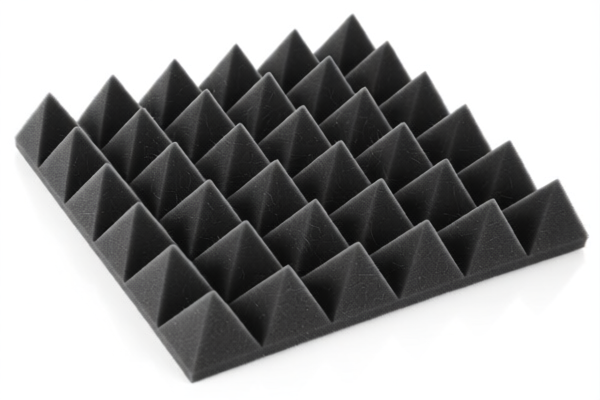
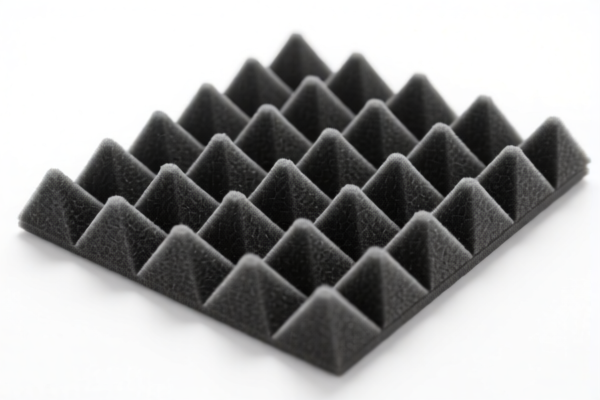
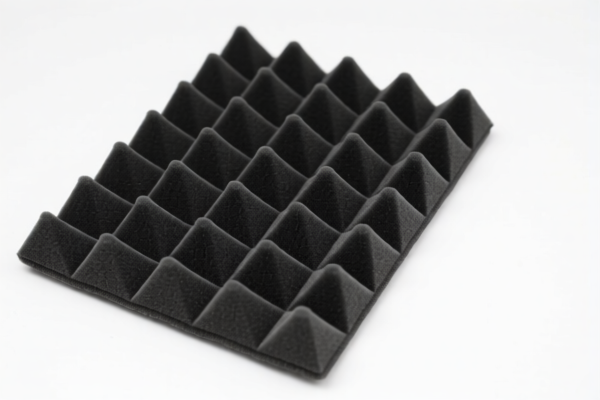
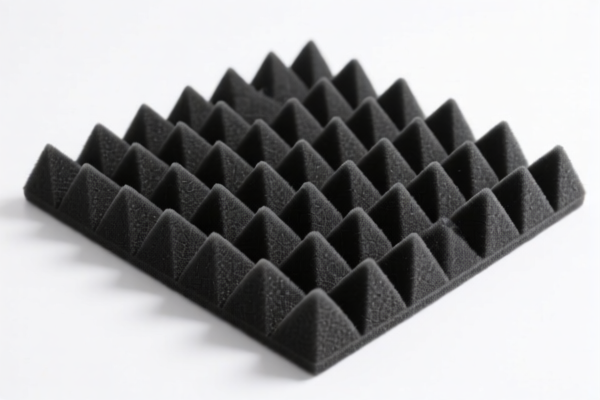
AI Analysis
🏗️ Polyurethane Textile Composite Soundproof Panel (Building Board)
🌐 HS Code Reference & Customs Clearance Guide | 2026 Latest Tariff Analysis | Professional Clearance Strategy for Construction Materials
📌 I. Product Definition & Classification: Understanding the "Composite Nature"
The Polyurethane Textile Composite Soundproof Panel is a specialized construction material. It is not merely a single material but a hybrid product combining Polyurethane (PU) foam/core with Textile/Fabric surfaces.
In international trade, the classification depends heavily on the primary characteristic or the processing method: 1. As a Composite Board: If viewed as a structural board made of plastics (PU) reinforced or faced with textiles. 2. As Impregnated/Laminated Fabric: If viewed primarily as a textile fabric treated with plastic (PU coating/lamination).
⚠️ Key Classification Dilemma:
- Is it a Plastic Product (Chapter 39)? → Higher base duty, specific subheadings for foams/boards.
- Is it a Textile Product (Chapter 59)? → Lower base duty (often 0%), but specific rules for plastic-impregnated fabrics.
- Is it a Mineral Product? → (Less likely, but mentioned in data due to construction use) → 0% base, but high risk of misclassification.
📦 II. HS Code Classification Details (2026 Latest Tariff Authority Comparison)
| HS Code | Product Description | Application Scenario | Key Classification Logic |
|---|---|---|---|
3921.13.15.00 |
Polyurethane Textile Composite Building Board, Composite Form | Building panels, architectural cladding | PU material + Textile form = Composite Board. Fits "Plastics and articles thereof; other plates, sheets, film, foil and strip, of polyurethane...". |
3921.13.19.50 |
Polyurethane Textile Composite Building Board, Board Form | General construction, insulation boards | Focuses on the "board/plate" aspect of PU. Fits "Other plates, sheets... of polyurethane". |
5903.20.25.00 |
Polyurethane Textile Composite Board, Impregnated/Laminated Fabric | Soundproofing layers, decorative interiors | PU material + Textile form. Fits "Textile fabrics impregnated, coated, covered or laminated with plastic; of polyurethane". |
5903.20.20.00 |
Polyurethane Textile Composite Board, Laminated/Impregnated Textile | Acoustic panels, wall coverings | PU meets material req; Textile composite meets impregnation/lamination form. Lowest Base Duty. |
6810.99.00.80 |
Polyurethane Textile Composite Board, Inferred Mineral/Cement Product | High Risk Misclassification | Only if wrongly classified as "Cement/Concrete/Artificial Stone". Not recommended unless no PU/Textile is visible. |
🔍 Critical Reminder:
-5903.20.20.00is often the most favorable for cost due to 0.0% Base Duty, provided the product can be clearly defined as "plastic-laminated textile" rather than "plastic board".
-3921codes treat it as a plastic product, resulting in higher base duties (5.3%-6.5%) but are more accurate if the PU core is the dominant structural element.
-6810is highly risky. Misclassifying a polymer-based product as mineral (cement/stone) can lead to severe penalties, back taxes, and shipment delays.
💰 III. 2026 Latest Tariff Rate Breakdown (Detailed Tax Clauses)
✅ Applicable Country: USA (US)
✅ Origin: China (CN)
✅ Effective Time: Nov 10, 2025 onwards (including subsequent imports)
🎯 1. 3921.13.15.00 – Polyurethane Composite Board (Textile Faced)
| Item | Content |
|---|---|
| Base Duty | 6.5% (ad valorem) |
| Section 301 Duty (Add-on) | +25.0% (Due to USITC Footnote) |
| Section 122 Duty (Add-on) | +10.0% (Specific China tariff clause) |
| Total Rate | 41.5% |
| Calculation | CIF Value × 41.5% |
| De Minimis Exemption | ❌ Not Available (deny_de_minimis) |
| Legal Path | HTSUS:3921.13.15.00 → USITC:301 → IEEPA:122 |
📌 Explanation:
- 6.5% Base: Standard MFN rate for PU composite plates.
- 25% Section 301: Standard trade war tariff on Chinese plastics/articles.
- 10% Section 122: Additional punitive tariff on specific Chinese imports.
- Total 41.5%: High cost, but structurally accurate for "Board" classification.
🎯 2. 3921.13.19.50 – Other PU Boards/Sheets
| Item | Content |
|---|---|
| Base Duty | 5.3% (ad valorem) |
| Section 301 Duty (Add-on) | +25.0% |
| Section 122 Duty (Add-on) | +10.0% |
| Total Rate | 40.3% |
| Calculation | CIF Value × 40.3% |
| De Minimis Exemption | ❌ Not Available |
| Legal Path | HTSUS:3921.13.19.50 → USITC:301 → IEEPA:122 |
📌 Note:
- Slightly lower than3921.13.15.00due to "Other" subheading nuances.
- Still subject to the same heavy add-on tariffs.
🎯 3. 5903.20.25.00 – Plastic-Impregnated Textile (PU)
| Item | Content |
|---|---|
| Base Duty | 7.5% (ad valorem) |
| Section 301 Duty (Add-on) | +25.0% |
| Section 122 Duty (Add-on) | +10.0% |
| Total Rate | 42.5% |
| Calculation | CIF Value × 42.5% |
| De Minimis Exemption | ❌ Not Available |
| Legal Path | HTSUS:5903.20.25.00 → USITC:301 → IEEPA:122 |
📌 Warning:
- Although it is a textile, the Base Duty is 7.5%, which is higher than the 3921 options.
- Total rate is the highest among all options (42.5%). Avoid unless structurally it is clearly a fabric roll, not a rigid board.
🎯 4. 5903.20.20.00 – Plastic-Impregnated Textile (Other)
| Item | Content |
|---|---|
| Base Duty | 0.0% (ad valorem) |
| Section 301 Duty (Add-on) | +25.0% |
| Section 122 Duty (Add-on) | +10.0% |
| Total Rate | 35.0% |
| Calculation | CIF Value × 35.0% |
| De Minimis Exemption | ❌ Not Available |
| Legal Path | HTSUS:5903.20.20.00 → USITC:301 → IEEPA:122 |
📌 Optimal Choice?:
- Lowest Total Duty (35%) due to 0% Base Duty.
- Condition: Must be justifiable as a "Textile Fabric Laminated with Plastic". If the product is a rigid soundproof board, customs may challenge this classification.
- Risk vs. Reward: High savings, but requires strong technical documentation proving the "Textile" nature is primary.
🎯 5. 6810.99.00.80 – Artificial Stone/Cement Products (Misclassification Risk)
| Item | Content |
|---|---|
| Base Duty | 0.0% |
| Section 301 Duty (Add-on) | +25.0% |
| Section 122 Duty (Add-on) | +10.0% |
| Total Rate | 35.0% |
| Calculation | CIF Value × 35.0% |
| De Minimis Exemption | ❌ Not Available |
| Legal Path | HTSUS:6810.99.00.80 → USITC:301 → IEEPA:122 |
📌 Danger Zone:
- Same total rate as 5903.20.20.00, but legally incorrect for a PU/Textile product.
- Consequence: If customs inspects and finds PU/Textile, you will face fraud allegations, penalties, and shipment seizure.
- Do NOT use this code unless the product is genuinely mineral-based with negligible PU/Textile content.
🛠️ IV. Customs Clearance Practical Advice (Field Avoidance Guide)
✅ 1. Required Documentation List (Must-Haves)
| Document | Required? | Purpose |
|---|---|---|
| ✅ Technical Specification Sheet | ✔️ | Must detail: Layer composition (PU core thickness, Textile type, Lamination method). |
| ✅ Product Photos (Cross-section) | ✔️ | Crucial to show the composite structure. Proves it is not just a "Board" or just "Fabric". |
| ✅ Material Safety Data Sheet (MSDS) | ✔️ | Confirms Polyurethane content and chemical nature. |
| ✅ Commercial Invoice | ✔️ | Description must be precise: "Polyurethane-impregnated Textile Composite Panel for Soundproofing". Avoid vague terms like "Construction Board". |
| ✅ Bill of Lading / Packing List | ✔️ | Consistent weight and dimensions with specs. |
| ✅ Pre-Ruling Document (Optional but Recommended) | ✔️ | CBP Pre-Ruling for 5903.20.20.00 or 3921.13.15.00. |
✅ 2. Declaration Strategy (Key Mantra)
🔥 "Base Structure Defines Class, Documentation Proves Composition!"
| Scenario | Correct Declaration | Wrong Approach |
|---|---|---|
| Rigid Board, PU Core Dominant | 3921.13.15.00 or 3921.13.19.50 |
Calling it "Textile" to get 0% base → Audit Risk. |
| Flexible/Laminated Fabric, Surface Dominant | 5903.20.20.00 |
Calling it "Plastic Board" → Pays 40%+ instead of 35%. |
| Generic "Building Material" | Specific HS Code | "Construction Board" → Customs will assign worst-case rate. |
| Mineral-based | 6810... |
Using for PU Product → Fraud/Penalties. |
✅ 3. Special Case Handling
| Situation | Recommendation |
|---|---|
| OEM Custom Soundproof Panels | Provide Customer Design Drawings showing layer order. If Textile is the outer facing and PU is the filler, argue for 5903.20.20.00. |
| Rolled vs. Cut Panels | If sold as rolls of fabric that are laminated with PU, use 5903.20.20.00. If sold as rigid cut boards, 3921 is safer but costs more. |
| Mixed Containers | If mixed with other goods, ensure separate line items and accurate values for each HS Code. |
| Section 122 Applicability | Ensure all paperwork explicitly states Origin: China to avoid disputes on the 10% add-on. |
🌍 V. Global Market Clearance Comparison (2026 Update)
| Country/Region | Recommended HS Code | Base Duty | Add-on Tariffs | Total Est. Duty | Notes |
|---|---|---|---|---|---|
| 🇺🇸 USA | 5903.20.20.00 |
0% | +35% (301+122) | 35% | Best cost if justifiable as laminated textile. |
| 🇺🇸 USA | 3921.13.15.00 |
6.5% | +35% (301+122) | 41.5% | Safer if product is rigid board. |
| 🇨🇳 China | 3921.13.15.00 |
6.5% | None | 6.5% | Export from China usually has lower duties. |
| 🇪🇺 EU | 5903.20.20.00 |
0% | None (WTO) | 0% | If deemed "Textile". Check EORI/VAT. |
| 🇩🇪 Germany | 3921.13.15.00 |
4.7% | None (WTO) | 4.7% | Plastic route safer for rigid boards. |
📌 Conclusion:
- USA is the most complex market due to Section 301 (25%) + Section 122 (10%).
-5903.20.20.00offers the lowest duty (35%) but requires strong technical justification that the product is primarily a "plastic-laminated textile" rather than a "plastic board".
-3921codes are more defensible for rigid construction boards but cost 40.3%-41.5%.
📌 VI. Common Mistakes & Pitfalls (Lessons Learned)
❌ Mistake 1: Using 6810.99.00.80 to avoid high duties
👉 Consequence: Customs detects PU/Textile → 100% penalty + shipment seizure.
❌ Mistake 2: Declaring as "Generic Plastic Board" without specifying textile composite
👉 Consequence: Customs assigns higher "Other Plastic" rate → Overpayment.
❌ Mistake 3: Ignoring Section 122 (10% Add-on)
👉 Consequence: Under-declaration → Back taxes + Interest.
❌ Mistake 4: Mixing 5903 and 3921 without clear justification
👉 Consequence: Customs audit → Delay in release.
✅ Correct Approach:
"Polyurethane-Laminated Textile Soundproofing Panel, 12mm Thick, For Interior Wall Use, Model XYZ, China Origin"
🎯 VII. Conclusion: Professional Declaration Saves Money!
🎯 Remember the Mantra:
🔹 "Textile Laminated = 0% Base, 35% Total (Save 5-7%)! But Prove It!"
🔹 "Rigid Board = 5-6% Base, 40-41% Total (Safe!)".
🔹 "Never Use 6810 for PU! Penalties Are Worse!"
📌 Pro Tip:
If your panel is flexible enough to roll, argue for 5903.20.20.00 (35% Total).
If it is rigid and structural, argue for 3921.13.15.00 (41.5% Total).
Always get a CBP Pre-Ruling if the value is high to mitigate risk.
📣 Immediate Action:
📞 Consult a Licensed Customs Broker
📄 Prepare Technical Specs Showing Layer Composition
🚀 Clearance Smoothly, Profit Maximally!
✨ Professional Customs Clearance Starts with Accurate Classification!
💼 Every Percent of Duty Matters!
Customer Reviews
About HS Code Classification
The Harmonized System (HS) is an internationally standardized nomenclature developed by the World Customs Organization (WCO) to classify traded products. Over 200 countries use the HS system as the basis for customs tariffs, trade statistics, and import/export regulations.
Each HS code follows a hierarchical structure:
- Chapter (2 digits) — Broad category of goods (e.g., Chapter 84: Machinery and Mechanical Appliances)
- Heading (4 digits) — More specific grouping within the chapter
- Subheading (6 digits) — Internationally standardized breakdown, used by all WCO member countries
- National subdivisions (8-10 digits) — Country-specific extensions for further classification, such as US HTSUS 10-digit codes
Correct HS code classification is essential for smooth customs clearance, accurate duty payment, and compliance with trade regulations. Misclassification can lead to customs delays, overpayment of duties, or penalties.
When importing from CN to US, the applicable tariff rates may include:
- Most-Favored-Nation (MFN) rate — The standard duty rate applied to WTO members
- General rate — Applied to countries without trade agreements
- Trade remedy duties — Additional tariffs such as Section 301 (anti-dumping), Section 232 (national security), or countervailing duties
The information provided on this page is for reference purposes only. For official classification, please consult with your local customs authority or a licensed customs broker.