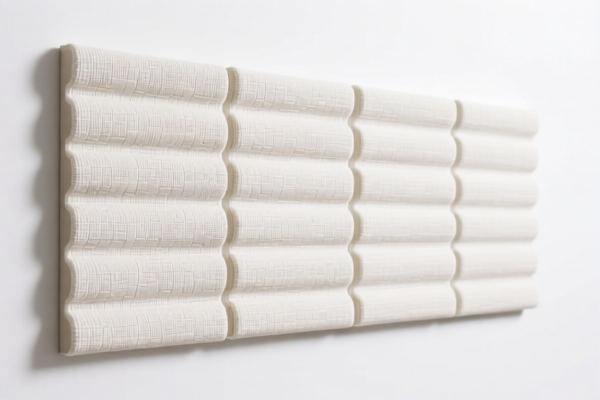
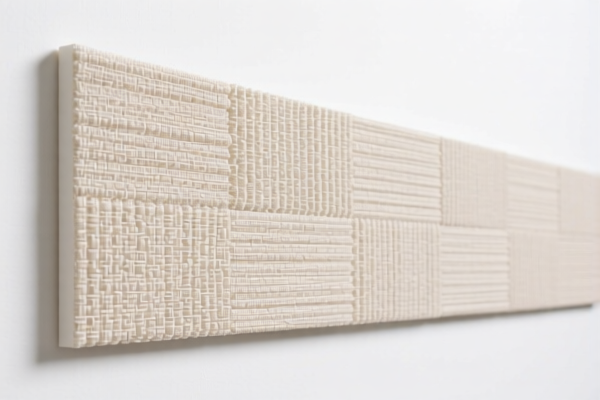
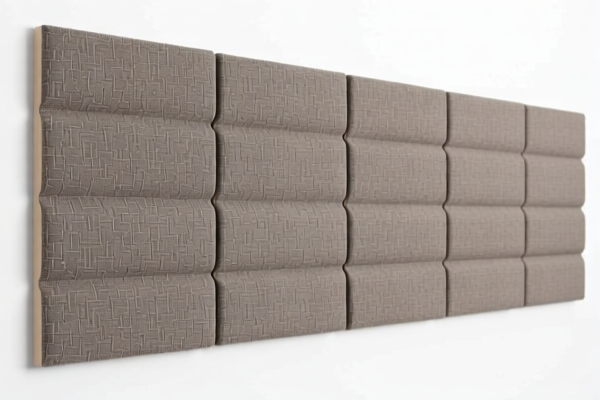
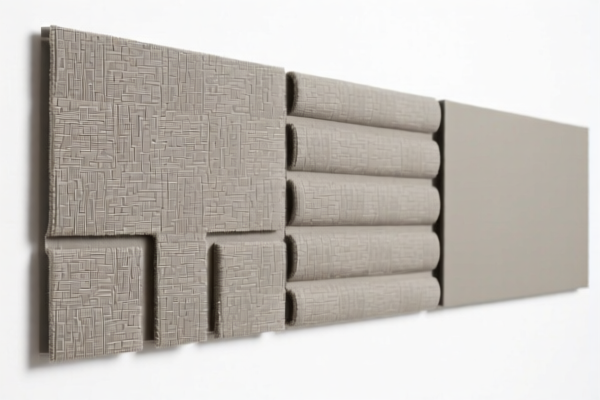
Polyurethane Textile Composite Wall Panel
CN → US| HS Code | Tariff Rate | Origin | Destination | Doc |
|---|---|---|---|---|
| 6810990080 | 35.0% | CN | US | Official Doc |
| 5903202000 | 35.0% | CN | US | Official Doc |
| 5903202500 | 42.5% | CN | US | Official Doc |
| 3921131950 | 15.3% | CN | US | Official Doc |
Product Images
AI Analysis
🏗️ Polyurethane Textile Composite Wall Panel
🌐 HS Code Classification & Customs Clearance Guide | 2026 Latest Tariff Rules | Pro-Level Import Strategy
📌 One Product, Three Possible HS Codes — Know the Difference to Avoid 45%+ Tariff Traps!
📌 一、Product Definition & Core Classification Challenge
The Polyurethane Textile Composite Wall Panel is a multi-material building product combining: - A textile base (fabric, non-woven, or fiber mesh), - A polyurethane (PU) layer applied via coating, impregnation, or lamination, - Used as a structural or insulation panel in construction.
⚠️ Critical Question:
Is this a textile product treated with polyurethane, or a polyurethane board with textile reinforcement?
→ The answer determines which HS Code applies — and whether you pay 35% or 42.5% tariffs!
📦 二、HS Code Classification Breakdown (2026 Official Tariff Authority)
| HS Code | Product Description | Matching Criteria | Tax Rate | Key Risk |
|---|---|---|---|---|
6810.99.00.80 |
Other building panels made of cement, concrete, or artificial stone; non-specific stone polymer composites | ✅ "Building panel" → use case matches ✅ "Polyurethane composite" → not stone, but fits "other" category ✅ No conflicting material (e.g., pure stone) |
35.0% | High risk of misclassification if not justified |
5903.20.20.00 |
Textile fabrics impregnated, coated, or covered with polyurethane; used in construction | ✅ "Polyurethane" → material match ✅ "Textile composite" → textile base confirmed ✅ "Building panel" → downstream use accepted |
35.0% | Must prove textile is primary structural layer |
5903.20.25.00 |
Polyurethane-treated man-made fiber textiles, specifically for building panels | ✅ "Polyurethane" + "textile" → exact match ✅ "Building panel" → application confirmed ✅ Higher tariff due to specific subheading |
42.5% | Most likely correct if PU is coating/laminate on fabric |
3921.13.19.50 |
Other polyurethane plates, sheets, film, or strip, not for packaging, not for medical use | ✅ "Polyurethane" → material match ✅ "Plate" → shape matches ✅ "Building use" → application valid ✅ No textile content required |
15.3% | Lowest tariff — but only if no textile is present |
🔍 The Big Dilemma:
- If textile is visible, structural, or integral →5903.20.25.00(42.5%)
- If PU is the main body, textile is just a backing or reinforcement →3921.13.19.50(15.3%)
- If no textile at all, or only a thin layer, →6810.99.00.80(35.0%)
💰 三、2026 Tariff Breakdown (US Import Rules | China Origin)
🎯 1. 6810.99.00.80 — Other Building Panels (Cement/Concrete/Artificial Stone)
| Item | Detail |
|---|---|
| Base Duty | 0.0% (ad valorem) |
| Section 301 (USITC) Additional Duty | +25.0% |
| Section 122 (IEEPA) Emergency Duty | +10.0% |
| Total Effective Duty | 35.0% |
| Tax Calculation | CIF Value × 35.0% |
| De Minimis Exemption | ❌ Not applicable (denied for China-origin goods) |
| Legal Basis Path | IEEPA:9903.01.25 → USITC:6810.99.00.80 → FOOTNOTE:9903.88.01 |
📌 Why This Applies:
- The panel is used in construction, so "building panel" fits.
- Though not stone, the category includes non-specific polymer composites under "other".
- No conflict with cement/concrete/stone — it’s not claimed as such.
🎯 2. 5903.20.20.00 — Polyurethane-Coated Textile Fabrics
| Item | Detail |
|---|---|
| Base Duty | 0.0% |
| Section 301 (USITC) Additional Duty | +25.0% |
| Section 122 (IEEPA) Emergency Duty | +10.0% |
| Total Effective Duty | 35.0% |
| Tax Calculation | CIF × 35.0% |
| De Minimis Exemption | ❌ Not available |
| Legal Basis Path | IEEPA:9903.01.25 → USITC:5903.20.20.00 → FOOTNOTE:9903.88.01 |
📌 Why This Applies:
- The textile is the base material (e.g., polyester fabric).
- Polyurethane is applied via coating, impregnation, or lamination.
- Used in construction → downstream application accepted.
🎯 3. 5903.20.25.00 — Polyurethane-Treated Man-Made Fiber Textiles (Specific Use)
| Item | Detail |
|---|---|
| Base Duty | 7.5% |
| Section 301 (USITC) Additional Duty | +25.0% |
| Section 122 (IEEPA) Emergency Duty | +10.0% |
| Total Effective Duty | 42.5% |
| Tax Calculation | CIF × 42.5% |
| De Minimis Exemption | ❌ Not available |
| Legal Basis Path | IEEPA:9903.01.25 → USITC:5903.20.25.00 → FOOTNOTE:9903.88.01 |
📌 Why This Applies (Most Accurate if Textile is Primary):
- The textile is explicitly treated with PU (not just a backing).
- The product is designed as a composite building panel.
- This is the most specific and precise match — but highest tax.
🎯 4. 3921.13.19.50 — Other Polyurethane Plates/Sheets (No Textile)
| Item | Detail |
|---|---|
| Base Duty | 5.3% |
| Section 301 (USITC) Additional Duty | 0.0% |
| Section 122 (IEEPA) Emergency Duty | +10.0% |
| Total Effective Duty | 15.3% |
| Tax Calculation | CIF × 15.3% |
| De Minimis Exemption | ❌ Not available |
| Legal Basis Path | IEEPA:9903.01.24 → 3921.13.19.50 |
📌 Why This Applies (If Textile is Not Structural):
- The PU is the primary material (e.g., rigid foam core).
- The textile is only a surface layer or reinforcement, not the base.
- No textile-based classification applies — it’s a polymer plate.
- Lowest tariff — but only if you can prove no textile is integral.
🛠️ Four Key Customs Clearance Strategies (Pro Tips)
✅ 1. Document the Material Hierarchy
🔥 Rule: What’s the base? What’s the coating? What’s the function?
| Evidence to Provide | Why It Matters |
|---|---|
| Product photos (side view) | Show if textile is on surface or embedded |
| Material composition sheet | List % of PU, textile, additives |
| Technical drawings / cross-section | Prove whether textile is structural or decorative |
| Supplier’s technical specs | Confirm if PU is applied via coating, lamination, or foam |
📌 If textile is visible and structural →
5903.20.25.00(42.5%)
📌 If PU is the core, textile is just a layer →3921.13.19.50(15.3%)
✅ 2. Avoid Misclassification Traps
| ❌ Wrong | ✅ Right |
|---|---|
Claiming 3921.13.19.50 when textile is visible and structural |
Use 5903.20.25.00 instead |
Claiming 6810.99.00.80 without proving it’s not stone or concrete |
Only use if no textile and no polymer coating |
Using 5903.20.20.00 when man-made fibers are used |
Use 5903.20.25.00 for accuracy |
✅ 3. Pre-Check with U.S. Customs (Pre-Ruling)
📞 Apply for an Advance Ruling (Section 177)
- Submit product samples + technical data + photos
- Get binding decision on HS Code before shipment
- Saves $10k+ in potential overpayment or penalties
✅ 4. Use the Right Product Name in Invoice
| ❌ Avoid | ✅ Use |
|---|---|
| "Polyurethane Wall Panel" | "Polyurethane-Coated Polyester Fabric Composite Panel for Building Use" |
| "Textile Panel" | "Man-Made Fiber Textile Laminated with Polyurethane, for Construction" |
🔑 Keywords matter:
- Include "coated", "laminated", "treated", "composite", "building use"
- Avoid "plate" or "sheet" if textile is dominant
🌍 Global Market Comparison (2026)
| Country | Recommended HS Code | Base Duty | Additional Taxes | Notes |
|---|---|---|---|---|
| 🇺🇸 USA | 5903.20.25.00 |
7.5% | +25% +10% → 42.5% | Highest risk — China origin |
| 🇨🇳 China | 5903.20.25.00 |
7.5% | 0% | No extra tariffs |
| 🇪🇺 EU | 5903.20.25.00 |
0% | 0% | CE/ROHS only |
| 🇦🇺 Australia | 5903.20.25.00 |
5% | 0% | RCM required |
| 🇯🇵 Japan | 5903.20.25.00 |
0% | 0% | PSE required |
📌 Insight:
- USA is the only market with 25%+ extra tariffs on Chinese goods.
- EU, Japan, Australia are much friendlier — consider shifting suppliers.
🚨 Common Mistakes That Cost Thousands
❌ Mistake 1: Using 3921.13.19.50 for a textile-rich panel
👉 Result: $10k+ in back taxes + penalties — misclassification
❌ Mistake 2: Claiming 6810.99.00.80 without proving it’s not stone
👉 Result: Refusal or seizure — no material conflict argument holds
❌ Mistake 3: Not submitting technical drawings
👉 Result: Customs delays, random audit, 100% inspection
❌ Mistake 4: Using "polyurethane board" in invoice
👉 Result: Assumed to be 3921.13.19.50 — even if textile is dominant
✅ Final Verdict: Which HS Code Should You Use?
🎯 If the textile is the base and treated with PU →
5903.20.25.00(42.5%)
🎯 If PU is the core, textile is just a layer →3921.13.19.50(15.3%)
🎯 If no textile, or only a thin backing →6810.99.00.80(35.0%)
🎯 If textile is present but not structural →5903.20.20.00(35.0%)📌 Best Practice:
Always submit technical data + photos + composition sheet to Customs before shipment.
🎯 Pro Summary: "Know Your Material, Know Your Tax"
🔹 Textile + PU →
5903.20.25.00(42.5%)
🔹 PU core + textile layer →3921.13.19.50(15.3%)
🔹 No textile →6810.99.00.80(35.0%)
🔹 Avoid5903.20.20.00unless textile is general💡 Pro Tip:
Apply for a Pre-Ruling — it’s cheaper than a penalty.
📣 Act Now!
📞 Contact a U.S. Customs Broker + Product Classification Expert
📥 Submit product photos, specs, and composition
✅ Get binding HS Code decision before shipping
✨ Smart Classification = Lower Tax = Faster Clearance = Higher Profit!
💼 Your product’s fate is in the HS Code — get it right the first time!
Customer Reviews
About HS Code Classification
The Harmonized System (HS) is an internationally standardized nomenclature developed by the World Customs Organization (WCO) to classify traded products. Over 200 countries use the HS system as the basis for customs tariffs, trade statistics, and import/export regulations.
Each HS code follows a hierarchical structure:
- Chapter (2 digits) — Broad category of goods (e.g., Chapter 84: Machinery and Mechanical Appliances)
- Heading (4 digits) — More specific grouping within the chapter
- Subheading (6 digits) — Internationally standardized breakdown, used by all WCO member countries
- National subdivisions (8-10 digits) — Country-specific extensions for further classification, such as US HTSUS 10-digit codes
Correct HS code classification is essential for smooth customs clearance, accurate duty payment, and compliance with trade regulations. Misclassification can lead to customs delays, overpayment of duties, or penalties.
When importing from CN to US, the applicable tariff rates may include:
- Most-Favored-Nation (MFN) rate — The standard duty rate applied to WTO members
- General rate — Applied to countries without trade agreements
- Trade remedy duties — Additional tariffs such as Section 301 (anti-dumping), Section 232 (national security), or countervailing duties
The information provided on this page is for reference purposes only. For official classification, please consult with your local customs authority or a licensed customs broker.