Polyvinyl Chloride Resin Blow Molding Grade
CN → US| HS Code | Tariff Rate | Origin | Destination | Doc |
|---|---|---|---|---|
| 3904210000 | 41.5% | CN | US | Official Doc |
| 3904220000 | 41.5% | CN | US | Official Doc |
| 8477300000 | 38.1% | CN | US | Official Doc |
| 8477908601 | 38.1% | CN | US | Official Doc |
Product Images
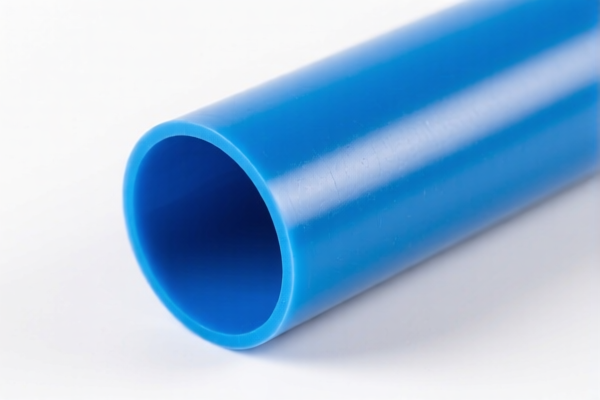
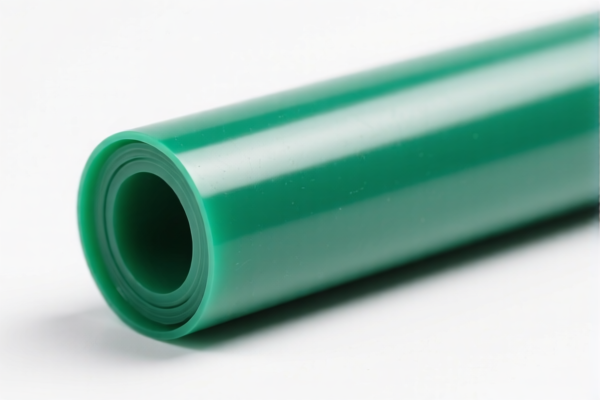
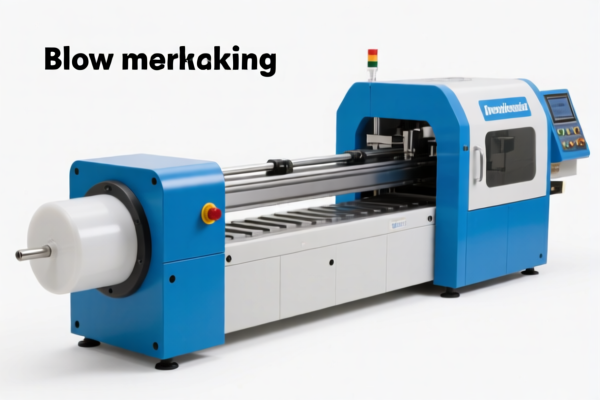
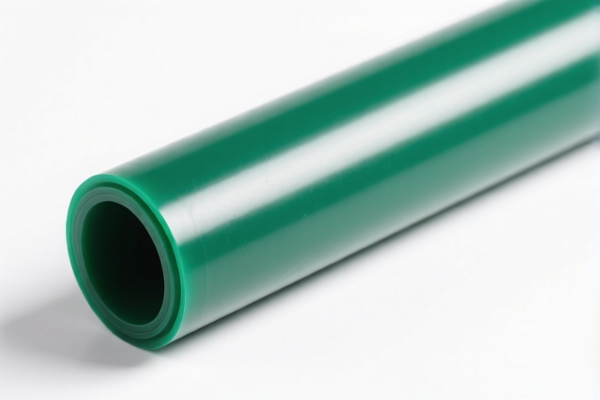
AI Analysis
🧪 Polyvinyl Chloride (PVC) Resin: Blow Molding Grade
🌐 HS Code Reference & Customs Clearance Guide | 2026 Latest Tariff Analysis | Professional Compliance Strategy
📌 Part I: Product Definition & Classification: What is "Blow Molding Grade PVC"?
Polyvinyl Chloride (PVC) resin is a versatile thermoplastic polymer. In the context of trade and customs classification, "Blow Molding Grade" refers specifically to PVC formulations designed for the blow molding manufacturing process (used to make hollow articles like bottles, containers, and drums).
In international trade, PVC is primarily categorized by its plasticization state: 1. Non-plasticized (Unplasticized PVC / uPVC): Rigid PVC, used for pipes, profiles, and hard containers. 2. Plasticized PVC: Flexible PVC, used for films, cables, and soft packaging.
⚠️ Critical Distinction for Customs:
- If the PVC resin is rigid and intended for blow molding rigid containers (e.g., chemical bottles, detergent bottles), it is classified as Non-plasticized.
- If the PVC resin is flexible and intended for blow molding soft products (e.g., air mattresses, inflatable toys), it is classified as Plasticized.
- Blow Molding Machinery is a separate category entirely (HS 8477). This guide focuses on the resin material itself.
📦 Part II: HS Code Classification Details (2026 Latest Tariff Alignment)
| HS Code | Product Description | Applicable Scenario | Plasticization State |
|---|---|---|---|
3904.21.00.00 |
Polymers of vinyl chloride... Other poly(vinyl chloride): Nonplasticized | Rigid PVC resin for blow-molding bottles, pipes, or rigid containers | ❌ No Plasticizers |
3904.22.00.00 |
Polymers of vinyl chloride... Other poly(vinyl chloride): Plasticized | Flexible PVC resin for blow-molding films, inflatables, or soft packaging | ✅ With Plasticizers |
🔍 Key Reminder:
- The term "Blow Molding Grade" in a commercial invoice must be clarified by specifying whether the resin is Rigid (Non-plasticized) or Flexible (Plasticized).
- Misclassification between 3904.21 and 3904.22 can lead to customs audits, as the physical properties and end-uses are significantly different.
- Machinery (HS 8477) is NOT included in the resin classification. If you are importing machines, refer to the machinery codes below.
💰 Part III: 2026 Latest Tariff Rate Breakdown (Including Surcharges)
✅ Applicable Country: United States (US)
✅ Country of Origin: China (CN)
✅ Effective Date: November 10, 2025 onwards (for subsequent imports)
🎯 1. 3904.21.00.00 —— Non-plasticized PVC Resin (Rigid)
| Item | Content |
|---|---|
| Base Tariff | 0.0% (ad valorem) |
| Section 301 Surcharge | 0.0% |
| IEEPA Surcharge | 0.0% |
| Total Tax Rate | 0.0% |
| Tax Calculation | CIF Value × 0.0% = $0 |
| De Minimis Eligibility | ✅ Yes (if value < $800 per shipment, generally exempt from duties, but subject to other regulations) |
| Legal Basis Path | HTSUS:3904.21.00.00 → No 301/IEEPA footnote applies to this specific PVC subheading for China origin in this dataset. |
📌 Explanation:
- Unlike many other Chinese-manufactured goods, Non-plasticized PVC resin currently enjoys a 0% total tariff rate in the US.
- This makes it a cost-effective material for importing rigid PVC supplies.
- However, verify if any anti-dumping (AD) or countervailing duties (CVD) apply, as PVC resin has been subject to trade remedies in the past. This dataset indicates no current tariffs.
🎯 2. 3904.22.00.00 —— Plasticized PVC Resin (Flexible)
| Item | Content |
|---|---|
| Base Tariff | 0.0% (ad valorem) |
| Section 301 Surcharge | 0.0% |
| IEEPA Surcharge | 0.0% |
| Total Tax Rate | 0.0% |
| Tax Calculation | CIF Value × 0.0% = $0 |
| De Minimis Eligibility | ✅ Yes (if value < $800 per shipment) |
| Legal Basis Path | HTSUS:3904.22.00.00 → No 301/IEEPA footnote applies to this specific PVC subheading for China origin in this dataset. |
📌 Note:
- Similar to non-plasticized PVC, Plasticized PVC resin also has a 0% total tariff rate.
- Both rigid and flexible PVC resins are currently tariff-free under this dataset.
- Caution: While tariffs are 0%, ensure the product complies with FDA regulations if intended for food contact, or EPA regulations for industrial uses.
🛠️ Part IV: Customs Clearance Practical Advice (Battle-Tested Pitfall Avoidance)
✅ 1. Documentation Checklist (Indispensable)
| Document | Must Provide | Explanation |
|---|---|---|
| ✅ Product Specification Sheet | ✔️ | Must clearly state: "PVC Resin," "Blow Molding Grade," and Plasticization State (Plasticized vs. Non-plasticized). |
| ✅ MSDS (Material Safety Data Sheet) | ✔️ | Required for chemical handling and customs safety verification. |
| ✅ Certificate of Origin (CO) | ✔️ | To confirm origin as China (or eligible for preferential treatment if from other countries). |
| ✅ Commercial Invoice | ✔️ | Must match HS Code description exactly: "Polymers of Vinyl Chloride, Non-plasticized" or "Plasticized." |
| ✅ Packaging List | ✔️ | Show net/gross weight, number of bags, and palletization. |
✅ 2. Declaration Tips (Key Mantras)
🔥 “Specify Plasticization, Match HS Code, 0% Duty, Clear Entry!”
| Scenario | Correct Declaration | Wrong Practice |
|---|---|---|
| Rigid PVC for Bottles | 3904.21.00.00 |
Misclassifying as 3904.10 (Suspension Type PVC) → Risk of audit |
| Flexible PVC for Inflatables | 3904.22.00.00 |
Misclassifying as 3904.21 → Potential underpayment if rates differed |
| PVC Pellets for Blow Molding | 3904.21 or 3904.22 |
Calling it "Plastic Compounds" → Wrong chapter (Chapter 39 vs 38) |
| Importing Blow Molding Machines | 8477.30.00.00 |
Mixing machine and resin in one shipment → Customs confusion |
✅ 3. Special Case Handling
| Situation | Handling Advice |
|---|---|
| Mixed Shipment (Resin + Machine) | Declare Separately! Resin goes to HS 3904; Machine goes to HS 8477. Do not blend values. |
| PVC for Food Contact | Provide FDA compliance statement. Customs may request additional testing documentation. |
| Blow Molding Machinery Parts | If importing parts for blow molding machines, use 8477.90.86.01 (Other parts of injection-molding machines). Note: This is for parts, not the whole machine. |
| Whole Blow Molding Machines | Use 8477.30.00.00. These also have 0% tariff in this dataset. |
🌍 Part V: Global Market Comparison (2026 Latest)
| Country/Region | Recommended HS Code | Tariff Rate | Certification Requirements | Notes |
|---|---|---|---|---|
| 🇺🇸 USA | 3904.21.00.00 / 3904.22.00.00 |
0% | FDA (if food contact), Prop 65 (CA) | No 301 tariffs on PVC resin currently. |
| 🇨🇳 China | 3904.21 / 3904.22 |
0% - 5% | CCC (if applicable) | Import duties may vary by trade agreement. |
| 🇪🇺 EU | 3904.21 / 3904.22 |
0% - 6.5% | REACH Registration | Strict chemical compliance. |
| 🇯🇵 Japan | 3904.21 / 3904.22 |
0% - 5% | JIS Standards | No additional surcharges. |
📌 Conclusion:
- USA offers 0% duty for PVC resin imports from China under current data.
- EU requires REACH compliance, which is a significant non-tariff barrier.
- China may have lower import duties depending on FTAs.
📌 Part VI: Common Errors & Pitfall Guide (Lessons Learned)
❌ Error 1: Declaring "PVC Resin" without specifying "Plasticized" or "Non-plasticized"
👉 Consequence: Customs may detain the shipment for clarification, causing delays and storage fees.
❌ Error 2: Confusing PVC Resin with PVC Compounds/Blends
👉 Consequence: If additives are present in significant quantities, it may fall under Chapter 38 (Miscellaneous Chemical Products). Stick to Chapter 39 if it’s primarily polymer.
❌ Error 3: Mixing Machine and Resin in One Line Item
👉 Consequence: Wrong HS Code assignment → Incorrect duty calculation → Penalties.
❌ Error 4: Assuming "Blow Molding Grade" is a specific HS Code
👉 Consequence: There is no HS Code for "Blow Molding Grade." It must be classified by its chemical nature (PVC type).
✅ Correct Approach:
"PVC Resin, Suspension Polymerized, Non-plasticized, Blow Molding Grade, for Rigid Containers, HS 3904.21.00.00"
🎯 Part VII: Conclusion: Precision Classification, Cost Efficiency, and Compliance!
🎯 Remember the Mantra:
🔹 "Specify Plasticization, Match HS Code, 0% Duty, Clear Entry!"
🔹 "Resin is 3904, Machine is 8477, Don’t Mix Them!"
🔹 "PVC Tariff is 0%, But Compliance is Key!"
📌 Pro Tip:
- If you are importing PVC Resin for blow molding, ensure your supplier provides a clear Material Safety Data Sheet (MSDS) and Technical Data Sheet (TDS).
- For Blow Molding Machines (8477.30.00.00) or their Parts (8477.90.86.01), the tariff is also 0%.
- Always verify if the PVC resin contains phthalates or other restricted substances for the destination market (e.g., EU REACH, US CPSIA).
📣 Immediate Action:
📞 Contact your customs broker + Provide Product Specs + Apply for HS Code Pre-Ruling if uncertain
🚀 Ensure your PVC resin imports are tariff-free, compliant, and smooth!
✨ Professional Customs Clearance Starts with Accurate Classification!
💼 Your cost savings are worth calculating!
Customer Reviews
About HS Code Classification
The Harmonized System (HS) is an internationally standardized nomenclature developed by the World Customs Organization (WCO) to classify traded products. Over 200 countries use the HS system as the basis for customs tariffs, trade statistics, and import/export regulations.
Each HS code follows a hierarchical structure:
- Chapter (2 digits) — Broad category of goods (e.g., Chapter 84: Machinery and Mechanical Appliances)
- Heading (4 digits) — More specific grouping within the chapter
- Subheading (6 digits) — Internationally standardized breakdown, used by all WCO member countries
- National subdivisions (8-10 digits) — Country-specific extensions for further classification, such as US HTSUS 10-digit codes
Correct HS code classification is essential for smooth customs clearance, accurate duty payment, and compliance with trade regulations. Misclassification can lead to customs delays, overpayment of duties, or penalties.
When importing from CN to US, the applicable tariff rates may include:
- Most-Favored-Nation (MFN) rate — The standard duty rate applied to WTO members
- General rate — Applied to countries without trade agreements
- Trade remedy duties — Additional tariffs such as Section 301 (anti-dumping), Section 232 (national security), or countervailing duties
The information provided on this page is for reference purposes only. For official classification, please consult with your local customs authority or a licensed customs broker.