Portable Electric Lamp (e.g., Flashlight, Headlamp)
CN → US| HS Code | Tariff Rate | Origin | Destination | Doc |
|---|---|---|---|---|
| 8513104000 | 13.5% | CN | US | Official Doc |
| 8513102000 | 22.5% | CN | US | Official Doc |
| 8513902000 | 97.5% | CN | US | Official Doc |
| 9405214010 | 38.7% | CN | US | Official Doc |
Product Images
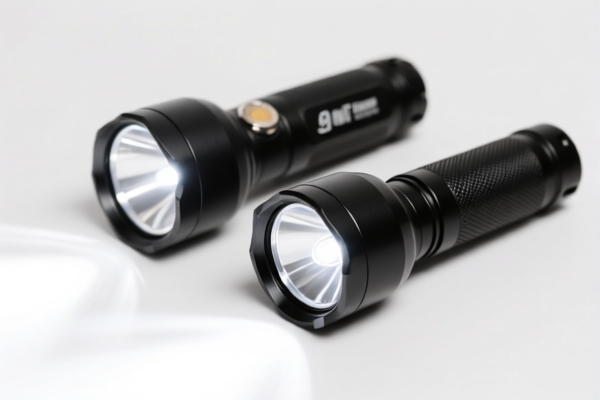
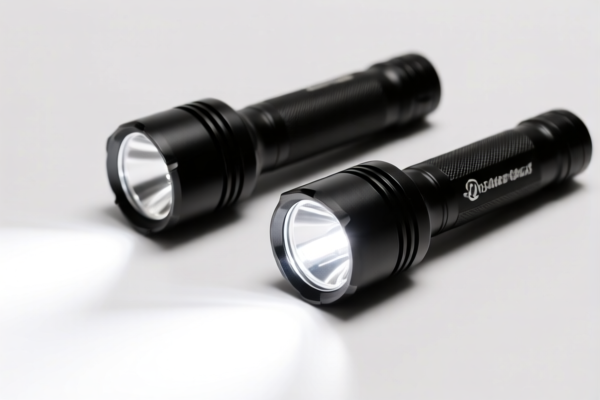
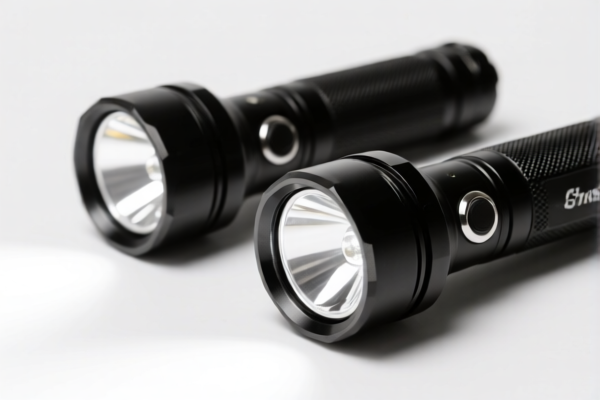
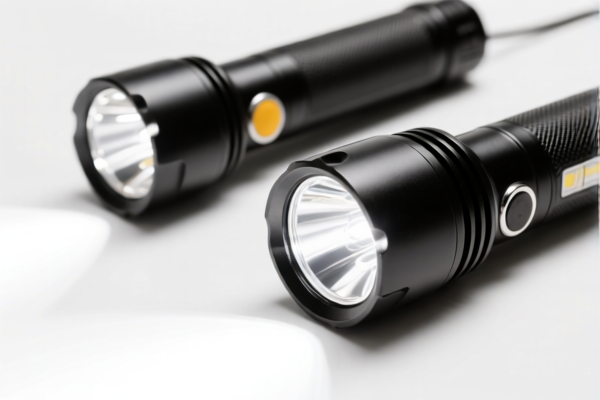
AI Analysis
🔦 Portable Electric Lamps (e.g., Flashlights, Headlamps)
🌐 HS Code Reference & Customs Clearance Guide | 2026 Latest Tariff Analysis | Professional Clearance Strategy 📌 I. Product Definition & Classification: Do You Really Understand "Portable Electric Lamps"?
Portable electric lamps, including flashlights and headlamps, are illumination devices that operate on their own internal energy source (batteries or built-in rechargeable units). In international trade, the classification depends heavily on the type of lamp, material composition (specifically for heads/beams), and usage context.
Key Distinctions: * General Purpose (Battery Operated): Standard flashlights with incandescent, LED, or halogen bulbs, classified under Heading 8513. * Material-Specific Components: Lamp heads or beams made of steel, aluminum, or copper may attract higher tariffs due to specific trade remedies. * Fixed/Stationary Lighting: Items often mistaken for portable lamps but actually functioning as table or floor lamps (e.g., portable rechargeable desk lamps) fall under Heading 9405.
⚠️ Critical Classification Point:
- If the device is self-contained, battery-powered, and portable → Likely 8513.
- If the device is primarily a lamp fixture (even if rechargeable) with a cord or plug-in base → Likely 9405.
- If the head/beams are metallic (steel/aluminum/copper) → Additional tariffs (Section 301/122) may apply significantly.
📦 II. HS Code Classification Details (Based on Provided Data)
Based on the provided dataset, here are the specific HS codes, summaries, and tax implications:
| HS Code | Summary / Description | Total Tax Rate | Tax Detail Breakdown |
|---|---|---|---|
| 8513.10.40.00 | Portable electric lamps, flashlights; features consistent with self-contained energy supply. | 13.5% | Base Tariff: 3.5% Add-on Tariff: 0.0% Section 122 Tariff: 10% |
| 8513.10.20.00 | Portable electric lamps, flashlights; fully matches usage and form. | 22.5% | Base Tariff: 12.5% Add-on Tariff: 0.0% Section 122 Tariff: 10% |
| 8513.90.20.00 | Portable electric lamps, flashlights; functional and usage consistency. | 97.5% | Base Tariff: 12.5% Add-on Tariff: 25.0% Section 122 Tariff: 10% Steel/Aluminum/Copper Products Add-on: 50% |
| 9405.21.40.10 | Electric lamps/fixtures; matches uses such as table lamps, floor lamps, etc.; no material conflict. | 38.7% | Base Tariff: 3.7% Add-on Tariff: 25.0% Section 122 Tariff: 10% |
🔍 Key Insight:
- 8513.10.40.00 offers the lowest tax rate (13.5%) for general portable lamps with self-contained energy.
- 8513.90.20.00 has a sky-high rate (97.5%) if the product contains steel, aluminum, or copper components. This is a critical pitfall for metal-bodied flashlights or headlamps.
- 9405.21.40.10 applies if the "portable" device is functionally a table/floor lamp (e.g., a rechargeable reading lamp with a base).
💰 III. 2026 Latest Tariff Rate Details (Including Additional Taxes & Policy Add-ons)
✅ Applicable Region: Data reflects tariffs including US trade remedies (Section 301/122 equivalent structures).
✅ Origin: Assumed China (CN) based on the "122 Clause" and "Add-on Tariff" structure typical of US-China trade data.
✅ Effective Time: Current rates apply as per the provided data.
🎯 1. 8513.10.40.00 —— Portable Electric Lamps (Optimal Classification)
| Item | Content |
|---|---|
| Base Tariff | 3.5% |
| Add-on Tariff (Section 301/Trade Remedy) | 0.0% |
| Section 122 Tariff | 10% |
| Total Effective Tax Rate | 13.5% |
| Tax Calculation | CIF Value × 13.5% |
| De Minimis Eligibility | ❌ Not Eligible (High-risk category for trade remedies) |
| Legal Basis Path | HTS:8513.10.40.00 → SECTION_122:10% |
📌 Explanation:
- This code is ideal for LED flashlights, plastic-bodied headlamps, and general portable lighting.
- The 10% Section 122 tariff is a specific additive tax.
- Zero add-on tariff makes this the most cost-effective classification if the product fits the description.
🎯 2. 8513.10.20.00 —— Portable Electric Lamps (Standard Classification)
| Item | Content |
|---|---|
| Base Tariff | 12.5% |
| Add-on Tariff | 0.0% |
| Section 122 Tariff | 10% |
| Total Effective Tax Rate | 22.5% |
| Tax Calculation | CIF Value × 22.5% |
| De Minimis Eligibility | ❌ Not Eligible |
| Legal Basis Path | HTS:8513.10.20.00 → SECTION_122:10% |
📌 Note:
- This code applies when the product matches the "usage and form" of standard portable lamps but may have slight structural or functional differences from 8513.10.40.
- Higher base tariff (12.5%) results in a higher total cost.
🎯 3. 8513.90.20.00 —— Portable Electric Lamps with Metallic Components (HIGH RISK)
| Item | Content |
|---|---|
| Base Tariff | 12.5% |
| Add-on Tariff | 25.0% |
| Section 122 Tariff | 10% |
| Steel/Aluminum/Copper Add-on | 50% |
| Total Effective Tax Rate | 97.5% |
| Tax Calculation | CIF Value × 97.5% |
| De Minimis Eligibility | ❌ Not Eligible |
| Legal Basis Path | HTS:8513.90.20.00 → STEEL_ALU_COPPER_SURCHARGE:50% |
🚨 CRITICAL WARNING:
- If your flashlight or headlamp has a metal head, beam, or casing (especially steel, aluminum, or copper), it may be classified here.
- The 50% surcharge on metallic products is devastating.
- Strategy: Consider redesigning with plastic/non-metallic materials for the head/beam to avoid this rate.
🎯 4. 9405.21.40.10 —— Table/Floor Lamps (Misclassification Risk)
| Item | Content |
|---|---|
| Base Tariff | 3.7% |
| Add-on Tariff | 25.0% |
| Section 122 Tariff | 10% |
| Total Effective Tax Rate | 38.7% |
| Tax Calculation | CIF Value × 38.7% |
| De Minimis Eligibility | ❌ Not Eligible |
| Legal Basis Path | HTS:9405.21.40.10 → SECTION_122:10% |
📌 Explanation:
- If the product is a rechargeable desk lamp or portable floor lamp, it falls under 9405.
- Although the base tariff is low, the 25% add-on tariff makes it expensive.
- Ensure the product is truly "portable" (battery-only, no cord) to qualify for 8513 instead.
🛠️ IV. Customs Clearance Practical Advice (Real-World Pitfall Avoidance)
✅ 1. Documentation Checklist (Non-Negotiable)
| Document | Required | Description |
|---|---|---|
| ✅ Product Specifications | ✔️ | Detailed description: battery type, wattage, lumens, dimensions. |
| ✅ Material Composition | ✔️ | Crucial: List materials for the head, beam, and casing. If <5% metal, argue for exemption from the 50% surcharge. |
| ✅ Product Photos | ✔️ | Clear images showing the lamp, battery compartment, and any metallic parts. |
| ✅ Power Source Info | ✔️ | Specify if it uses replaceable batteries or has a built-in rechargeable unit. |
| ✅ Commercial Invoice | ✔️ | Must clearly state "Portable Electric Lamp" and HS Code. |
| ✅ Packing List | ✔️ | Separate accessories (chargers, cables) if declared separately. |
✅ 2. Declaration Tips (Key Mnemonics)
🔥 "No Cord, No Plug, Portable is Key. Metal Head? Think Twice!"
| Scenario | Correct Declaration | Incorrect Action |
|---|---|---|
| Plastic LED Flashlight | 8513.10.40.00 |
Classify as 8513.10.20.00 (Higher tax) |
| Metal-headed Headlamp | 8513.90.20.00 (Prepare for 97.5% tax) |
Try to declare as plastic to avoid surcharge (Customs will inspect) |
| Rechargeable Desk Lamp | 9405.21.40.10 |
Declare as 8513 (Misclassification risk) |
| Flashlight with USB Cable | Still 8513 if cable is for charging only |
Split into "Lamp" + "Cable" (Complex and risky) |
✅ 3. Special Cases & Solutions
| Situation | Handling Advice |
|---|---|
| Mixed Materials (Plastic + Metal) | If metal content is minimal (e.g., small screws), argue for exclusion from the 50% surcharge. Provide a Bill of Materials (BOM). |
| OEM Custom Lamps | Provide customer design files to prove intended use and material specifications. |
| Headlamps with Straps | Ensure the strap is not considered a separate "apparel" item. Declare as a single unit under HS 8513. |
| Smart Flashlights (Bluetooth/Wi-Fi) | Still classified as lamps if lighting is the primary function. Do not classify under 8517 (communication devices). |
🌍 V. Global Market Comparison (2026 Latest)
| Country/Region | Recommended HS Code | Tariff (China Origin) | Certification Requirements | Notes |
|---|---|---|---|---|
| 🇺🇸 USA | 8513.10.40.00 |
13.5% (Plastic) / 97.5% (Metal) | FCC, UL/ETL (if applicable) | Highest risk for metal components. |
| 🇨🇳 China | 8513.10.40.00 |
15% (Import) | CCC (if applicable) | Standard import duties apply. |
| 🇪🇺 EU | 8513.10.00 |
0% (General) | CE, RoHS, WEEE | No significant trade remedies on lamps. |
| 🇬🇧 UK | 8513.10.00 |
0% (General) | UKCA, RoHS | Post-Brexit rules align with EU for lamps. |
| 🇯🇵 Japan | 8513.10.00 |
3.2% (General) | PSE (Electric Appliance Safety) | Low tariff, strict safety standards. |
📌 Conclusion:
- USA is the only market with punitive tariffs on specific lamp components (metal).
- EU/UK/Japan are stable markets with low tariffs, focusing on safety certifications.
- Strategy for US Market: If possible, design lamps with plastic heads/beams to secure the 13.5% rate instead of 97.5%.
📌 VI. Common Mistakes & Pitfall Guide (Lessons Learned)
❌ Mistake 1: Classifying a metal-headed flashlight as 8513.10.40.00
👉 Consequence: Customs detects metal content → Re-classifies to 8513.90.20.00 → 97.5% tax + penalties!
❌ Mistake 2: Declaring a rechargeable desk lamp as 8513
👉 Consequence: Customs deems it a "fixture" → Re-classifies to 9405.21.40.10 → 38.7% tax instead of 13.5%.
❌ Mistake 3: Omitting material details on the commercial invoice
👉 Consequence: Customs requests additional info → Delayed clearance → Storage fees + demurrage.
❌ Mistake 4: Using vague terms like "Lighting Device"
👉 Consequence: Customs uses their discretion → May assign higher tariff code.
✅ Correct Approach:
"Portable LED Flashlight, Plastic Body, Battery Operated, No Cord, Model XYZ, FCC Certified"
🎯 VII. Conclusion: Precise Classification Saves Money!
🎯 Remember the Mantra:
🔹 "Plastic Head? 13.5%. Metal Head? 97.5%. Desk Lamp? 38.7%."
🔹 "Check the Material, Check the Power Source, Avoid the Metal Trap!"
📌 Pro Tip:
If your product has metal components, consider:
1. Redesigning with plastic/composite materials for the head/beam.
2. Applying for an Exclusion (if available for specific products in the US).
3. Pre-clearance Ruling with Customs to confirm classification before shipping.
📣 Immediate Action:
📞 Contact a Customs Broker + Provide BOM (Bill of Materials) + Apply for HS Code Advance Ruling
🚀 Keep Your Lamps Plastic, Keep Your Costs Low, Keep Your Supply Chain Smooth!
✨ Professional Clearance Starts with Accurate Classification!
💼 Every Dollar Saved on Tariffs is Pure Profit!
Customer Reviews
About HS Code Classification
The Harmonized System (HS) is an internationally standardized nomenclature developed by the World Customs Organization (WCO) to classify traded products. Over 200 countries use the HS system as the basis for customs tariffs, trade statistics, and import/export regulations.
Each HS code follows a hierarchical structure:
- Chapter (2 digits) — Broad category of goods (e.g., Chapter 84: Machinery and Mechanical Appliances)
- Heading (4 digits) — More specific grouping within the chapter
- Subheading (6 digits) — Internationally standardized breakdown, used by all WCO member countries
- National subdivisions (8-10 digits) — Country-specific extensions for further classification, such as US HTSUS 10-digit codes
Correct HS code classification is essential for smooth customs clearance, accurate duty payment, and compliance with trade regulations. Misclassification can lead to customs delays, overpayment of duties, or penalties.
When importing from CN to US, the applicable tariff rates may include:
- Most-Favored-Nation (MFN) rate — The standard duty rate applied to WTO members
- General rate — Applied to countries without trade agreements
- Trade remedy duties — Additional tariffs such as Section 301 (anti-dumping), Section 232 (national security), or countervailing duties
The information provided on this page is for reference purposes only. For official classification, please consult with your local customs authority or a licensed customs broker.