Prepared Cereals
CN → US| HS Code | Tariff Rate | Origin | Destination | Doc |
|---|---|---|---|---|
| 1904100080 | 18.6% | CN | US | Official Doc |
| 1904900140 | 31.5% | CN | US | Official Doc |
| 1905909090 | 22.0% | CN | US | Official Doc |
| 1905901090 | 35.0% | CN | US | Official Doc |
| 8437800010 | 35.0% | CN | US | Official Doc |
| 8437800090 | 35.0% | CN | US | Official Doc |
| 4819100020 | 35.0% | CN | US | Official Doc |
| 4819200020 | 35.0% | CN | US | Official Doc |
Product Images
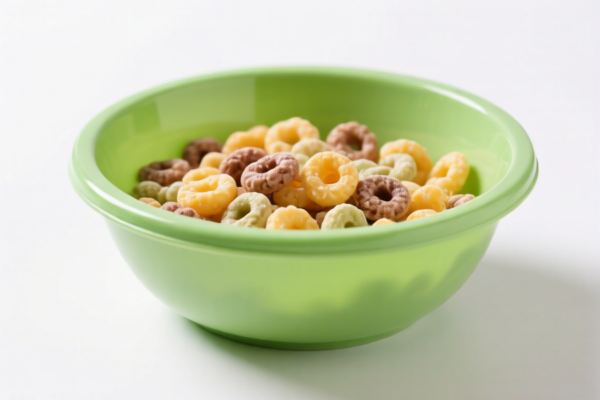
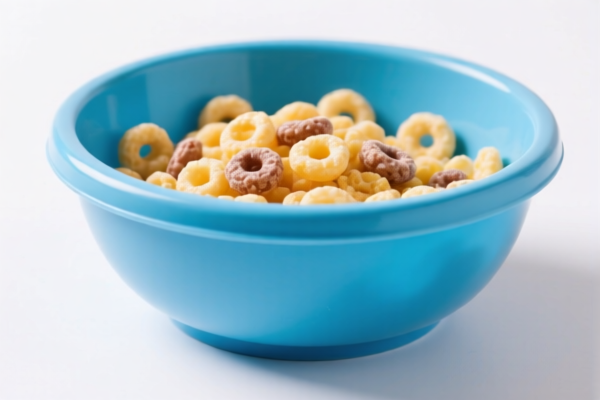
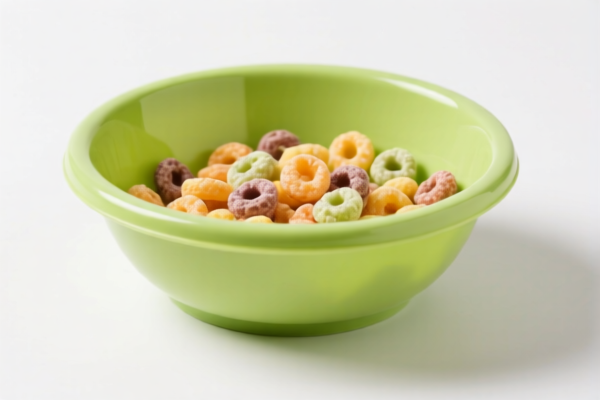
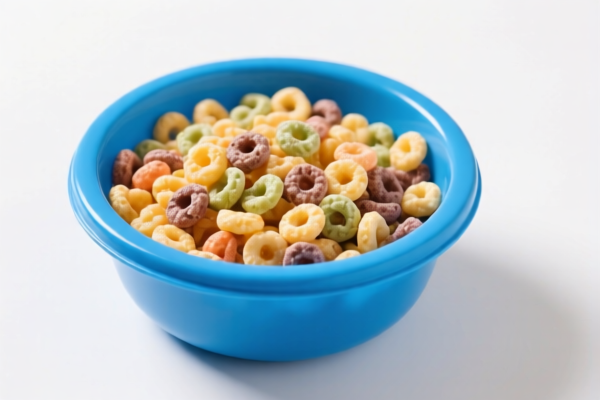
AI Analysis
🥣 Prepared Cereals & Bakery Wares (Global Trade Classification Guide)
🌐 HS Code Reference & Customs Clearance Strategy | 2026 Latest Tariff Analysis | Professional Compliance Guide
📌 I. Product Definition: What Exactly Are "Prepared Cereals"?
In international trade, "Prepared Cereals" is a broad category covering two distinct groups often confused by importers:
- Prepared Breakfast Cereals (Chapter 19): Foods obtained by swelling, roasting, or pre-cooking grains (e.g., Cornflakes, Puffed Rice, Muesli). These are primarily consumed as breakfast or snacks.
- Bakery Wares & Packaged Goods (Chapter 19 & 48): Bread, pastries, biscuits, and their corresponding sanitary packaging containers.
⚠️ Critical Distinction:
- If the product is swollen/roasted grain without significant added flour/sugar structure → Chapter 19 (1904/1905).
- If the product is bread/pastry → Chapter 19 (1905).
- If the product includes corrugated or folding cartons specifically for sanitary food/beverage storage → Chapter 48 (4819).
📦 II. HS Code Classification Matrix (2026 Latest Tariff Alignment)
Based on the provided <DATA>, here are the specific HS codes and their corresponding tax structures.
| HS Code | Product Description | Category | Tax Detail (Base + Add-on) | Total Tax |
|---|---|---|---|---|
| 1905.90.90.90 | Bread, pastry, cakes, biscuits, etc. (Other) | Bakery Wares | Base: 4.5% Add-on: 7.5% |
12.0% |
| 1905.90.10.90 | Bread, pastry, cakes, biscuits (with chocolate/fruit/nuts) | Bakery Wares | Base: 0.0% Add-on: 25.0% |
25.0% |
| 4819.10.00.20 | Corrugated paperboard containers (Sanitary food/beverage) | Packaging | Base: 0.0% Add-on: 25.0% |
25.0% |
| 4819.20.00.20 | Folding cartons (Sanitary food/beverage) | Packaging | Base: 0.0% Add-on: 25.0% |
25.0% |
| 8437.80.00.10 | Flour mill & grain mill machines (Other machinery) | Machinery | Base: 0.0% Add-on: 25.0% |
25.0% |
| 8437.80.00.90 | Milling/Grain machinery parts (Other) | Machinery Parts | Base: 0.0% Add-on: 25.0% |
25.0% |
| 1904.10.00.80 | Swollen/Roasted cereals (e.g., Cornflakes) | Prepared Cereals | Base: 0.0% Add-on: 0.0% |
0.0% |
| 1904.90.01.40 | Other prepared cereals (pre-cooked/worked) | Prepared Cereals | Base: 0.0% Add-on: 0.0% |
0.0% |
🔍 Key Observation:
- Prepared Cereals (1904) enjoy 0% total tax in this dataset.
- Bakery Wares (1905) and Packaging (4819) face significant 25% add-on tariffs, resulting in higher total costs.
- Machinery (8437) used for milling also faces the 25% add-on.
💰 III. Detailed Tax Clause Breakdown
🎯 1. Low-Tax Category: Prepared Swollen/Roasted Cereals
HS Codes: 1904.10.00.80 / 1904.90.01.40
| Item | Content |
|---|---|
| Description | Foods obtained by swelling or roasting cereals (e.g., Cornflakes) OR other pre-cooked/processed cereal grains not elsewhere specified. |
| Base Tariff | 0.0% |
| Add-on Tariff | 0.0% |
| Total Effective Rate | 0.0% |
| Strategic Advantage | This is the most favorable classification for prepared cereal products. Importers should ensure products are described as "swollen/roasted" rather than "bakery items" to qualify. |
🎯 2. High-Tax Category: Bakery Wares (Bread, Pastry, Biscuits)
HS Codes: 1905.90.90.90 / 1905.90.10.90
| Item | Content |
|---|---|
| Description | Bread, pastry, cakes, biscuits, and similar baked products. May contain cocoa, chocolate, fruit, nuts, or confectionery. |
| Sub-case A (General Other) | 1905.90.90.90: Base 4.5% + Add-on 7.5% = 12.0% |
| Sub-case B (Specialty/With Toppings) | 1905.90.10.90: Base 0.0% + Add-on 25.0% = 25.0% |
| Risk Note | If your biscuit contains fruit/nuts/chocolate, it falls into the 25% bracket. Do not misclassify to avoid penalties. |
🎯 3. High-Tax Category: Sanitary Food Packaging
HS Codes: 4819.10.00.20 / 4819.20.00.20
| Item | Content |
|---|---|
| Description | Paperboard containers (corrugated or folding) specifically for sanitary food and beverage use. |
| Base Tariff | 0.0% |
| Add-on Tariff | 25.0% |
| Total Effective Rate | 25.0% |
| Clarification | Not all paper boxes are taxed this way. Only those designated as "Sanitary food and beverage containers" incur the 25% add-on. General shipping cartons may have different rules, but these specific sanitary codes are high-tax. |
🎯 4. High-Tax Category: Milling Machinery
HS Codes: 8437.80.00.10 / 8437.80.00.90
| Item | Content |
|---|---|
| Description | Machines for cleaning, sorting, grading grain; flour mills; grain mills; and parts thereof. |
| Base Tariff | 0.0% |
| Add-on Tariff | 25.0% |
| Total Effective Rate | 25.0% |
| Note | If you are importing equipment to produce prepared cereals, the equipment itself is heavily taxed (25% add-on). |
🛠️ IV. Customs Clearance Practical Advice
✅ 1. Documentation Checklist (Essential for Clearance)
| Document | Requirement | Purpose |
|---|---|---|
| Commercial Invoice | Must clearly state "Prepared Cereal" or "Bakery Product" | Determines Chapter 19 classification |
| Product Specification | Detail processing method: "Roasted," "Swelled," or "Baked" | Differentiates 0% (1904) from 12-25% (1905) |
| Ingredient List | Highlight if chocolate, fruit, or nuts are present | Triggers 1905.90.10.90 (25% tax) if applicable |
| Packaging Description | Specify if carton is "Sanitary Food-Grade" | Triggers 4819 (25% tax) for packaging |
| Certificate of Origin | Required for tariff calculation | Confirms origin for base vs. add-on tax application |
✅ 2. Classification Strategy (How to Minimize Tax)
| Scenario | Recommended Classification | Tax Rate | Why? |
|---|---|---|---|
| Cornflakes / Puffed Rice | 1904.10.00.80 |
0% | Classified as "swollen/roasted cereals," not bakery wares. |
| Dry Muesli / Cereal Bars | 1904.90.01.40 |
0% | Classified as "other prepared cereals." Avoid "bakery" descriptors. |
| Chocolate Chip Cookie | 1905.90.10.90 |
25% | Contains confectionery/nuts. High tax unavoidable. |
| Plain Bread / Biscuit | 1905.90.90.90 |
12% | No chocolate/fruit/nuts. Lower than 25% bracket. |
| Sanitary Carton | 4819.20.00.20 |
25% | Specific sanitary designation triggers add-on. |
📌 Pro Tip:
- Avoid the word "Bakery" in the description for cereal products. Use "Breakfast Cereal," "Prepared Grain," or "Swollen Corn Product."
- Check Ingredient Composition: If a biscuit has >5% fruit/nuts/chocolate, it may shift to the higher tax bracket1905.90.10.90.
✅ 3. Common Pitfalls & Solutions
| Mistake | Consequence | Solution |
|---|---|---|
| Mislabeling Cereal as "Bakery Product" | Pay 12-25% instead of 0% | Use precise technical terms: "Roasted," "Extruded," "Swelled." |
| Ignoring Packaging Classification | Under-declaring packaging tax | If packing is "sanitary food-grade," declare under 4819. |
| Confusing Machinery Parts | Pay 25% on parts unnecessarily | Ensure parts are clearly listed as such; however, 8437 parts still have 25% add-on. |
| Incomplete Ingredient List | Customs reclassification & penalties | Provide full INCI/ingredient list to prove absence of chocolate/fruit if claiming 0% rate. |
🌍 V. Global Market Comparison (Inferred from Data Structure)
Note: The data implies a specific trade regime (likely US-China or similar with significant "Add-on" tariffs).
| Market Segment | Typical HS Chapter | Tax Implication |
|---|---|---|
| USA (China Origin) | High add-on tariffs (25%) on many categories | 1905 and 4819 face heavy levies. 1904 may be exempt. |
| EU | Usually lower base rates, fewer "add-ons" | Likely lower overall cost for Bakery/Packaging. |
| ASEAN | Varies, but often lower for agricultural goods | May have preferential tariffs for cereals. |
📌 Conclusion:
- Prepared Cereals (1904) are the winner with 0% tax.
- Bakery & Packaging (1905/4819) are losers with 12-25% tax.
- Strategy: Reformulate products to stay within "Prepared/Pre-cooked" rather than "Baked" if possible. Use plain descriptions.
📌 VI. Final Checklist for Importers
- Verify Processing Method: Is it roasted/swelled (0%) or baked (12-25%)?
- Check Ingredients: Does it contain chocolate/fruit/nuts? (If yes, 25%).
- Review Packaging: Is it sanitary food-grade? (If yes, 25% for packaging).
- Prepare Documentation: Invoice must match HS Code description exactly.
- Consult Customs Broker: For borderline cases (e.g., "Cereal Bars"), request a Binding Tariff Information (BTI) or pre-classification ruling.
🎯 Conclusion: Optimize Your Supply Chain
🎯 Remember the Golden Rule:
🔹 "Prepared/Pre-cooked = 0% Tax"
🔹 "Baked/Pastry = 12-25% Tax"
🔹 "Sanitary Packaging = 25% Tax"
✅ Action Plan:
- Reclassify cereal products under 1904 wherever possible.
- Avoid "bakery" terminology for dry cereals.
- Budget for 25% add-on if importing bakery wares or sanitary packaging.
📣 Disclaimer:
This guide is based on the provided <DATA> and <TAX> snippets. Tariff rates are subject to change based on trade agreements, origin, and regulatory updates. Always consult a licensed customs broker for final classification.
✨ Professional Customs Clearance Starts with Accurate Classification!
💼 Save Costs, Avoid Delays, Ensure Compliance!
Customer Reviews
About HS Code Classification
The Harmonized System (HS) is an internationally standardized nomenclature developed by the World Customs Organization (WCO) to classify traded products. Over 200 countries use the HS system as the basis for customs tariffs, trade statistics, and import/export regulations.
Each HS code follows a hierarchical structure:
- Chapter (2 digits) — Broad category of goods (e.g., Chapter 84: Machinery and Mechanical Appliances)
- Heading (4 digits) — More specific grouping within the chapter
- Subheading (6 digits) — Internationally standardized breakdown, used by all WCO member countries
- National subdivisions (8-10 digits) — Country-specific extensions for further classification, such as US HTSUS 10-digit codes
Correct HS code classification is essential for smooth customs clearance, accurate duty payment, and compliance with trade regulations. Misclassification can lead to customs delays, overpayment of duties, or penalties.
When importing from CN to US, the applicable tariff rates may include:
- Most-Favored-Nation (MFN) rate — The standard duty rate applied to WTO members
- General rate — Applied to countries without trade agreements
- Trade remedy duties — Additional tariffs such as Section 301 (anti-dumping), Section 232 (national security), or countervailing duties
The information provided on this page is for reference purposes only. For official classification, please consult with your local customs authority or a licensed customs broker.