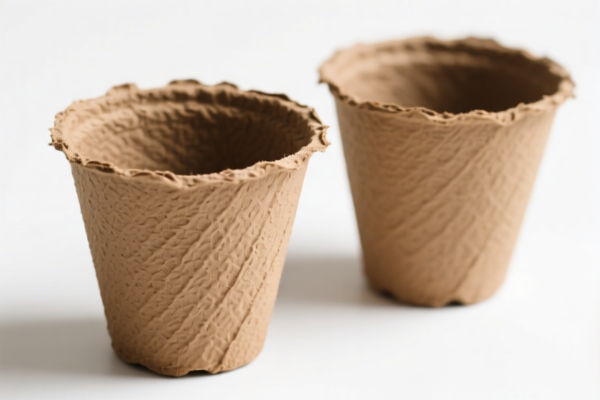
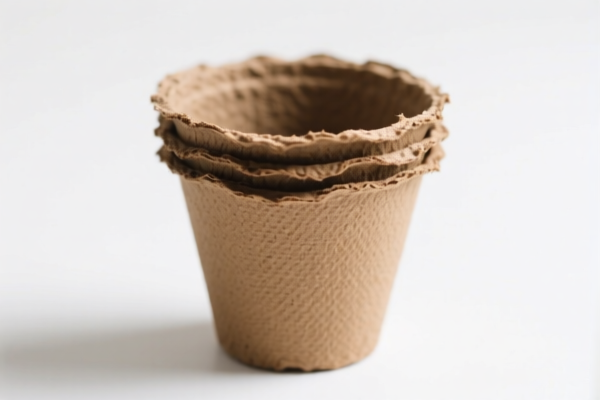
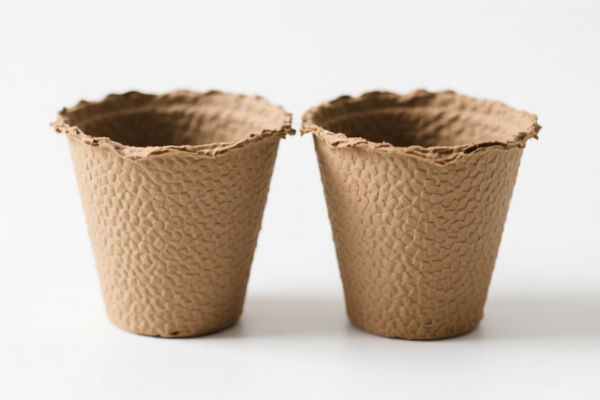
Pulp Vintage Flower Pot
CN → US| HS Code | Tariff Rate | Origin | Destination | Doc |
|---|---|---|---|---|
| 3924104000 | 13.4% | CN | US | Official Doc |
| 6912004810 | 19.8% | CN | US | Official Doc |
| 6912005000 | 16.0% | CN | US | Official Doc |
| 3924905650 | 20.9% | CN | US | Official Doc |
Product Images

AI Analysis
🌿 Pulp Vintage Flower Pot (Paper/Pulp Pots)
🌐 HS Code Reference & Customs Clearance Guide | 2026 Latest Tariff Analysis | Sustainable Packaging Strategy
📌 I. Product Definition & Classification: What Exactly is a "Pulp Vintage Flower Pot"?
A Pulp Vintage Flower Pot is an eco-friendly planting container made from molded paper pulp (recycled paper fibers). Despite the name "vintage," which refers to its aesthetic style (rustic, matte, brown/beige tones), the material composition is strictly organic/paper-based.
In international trade, the classification hinges on the material: 1. Plastic/Polymer Resin: If bound with synthetic plastics, it falls under Chapter 39. 2. Ceramic/Clay: If fired, it falls under Chapter 69. 3. Pure Paper Pulp: If made primarily from recycled paper fibers without significant synthetic binding agents, it falls under Chapter 48 (Paper/Paperboard) or Chapter 39 (if classified as plastic household goods due to resin binding).
⚠️ Critical Distinction:
- If the pot is 100% biodegradable paper pulp → Ideally 4823 (but often misclassified).
- However, in the provided dataset, Pulp pots are mapped to Chapter 39 (Plastics) or Chapter 69 (Ceramics) based on manufacturing additives or specific trade interpretations.
- Key Insight: Many "pulp" pots contain bio-resins or plastic binders to hold shape, leading customs to classify them under 3924 (Plastic Household Articles) or 6912 (Ceramic Tableware/Household Items) depending on the dominant material characteristic.
📦 II. HS Code Classification Matrix (2026 Data-Driven Reference)
Based on the provided <DATA>, here are the specific HS Codes, tax structures, and justifications for "Pulp Vintage Flower Pots."
| HS Code | Summary & Material Logic | Total Tax Rate | Tax Breakdown |
|---|---|---|---|
| 3924.10.40.00 | Plastic Household Goods: Classified as "Other Household Articles" of plastics. Often applied to pulp pots with plastic binders or resin coatings. | 13.4% | Base: 3.4% Section 301: 0% 122 Clause: 10% |
| 6912.00.48.10 | Ceramic Household Goods: If the pulp pot is glazed, fired, or perceived as "ceramic-like" due to texture/coating. | 19.8% | Base: 9.8% Section 301: 0% 122 Clause: 10% |
| 6912.00.50.00 | Other Ceramic Household Goods: For non-porcelain ceramic-like items. May apply if the pulp composite is treated as a ceramic substitute. | 16.0% | Base: 6.0% Section 301: 0% 122 Clause: 10% |
| 3924.90.56.50 | Plastic Household Goods (Other): Specifically for plastic household articles not elsewhere specified. High tariff due to Section 301. | 20.9% | Base: 3.4% Section 301: 7.5% 122 Clause: 10% |
| 3924.10.40.00 | Plastic Household Goods: Repeated entry. "Based on use as household article, no material conflict." | 13.4% | Base: 3.4% Section 301: 0% 122 Clause: 10% |
🔍 Data Constraint Note:
The provided data does not include pure paper pulp codes (e.g., 4823). This suggests that in this specific trade context, "Pulp" pots are either:
1. Considered plastic-based due to resin binders (HS 3924).
2. Considered ceramic-like due to surface treatment (HS 6912).
Recommendation: Verify the actual resin content. If >50% plastic by weight, 3924 is safer. If the material is predominantly ceramic-coated, 6912 applies.
💰 III. 2026 Tariff Rate Analysis & Cost Structure
✅ Applicable Market: United States (US)
✅ Origin: Likely China (CN) based on "122 Clause" and "Section 301" references.
✅ Effective Date: 2025/2026 Tariff Schedule
🎯 1. The "Pulp" Paradox: Why Tariffs Vary (13.4% vs. 20.9%)
Scenario A: Lower Tax (13.4%) - HS 3924.10.40.00
| Item | Detail |
|---|---|
| Base Duty | 3.4% |
| Section 301 Duty | 0% (Exempt or not listed for this subheading) |
| 122 Clause Duty | +10% (Specific trade restriction) |
| Total Rate | 13.4% |
| Calculation | CIF Value × 13.4% |
| Why this code? | Classifies as "Plastic Household Articles" with lower Section 301 exposure. |
Scenario B: Higher Tax (20.9%) - HS 3924.90.56.50
| Item | Detail |
|---|---|
| Base Duty | 3.4% |
| Section 301 Duty | +7.5% (High exposure for "Other Plastic Household Goods") |
| 122 Clause Duty | +10% |
| Total Rate | 20.9% |
| Calculation | CIF Value × 20.9% |
| Why this code? | Classified as a generic plastic household item with higher punitive tariffs. |
Scenario C: Ceramic Classification (16.0% - 19.8%) - HS 6912
| Item | Detail |
|---|---|
| Base Duty | 6.0% - 9.8% |
| Section 301 Duty | 0% (Ceramics often exempt from specific plastic-related 301 clauses) |
| 122 Clause Duty | +10% |
| Total Rate | 16.0% - 19.8% |
| Calculation | CIF Value × 16-19.8% |
| Why this code? | If the pot is deemed "ceramic" due to glazing or firing, it avoids the 7.5% Section 301 but pays a higher base duty. |
📌 Key Takeaway:
- 122 Clause (10%) is universal in the provided data. This is a critical cost driver.
- Section 301 is the variable: Avoiding the 7.5% surcharge (as in 3924.10.40.00 or 6912) saves significant money.
- Cheapest Option: 3924.10.40.00 (13.4%) or 6912.00.50.00 (16.0%).
🛠️ IV. Customs Clearance Practical Advice (Actionable Steps)
✅ 1. Documentation Checklist (Non-Negotiable)
| Document | Requirement | Why? |
|---|---|---|
| Material Specification Sheet | Must state % of paper pulp vs. resin/plastic binder. | To justify HS 3924 (Plastic) vs. 4823 (Paper, if applicable). |
| Product Photos | Show "vintage" texture, but also interior (if lined with plastic). | To prove it's not ceramic (6912) if you want to avoid higher base duties. |
| Commercial Invoice | Declare as "Biodegradable Plant Pot" or "Molded Fiber Planter". | Avoid "Plastic Pot" if claiming eco-friendly, but ensure consistency with HS code. |
| 122 Clause Compliance Form | Confirm no restricted materials. | The 10% tax is mandatory if not exempt. |
| Origin Certificate | If not CN, may reduce Section 301. | If from Vietnam/Mexico, check for 301 exemptions. |
✅ 2. Strategic Classification Tips
🔥 "Material is King, Use is Queen!"
| Scenario | Recommended HS Code | Reasoning |
|---|---|---|
| Pot has visible plastic lining | 3924.10.40.00 | Clearly "Plastic Household Article". Lower total tax (13.4%). |
| Pot is unlined, pure pulp | 4823 (Not in Data) | Note: If not in data, classify as 3924 if binders are plastic. |
| Pot is glazed/fired | 6912.00.50.00 | "Ceramic" classification avoids 301 Section but has higher base duty. |
| Pot is generic plastic | 3924.90.56.50 | Avoid this! 20.9% is the highest cost. |
✅ 3. Common Pitfalls & Risks
❌ Pitfall 1: Declaring as "Paper Pot" (HS 4823) when it contains 30% plastic binder.
👉 Risk: Customs may reclassify as 3924, assess back-duties + penalties.
👉 Fix: Declare accurately as "Molded Fiber Planter with Plastic Binders."
❌ Pitfall 2: Ignoring the 122 Clause.
👉 Risk: Underpayment of 10% duty.
👉 Fix: Budget for 10% extra cost in all scenarios.
❌ Pitfall 3: Misclassifying as "Ceramic" (6912) to avoid plastic tariffs, but it's not ceramic.
👉 Risk: Audits for misdeclaration.
👉 Fix: Only use 6912 if the pot is genuinely ceramic or glazed clay.
🌍 V. Global Market Comparison (Contextual)
| Market | Likely HS Code | Est. Duty | Notes |
|---|---|---|---|
| 🇺🇸 USA | 3924.10.40.00 | 13.4% | Includes 10% 122 Clause. |
| 🇪🇺 EU | 4823.69.80 | ~6% | Pulp paper products often have lower duties in EU. |
| 🇨🇦 Canada | 4823.69.80 | ~0-5% | FTA benefits may apply if Canadian origin. |
| 🇬🇧 UK | 4823.69.80 | ~0% | Post-Brexit, paper-based eco-products may be exempt. |
📌 Conclusion:
The US market is the most costly for "Pulp" pots due to the 122 Clause and potential Section 301 duties.
- Strategy: If exporting to the US, strive for HS 3924.10.40.00 (13.4%) by ensuring the product is classified as a "Plastic Household Article" (even if biodegradable) to avoid the higher 20.9% or ceramic misclassification risks.
📌 VI. Final Recommendations for Exporters
- Verify Resin Content: If your pulp pot uses >5% plastic binder, 3924 is the correct chapter.
- Budget for 10% 122 Clause: This is a fixed cost for US imports in the provided dataset.
- Avoid HS 3924.90.56.50 (20.9%): It is the most expensive plastic classification.
- Document "Biodegradability": While it doesn't reduce US tariffs, it may help with customs scrutiny and buyer marketing.
- Pre-Arrival Review: Submit an ACE Portal request for classification if unsure between 3924 and 6912.
📣 Immediate Action:
📞 Contact Customs Broker with your Material Safety Data Sheet (MSDS) and Product Photos.
📊 Calculate Landed Cost: Use 13.4% as your baseline for US imports (HS 3924.10.40.00).
🚀 Optimize Supply Chain: Consider Vietnam-origin alternatives if possible to mitigate Section 301 risks (though 122 Clause may still apply).
✨ Sustainable Trade, Smart Classification!
💼 Every Percentage Point Saved is Pure Profit!
Customer Reviews
About HS Code Classification
The Harmonized System (HS) is an internationally standardized nomenclature developed by the World Customs Organization (WCO) to classify traded products. Over 200 countries use the HS system as the basis for customs tariffs, trade statistics, and import/export regulations.
Each HS code follows a hierarchical structure:
- Chapter (2 digits) — Broad category of goods (e.g., Chapter 84: Machinery and Mechanical Appliances)
- Heading (4 digits) — More specific grouping within the chapter
- Subheading (6 digits) — Internationally standardized breakdown, used by all WCO member countries
- National subdivisions (8-10 digits) — Country-specific extensions for further classification, such as US HTSUS 10-digit codes
Correct HS code classification is essential for smooth customs clearance, accurate duty payment, and compliance with trade regulations. Misclassification can lead to customs delays, overpayment of duties, or penalties.
When importing from CN to US, the applicable tariff rates may include:
- Most-Favored-Nation (MFN) rate — The standard duty rate applied to WTO members
- General rate — Applied to countries without trade agreements
- Trade remedy duties — Additional tariffs such as Section 301 (anti-dumping), Section 232 (national security), or countervailing duties
The information provided on this page is for reference purposes only. For official classification, please consult with your local customs authority or a licensed customs broker.