Rabbit Fur with Tail
CN → US| HS Code | Tariff Rate | Origin | Destination | Doc |
|---|---|---|---|---|
| 4301900000 | 10.0% | CN | US | Official Doc |
| 4303100060 | 39.0% | CN | US | Official Doc |
| 4301800202 | 17.5% | CN | US | Official Doc |
| 4302195500 | 37.7% | CN | US | Official Doc |
| 4302203000 | 37.1% | CN | US | Official Doc |
| 4303900000 | 35.0% | CN | US | Official Doc |
Product Images
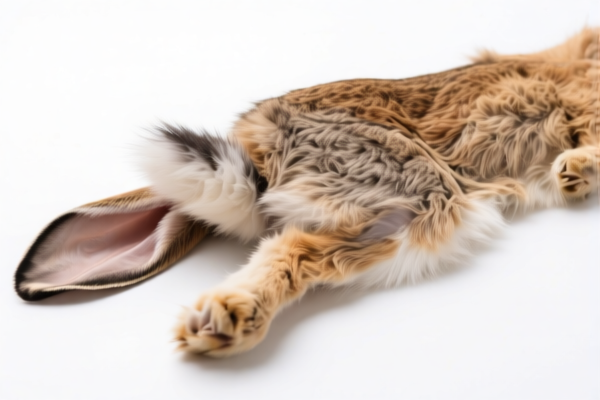
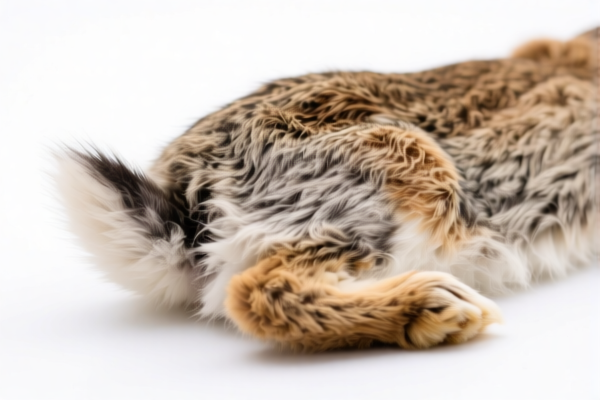
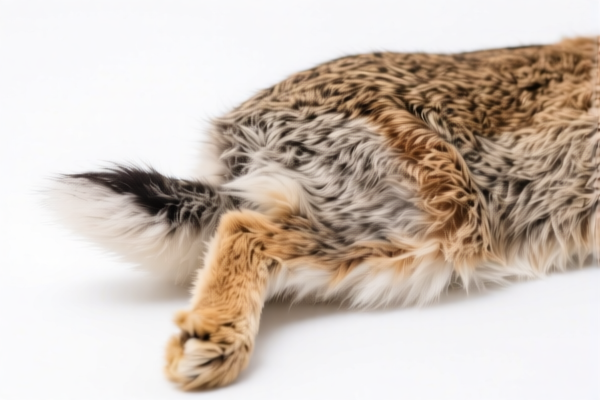
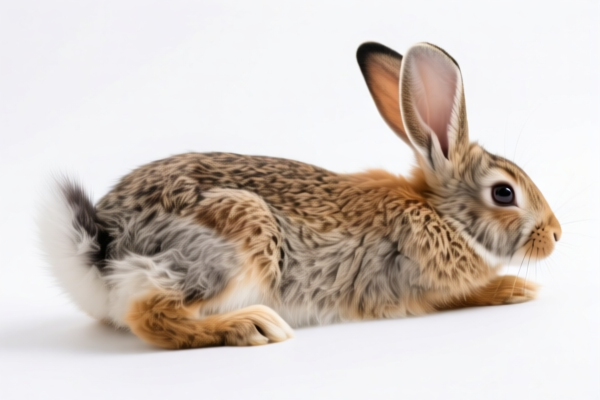
AI Analysis
🐰 Rabbit Fur with Tail (Raw & Processed)
🌐 HS Code Reference & Clearance Guide | 2026 Latest Tariff Analysis | Professional Customs Strategy
📌 I. Product Definition & Classification: Do You Truly Understand "Rabbit Fur"?
Rabbit fur is a versatile material used in the fashion, luxury goods, and fur trading industries. In international trade, it is strictly categorized based on its processing state (raw vs. tanned/finished) and form (whole skin, pieces, or garments).
Raw Skins (Unprocessed/Tanned for Trading):
These are skins that have been salted, limed, or lightly tinned specifically for the furrier to process further. They retain natural features like tails.
Finished/Fashion Products:
These include tanned, dyed, or sewn items such as collars, vests, or accessories.
⚠️ Key Distinction Point:
- If the fur is raw, semi-processed, or sold to furriers for further manufacturing (including tails) → Classified under Chapter 43 Headings 4301, 4302.
- If the fur is finished into garments or accessories → Classified under Heading 4303.
- Critical Note: The presence of a tail on raw skins is a defining characteristic of "whole skins" intended for trade, not a defect. It does not automatically disqualify the item from raw skin categories if processed correctly for trading.
📦 II. HS Code Classification Matrix (2026 Latest Tariff Authority)
| HS Code | Product Description | Application Scenario | Tax Rate |
|---|---|---|---|
4301.90.00.00 |
Other raw pelts and skins (including with heads, paws, tails) | Raw rabbit pelts, with tails, for furrier use | 10.0% |
4303.10.00.60 |
Articles of fur skin, other than those of heading 4302 | Rabbit fur finished goods (e.g., collars, caps), non-mink | 39.0% |
4301.80.02.02 |
Rabbit skins (raw), other than whole skins with heads | Rabbit skins, raw, explicitly matching rabbit material, with tails | 17.5% |
4302.19.55.00 |
Tanned or dressed furskins (other than mink) | Processed rabbit skins, whole skins, with tail features | 37.7% |
4302.20.30.00 |
Pieces of furskins, tanned or dressed | Refined fur pieces, fragments, rabbit material | 37.1% |
4303.90.00.00 |
Articles of fur skin, not elsewhere specified | Finished fur products, not accessories | 35.0% |
🔍 Key Reminder:
- Raw vs. Processed:4301items are "raw/semi-raw" for trade.4302items are "tanned/dressed" for final use or further processing.4303items are finished articles (clothing/accessories).
- Tail Inclusion: For raw skins (4301), the tail is part of the "whole skin" definition. For finished goods (4303), the tail is just a component of the article.
- Misclassification Risk: Declaring a raw skin as a "finished good" to avoid high taxes is a major red flag for Customs.
💰 III. 2026 Latest Tariff Rate Breakdown (Including Surcharges & Policy Add-ons)
✅ Applicable Country: United States (US)
✅ Origin: China (CN)
✅ Effective Date: November 10, 2025 (and subsequent imports)
🎯 1. 4301.90.00.00 – Raw Rabbit Pelts (Including Tails)
| Item | Details |
|---|---|
| Base Tariff | 0.0% (ad valorem) |
| Section 301 Surcharge | 0.0% |
| 122 Tariff (IEEPA) | +10.0% (China-specific) |
| Total Rate | 10.0% |
| Calculation | CIF Value × 10% |
| De Minimis Eligibility | ❌ No (deny_de_minimis) |
| Legal Basis | IEEPA:122 → USITC:4301.90.00.00 |
📌 Explanation:
- This is the lowest tax bracket for rabbit fur.
- It applies to raw skins brought to the US for furriers to process into finished goods.
- The "122 Tariff" is a specific surcharge on Chinese-origin raw materials.
🎯 2. 4301.80.02.02 – Raw Rabbit Skins (Explicitly Rabbit)
| Item | Details |
|---|---|
| Base Tariff | 0.0% |
| Section 301 Surcharge | +7.5% |
| 122 Tariff (IEEPA) | +10.0% |
| Total Rate | 17.5% |
| Calculation | CIF Value × 17.5% |
| De Minimis Eligibility | ❌ No |
| Legal Basis | IEEPA:122 → USITC:4301.80.02.02 → FOOTNOTE:301.7.5 |
📌 Explanation:
- Applies to raw rabbit skins that are clearly identified as such but may not be "whole pelts with tails" in the same category as4301.90.
- Still considered "raw/trading grade."
🎯 3. 4302.19.55.00 – Tanned/Dressed Rabbit Skins (Whole)
| Item | Details |
|---|---|
| Base Tariff | 2.7% |
| Section 301 Surcharge | +25.0% |
| 122 Tariff (IEEPA) | +10.0% |
| Total Rate | 37.7% |
| Calculation | CIF Value × 37.7% |
| De Minimis Eligibility | ❌ No |
| Legal Basis | IEEPA:122 → USITC:4302.19.55.00 → FOOTNOTE:301.25 |
📌 Explanation:
- The fur is tanned or dressed (processed for final use or retail).
- High tax burden due to Section 301 (25%) + IEEPA (10%) + Base (2.7%).
- Common for "dressed skins" sold to manufacturers for cutting.
🎯 4. 4302.20.30.00 – Tanned/Dressed Fur Pieces (Rabbit)
| Item | Details |
|---|---|
| Base Tariff | 2.1% |
| Section 301 Surcharge | +25.0% |
| 122 Tariff (IEEPA) | +10.0% |
| Total Rate | 37.1% |
| Calculation | CIF Value × 37.1% |
| De Minimis Eligibility | ❌ No |
| Legal Basis | IEEPA:122 → USITC:4302.20.30.00 → FOOTNOTE:301.25 |
📌 Explanation:
- Used for fur fragments, patches, or pieces that are tanned.
- Slightly lower than whole skins due to base tariff differences.
🎯 5. 4303.90.00.00 – Finished Fur Articles (Non-Accessory)
| Item | Details |
|---|---|
| Base Tariff | 0.0% |
| Section 301 Surcharge | +25.0% |
| 122 Tariff (IEEPA) | +10.0% |
| Total Rate | 35.0% |
| Calculation | CIF Value × 35.0% |
| De Minimis Eligibility | ❌ No |
| Legal Basis | IEEPA:122 → USITC:4303.90.00.00 → FOOTNOTE:301.25 |
📌 Explanation:
- Finished products like fur blankets, shawls, or non-garment accessories.
- Base tariff is 0%, but the 301 surcharge still applies heavily.
🎯 6. 4303.10.00.60 – Finished Fur Articles (Other than Mink)
| Item | Details |
|---|---|
| Base Tariff | 4.0% |
| Section 301 Surcharge | +25.0% |
| 122 Tariff (IEEPA) | +10.0% |
| Total Rate | 39.0% |
| Calculation | CIF Value × 39.0% |
| De Minimis Eligibility | ❌ No |
| Legal Basis | IEEPA:122 → USITC:4303.10.00.60 → FOOTNOTE:301.25 |
📌 Explanation:
- Highest tax rate in the dataset.
- Applies to finished garments/accessories (e.g., rabbit fur coats, vests) that are not mink.
- Avoid this category if importing raw materials.
🛠️ IV. Customs Clearance Practical Advice (Real-World Pitfall Guide)
✅ 1. Documentation Checklist (Non-Negotiable)
| Document | Required | Notes |
|---|---|---|
| ✅ Product Specification Sheet | ✔️ | Must specify: Raw/Tanned/Dressed, Whole/Piece, with/without tail |
| ✅ Processing Method Statement | ✔️ | Crucial for distinguishing 4301 (raw) from 4302 (tanned) |
| ✅ Commercial Invoice | ✔️ | Clearly state: "Raw Rabbit Fur Skins with Tails" or "Finished Rabbit Fur Collar" |
| ✅ Photo Evidence | ✔️ | Show the fur, tail, and any processing labels |
| ✅ Fumigation Certificate | ✔️ | Required for all animal products to prevent pests |
| ✅ Country of Origin Certificate | ✔️ | Critical for calculating Section 301 and IEEPA surcharges |
✅ 2. Declaration Strategy (Key Rules)
🔥 "Raw is Low Tax, Finished is High Tax; Tail is Normal, Not a Flaw!"
| Scenario | Correct Declaration | Wrong Practice |
|---|---|---|
| Raw skins for furriers (with tails) | 4301.90.00.00 (10%) |
Misdeclare as finished goods → 39% |
| Tanned skins for manufacturers | 4302.19.55.00 (37.7%) |
Declare as raw → Customs Penalty |
| Finished rabbit fur vest | 4303.10.00.60 (39%) |
Declare as raw → Seizure Risk |
| Fur pieces/patches | 4302.20.30.00 (37.1%) |
Declare as whole skins → Misclassification |
| Non-mink finished articles | 4303.90.00.00 (35%) |
N/A |
✅ 3. Special Handling Tips
| Situation | Advice |
|---|---|
| Importing for Personal Use | Still subject to 35-39% tariffs if declared as finished goods. Consider raw skins if you are a furrier. |
| Mixed Shipments | Separate raw and finished goods in different boxes to avoid confusion. |
| Tail Removal | Removing tails does not change the HS Code for raw skins, but may affect quality valuation. |
| Dyed vs. Undyed | Undyed raw skins (4301) are lower tax than dyed tanned skins (4302). |
🌍 V. Global Market Comparison (2026 Update)
| Country/Region | Recommended HS Code | Tariff (China Origin) | Certification | Notes |
|---|---|---|---|---|
| 🇺🇸 USA | 4301.90.00.00 |
10% (Raw) | CITES Permit (if applicable) | Highest protectionist tariffs on finished goods |
| 🇨🇳 China | 4301.90.00.00 |
10% | None | Major producer/consumer of rabbit fur |
| 🇪🇺 EU | 4301.90.00.00 |
0-12% | CITES + REACH | Strict animal welfare regulations |
| 🇬🇧 UK | 4301.90.00.00 |
0-12% | UKCA + CITES | Post-Brexit rules apply |
| 🇯🇵 Japan | 4301.90.00.00 |
0-5% | None | Low tariffs, high quality demand |
📌 Conclusion:
- The USA imposes the highest effective tariffs on Chinese-origin fur products due to Section 301 and IEEPA surcharges.
- Raw skins (4301) are significantly cheaper (10-17.5%) than finished goods (35-39%).
- Strategic Move: Import raw skins, process domestically (if allowed) or in third countries, to avoid high finished-good tariffs.
📌 VI. Common Errors & Pitfalls (Blood & Tears Lessons)
❌ Mistake 1: Declaring tanned/dressed skins as raw skins
👉 Consequence: Customs audits, back taxes + penalties (30-40% difference).
✅ Fix: Provide proof of tanning process (e.g., chemical treatment records).
❌ Mistake 2: Ignoring Section 301 surcharges in cost calculation
👉 Consequence: Unexpected $10,000+ bill at customs.
✅ Fix: Always budget for 25% (301) + 10% (122) on top of base tariff for finished goods.
❌ Mistake 3: Not providing CITES Permits for endangered species
👉 Consequence: Seizure and deportation of goods.
✅ Fix: Verify if rabbit species are CITES-listed. Most domestic rabbits are not, but wild species are.
❌ Mistake 4: Poor description on Invoice
👉 Consequence: Customs delays, manual inspection.
✅ Fix: Use precise terms: "Raw Rabbit Pelts, Tails Attached, Salted Preservation, HS 4301.90.00.00"
🎯 VII. Conclusion: Smart Classification, Lower Costs, Faster Clearance
🎯 Remember the Golden Rule:
🔹 "Raw is 10%, Finished is 39% — Know your stage!"
🔹 "Tails are normal, not defects — Declare clearly!"
🔹 "Section 301 hits hard — Plan your supply chain wisely!"
📌 Pro Tip:
If you are a manufacturer, import raw skins (4301) to minimize tariffs.
If you are a retailer, be prepared for 35-39% tariffs on finished goods.
Consider transshipment through non-China origins (e.g., Vietnam, Italy) to mitigate US tariffs, but ensure substantial transformation occurs.
📣 Immediate Action:
📞 Consult a licensed customs broker
📄 Prepare detailed product specs (Raw/Tanned/Finished)
🚀 Apply for Advance Rulings if uncertain about HS Code
✨ Professional Clearance, Starting with Precise Classification!
💼 Every Percent Saved is Profit Gained!
Customer Reviews
About HS Code Classification
The Harmonized System (HS) is an internationally standardized nomenclature developed by the World Customs Organization (WCO) to classify traded products. Over 200 countries use the HS system as the basis for customs tariffs, trade statistics, and import/export regulations.
Each HS code follows a hierarchical structure:
- Chapter (2 digits) — Broad category of goods (e.g., Chapter 84: Machinery and Mechanical Appliances)
- Heading (4 digits) — More specific grouping within the chapter
- Subheading (6 digits) — Internationally standardized breakdown, used by all WCO member countries
- National subdivisions (8-10 digits) — Country-specific extensions for further classification, such as US HTSUS 10-digit codes
Correct HS code classification is essential for smooth customs clearance, accurate duty payment, and compliance with trade regulations. Misclassification can lead to customs delays, overpayment of duties, or penalties.
When importing from CN to US, the applicable tariff rates may include:
- Most-Favored-Nation (MFN) rate — The standard duty rate applied to WTO members
- General rate — Applied to countries without trade agreements
- Trade remedy duties — Additional tariffs such as Section 301 (anti-dumping), Section 232 (national security), or countervailing duties
The information provided on this page is for reference purposes only. For official classification, please consult with your local customs authority or a licensed customs broker.