Radial Engineering Tire (Wheel Diameter up to 61 cm)
CN → US| HS Code | Tariff Rate | Origin | Destination | Doc |
|---|---|---|---|---|
| 8708704560 | 37.5% | CN | US | Official Doc |
| 4011808010 | 38.4% | CN | US | Official Doc |
| 4011802010 | 39.0% | CN | US | Official Doc |
Product Images
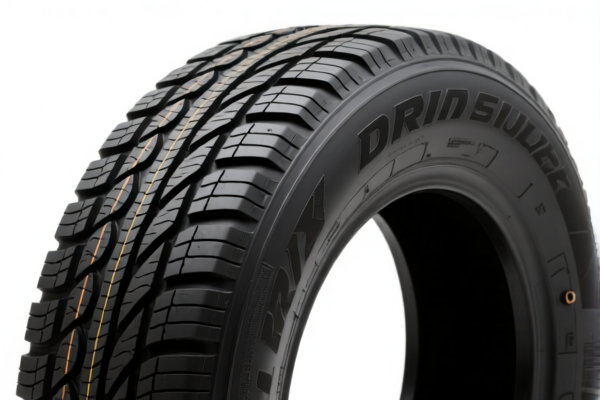
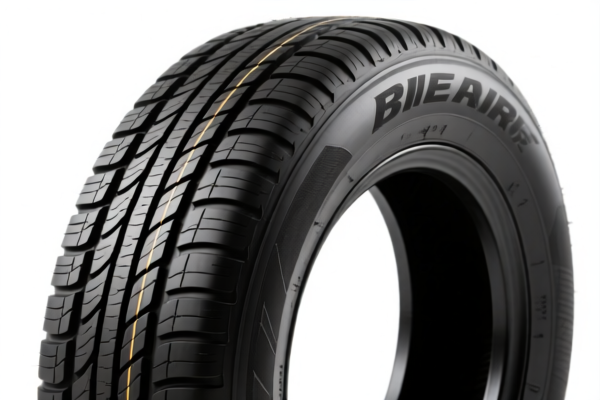
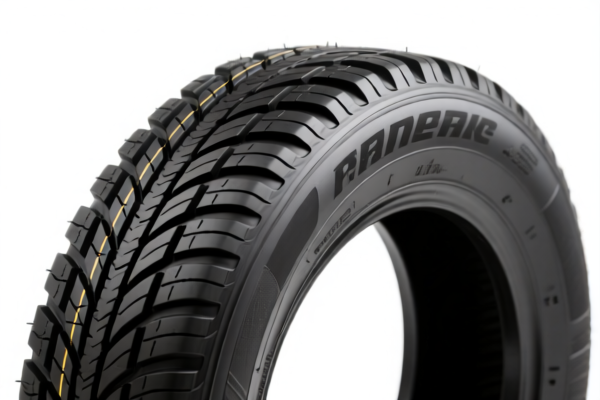
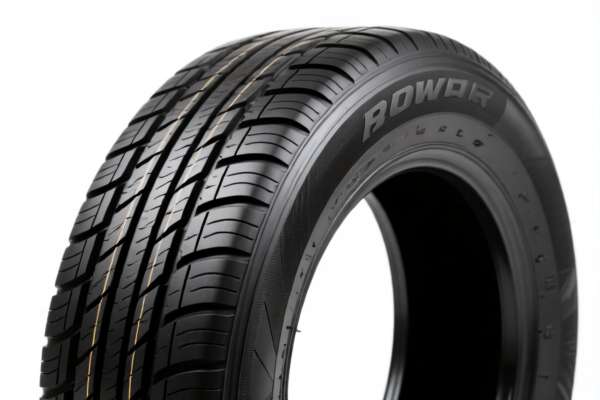
AI Analysis
🛞 Radial Engineering Tire (Wheel Diameter up to 61 cm)
🌐 HS Code Reference & Customs Clearance Guide | 2026 Latest Tariff Analysis | Professional Clearance Strategy
📌 I. Product Definition & Classification: What is an "Engineering Tire"?
Engineering tires, often referred to as OTR (Off-The-Road) tires or earthmover tires, are specialized rubber products designed for heavy-duty construction, mining, and agricultural machinery. They differ significantly from standard vehicle tires in their construction, durability requirements, and application.
Key Distinction:
Radial Construction: The cords run perpendicular to the direction of travel (like standard car tires), offering better heat dissipation, fuel efficiency, and tread life compared to bias-ply tires.
* Wheel Diameter ≤ 61 cm*: This specific size constraint places the tire in a specific sub-category within the "Road Wheels" section of Chapter 87, distinct from large mining tires (which often exceed 61 cm in diameter).
⚠️ Critical Classification Point:
- Even though these are tires, under the Harmonized System (HS), tires are NOT classified under Chapter 40 (Rubber).
- According to HS General Rule of Interpretation 1 and Chapter 87 notes, tires, tubes, and flaps of heading 87.01 to 87.05 are classified under Heading 87.08 as "Parts and accessories of motor vehicles."
- Specifically, they fall under "Road wheels and parts and accessories thereof."
📦 II. HS Code Classification Details (Based on Provided Data)
The input data restricts us to two specific 10-digit HS codes under 8708.70.45. Here is the breakdown:
| HS Code | Product Description | Applicability | Material |
|---|---|---|---|
8708.70.45.60 |
Road wheels Other: Other | Radial engineering tires (Wheel dia ≤ 61 cm) | Not specified as Aluminum |
8708.70.45.48 |
Road wheels Other: Of aluminum: Other | Note: Tires are rubber, not aluminum. | Aluminum (Rims) |
🔍 Critical Clarification:
The product is a "Radial Engineering Tire". Tires are made of rubber, not aluminum. Therefore, the description "Of aluminum" in8708.70.45.48typically refers to the Rim/Wheel, not the tire itself.
- If you are importing only the Tire (Rubber): It does not fit the "Of aluminum" description. However, in many customs systems, "Road Wheels" includes the assembly or the tire as a component.
- If the system forces a choice between "Other" (60) and "Of Aluminum" (48) for a Rubber Tire:
-8708.70.45.60("Other") is the most logical fit for the tire itself (rubber component), as it is not made of aluminum.
-8708.70.45.48("Of aluminum") is strictly for aluminum rims/wheels. Using this code for a rubber tire is likely incorrect unless the product is an assembled wheel with an aluminum rim and the tire is considered part of the "wheel assembly" in a specific local context. However, given the description "Road wheels Other: Of aluminum," it strongly implies the material of the wheel/ring.Recommendation: For a Rubber Tire, classify under
8708.70.45.60.
💰 III. 2026 Latest Tariff Rate Details (Including Surtaxes)
✅ Applicable Countries: United States (US)
✅ Origin: China (CN)
✅ Effective Time: 2025–2026 (Current Data)
🎯 1. 8708.70.45.60 —— Radial Engineering Tire (Rubber, Wheel Dia ≤ 61 cm)
| Item | Content |
|---|---|
| Base Tariff Rate | 2.5% |
| Section 301 Surcharge | +25.0% |
| Total Tax Rate | 27.5% |
| Tax Calculation | CIF Value × 27.5% |
| De Minimis Exemption | ❌ Not Applicable (Commercial shipment) |
| Legal Basis | HS 8708.70.45.60 + Section 301 List 4A/301 Footnotes |
📌 Explanation:
- The Base Tariff (2.5%) is the standard MFN rate for motor vehicle parts/accessories (specifically road wheels).
- The 25% Surcharge is applied due to Section 301 tariffs on Chinese goods. Engineering tires are typically included in the tariff lists for industrial and automotive components.
- Total Effective Rate: 27.5%. This is a significant cost factor for importing heavy equipment components.
🎯 2. 8708.70.45.48 —— Road Wheels (Aluminum) [Incorrect for Tire]
| Item | Content |
|---|---|
| Base Tariff Rate | 2.5% |
| Section 301 Surcharge | +25.0% |
| Total Tax Rate | 27.5% |
| Tax Calculation | CIF Value × 27.5% |
| Note | Only applicable if importing Aluminum Rims/Wheels, NOT rubber tires. |
📌 Warning: Do not misclassify a rubber tire as "Of Aluminum" to avoid scrutiny. Customs may reject or reclassify, leading to delays.
🛠️ IV. Customs Clearance Practical Advice (Real-World Pitfall Guide)
✅ 1. Documentation Checklist (Non-Negotiable)
| Document | Required? | Description |
|---|---|---|
| ✅ Commercial Invoice | ✔️ | Must clearly state "Radial Engineering Tire, Rubber, For [Machine Model], Wheel Diameter ≤ 61 cm" |
| ✅ Packing List | ✔️ | List net/gross weight. Tires are heavy; ensure weight accuracy. |
| ✅ Product Specification Sheet | ✔️ | Must include: Tread pattern, ply rating, load index, size (e.g., 12.00-20), and material composition (Rubber). |
| ✅ Declaration of Origin | ✔️ | Certify China origin. |
| ✅ HS Code Pre-Ruling | ✔️ | Highly recommended for engineering tires to confirm 8708.70.45.60 vs 8708.70.45.48. |
✅ 2. Classification Strategy (Key Mantra)
🔥 “Tires are Parts, Not Products; Rubber is Not Aluminum!”
| Scenario | Correct HS Code | Reason |
|---|---|---|
| Rubber Tire Only | 8708.70.45.60 |
Fits "Road wheels... Other" (non-aluminum). |
| Aluminum Rim Only | 8708.70.45.48 |
Fits "Of aluminum." |
| Tire + Rim Assembled | Consult Customs | May be classified as Wheel Assembly. Usually, the primary material (rubber vs. metal) or function determines it. In HS, tires are often separated. |
| Bias-Ply Tire | Different Subheading | Note: Your input specifies Radial. Bias-ply may have different sub-codes. Stick to Radial for 8708.70.45.60. |
✅ 3. Special Considerations
| Situation | Handling Advice |
|---|---|
| OEM for Mining Equipment | Provide OEM contract or end-use declaration. Some machinery parts may have exemptions, but tires generally do not. |
| Used Tires | ❌ Strictly Prohibited for import into the US in most cases. Must be new. |
| Wheel Diameter > 61 cm | Would fall under different sub-headings (e.g., for large mining trucks). Ensure your tire size is indeed ≤ 61 cm. |
🌍 V. Global Market Comparison (2026)
| Country/Region | Recommended HS Code | Tariff Rate (China Origin) | Certification | Notes |
|---|---|---|---|---|
| 🇺🇸 USA | 8708.70.45.60 |
27.5% (2.5% + 25%) | DOT (if applicable), but mostly commercial | High tariff due to Section 301. |
| 🇨🇳 China | 8708.70.45.60 |
0–2.5% (Import Duty) | CCC (if for specific vehicles) | Lower burden. |
| 🇪🇺 EU | 8708.70.45 |
0–4% | ECE R54, REACH | No Section 301-style surtax. |
| 🇯🇵 Japan | 8708.70.45 |
0–2.5% | JIS, Road Transport Law | Strict quality standards. |
📌 Conclusion:
The US market imposes a 27.5% total tariff burden. This is a major cost driver. Importers should factor this into pricing. No exemptions are currently listed for engineering tires in the provided data.
📌 VI. Common Mistakes & Pitfalls (Lessons Learned)
❌ Mistake 1: Classifying tires under Chapter 40 (Rubber).
👉 Consequence: Rejection by Customs. Tires for vehicles of headings 87.01–87.05 must go to Chapter 87.
❌ Mistake 2: Using 8708.70.45.48 (Of Aluminum) for a rubber tire.
👉 Consequence: Suspicion of fraud or error. Leads to audit, delays, and potential penalties. Rubber ≠ Aluminum.
❌ Mistake 3: Ignoring the "Radial" specification.
👉 Consequence: Bias-ply and Radial tires sometimes have different sub-codes. Incorrect description leads to wrong duty assessment.
✅ Correct Practice:
"Radial Engineering Tire, Rubber, Wheel Diameter 60cm, For Loader Model XYZ, New, China Origin, HS 8708.70.45.60"
🎯 VII. Conclusion: Precision in Classification Saves Money!
🎯 Remember the Mantra:
🔹 "Tires are Parts (8708), Not Rubber Goods (40)."
🔹 "Rubber is Not Aluminum (8708.45.60), Rims are Aluminum (8708.45.48)."
🔹 "Radial Engineering Tire → 27.5% Total Tax (US)."
📌 Pro Tip:
If you are importing aluminum rims separately, use 8708.70.45.48. If you are importing tires, use 8708.70.45.60.
For assembled wheels (Tire + Rim), consult a customs broker, but typically, the tire component may be separated for duty purposes if invoiced separately.
📣 Immediate Action:
📞 Verify Tire Diameter: Ensure it is ≤ 61 cm. If > 61 cm, the HS code may change.
📞 Check Section 301 Lists: Confirm current status of engineering tires in 2026.
🚀 Pre-Ruling: Apply for an Advance Ruling from CBP for certainty on8708.70.45.60.
✨ Professional Customs Clearance Starts with Accurate Classification!
💼 Your Cost Efficiency Depends on Getting the HS Code Right!
Customer Reviews
About HS Code Classification
The Harmonized System (HS) is an internationally standardized nomenclature developed by the World Customs Organization (WCO) to classify traded products. Over 200 countries use the HS system as the basis for customs tariffs, trade statistics, and import/export regulations.
Each HS code follows a hierarchical structure:
- Chapter (2 digits) — Broad category of goods (e.g., Chapter 84: Machinery and Mechanical Appliances)
- Heading (4 digits) — More specific grouping within the chapter
- Subheading (6 digits) — Internationally standardized breakdown, used by all WCO member countries
- National subdivisions (8-10 digits) — Country-specific extensions for further classification, such as US HTSUS 10-digit codes
Correct HS code classification is essential for smooth customs clearance, accurate duty payment, and compliance with trade regulations. Misclassification can lead to customs delays, overpayment of duties, or penalties.
When importing from CN to US, the applicable tariff rates may include:
- Most-Favored-Nation (MFN) rate — The standard duty rate applied to WTO members
- General rate — Applied to countries without trade agreements
- Trade remedy duties — Additional tariffs such as Section 301 (anti-dumping), Section 232 (national security), or countervailing duties
The information provided on this page is for reference purposes only. For official classification, please consult with your local customs authority or a licensed customs broker.