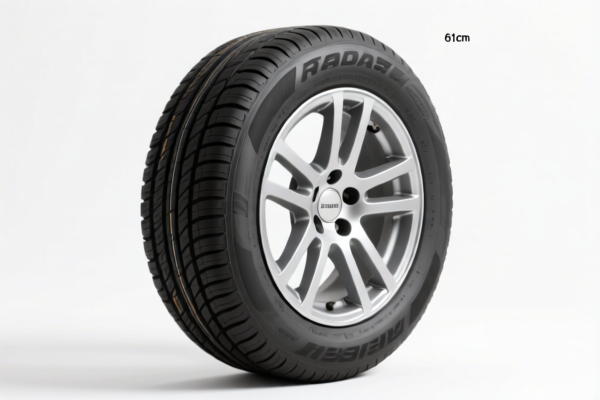
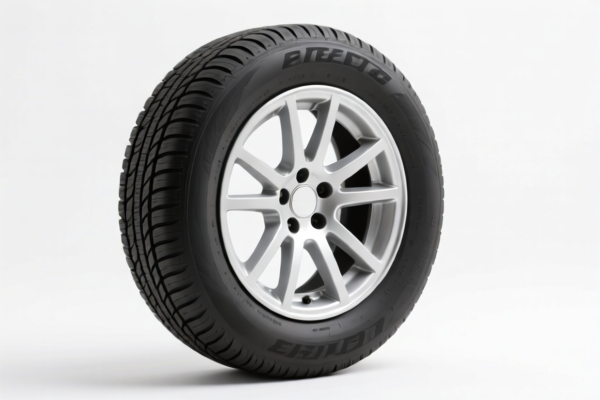
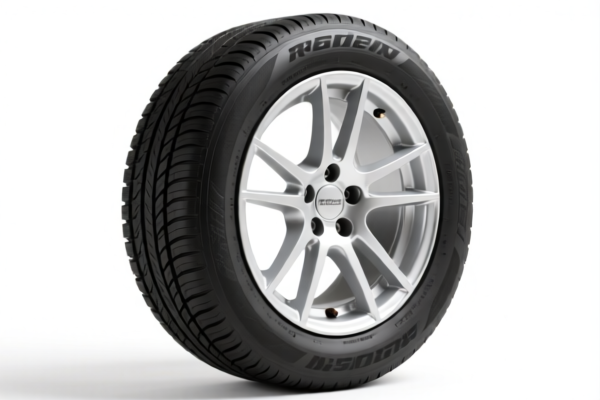
Radial Engineering Tires with Rim Size up to 61cm
CN → US| HS Code | Tariff Rate | Origin | Destination | Doc |
|---|---|---|---|---|
| 4011802010 | 39.0% | CN | US | Official Doc |
| 4011808010 | 38.4% | CN | US | Official Doc |
Product Images
AI Analysis
🚜 Radial Industrial Tires (Max Rim Size 61cm) – HS Code & Tax Analysis
🌐 HS Code Reference & Customs Clearance Guide | 2026 Latest Tariff Analysis | Professional Clearance Strategy
📌 1. Product Definition & Classification: What Exactly Are These Tires?
Radial Engineering Tires are specialized pneumatic rubber tires designed for heavy-duty construction, mining, and industrial handling machinery (e.g., wheel loaders, forklifts, excavators, bulldozers). The key distinction lies in the construction type (Radial vs. Bias) and the rim size constraint (≤ 61 cm).
In international trade, these tires are categorized under Chapter 40 (Rubber and Articles Thereof). The critical classification factors are: - Construction: Radial ply structure (flexible sidewall, stable tread). - Application: Construction, mining, or industrial handling vehicles. - Rim Size: Must not exceed 61 cm (approx. 24 inches).
⚠️ Key Distinction:
- Radial Construction: Classified under 4011.80.20.10
- Non-Radial (Bias/Other) Construction: Classified under 4011.80.80.10
- Rim Size > 61 cm: Would fall under different subheadings (not covered here).
- Passenger/Vehicle Tires: Not applicable; these are strictly industrial.
📦 2. HS Code Classification Details (2026 Latest Tariff Authority)
| HS Code | Product Description | Rim Size Constraint | Construction Type |
|---|---|---|---|
4011.80.20.10 |
New pneumatic tires of rubber; of a kind used on construction, mining or industrial handling vehicles and machines; other; radial | ≤ 61 cm | ✅ Radial |
4011.80.80.10 |
New pneumatic tires of rubber; of a kind used on construction, mining or industrial handling vehicles and machines; other; other (non-radial) | ≤ 61 cm | ❌ Bias/Other |
🔍 Critical Reminder:
- Radial tires are generally preferred for industrial machinery due to better heat dissipation and traction.
- "Other" in4011.80.80.10refers to bias-ply or non-radial constructions.
- Both codes share the same rim size limit: not exceeding 61 cm.
💰 3. 2026 Latest Tariff Rate Breakdown (Detailed Tax Clauses)
✅ Applicable Country: United States (US)
✅ Country of Origin: China (CN)
✅ Effective Date: 2025-11-10 (and subsequent imports)
🎯 1. 4011.80.20.10 – Radial Industrial Tires (≤ 61 cm)
| Item | Content |
|---|---|
| Base Tariff Rate | 0.0% (ad valorem) |
| Additional Tariff (Section 301) | 0.0% |
| IEEPA Additional Tariff | 0.0% |
| Total Tax Rate | 0.0% |
| Tax Calculation | CIF Value × 0.0% = $0 |
| De Minimis Eligibility | ❌ Not Applicable (Industrial goods often excluded or handled differently, but tax is 0 anyway) |
| Legal Authority Path | USITC:4011.80.20.10 → FOOTNOTE:NA (No additional footnotes apply for 0% total tax) |
📌 Explanation:
- Base Rate: 0% is standard for many industrial rubber goods under certain trade frameworks.
- Section 301 & IEEPA: Unlike electronics or consumer goods, industrial tires in this specific subheading currently face 0% additional tariffs for Chinese origin. This is a significant cost advantage compared to other industrial components.
- Total Impact: Zero duty burden for these specific radial tires.
🎯 2. 4011.80.80.10 – Non-Radial (Bias) Industrial Tires (≤ 61 cm)
| Item | Content |
|---|---|
| Base Tariff Rate | 0.0% (ad valorem) |
| Additional Tariff (Section 301) | 0.0% |
| IEEPA Additional Tariff | 0.0% |
| Total Tax Rate | 0.0% |
| Tax Calculation | CIF Value × 0.0% = $0 |
| De Minimis Eligibility | ❌ Not Applicable |
| Legal Authority Path | USITC:4011.80.80.10 → FOOTNOTE:NA |
📌 Note:
- Same tax treatment as radial tires.
- No additional Section 301 or IEEPA tariffs apply.
- Ideal for cost-sensitive procurement where bias-ply construction is sufficient for the application.
🛠️ 4. Customs Clearance Practical Advice (Battle-Tested Tips)
✅ 1. Required Documentation Checklist (Non-Negotiable)
| Document | Mandatory? | Notes |
|---|---|---|
| ✅ Commercial Invoice | ✔️ | Must clearly state: "New Pneumatic Tires, Rubber, Radial/Bias, Rim Size ≤ 61 cm" |
| ✅ Packing List | ✔️ | Include quantity, gross weight, net weight, and dimensions |
| ✅ Product Specification Sheet | ✔️ | Confirm rim size (e.g., "Rim: 24.5 x 25") and construction (Radial vs. Bias) |
| ✅ Country of Origin Certificate | ✔️ | Essential to prove CN origin for tariff verification |
| ✅ Manufacturer’s Declaration | ✔️ | Confirm "New" status (not retreaded or used) |
⚠️ Critical Alert:
- Do NOT use generic terms like "Tires" or "Truck Tires."
- Specify "Construction/Mining/Industrial Handling Vehicles" in the description to align with HS Code 4011.80.
- Rim Size Must Be Explicitly Stated (e.g., "Rim Diameter: 600 mm (23.6 inches)") to avoid customs scrutiny and potential reclassification.
✅ 2. Declaration Strategy (Key Rules)
🔥 “Exact Description, Correct HS, Zero Tax Mind!”
| Scenario | Correct Declaration | Incorrect Practice |
|---|---|---|
| Radial Tires, Rim 600mm | 4011.80.20.10 – "Radial tires for construction vehicles" |
Misclassify as car tires → Higher tax risk |
| Bias Tires, Rim 500mm | 4011.80.80.10 – "Non-radial tires for industrial forklifts" |
Call them "Radial" → Classification error |
| Rim Size > 61 cm | Different HS Code (e.g., 4011.80.30.xx) | Claim ≤ 61 cm when it’s 65 cm → Fraudulent declaration |
| Used/Retreaded Tires | HS Code 4012.xx (Not covered here) | Declare as "New" → Seizure and penalties |
✅ 3. Special Cases & Risk Mitigation
| Situation | Recommendation |
|---|---|
| Mixed Shipment (Radial + Bias) | Split HS Codes on the same invoice. Do not combine under one code. |
| Rim Size Borderline (e.g., 61.0 cm) | Measure outer diameter of the rim (not tire). If > 61 cm, use different HS. |
| OEM Branded Tires | Provide brand authorization and OEM contract to prevent anti-dumping scrutiny. |
| Retreaded Tires | Must declare under 4012.12.00.00 or similar. Never mix with new tires. |
🌍 5. Global Market Comparison (2026)
| Country/Region | Recommended HS Code | Tariff (China Origin) | Notes |
|---|---|---|---|
| 🇺🇸 USA | 4011.80.20.10 / 4011.80.80.10 |
0.0% | No Section 301 or IEEPA tariffs for this specific industrial category |
| 🇨🇳 China (Import) | 4011.80.20.10 |
~10-15% | Check latest CN tariff schedule |
| 🇪🇺 EU | 4011.80.20 |
0-4.5% | Varies by exact subheading; likely low |
| 🇮🇳 India | 4011.80.20 |
10-20% | Additional anti-dumping duties may apply |
📌 Conclusion:
- USA offers 0% duty for these specific industrial tires, making it a competitive market for exporters.
- Documentation accuracy is paramount to maintain this 0% status. Any misclassification could trigger higher base rates or audits.
📌 6. Common Mistakes & Pitfalls (Lessons Learned)
❌ Mistake 1: Declaring "Industrial Tires" without specifying "Radial" or "Bias"
👉 Consequence: Customs may select the higher base rate or hold for inspection → Delays
❌ Mistake 2: Ignoring the 61 cm rim size limit
👉 Consequence: If rim size is 62 cm, HS Code changes → Potential tariff increase or reclassification
❌ Mistake 3: Using "Car Tires" or "Truck Tires" in description
👉 Consequence: Incorrect Chapter → Penalties and fines
❌ Mistake 4: Not declaring "New" status
👉 Consequence: If used, HS Code shifts to 4012 → Different tax treatment
✅ Best Practice:
"NEW PNEUMATIC RUBBER TIRES, RADIAL CONSTRUCTION, FOR WHEEL LOADERS, RIM SIZE: 600mm (≤61cm), MODEL XYZ, MADE IN CHINA"
🎯 7. Conclusion: Professional Declaration, Cost Efficiency, Risk-Free Clearance
🎯 Remember the Golden Rule:
🔹 "Radial → 4011.80.20.10 | Bias → 4011.80.80.10 | Rim ≤ 61cm | Tax 0%"
🔹 "Exact specs prevent audits; vague descriptions invite penalties!"
📌 Pro Tip:
- If your tires are exported to the USA, ensure the Bill of Lading and Invoice match the HS Code precisely.
- Keep technical drawings or manufacturer specs handy in case of customs inquiry.
- Consider pre-clearance rulings if you have high-volume shipments to ensure long-term compliance.
📣 Immediate Action:
📞 Consult a licensed customs broker to verify the exact rim measurement.
🚀 Accurate HS Classification = Zero Duty + Smooth Clearance.
✨ Professional Clearance Starts with Precision!
💼 Your bottom line depends on getting the HS Code right!
Customer Reviews
About HS Code Classification
The Harmonized System (HS) is an internationally standardized nomenclature developed by the World Customs Organization (WCO) to classify traded products. Over 200 countries use the HS system as the basis for customs tariffs, trade statistics, and import/export regulations.
Each HS code follows a hierarchical structure:
- Chapter (2 digits) — Broad category of goods (e.g., Chapter 84: Machinery and Mechanical Appliances)
- Heading (4 digits) — More specific grouping within the chapter
- Subheading (6 digits) — Internationally standardized breakdown, used by all WCO member countries
- National subdivisions (8-10 digits) — Country-specific extensions for further classification, such as US HTSUS 10-digit codes
Correct HS code classification is essential for smooth customs clearance, accurate duty payment, and compliance with trade regulations. Misclassification can lead to customs delays, overpayment of duties, or penalties.
When importing from CN to US, the applicable tariff rates may include:
- Most-Favored-Nation (MFN) rate — The standard duty rate applied to WTO members
- General rate — Applied to countries without trade agreements
- Trade remedy duties — Additional tariffs such as Section 301 (anti-dumping), Section 232 (national security), or countervailing duties
The information provided on this page is for reference purposes only. For official classification, please consult with your local customs authority or a licensed customs broker.