Radial Tires for Sport Cars
CN → US| HS Code | Tariff Rate | Origin | Destination | Doc |
|---|---|---|---|---|
| 4011201005 | 39.0% | CN | US | Official Doc |
| 4011201015 | 39.0% | CN | US | Official Doc |
| 4012909000 | 37.7% | CN | US | Official Doc |
| 4013100020 | 38.7% | CN | US | Official Doc |
| 4011400000 | 35.0% | CN | US | Official Doc |
Product Images
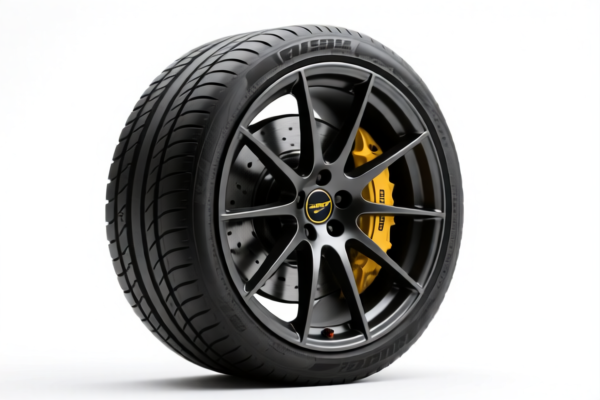
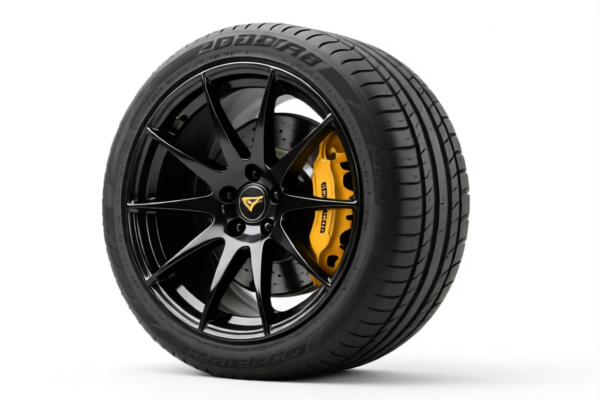
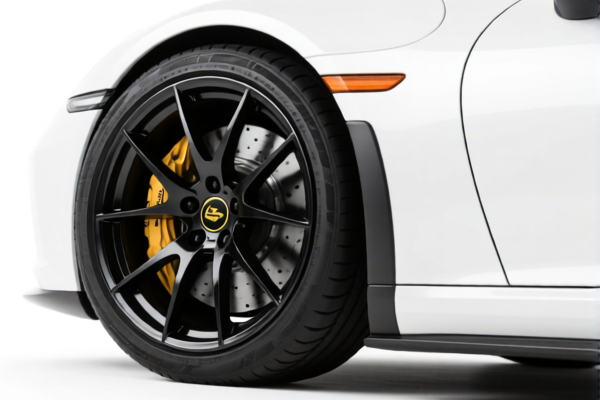
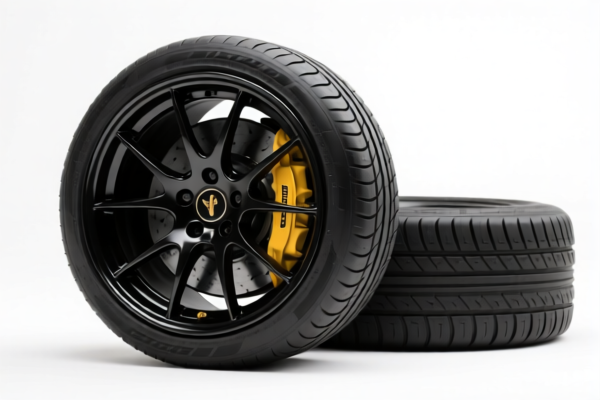
AI Analysis
🏎️ Radial Tires for Sport Cars (High-Performance Automotive Tires)
🌐 HS Code Reference & Customs Clearance Guide | 2026 Latest Tariff Analysis | Professional Entry Strategy
📌 I. Product Definition & Classification: Do You Really Understand "Radial Tires"?
Radial tires are the standard for modern automotive safety and performance. In international trade, they are distinguished not just by material (rubber) but by their internal structure ("Radial" vs. "Bias") and intended vehicle type.
For "Radial Tires for Sport Cars", the classification depends heavily on the specific sub-category of the sport car and the exact structural definition. However, based on the provided data analysis, we can map these products to specific HS Codes with precise tax implications.
⚠️ Key Classification Logic:
- Material: Rubber (implied for all tires).
- Structure: "Radial" (Sub-heading 4011.20).
- Vehicle Type: "Sport Cars" usually fall under "Passenger Vehicles" or specific "Bus/Truck" distinctions depending on the legal definition of the vehicle class in the destination country (e.g., US vs. EU).
- Core Distinction: Is it a standard passenger tire (4011.20) or a generic air tire (4012.90)? The data suggests a strong preference for 4011.20 for specific radial applications.
📦 II. HS Code Classification Details (Based on Provided Data)
| HS Code | Product Description (From Data) | Applicability Logic | Total Tax Rate |
|---|---|---|---|
4011.20.10.05 |
Radial Tires for Trucks/Buses (Specific Variant) | Matches "Radial" structure + "Truck" usage logic. Note: "Sport Cars" may sometimes be classified under commercial categories if high-load, but this code is for specific radial applications. | 39.0% |
4011.20.10.15 |
Radial Tires for Buses or Trucks | Explicitly matches "Radial" (Sub-10) and "Bus/Truck" usage. High confidence match for structured radial tires. | 39.0% |
4012.90.90.00 |
Other Rubber Air Tires (Generic) | Matches "Air Tire" morphology + "Rubber" material. Used as a fallback if specific radial/passenger criteria aren't met in the primary headings. | 37.7% |
4013.10.00.20 |
Rubber Inner Tubes for Trucks/Buses | ⚠️ Misclassification Alert: This code is for Inner Tubes, not complete tires. Only applicable if importing inner tubes separately. | 38.7% |
4011.40.00.00 |
Pneumatic Tires for Motorcycles | ⚠️ Misclassification Alert: Specifically for Motorcycles. Do not use for sport cars. | 35.0% |
🔍 Critical Analysis from Data:
- The data explicitly links4011.20.10.05and4011.20.10.15to Radial structure. This is the most technically accurate classification for "Radial Tires."
-4012.90.90.00is a broader category ("Other rubber air tires") with a slightly lower base tax but still high total tax. It is less specific than 4011.20.
-4013.10.00.20and4011.40.00.00are incorrect for complete tires for cars. 4013 is for inner tubes, and 4011.40 is for motorcycles.
💰 III. 2026 Latest Tariff Rate Breakdown (Including Surcharges)
✅ Applicable Country: United States (US)
✅ Origin: China (CN)
✅ Effective Time: Post-November 2025 (Current Regime)
All HS Codes in the provided data share a similar tax structure due to trade policies. Here is the detailed breakdown:
🎯 1. 4011.20.10.05 & 4011.20.10.15 — Radial Tires (Passenger/Commercial)
| Item | Detail |
|---|---|
| Base Tariff | 4.0% |
| USITC Surcharge (Section 301) | +25.0% |
| IEEPA Surcharge (122 Clause) | +10.0% |
| Total Effective Tax Rate | 39.0% |
| Calculation Basis | CIF Value × 39.0% |
| De Minimis Exemption | ❌ Not Applicable (Denied for these codes) |
| Legal Path | IEEPA:122 → USITC:4011.20.10 → FOOTNOTE:301 |
📌 Interpretation:
- The 4.0% base rate is standard for vehicle tires.
- The 25% is the standard Section 301 tariff on Chinese tires.
- The 10% is an additional IEEPA surcharge specifically highlighted in the data ("122条款关税").
- Total: 39%. This is a high-cost product for importers.
🎯 2. 4012.90.90.00 — Other Rubber Air Tires
| Item | Detail |
|---|---|
| Base Tariff | 2.7% |
| USITC Surcharge (Section 301) | +25.0% |
| IEEPA Surcharge (122 Clause) | +10.0% |
| Total Effective Tax Rate | 37.7% |
| Calculation Basis | CIF Value × 37.7% |
| De Minimis Exemption | ❌ Not Applicable |
📌 Interpretation:
- Slightly lower base rate (2.7% vs 4.0%), but the surcharges remain the same.
- Total: 37.7%. Still extremely high.
🎯 3. 4013.10.00.20 — Rubber Inner Tubes (For Trucks)
| Item | Detail |
|---|---|
| Base Tariff | 3.7% |
| USITC Surcharge | +25.0% |
| IEEPA Surcharge | +10.0% |
| Total Effective Tax Rate | 38.7% |
⚠️ Warning: This code is for Inner Tubes, not tires. If you import tires, do not use this code. It will lead to customs seizure or penalty for misdeclaration.
🎯 4. 4011.40.00.00 — Motorcycle Tires
| Item | Detail |
|---|---|
| Base Tariff | 0.0% |
| USITC Surcharge | +25.0% |
| IEEPA Surcharge | +10.0% |
| Total Effective Tax Rate | 35.0% |
⚠️ Warning: This code is for Motorcycles. Using this for car tires is a misclassification. The lower base rate (0%) does not justify the risk of incorrect HS Code declaration.
🛠️ IV. Customs Clearance Practical Advice (Avoid Pitfalls)
✅ 1. Document Checklist (Essential for Tires)
| Document | Requirement | Reason |
|---|---|---|
| Product Specification Sheet | ✔️ Must include: Radial/Bias structure, Size (e.g., 225/45R17), Load Index, Speed Rating (e.g., W, Y) | To prove "Radial" classification (4011.20 vs 4011.10). |
| Material Declaration | ✔️ Confirm 100% Rubber composition | To align with HS Chapter 40. |
| Original Packing List | ✔️ Quantity per box/pallet | For volume-based tax calculation. |
| Commercial Invoice | ✔️ Clearly state "Radial Pneumatic Tire for Passenger Vehicle" | Avoids ambiguity that might lead to 4012.90 (generic). |
| Manufacturer Certificate | ✔️ Proof of origin | To verify CN origin and apply correct tariffs. |
✅ 2. Declaration Strategy (Key Mnemonic)
🔥 "Radial is 4011.20, Bias is 4011.10, Motorcycle is 4011.40, Tubes are 4013.00!"
| Scenario | Correct HS Code | Risk of Misclassification |
|---|---|---|
| Radial Tires for Sport/Passenger Cars | 4011.20.10.xx |
High Risk if declared as "Generic Tire" (4012.90). Penalty for underpayment or overpayment. |
| Bias Tires (Less Common) | 4011.10.xx |
Not in data, but structurally different. |
| Motorcycle Tires | 4011.40.00.00 |
Low Tax (35%), but Illegal to use for cars. |
| Inner Tubes (Separate) | 4013.10.00.20 |
Wrong Product. Never mix with tire shipments. |
✅ 3. Special Notes for Sport Cars
- "Sport Car" Classification: In the US, tires for "passenger vehicles" (including most sport cars) fall under 4011.20. There is no separate HS code specifically for "Sport Cars" distinct from "Passenger Vehicles."
- Radial Structure Proof: Customs may request cross-section photos or manufacturer specs to confirm the "Radial" construction. If declared as "Bias" but found to be "Radial," penalties apply.
- Surcharge Stability: The 25% + 10% surcharges are currently stable for Chinese-origin tires. No known exemptions for "sport" or "high-performance" tires.
🌍 V. Global Market Comparison (2026)
| Country/Region | Recommended HS Code | Est. Total Tax (China Origin) | Key Certification | Note |
|---|---|---|---|---|
| 🇺🇸 USA | 4011.20.10.xx |
39.0% | DOT, FMVSS 109/139 | Highest tariff burden. |
| 🇪🇺 EU | 4011.20.xx |
~0-15% (Varies) | E-Mark, DOT | No US-style Section 301 tariffs. |
| 🇨🇳 China | 4011.20.xx |
4.0% (Base) | CCC (if applicable) | Import into China has lower tariffs. |
| 🇬🇧 UK | 4011.20.xx |
~0-10% | UKCA | Post-Brexit rules apply. |
📌 Conclusion:
- USA is the most expensive market for Chinese tires due to 39% total tax.
- EU/UK generally offer lower tariff barriers but require strict safety certifications (E-Mark/UKCA).
📌 VI. Common Errors & Pitfalls (Lessons Learned)
❌ Error 1: Declaring Radial Tires as 4012.90.90.00 (Generic Rubber Tires)
👉 Consequence: While tax is slightly lower (37.7% vs 39.0%), it is misclassification. Customs may audit the structure. If proven to be 4011.20, you may face penalties for "incorrect valuation" or "misdeclaration."
Recommendation: Stick to 4011.20 for radial tires.
❌ Error 2: Using 4011.40.00.00 (Motorcycle Tires) for Car Tires
👉 Consequence: Severe Penalty. The base rate is 0%, but the surcharges still apply (35% total). However, misdeclaring a car tire as a motorcycle tire is considered fraudulent intent if discovered, leading to seizure.
Recommendation: Never use this code for cars.
❌ Error 3: Confusing Inner Tubes (4013) with Tires (4011)
👉 Consequence: Customs will reject the shipment or require redeclaration. Inner tubes are not "tires."
Recommendation: Separate shipments or clear distinction in invoice.
✅ Correct Declaration Example:
"Radial Pneumatic Tires for Passenger Vehicles, Size 245/40R18, Load Index 97Y, Rubber, DOT Certified, Model XYZ, Origin China"
🎯 VII. Conclusion: Precision in Classification Saves Money
🎯 Remember the Mnemonic:
🔹 "Radial is 4011.20, Tax is 39%."
🔹 "Don't mix up Tires and Tubes, or you'll lose your goods."
🔹 "Motorcycle code is NOT for Cars, no matter how small the car."
📌 Pro Tip:
If you are importing large volumes, consider applying for an HTS Code Ruling from CBP (Customs and Border Protection) before shipment. This provides legal certainty on whether your specific "Sport Car Tire" falls under 4011.20.10.05 or 4011.20.10.15, ensuring no surprise audits.
📣 Immediate Action:
📞 Contact your freight forwarder with the exact tire sidewall markings (DOT code, size, Radial/Bias).
📝 Prepare a Spec Sheet highlighting "Radial Construction."
🚀 Budget for 39% Tax to avoid cash flow issues.
✨ Professional Customs Clearance Starts with Accurate HS Codes!
💼 Every Percent Saved is Pure Profit!
Customer Reviews
About HS Code Classification
The Harmonized System (HS) is an internationally standardized nomenclature developed by the World Customs Organization (WCO) to classify traded products. Over 200 countries use the HS system as the basis for customs tariffs, trade statistics, and import/export regulations.
Each HS code follows a hierarchical structure:
- Chapter (2 digits) — Broad category of goods (e.g., Chapter 84: Machinery and Mechanical Appliances)
- Heading (4 digits) — More specific grouping within the chapter
- Subheading (6 digits) — Internationally standardized breakdown, used by all WCO member countries
- National subdivisions (8-10 digits) — Country-specific extensions for further classification, such as US HTSUS 10-digit codes
Correct HS code classification is essential for smooth customs clearance, accurate duty payment, and compliance with trade regulations. Misclassification can lead to customs delays, overpayment of duties, or penalties.
When importing from CN to US, the applicable tariff rates may include:
- Most-Favored-Nation (MFN) rate — The standard duty rate applied to WTO members
- General rate — Applied to countries without trade agreements
- Trade remedy duties — Additional tariffs such as Section 301 (anti-dumping), Section 232 (national security), or countervailing duties
The information provided on this page is for reference purposes only. For official classification, please consult with your local customs authority or a licensed customs broker.