Raw Leather (HS 4101503000)
CN → US| HS Code | Tariff Rate | Origin | Destination | Doc |
|---|---|---|---|---|
| 4101503500 | 19.9% | CN | US | Official Doc |
| 4101503000 | 19.9% | CN | US | Official Doc |
| 4101503000 | 19.9% | CN | US | Official Doc |
| 4102101000 | 17.5% | CN | US | Official Doc |
| 4102291090 | 17.5% | CN | US | Official Doc |
Product Images

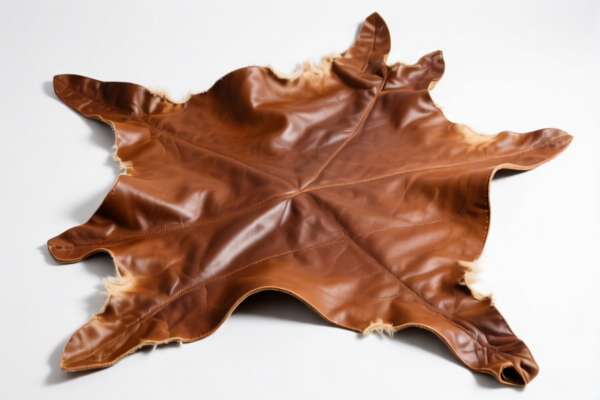
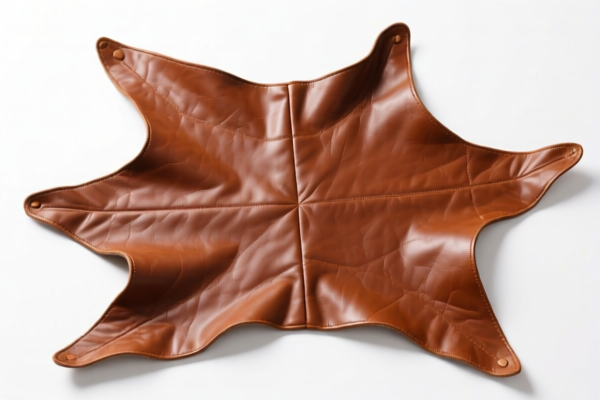
AI Analysis
🥩 Raw Leather: The Foundation of Luxury & Industry
🌐 HS Code Reference & Customs Clearance Guide | 2026 Latest Tariff Analysis | Professional Clearance Strategy
📌 Part 1: Product Definition & Classification: Do You Really Know "Raw Leather"?
Raw leather, specifically under HS Code 4101503000, refers to raw leather of non-bovine, non-equine, and non-ovine origin. This includes hides/skins from goats, sheep (excluding ovine classification in some contexts), or other animals, used primarily in the production of finished leather goods, footwear, or accessories.
In international trade, raw leather is distinguished by its state: * Not Tanned: It has not undergone the tanning process to become permanent leather. * Preserved: It may be fresh, salted, dried, limed, pickled, or otherwise preserved to prevent decay. * Exclusions: Explicitly excludes bovine (cow/buffalo), equine (horse/donkey), and standard ovine (sheep/goat in specific legal definitions) hides which have different tariff treatments.
⚠️ Key Distinction:
- If the leather is from cattle, buffalo, or horses → It falls under 4101.50.10 or 4101.50.35 (Different tariffs).
- If the leather is from goats or other specified animals (and fits the weight/size criteria) → It falls under 4101.50.30.00 (This guide).
- Note on HS Code Formats:4101503000and4101.50.30.00refer to the same classification.
📦 Part 2: HS Code Classification Details (2026 Latest Tariff Authority Comparison)
Based on the provided data, here are the relevant HS Codes for raw leather, with a focus on 4101503000.
| HS Code | Product Description | Applicable Scenario | Key Characteristics |
|---|---|---|---|
4101.50.30.00 (Also listed as 4101503000) |
Raw leather of other animals (excluding bovine, equine, ovine) | Goat skins, sheep skins (non-ovine), exotic animal hides | • Weight > 16 kg (if whole hides) • Surface area ≤ 2.6 m² • Not tanned/parchment-dressed |
4101.50.10.00 |
Raw leather of bovine origin (e.g., cattle, buffalo) | Cow hides, buffalo hides | • Excluded from 4101503000 • Tax info: Error/Failed to retrieve in source data |
4101.50.35.00 |
Raw hides/skins of bovine (including buffalo) | Buffalo hides specifically | • Excluded from 4101503000 • Tax: 0.0% (Base + Add-on) |
🔍 Crucial Note:
-4101.50.30.00is the specific code for "Other" raw leathers (like goats, certain sheep) that do not fall under the primary bovine/equine/ovine exclusions in this specific tariff line.
- Do not confuse with4101.50.35.00which is specifically for Buffalo hides (tariff 0%).
- Do not confuse with Bovine hides (Tariff info missing/Error in source, but typically 2.4% base + 7.5% add-on similar to 4101503000 if following standard patterns, but data says "Error").
💰 Part 3: 2026 Latest Tariff Rate Breakdown (Including Add-ons)
✅ Applicable Product: Raw Leather (HS
4101503000/4101.50.30.00)
✅ Exclusions: Bovine, Equine, Ovine (covered under different codes)
✅ Status: Data retrieved successfully
🎯 1. 4101.50.30.00 (Raw Leather of Other Animals)
| Item | Content |
|---|---|
| Base Tariff | 2.4% (Ad Valorem) |
| Add-on Tariff | 7.5% (Specific surcharge, likely Section 301 or similar) |
| Total Tax Rate | 9.9% |
| Tax Calculation | CIF Value × 9.9% |
| Legal Basis | Base: 2.4% + Add-on: 7.5% |
📌 Explanation:
- The 9.9% total tax rate is a critical cost factor for importers.
- This rate applies to raw hides/skins from non-bovine, non-equine, non-ovine sources (e.g., goats, certain sheep, exotic leathers).
- Do not apply this rate to Buffalo hides (4101.50.35.00), which have a 0.0% rate. Misclassification can lead to overpayment or underpayment penalties.
🛠️ Part 4: Customs Clearance Practical Advice (Real-World Pitfall Guide)
✅ 1. Documentation Checklist (Non-Negotiable)
| Document | Required? | Description |
|---|---|---|
| ✅ Commercial Invoice | ✔️ | Must clearly state: "Raw Leather, [Animal Origin], Preserved, Not Tanned" |
| ✅ Packing List | ✔️ | Detail weight per hide, total hides, and packaging type |
| ✅ Species Declaration | ✔️ | Critical: Must specify animal origin (e.g., "Goat", "Sheep") to distinguish from Bovine/Equine |
| ✅ Processing Status Certificate | ✔️ | Confirm: "Not Tanned, Not Parchment-Dressed, Not Further Prepared" |
| ✅ Preservation Method | ✔️ | Specify: Fresh, Salted, Dried, Limed, or Pickled |
| ✅ Weight & Size Data | ✔️ | Whole hides > 16 kg? Surface area ≤ 2.6 m²? (Impacts sub-classification) |
| ❌ Tanned Leather Cert | ❌ | Do NOT provide tanning certificates, as this is raw leather |
✅ 2. Declaration Tips (Key Mantras)
🔥 "Animal Origin First, State Second, Weight Third!"
| Scenario | Correct Declaration | Wrong Action |
|---|---|---|
| Goat Skin Raw | 4101.50.30.00 |
Misdeclare as Bovine → Risk of audit/penalty |
| Buffalo Hide | 4101.50.35.00 |
Use 4101.50.30.00 → Pay 9.9% instead of 0% |
| Bovine Hide | 4101.50.10.00 (Data Error) |
Use 4101.50.30.00 → Incorrect classification |
| Tanned Leather | Not in this HS Chapter (Chapter 41, but different code) | Declare as "Raw Leather" → Severe penalty |
✅ 3. Special Case Handling
| Situation | Handling Advice |
|---|---|
| Mixed Hides (Goat + Cow) | Do not mix in one shipment under one HS Code. Separate by origin or declare correctly per piece. |
| Salted vs. Fresh | Both can be 4101.50.30.00, but ensure "Salted" is declared to justify preservation. |
| Ovine (Sheep/Goat) Ambiguity | If legally classified as "Ovine" in the target market, it may fall outside 4101.50.30.00. Consult local tariff notes. |
| Small Pieces/Scrap | If < 16 kg or fragmented, may fall under different subheadings (e.g., 4101.50.90). Check full 10-digit code. |
🌍 Part 5: Global Market Comparison (2026 Latest)
| Country/Region | Recommended HS Code | Tariff Rate | Certification Requirements | Notes |
|---|---|---|---|---|
| 🇺🇸 USA | 4101.50.30.00 |
9.9% (2.4% Base + 7.5% Add-on) | No specific, but origin docs required | High accuracy needed to avoid misclassification |
| 🇨🇳 China | 4101.50.30.00 |
9.9% (Import Duty) | None specific | Consistent with international HS |
| 🇪🇺 EU | 4101.90 (General) |
Varies | CE/RoHS not applicable for raw | Raw leather has different sub-codes in EU |
| 🇬🇧 UK | 4101.50.30 |
Check post-Brexit tariffs | None | Post-Brexit tariff regime applies |
📌 Conclusion:
- Tariff Accuracy is Paramount: A misclassification between Buffalo (4101.50.35.00, 0%) and Other Raw Leather (4101.50.30.00, 9.9%) can cost 9.9% of the shipment value.
- Origin Documentation is the single most important document to justify the 9.9% rate vs. 0% rate.
📌 Part 6: Common Errors & Pitfall Guide (Lessons Learned)
❌ Mistake 1: Classifying Buffalo Hides under 4101.50.30.00
👉 Consequence: Pay 9.9% tax instead of 0% → Unnecessary Cost Increase
❌ Mistake 2: Classifying Bovine Hides under 4101.50.30.00
👉 Consequence: Classification error → Customs Audit, Delay, Potential Penalty
❌ Mistake 3: Declaring Tanned Leather as "Raw Leather"
👉 Consequence: Wrong HS Code → Severe Penalty, Goods Seized
❌ Mistake 4: Omitting Animal Origin on Invoice
👉 Consequence: Customs cannot verify tax rate → Default to highest rate or hold goods
✅ Correct Practice:
"Raw Goat Skins, Salted, Not Tanned, Whole Hides, 18kg avg, HS 4101.50.30.00"
🎯 Part 7: Conclusion: Precision Saves Money!
🎯 Remember the Mantra:
🔹 "Buffalo is 0%, Other is 9.9%, Bovine is Separate!"
🔹 "HS Code 4101503000 = Goat/Other Raw Leather = 9.9% Tax"
🔹 "Declare Animal Origin Clearly to Avoid Penalties!"
📌 Pro Tip:
If your raw leather is from Buffalo, ensure you declare it under 4101.50.35.00 to benefit from the 0.0% tariff.
For Goat/Other raw leather, prepare for a 9.9% total tax burden.
📣 Action Required:
📞 Contact Customs Broker + Provide Animal Origin + Verify Preservation Method
🚀 Ensure Accurate Classification to Optimize Costs and Clearance Speed!
✨ Professional Clearance Starts with Accurate Classification!
💼 Every Percent of Tax Matters!
Customer Reviews
About HS Code Classification
The Harmonized System (HS) is an internationally standardized nomenclature developed by the World Customs Organization (WCO) to classify traded products. Over 200 countries use the HS system as the basis for customs tariffs, trade statistics, and import/export regulations.
Each HS code follows a hierarchical structure:
- Chapter (2 digits) — Broad category of goods (e.g., Chapter 84: Machinery and Mechanical Appliances)
- Heading (4 digits) — More specific grouping within the chapter
- Subheading (6 digits) — Internationally standardized breakdown, used by all WCO member countries
- National subdivisions (8-10 digits) — Country-specific extensions for further classification, such as US HTSUS 10-digit codes
Correct HS code classification is essential for smooth customs clearance, accurate duty payment, and compliance with trade regulations. Misclassification can lead to customs delays, overpayment of duties, or penalties.
When importing from CN to US, the applicable tariff rates may include:
- Most-Favored-Nation (MFN) rate — The standard duty rate applied to WTO members
- General rate — Applied to countries without trade agreements
- Trade remedy duties — Additional tariffs such as Section 301 (anti-dumping), Section 232 (national security), or countervailing duties
The information provided on this page is for reference purposes only. For official classification, please consult with your local customs authority or a licensed customs broker.