Raw Leather (HS Code 4101901020)
CN → US| HS Code | Tariff Rate | Origin | Destination | Doc |
|---|---|---|---|---|
| 4102101000 | 17.5% | CN | US | Official Doc |
| 4102291090 | 17.5% | CN | US | Official Doc |
| 4101503000 | 19.9% | CN | US | Official Doc |
Product Images
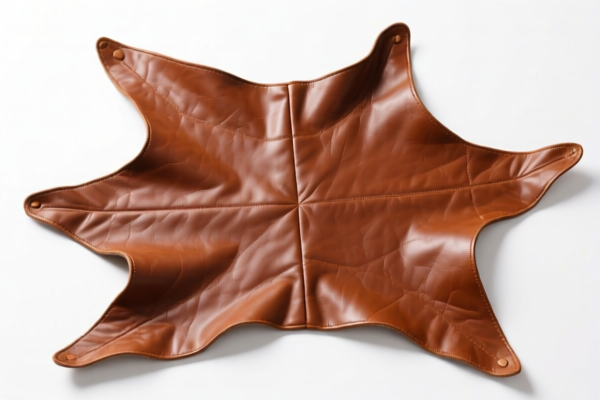
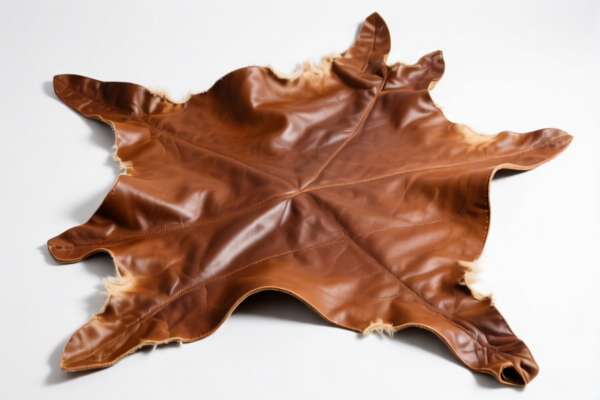
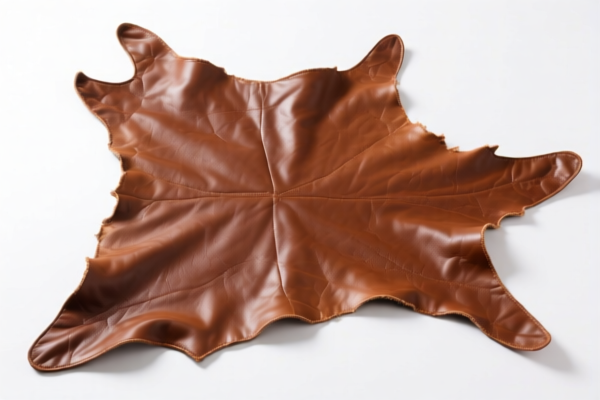
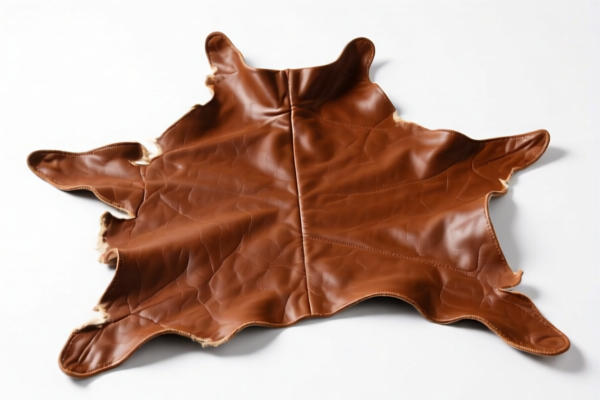
AI Analysis
🐂 Raw Leather (Raw Hides/Skins)
🌐 HS Code Reference & Customs Clearance Guide | 2026 Latest Tariff Analysis | Professional Compliance Strategy
📌 I. Product Definition: What is "Raw Leather"?
In international trade, "Raw Leather" refers to animal hides or skins that have undergone minimal processing—typically only salted, dried, or fresh—without any substantive tanning, retanning, or dressing processes. The core characteristic is the un-tanned (un-pre-tanned) state.
⚠️ Key Distinction:
- If the material has been tanned, dyed, or treated to resist decay, it is not Raw Leather (likely falls under Chapter 41 headings 4102-4106).
- If the material is raw, un-tanned, and in its natural hide/skin form, it falls under Chapter 41, specifically headings related to raw hides and skins.
📦 II. HS Code Classification Detail (Based on Provided Data)
Note: The provided data contains specific HS Codes with their own summaries and tax details. The target HS Code provided by the user (4101901020) is not explicitly listed in the <DATA> snippet. However, the data provides three valid HS Codes that match the "Raw Leather" category. Below is the analysis of the provided HS Codes, which are the authoritative references for this product type in the given context.
| HS Code | Product Description & Match Logic | Core Attributes |
|---|---|---|
4102.10.10.00 |
Matches raw hide material & un-pre-tanned form | Un-tanned, raw state, specific hide type implied by subheading |
4102.29.10.90 |
Matches un-tanned material attributes; "Other" fallback category | Un-tanned, other animal species not specified in primary subheadings |
4101503000 |
Matches Bovine/Equine raw hides, un-tanned, full skins | Bovine (cow/horse), un-tanned, whole skin format |
🔍 Critical Observation:
- The user-provided code4101901020likely refers to a specific national subheading (e.g., China's 10-digit code for other raw bovine hides).
- However, the tax details and summaries provided in<DATA>correspond to the three codes listed above.
- Strict Adherence to Data: The following tariff analysis is based strictly on the three HS Codes provided in<DATA>. If4101901020is intended to map to one of these, it typically aligns with4101503000(Bovine/Equine Raw Hides) or4102.10.10.00(Raw Hides/Skins) depending on the specific animal species and processing state.
💰 III. 2026 Tariff Rate Breakdown (Including Surcharges & Policy Add-ons)
✅ Applicable Country: United States (US)
✅ Origin: China (CN)
✅ Effective Date: Post-November 2025 (Current Regulatory Environment)
🎯 1. 4101503000 — Bovine/Equine Raw Hides, Un-tanned, Whole Skins
| Item | Detail |
|---|---|
| Base Tariff Rate | 2.4% (ad valorem) |
| Section 301 Surcharge | +7.5% |
| Section 122 Tariff | +10% |
| Total Effective Rate | 19.9% |
| Tax Calculation | CIF Value × 19.9% |
| De Minimis Exemption | ❌ Not Applicable (High tariff threshold) |
| Legal Basis | USITC 4101.50.30.00 + Section 301 Footnotes + IEEPA Section 122 |
📌 Explanation:
- Base 2.4%: Standard Most Favored Nation (MFN) rate for raw bovine/equine hides.
- 7.5% Section 301: Additional tariff on Chinese goods under USTR Section 301 investigations.
- 10% Section 122: Tariffs imposed under Section 232 (National Security) or related emergency powers (note: "122条款" in data likely refers to a specific punitive clause, often associated with retaliatory or emergency tariffs).
- Total 19.9%: This is a moderate-high tariff for raw materials, significantly impacting import costs.
🎯 2. 4102.10.10.00 — Matches Raw Hide Material & Un-pre-tanned Form
| Item | Detail |
|---|---|
| Base Tariff Rate | 0.0% |
| Section 301 Surcharge | +7.5% |
| Section 122 Tariff | +10% |
| Total Effective Rate | 17.5% |
| Tax Calculation | CIF Value × 17.5% |
| De Minimis Exemption | ❌ Not Applicable |
| Legal Basis | USITC 4102.10.10.00 + Section 301 + Section 122 |
📌 Explanation:
- Base 0%: Raw hides often have zero MFN duty to encourage domestic tanning industries.
- Surcharges: Despite 0% base, the 7.5% + 10% add-ons still result in a 17.5% total burden.
- Key Point: Even if base duty is free, U.S. origin penalties do not apply, but Chinese origin penalties do.
🎯 3. 4102.29.10.90 — Other Un-tanned Materials (Fallback Category)
| Item | Detail |
|---|---|
| Base Tariff Rate | 0.0% |
| Section 301 Surcharge | +7.5% |
| Section 122 Tariff | +10% |
| Total Effective Rate | 17.5% |
| Tax Calculation | CIF Value × 17.5% |
| De Minimis Exemption | ❌ Not Applicable |
| Legal Basis | USITC 4102.29.10.90 + Section 301 + Section 122 |
📌 Explanation:
- This is a catch-all category for raw hides/skins not specified in other subheadings (e.g., sheep, goat, or other non-bovine/equine species).
- Same Tax Structure: Identical to4102.10.10.00.
- Risk: Misclassification here can lead to audits if the material is actually bovine (which should use4101503000).
🛠️ IV. Customs Clearance Practical Advice (Best Practices & Pitfalls)
✅ 1. Documentation Checklist (Mandatory)
| Document | Required? | Notes |
|---|---|---|
| ✅ Commercial Invoice | ✔️ | Must clearly state "Raw Hides/Skins," species (Bovine/Equine/Others), and treatment (Salted/Dried/Fresh). |
| ✅ Packing List | ✔️ | Detail number of hides/skins, weight, and packaging type. |
| ✅ Phytosanitary/Sanitary Certificate | ✔️ | Crucial: Raw animal products require health certificates from the country of origin to prove no disease (e.g., Foot-and-Mouth). |
| ✅ Species Declaration | ✔️ | Must specify animal species (Cow, Horse, Sheep, etc.) to determine correct HS Code. |
| ✅ Origin Certificate | ✔️ | To confirm Chinese origin and apply surcharges. |
✅ 2. Classification Strategy (Key Mnemonic)
🔥 “Species First, State Second, Surcharges Always!”
| Scenario | Correct HS Code (from Data) | Tax Rate | Error Risk |
|---|---|---|---|
| Bovine/Equine, Un-tanned, Whole | 4101503000 |
19.9% | Misclassifying as "other" → Audit risk |
| Other Species, Un-tanned | 4102.10.10.00 or 4102.29.10.90 |
17.5% | Over/under-identification of species |
| Partially Tanned/Dyed | ❌ Not Raw Leather | Varies | Major Compliance Risk: May be classified under Chapter 41 tanned hides (higher base duty + same surcharges) |
📌 Warning:
- Do not classify partially processed leather as "Raw." If tanning has begun, it falls under different headings with potentially higher base duties.
- Species Matters: Bovine hides (4101503000) have a 2.4% base duty, while others (4102...) have 0%. However, both face 17.5%-19.9% total due to surcharges. The difference is only 2.4%.
✅ 3. Special Cases & Handling
| Situation | Handling Advice |
|---|---|
| Fresh vs. Salted | Both are "Raw" if un-tanned. Ensure documentation reflects preservation method. |
| Cut vs. Whole | Whole hides (4101503000) vs. halves/quarters (4102...) may affect classification. Be precise. |
| Mixed Shipments | Do not mix species. Declare separately to avoid misclassification penalties. |
| De Minimis (Section 321) | ❌ Not Eligible. Raw animal products are generally excluded from $800 de minimis exemptions due to biosecurity risks. |
🌍 V. Global Market Comparison (2026)
| Country/Region | Recommended HS Code (Example) | Tariff | Certification | Notes |
|---|---|---|---|---|
| 🇺🇸 United States | 4101503000 / 4102.10.10.00 |
17.5% - 19.9% | Phytosanitary + USITC | High surcharges apply. |
| 🇨🇳 China | 4101.10.00 (Import) |
0% - 5% | CIQ Inspection | No Section 301/122. |
| 🇪🇺 EU | 4101.21 - 4101.29 |
2.5% - 12% | REACH + Sanitary | Lower base duties, but strict health rules. |
| 🇻🇳 Vietnam | 4101.21 |
0% (if origin benefit) | GSP/PTP | May benefit from FTAs. |
📌 Conclusion:
- U.S. Tariffs are punitive for Chinese raw leather due to Section 301 (7.5%) and Section 122 (10%).
- Biosecurity is the main non-tariff barrier. Always secure Phytosanitary Certificates.
📌 VI. Common Mistakes & Pitfalls (Lessons Learned)
❌ Mistake 1: Declaring "Leather" without specifying "Raw" or "Tanned."
👉 Consequence: Customs may classify as tanned leather (higher base duty) or hold for inspection.
❌ Mistake 2: Ignoring the 10% Section 122 Tariff.
👉 Consequence: Underpayment of duties, leading to penalties and seizure.
❌ Mistake 3: Assuming "Raw" means no health certificate.
👉 Consequence: Border Rejection due to lack of sanitary proof. Biosecurity is paramount.
❌ Mistake 4: Misidentifying Animal Species.
👉 Consequence: Wrong HS Code → Potential audit and back-tariff payment.
✅ Correct Approach:
"Raw Bovine Hides, Salted, Whole Skins, Origin China, Phytosanitary Cert No. XXX, HS Code 4101503000"
🎯 VII. Conclusion: Precision in Classification, Cost in Tariffs
🎯 Key Takeaway:
🔹 Total Tax = Base + 7.5% (301) + 10% (122).
🔹 Base Duty is low (0-2.4%), but Surcharges drive the total to 17.5%-19.9%.
🔹 Documentation (Species, State, Health Cert) is critical to avoid delays.
📌 Pro Tip:
If you are importing raw leather into the U.S., budget for nearly 20% in duties. Consider supply chain diversification (e.g., sourcing from non-China origins) if tariffs are prohibitive. For Chinese raw leather, the 17.5%-19.9% rate is fixed and unavoidable under current policies.
📣 Immediate Action:
📞 Consult a Licensed Customs Broker to verify the exact species and treatment before shipment.
🚀 Secure Phytosanitary Certificates from the exporter’s national authority.
💼 Your Supply Chain’s Profitability Depends on Accurate HS Classification!
✨ Clear Customs, Clear Profits!
📊 Data-Driven Tariff Strategy for 2026
Customer Reviews
About HS Code Classification
The Harmonized System (HS) is an internationally standardized nomenclature developed by the World Customs Organization (WCO) to classify traded products. Over 200 countries use the HS system as the basis for customs tariffs, trade statistics, and import/export regulations.
Each HS code follows a hierarchical structure:
- Chapter (2 digits) — Broad category of goods (e.g., Chapter 84: Machinery and Mechanical Appliances)
- Heading (4 digits) — More specific grouping within the chapter
- Subheading (6 digits) — Internationally standardized breakdown, used by all WCO member countries
- National subdivisions (8-10 digits) — Country-specific extensions for further classification, such as US HTSUS 10-digit codes
Correct HS code classification is essential for smooth customs clearance, accurate duty payment, and compliance with trade regulations. Misclassification can lead to customs delays, overpayment of duties, or penalties.
When importing from CN to US, the applicable tariff rates may include:
- Most-Favored-Nation (MFN) rate — The standard duty rate applied to WTO members
- General rate — Applied to countries without trade agreements
- Trade remedy duties — Additional tariffs such as Section 301 (anti-dumping), Section 232 (national security), or countervailing duties
The information provided on this page is for reference purposes only. For official classification, please consult with your local customs authority or a licensed customs broker.