Raw Sheepskin (Pickled)
CN → USProduct Images
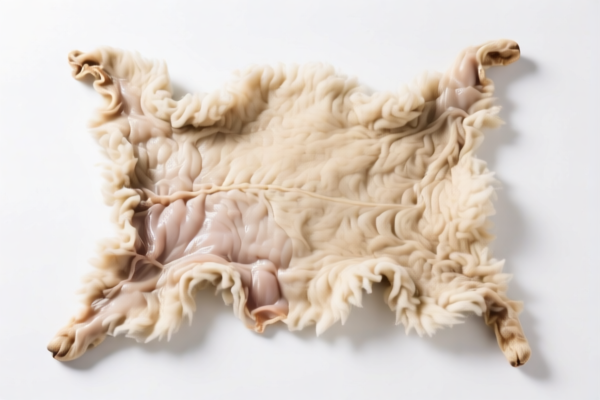
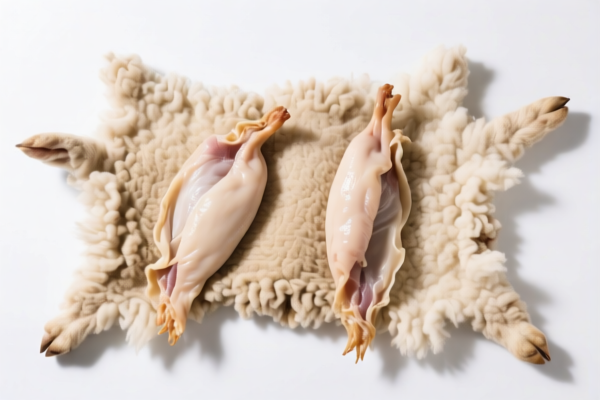
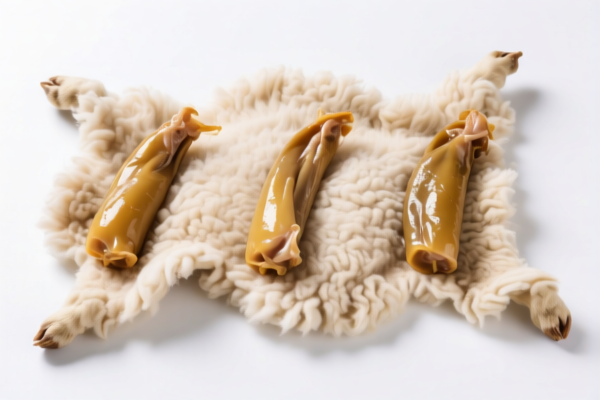
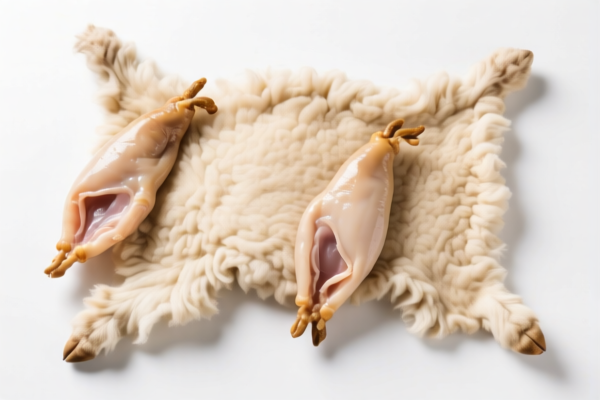
AI Analysis
🐑 Raw Sheepskin (Pickled)
🌐 HS Code Reference & Customs Clearance Guide | 2026 Latest Tariff Analysis | Professional Clearance Strategy
📌 Part I: Product Definition & Classification: What Exactly is "Pickled Sheepskin"?
Raw Sheepskin (Pickled) is a semi-processed animal hide that has undergone a specific preservation process to prevent rotting during international transit. Unlike fresh hides, pickled skins are treated with salt and acid (typically sulfuric acid) to lower the pH and stabilize the collagen structure.
In international trade, classification depends heavily on processing depth: * Pickled Skins (HS 4104): Hides that have been cured with salt and acid but not tanned, chromium-plated, or further dressed. They are still in a raw state but stabilized. * Tanned/Dressed Skins (HS 4105/4107): If the sheepskin has undergone chrome tanning or vegetable tanning, it is no longer "pickled" but "tanned."
⚠️ Key Distinction Point:
- If the skin is acid-salted (pickled) and not tanned →归入 4104 series.
- If the skin is Chrome Tanned → 归入 4105.30 series.
- If the skin is Vegetable Tanned → 归入 4105.40 series.
📦 Part II: HS Code Classification Details (2026 Latest Tariff Authority Comparison)
| HS Code | Product Description | Application Scenario | Processing Status |
|---|---|---|---|
4104.41.00.00 |
Sheep and lamb skins, pickled, without hair on | Industrial leather backing, non-decorative uses | ✅ Pickled only (No hair) |
4104.49.00.00 |
Other sheep and lamb skins, pickled | Standard pickled sheepskins with hair on | ✅ Pickled only (With hair) |
4105.30.10.00 |
Chrome-tanned sheepskins, without hair on | Fashion leather, gloves, jackets | ✅ Tanned (Chrome) |
4105.30.90.00 |
Chrome-tanned sheepskins, with hair on | Shearling coats, lined gloves | ✅ Tanned (Chrome) |
4106.22.00.00 |
Sheep and lamb skins, tanned or dressed (other than chrome) | High-end leather goods, shoes | ✅ Tanned (Vegetable/Aldehyde) |
🔍 Important Reminder:
- "Pickled" means only salted and acidified. It is NOT tanned.
- If you declare4104but the goods are actually tanned, customs may reject the entry or reclassify, leading to higher duties and penalties.
- Ensure the Commercial Invoice clearly states "Pickled, Not Tanned" to avoid confusion with tanned leather.
💰 Part III: 2026 Latest Tariff Rate Details (Including Surtaxes & Policy Add-ons)
✅ Applicable Country: United States (US)
✅ Country of Origin: China (CN)
✅ Effective Date: November 10, 2025 (and subsequent imports)
🎯 1. 4104.41.00.00 & 4104.49.00.00 —— Pickled Sheepskins (Without/With Hair)
| Item | Content |
|---|---|
| Base Tariff Rate | 0% (Ad Valorem) |
| USITC Surtax | +25% (Under USITC Footnote 9903.41.00) |
| IEEPA Surtax | +10% (For Chinese/HK products, effective Nov 10, 2025) |
| Total Tax Rate | 45% |
| Tax Calculation | CIF Value × 45% |
| De Minimis Eligibility | ❌ Not Eligible (deny_de_minimis) |
| Legal Path | IEEPA:9903.01.25 → IEEPA:9903.01.24 → USITC:4104.41.00.00 → FOOTNOTE:9903.41.00 |
📌 Explanation:
- The 25% USITC surtax is part of the Section 301 tariffs on Chinese leather products.
- The 10% IEEPA surtax is an additional penalty on Chinese-origin goods.
- Total 45% is a high duty rate, requiring advance cost planning.
🎯 2. 4105.30.xx.xx —— Chrome-Tanned Sheepskins (If Misclassified as Pickled)
| Item | Content |
|---|---|
| Base Tariff Rate | 0% |
| USITC Surtax | +25% |
| IEEPA Surtax | +10% |
| Total Tax Rate | 45% |
| Note | Same tariff rate, but different HS code. Misclassification can lead to customs audits. |
📌 Note:
- Even if tanned, Chinese-origin sheepskins face the same high tariff burden.
- However, tanned leather is more versatile for end-use, whereas pickled skins require further processing.
🛠️ Part IV: Customs Clearance Practical Advice (Real-World Pitfall Guide)
✅ 1. Required Documentation Checklist (All are Mandatory)
| Document | Mandatory | Description |
|---|---|---|
| ✅ Commercial Invoice | ✔️ | Must state: "Sheepskins, Pickled, Not Tanned, Country of Origin: China" |
| ✅ Packing List | ✔️ | Detail gross/net weight, number of skins, and dimensions |
| ✅ Certificate of Origin | ✔️ | Proof of Chinese origin to confirm tariff applicability |
| ✅ Processing Certificate | ✔️ | Crucial! Must confirm "Pickled Only" and "No Chrome/Vegetable Tanning" |
| ✅ Phytosanitary Certificate | ✔️ | Required by USDA for animal products |
| ✅ Fumigation Certificate | ✔️ | Required if wood packaging is used |
| ✅ Product Photos | ✔️ | Clear images of skins showing texture, hair, and any markings |
✅ 2. Declaration Tips (Key Mnemonics)
🔥 "Pickled is Raw, Tanned is Done. Don't Mix Them Up!"
| Situation | Correct Declaration | Wrong Practice |
|---|---|---|
| Pickled Sheepskins | 4104.49.00.00 (Pickled) |
Misdeclare as 4105.30.90.00 (Tanned) → Risk of audit |
| Chrome-Tanned Sheepskins | 4105.30.90.00 (Tanned) |
Misdeclare as "Pickled" → Customs will reject |
| Sheepskins with Wood Packaging | Include Fumigation Cert | Omit Fumigation Cert → Delay or Destruction |
| Mixed Batches (Pickled + Tanned) | Declare Separately | Mix in one invoice → Confusion and potential penalties |
✅ 3. Special Cases Handling
| Situation | Handling Advice |
|---|---|
| OEM Custom Pickling | Provide processing details to prove "Pickled" status, not Tanned |
| Sheepskins for Medical Use | May require additional FDA documentation if for human use |
| Sheepskins for Luxury Goods | Ensure no prohibited chemicals (e.g., Chromium VI) are present in pickling process |
| Sheepskins for Export to US | Plan for 45% tariff; consider sourcing from non-China origins if possible |
🌍 Part V: Global Market Clearance Comparison (2026 Latest)
| Country/Region | Recommended HS Code | Tariff Rate | Certification Requirements | Remarks |
|---|---|---|---|---|
| 🇺🇸 USA | 4104.49.00.00 |
45% (China) | USDA + Phytosanitary | High duty; strict origin control |
| 🇨🇳 China | 4104.49.00.00 |
0% | None | Duty-free import for raw hides |
| 🇪🇺 EU | 4104.49.00 |
0% (If GSP) | REACH + CE | Zero duty under GSP for some Chinese goods |
| 🇦🇺 Australia | 4104.49.00 |
5% | Biosecurity Approval | Strict biosecurity checks |
| 🇯🇵 Japan | 4104.49.00 |
0% | Phytosanitary | Zero duty under JEPA |
📌 Conclusion:
- USA is the most challenging market due to 45% total tariffs.
- EU, Japan, and Australia offer more favorable conditions, but biosecurity and chemical regulations (REACH) are strict.
- China imports raw hides duty-free, making it a major hub for further processing.
📌 Part VI: Common Errors & Pitfall Guide (Blood Lessons)
❌ Error 1: Declaring "Tanned Sheepskin" when goods are "Pickled"
👉 Consequence: Customs may seize goods for misdeclaration or impose penalties for false origin/processing claims.
❌ Error 2: Missing Phytosanitary Certificate
👉 Consequence: USDA will block entry or order fumination/destruction at importer's cost.
❌ Error 3: Not declaring "Country of Origin" clearly
👉 Consequence: Cannot apply correct tariff; may be charged highest general rate.
❌ Error 4: Using "Leather" instead of "Sheepskin" in description
👉 Consequence: Vague description leads to customs query and delay.
✅ Correct Practice:
"Sheepskins, Pickled, Not Tanned, With Hair On, Chinese Origin, 100 Sheets, Net Weight 500kg"
🎯 Part VII: Conclusion: Professional Declaration, Save Time and Money!
🎯 Remember the Mantra:
🔹 "Pickled is Raw, Tanned is Done. Don't Mix Them Up!"
🔹 "45% Tax for China, Zero for EU. Plan Ahead!"
🔹 "Phytosanitary is Key, No Cert, No Entry!"
📌 Pro Tip:
If your sheepskins are originally from Australia, New Zealand, or Argentina, you can apply for preferential tariff rates (0% in many cases).
Recommend pre-classification (Advance Ruling) from US Customs to avoid clearance risks.
📣 Immediate Action:
📞 Contact Professional Customs Broker + Provide Product Photos + Apply for HS Code Advance Ruling
🚀 Let your sheepskins clear smoothly, efficiently, and profitably!
✨ Professional Clearance Starts with Accurate Classification!
💼 Every Dollar of Cost Deserves Precise Calculation!
Customer Reviews
About HS Code Classification
The Harmonized System (HS) is an internationally standardized nomenclature developed by the World Customs Organization (WCO) to classify traded products. Over 200 countries use the HS system as the basis for customs tariffs, trade statistics, and import/export regulations.
Each HS code follows a hierarchical structure:
- Chapter (2 digits) — Broad category of goods (e.g., Chapter 84: Machinery and Mechanical Appliances)
- Heading (4 digits) — More specific grouping within the chapter
- Subheading (6 digits) — Internationally standardized breakdown, used by all WCO member countries
- National subdivisions (8-10 digits) — Country-specific extensions for further classification, such as US HTSUS 10-digit codes
Correct HS code classification is essential for smooth customs clearance, accurate duty payment, and compliance with trade regulations. Misclassification can lead to customs delays, overpayment of duties, or penalties.
When importing from CN to US, the applicable tariff rates may include:
- Most-Favored-Nation (MFN) rate — The standard duty rate applied to WTO members
- General rate — Applied to countries without trade agreements
- Trade remedy duties — Additional tariffs such as Section 301 (anti-dumping), Section 232 (national security), or countervailing duties
The information provided on this page is for reference purposes only. For official classification, please consult with your local customs authority or a licensed customs broker.