Raw Silk (Hilco)
CN → US| HS Code | Tariff Rate | Origin | Destination | Doc |
|---|---|---|---|---|
| 5002000000 | 35.0% | CN | US | Official Doc |
| 5002000000 | 35.0% | CN | US | Official Doc |
Product Images
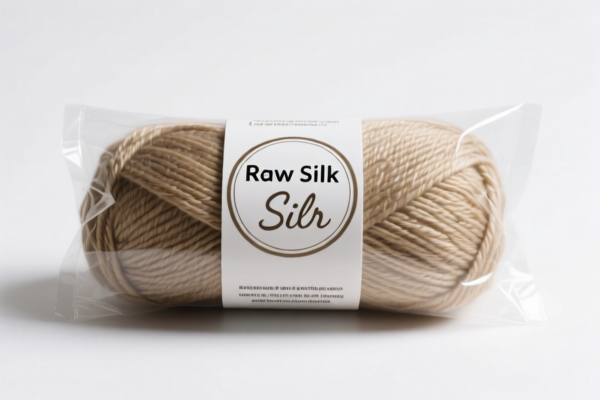
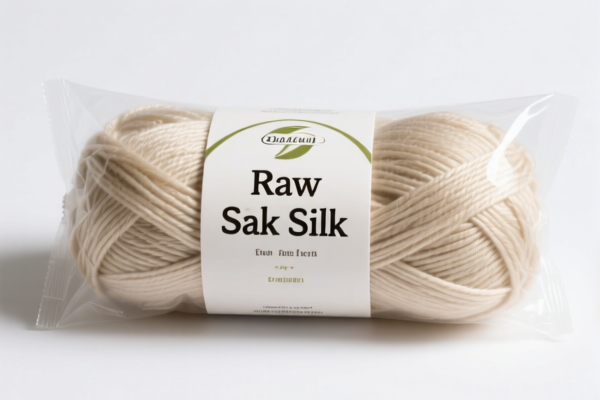
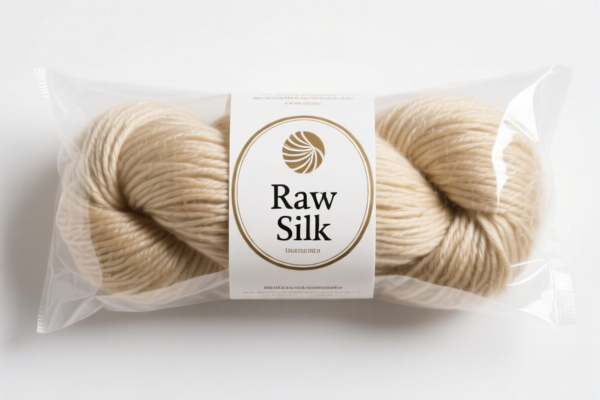
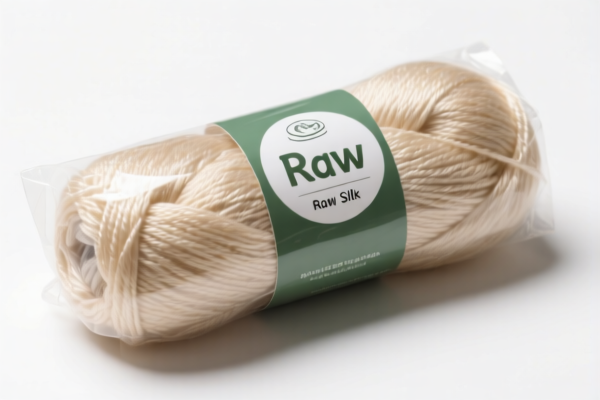
AI Analysis
🧵 Raw Silk (Not Thrown) - Hilco Variety
🌐 HS Code Reference & Customs Clearance Guide | 2026 Latest Tariff Analysis | Professional Entry Strategy
📌 I. Product Definition & Classification: Do You Understand "Raw Silk"?
Raw Silk (Not Thrown) refers to silk fibers that have been reeled from cocoons but have not yet been twisted, laid up, or processed into yarn/thread. In international trade, this is a specific chemical/physical state distinct from "Thrown Silk" (yarn).
The term "Hilco" (often associated with Hilco Trading or specific high-grade mulberry silk lots) generally denotes high-quality, long-staple, naturally colored or processed raw silk filaments. It is still classified under the general heading of raw silk unless heavily processed into fabric or finished yarn, which it is not.
⚠️ Key Distinction:
- Raw Silk (5002): Single filaments or skeins, no twist added. Used for weaving, spinning, or further processing.
- Thrown Silk (5003/5004/5005): Two or more filaments twisted together to form yarn.
- Fabric/Yarn (5007/5008+): Further processed into finished goods.Since the input specifies "Raw Silk (Hilco)" and the data points to 5002, we focus on the un-twisted state.
📦 II. HS Code Classification Details (2026 Latest Tariff Authority Match)
Based strictly on the provided <DATA>, the classification is unified:
| HS Code | Product Description | Applicable Scenario | Processing State |
|---|---|---|---|
5002.00.00.00 |
Raw Silk (Not Thrown) | High-grade mulberry silk (e.g., Hilco brand), silkworm cocoons reeled but not twisted | ❌ No Twist |
🔍 Critical Note on "Hilco":
- "Hilco" is a brand or lot identifier, not a separate HS Code category.
- It falls under Chapter 50, Heading 50.02: "Raw Silk (Not Thrown)".
- Regardless of color (natural white, yellow, gold) or length (long, medium, short), if it is not thrown, it belongs to 5002.00.00.00.
💰 III. 2026 Latest Tariff Rate Breakdown (Including Surcharge)
✅ Applicable Country: United States (US)
✅ Origin: China (CN) (Assumed based on typical trade context for Raw Silk imports and the 25% surcharge pattern)
✅ Effective Time: Current trade policy (Section 301 & IEEPA)
🎯 5002.00.00.00 —— Raw Silk (Not Thrown)
| Item | Content |
|---|---|
| Base Duty Rate | 0.0% |
| Additional Surcharge (Section 301 / USITC) | +25.0% |
| IEEPA Surcharge | 0% (Note: Data does not show additional IEEPA for this specific HS code, only the 25% surcharge) |
| Total Tax Rate | 25.0% |
| Tax Calculation | CIF Value × 25% |
| De Minimis Exemption | ❌ Not Applicable (Raw silk is a bulk commodity; low-value shipment exemptions do not apply to this classification in standard commercial imports) |
| Legal Basis Path | USITC:5002.00.00.00 → FOOTNOTE:Section301 |
📌 Explanation:
- Base Duty (0%): Raw silk is a primary agricultural/textile material, often duty-free under base MFN rates.
- Surcharge (25%): Under Section 301 of the Trade Act, certain Chinese-origin textile raw materials face a 25% additional tariff.
- Total Cost Impact: For every $10,000 CIF value, expect $2,500 in duties alone.
🛠️ IV. Customs Clearance Practical Advice (Avoid Pitfalls)
✅ 1. Documentation Checklist (Must-Haves)
| Document | Required? | Description |
|---|---|---|
| ✅ Commercial Invoice | ✔️ | Must clearly state: "Raw Silk, Not Thrown, Hilco Brand/Grade" |
| ✅ Packing List | ✔️ | Detail gross/net weight, bale numbers, and fiber length specifications |
| ✅ Bill of Lading/Air Waybill | ✔️ | Standard shipping docs |
| ✅ Certificate of Origin (CO) | ✔️ | Essential to prove origin; if non-China origin, surcharge may not apply |
| ✅ Product Specification Sheet | ✔️ | Confirm "Not Thrown" status. Include fiber length, denier, and processing stage |
| ✅ Import License (if applicable) | ✔️ | Check if silk imports require specific USDA or customs licenses |
✅ 2. Declaration Tips (Key Mnemonic)
🔥 "Raw = Un-twisted, Hilco = Grade, Not Yarn, 25% Pay!"
| Scenario | Correct Declaration | Common Mistake |
|---|---|---|
| Bulk Raw Silk Bales | 5002.00.00.00 |
Misdeclare as "Silk Yarn" (5004) → Different duties |
| Silk Cocoons (Un-reeled) | 5001.00.00.00 |
Confuse with raw silk → 5001 vs 5002 |
| Hilco Silk Fabric | 5007.10.00.00 |
If already woven, it’s fabric, not raw silk |
| Thrown Silk Thread | 5004.00.00.00 |
If twisted, it’s yarn, different code |
✅ 3. Special Handling for "Hilco" Grade
- Quality Verification: Hilco silk is often premium. Ensure customs understands it’s not mixed with synthetic fibers. If blended, it may shift to Chapter 55 (Synthetics) or 50/55 mix.
- Pest Control: Raw silk may require fumigation certificates to prevent insect damage during transit. Ensure phytosanitary certificates are included if required by US USDA APHIS.
- Moisture Content: Declare moisture content accurately. Over-moisture can lead to weight disputes and duty recalculations.
🌍 V. Global Market Comparison (2026 Latest)
| Country/Region | Recommended HS Code | Duty Rate | Certification Requirement | Remarks |
|---|---|---|---|---|
| 🇺🇸 USA | 5002.00.00.00 |
25% | CO, Fumigation Cert | High surcharge for CN origin |
| 🇪🇺 EU | 5002.00.00 |
0-6.5% | REACH, Organic Cert (if applicable) | Lower base duty, no Section 301 |
| 🇨🇳 China | 5002.00.00 |
5-10% | N/A | Export duty may apply |
| 🇮🇳 India | 5002.00.00 |
0-10% | BIS Standard | Varies by silk type |
📌 Conclusion:
- USA is the most costly market for Chinese raw silk due to the 25% surcharge.
- If sourcing from non-China origins (e.g., India, Brazil, Uzbekistan), the 25% surcharge does not apply, reducing total duty to 0%.
📌 VI. Common Errors & Pitfalls (Lessons Learned)
❌ Error 1: Declaring "Raw Silk" as "Silk Yarn"
👉 Consequence: Wrong HS Code (5004 vs 5002), potential duty difference + penalties.
❌ Error 2: Ignoring the "Not Thrown" specification
👉 Consequence: Customs may require additional documentation or re-classify, causing delays.
❌ Error 3: Mixing Hilco Raw Silk with Synthetic Fibers without disclosure
👉 Consequence: If >50% synthetic, may fall under Chapter 55. Misdeclaration leads to fraud charges.
✅ Correct Approach:
"Raw Silk, Mulberry, Hilco Grade, Not Thrown, 22mm Filament, Bulk Bales, HS 5002.00.00.00, Origin: China"
🎯 VII. Conclusion: Accurate Classification Saves Money!
🎯 Remember:
🔹 "Raw = 5002, Not Thrown = No Twist, Hilco = Brand, 25% = US Tax!"
🔹 "If not twisted, it’s raw. If twisted, it’s yarn. Choose wisely!"
📌 Pro Tip:
- If you are importing non-China origin raw silk (e.g., from India or Italy), you can save the 25% surcharge by providing a valid Certificate of Origin from a non-China source.
- Consider Advance Ruling from US CBP if you have large, recurring shipments of Hilco silk to ensure consistent classification.
📣 Immediate Action:
📞 Contact your customs broker + Provide Product Specs + Verify Origin
🚀 Ensure smooth clearance, avoid 25% surprise costs, and protect your profit margins!
✨ Professional Customs Clearance Starts with Precise Classification!
💼 Your Silk, Your Value, Your Strategy!
Customer Reviews
About HS Code Classification
The Harmonized System (HS) is an internationally standardized nomenclature developed by the World Customs Organization (WCO) to classify traded products. Over 200 countries use the HS system as the basis for customs tariffs, trade statistics, and import/export regulations.
Each HS code follows a hierarchical structure:
- Chapter (2 digits) — Broad category of goods (e.g., Chapter 84: Machinery and Mechanical Appliances)
- Heading (4 digits) — More specific grouping within the chapter
- Subheading (6 digits) — Internationally standardized breakdown, used by all WCO member countries
- National subdivisions (8-10 digits) — Country-specific extensions for further classification, such as US HTSUS 10-digit codes
Correct HS code classification is essential for smooth customs clearance, accurate duty payment, and compliance with trade regulations. Misclassification can lead to customs delays, overpayment of duties, or penalties.
When importing from CN to US, the applicable tariff rates may include:
- Most-Favored-Nation (MFN) rate — The standard duty rate applied to WTO members
- General rate — Applied to countries without trade agreements
- Trade remedy duties — Additional tariffs such as Section 301 (anti-dumping), Section 232 (national security), or countervailing duties
The information provided on this page is for reference purposes only. For official classification, please consult with your local customs authority or a licensed customs broker.