Raw Wool (Wool Fat)
CN → US| HS Code | Tariff Rate | Origin | Destination | Doc |
|---|---|---|---|---|
| 5101112000 | 35.0% | CN | US | Official Doc |
| 5101114000 | 35.0% | CN | US | Official Doc |
| 5101112000 | 35.0% | CN | US | Official Doc |
| 5101114000 | 35.0% | CN | US | Official Doc |
| 5101114000 | 35.0% | CN | US | Official Doc |
Product Images
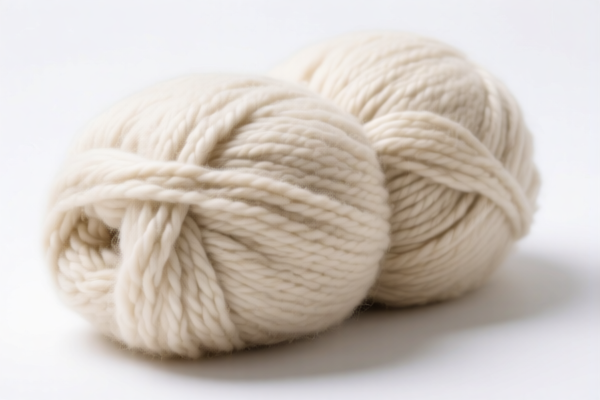
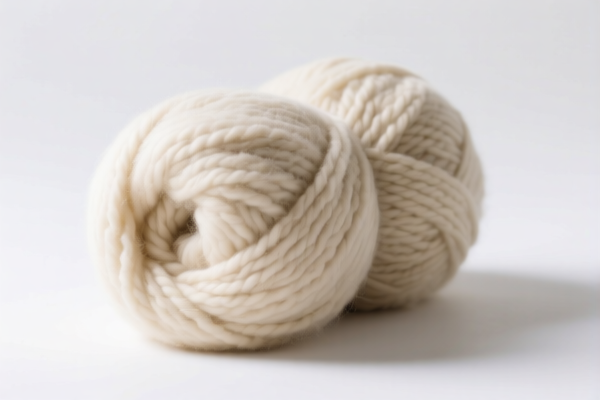
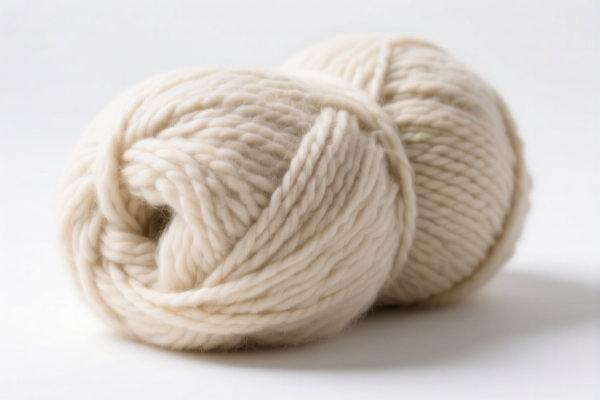
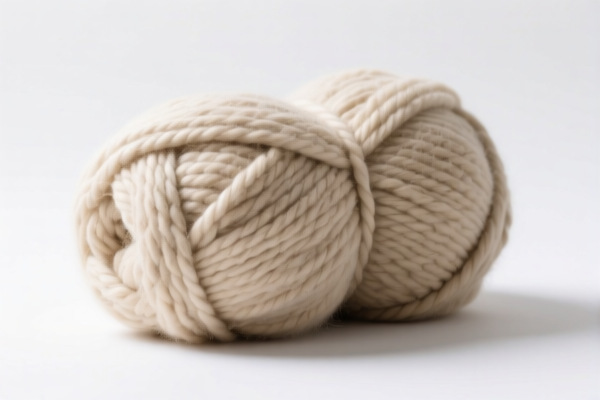
AI Analysis
🐑 Raw Wool & Wool Fat (Greasy, Unimproved Wool)
🌐 HS Code Reference & Customs Clearance Guide | 2026 Latest Tariff Analysis | Professional Entry Strategy
📌 I. Product Definition & Classification: Do You Really Know "Raw Wool"?
Raw wool, often containing natural impurities and wool grease (lanolin), is the primary fiber source for the global textile industry. In international trade, it is strictly categorized based on its fineness (micron count/super number) and processing state.
Key Distinction in Your Data: The classification hinges entirely on the fineness of the wool fibers: 1. Unimproved/Coarse Wool (>40s/46s): Lower value, less refined, higher fiber diameter. 2. Finer Wool (40s-44s): Higher value, finer fibers, suitable for higher-grade textile applications.
⚠️ Critical Classification Point:
- If the wool is not finer than 40s (coarser) → It falls under 5101.11.20.00.
- If the wool is finer than 40s but not finer than 44s → It falls under 5101.11.40.00.
Note: "Unimproved" means it has not been carded, combed, or significantly cleaned beyond basic washing (fleece-washed).
📦 II. HS Code Classification Details (2026 Latest Tariff Authority Comparison)
Based on the provided <DATA>, here are the two specific HS Codes for Greasy, Shorn, Unimproved Wool:
| HS Code | Product Description | Fineness Criterion | Status |
|---|---|---|---|
5101.11.20.00 |
Unimproved wool; other wool, not finer than 40s | Coarser or equal to 40s | Lower Fineness |
5101.11.40.00 |
Other wool, finer than 40s but not finer than 44s | Between 40s and 44s | Higher Fineness |
🔍 Key Reminder:
- "Greasy": Includes fleece-washed wool that still contains natural lanolin and impurities.
- "Shorn Wool": Comes from shearing live sheep (not fallen wool).
- "Unimproved": No carding or combing has been performed.
- Fineness Standard: The "s" number refers to the "Super Number." Generally, lower numbers indicate coarser wool. 40s is the threshold separating the two tax categories in this dataset.
💰 III. 2026 Latest Tariff Rate Details (Detailed Tax Clauses)
✅ Applicable Jurisdiction: United States (US)
✅ Origin: China (CN) (Assumed based on typical 25% additional tariff context)
✅ Status: Active for imports from covered countries
🎯 1. 5101.11.20.00 —— Unimproved Wool, Not Finer Than 40s
| Item | Content |
|---|---|
| Base Tariff Rate | 0.0% (Ad Valorem) |
| Additional Tariff (Section 301/China) | 25.0% (Wait, see Note Below) |
| Total Tax Rate | 0.0% |
| Tax Calculation | CIF Value × 0.0% |
| Legal Basis | HTSUS Subheading 5101.11.20.00 |
📌 Detailed Explanation for 5101.11.20.00:
- Base Rate: 0%. This is a preferential or standard low rate for raw agricultural/fiber commodities.
- Additional Tax: The provided data explicitly states加征关税: 0.0%.
- Total: 0.0%.
- Why 0%? Certain raw agricultural inputs may be exempt from specific Section 301 tariffs if they are not substituted by domestic production or are deemed essential raw materials. This is a significant advantage.
🎯 2. 5101.11.40.00 —— Finer Wool (40s < Fineness ≤ 44s)
| Item | Content |
|---|---|
| Base Tariff Rate | 0.0% (Ad Valorem) |
| Additional Tariff (Section 301/China) | 25.0% |
| Total Tax Rate | 25.0% |
| Tax Calculation | CIF Value × 25.0% |
| Legal Basis | HTSUS Subheading 5101.11.40.00 |
📌 Detailed Explanation for 5101.11.40.00:
- Base Rate: 0%.
- Additional Tax: 25.0%. This is a standard Section 301 additional duty applied to many Chinese-origin goods, including finer raw textiles.
- Total: 25.0%.
- Why 25%? Finer wool is often considered more competitive with domestic or allied-nation production, thus retaining the punitive tariff.
- Critical Cost Impact: A 25% surcharge significantly affects the landed cost of higher-quality raw wool.
🛠️ IV. Customs Clearance Practical Advice (Real-World Pitfall Guide)
✅ 1. Preparation Checklist (Must-Have Documents)
| Document | Required | Purpose |
|---|---|---|
| ✅ Wool Test Report | ✔️ CRITICAL | Must confirm micron count (fineness). This determines if you pay 0% or 25%. |
| ✅ Commercial Invoice | ✔️ | Must clearly state "Greasy Wool," "Shorn," "Unimproved." |
| ✅ Bill of Lading | ✔️ | Proof of shipment details. |
| ✅ Certificate of Origin | ✔️ | To confirm country of origin (e.g., China, Australia, NZ). |
| ✅ Lanolin Content Statement | ✔️ | Optional but helpful to confirm "Greasy" status. |
🔥 Pro Tip:
The Wool Test Report from an accredited lab (e.g., IWTO standards) is the single most important document. If your test says the average fiber diameter is 24 microns (~46s), it might be classified differently. If it’s 26 microns (~40s), it falls into the 0% tax bucket for code5101.11.20.00.
✅ 2. Declaration Strategy (Key Mantra)
🔥 "Test First, Then Declare. Fineness Determines Fate!"
| Scenario | Correct HS Code | Tariff Impact |
|---|---|---|
| Wool average fineness is ≥ 40s (coarser) | 5101.11.20.00 |
0% Total Tax |
| Wool average fineness is < 40s but ≤ 44s (finer) | 5101.11.40.00 |
25% Total Tax |
| Wool has been scoured/cleaned | ❌ Not "Greasy" | Different HS Code (5101.21/5101.30) → Different Tax |
| Wool is Combed/Carded | ❌ Not "Unimproved" | Different HS Code (5101.21/5101.30) → Different Tax |
✅ 3. Special Case Handling
| Situation | Handling Advice |
|---|---|
| Mixed Bales | If a single shipment contains both coarse and fine wool, customs may split the valuation or apply the higher rate to the entire lot if not segregated. Segregate by fineness in packaging. |
| Fleece-Washed vs. Greasy | "Fleece-washed" is still considered "Greasy" if lanolin/impurities remain above a certain threshold. If washed to near-clean, it may be classified under 5101.21 or 5101.30, which have different tax rates (often higher base rates). Ensure the description says "Greasy" only if true. |
| Wool Fat (Lanolin) | If you are importing pure Lanolin (Wool Fat), it is NOT raw wool. It falls under 1505.00. Do not use 5101 codes for pure lanolin. |
🌍 V. Global Market Comparison (2026)
| Country/Region | Recommended HS Code | Tariff (China Origin) | Notes |
|---|---|---|---|
| 🇺🇸 USA | 5101.11.20.00 / 5101.11.40.00 |
0% / 25% | Highly sensitive to fineness. |
| 🇨🇳 China | 5101.11 | ~10-12% | Import tariff for raw wool. |
| 🇪🇺 EU | 5101.11 | 0% (under GSP/Preferences) | Often duty-free for raw fibers from eligible origins. |
| 🇬🇧 UK | 5101.11 | 0% | Post-Brexit tariff schedules often favor raw materials. |
📌 Conclusion:
- The US market presents a binary choice: 0% or 25% depending strictly on micron count.
- For exporters, proving the fineness is not just a technicality—it’s a financial strategy.
- If your wool is borderline (e.g., 25 microns), a precise lab test can save you 25% of the CIF value.
📌 VI. Common Mistakes & Pitfalls (Lessons Learned)
❌ Mistake 1: Using "Raw Wool" in the description without specifying Fineness.
👉 Consequence: Customs may assign a default rate or reject the entry. Always provide the IWTO Test Report.
❌ Mistake 2: Claiming "Greasy" when the wool is actually Scoured (cleaned).
👉 Consequence: Misclassification. Scoured wool (5101.21/5101.30) has different base rates (often higher) and may not qualify for the 0% additional tax exemption in the same way.
❌ Mistake 3: Confusing Wool Fiber with Wool Fat (Lanolin).
👉 Consequence: Wool Fat (1505.00) is a chemical/fat product, not a textile fiber. Wrong HS Code = Seizure/Fine.
✅ Correct Approach:
"Greasy Shorn Wool, Unimproved, Average Fineness 26 Microns (~40s), Origin China, IWTO Certified."
🎯 VII. Conclusion: Precise Classification, Maximum Profit!
🎯 Remember the Mantra:
🔹 "Fineness is King: 40s is the Line. Below 40s? Pay 25%. Above 40s? Pay 0%."
🔹 "Test Report Saves Dollars: No Test, No Trust, High Tax Risk."
📌 Tips:
- If your wool is Australian or New Zealand origin, check for AGSC (Australian Government Supply Chain) or similar preferential treaties, which may reduce or eliminate the 25% additional tariff even for finer wool.
- For Chinese-origin wool, the 0% rate for coarse wool (5101.11.20.00) is a strategic advantage. Market and sell coarse wool to the US with this competitive edge.
📣 Immediate Action:
📞 Send your Wool Test Report to your Customs Broker BEFORE shipment.
🚀 Ensure the description matches the test results exactly.
💡 Your profit margin depends on that 25% difference!
✨ Professional clearance starts with precise classification!
💼 Don't let a micron count cost you 25% of your value!
Customer Reviews
About HS Code Classification
The Harmonized System (HS) is an internationally standardized nomenclature developed by the World Customs Organization (WCO) to classify traded products. Over 200 countries use the HS system as the basis for customs tariffs, trade statistics, and import/export regulations.
Each HS code follows a hierarchical structure:
- Chapter (2 digits) — Broad category of goods (e.g., Chapter 84: Machinery and Mechanical Appliances)
- Heading (4 digits) — More specific grouping within the chapter
- Subheading (6 digits) — Internationally standardized breakdown, used by all WCO member countries
- National subdivisions (8-10 digits) — Country-specific extensions for further classification, such as US HTSUS 10-digit codes
Correct HS code classification is essential for smooth customs clearance, accurate duty payment, and compliance with trade regulations. Misclassification can lead to customs delays, overpayment of duties, or penalties.
When importing from CN to US, the applicable tariff rates may include:
- Most-Favored-Nation (MFN) rate — The standard duty rate applied to WTO members
- General rate — Applied to countries without trade agreements
- Trade remedy duties — Additional tariffs such as Section 301 (anti-dumping), Section 232 (national security), or countervailing duties
The information provided on this page is for reference purposes only. For official classification, please consult with your local customs authority or a licensed customs broker.