raw wool wool fat
CN → US| HS Code | Tariff Rate | Origin | Destination | Doc |
|---|---|---|---|---|
| 5101114000 | 35.0% | CN | US | Official Doc |
| 5101191000 | 35.0% | CN | US | Official Doc |
| 1506000000 | 37.3% | CN | US | Official Doc |
| 3304991000 | 35.0% | CN | US | Official Doc |
| 3304995000 | 35.0% | CN | US | Official Doc |
Product Images
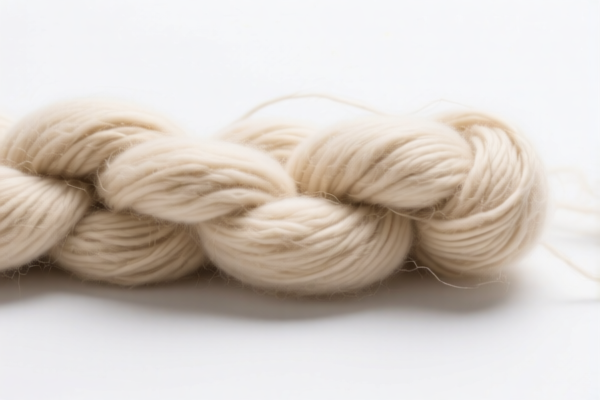
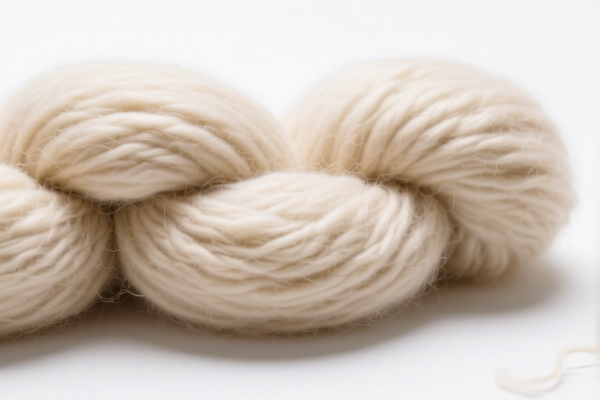
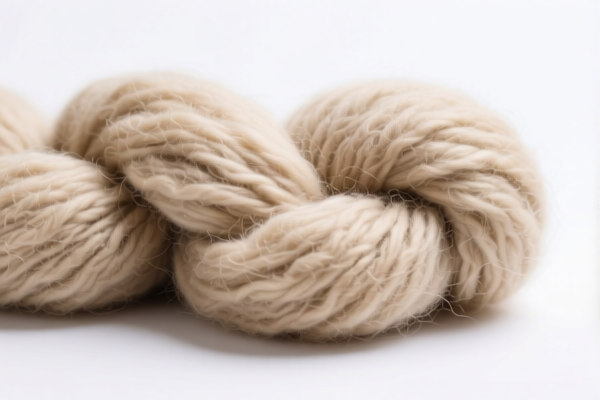

AI Analysis
🐑 Raw Wool & Lanolin (Sheep’s Fat): The Dual-Dimension Trade | 2026 Customs Classification Guide
🌐 HS Code Reference & Clearance Guide | Latest Tariff Analysis for Raw Wool & Wool Fat | Professional Clearance Strategies
📌 I. Product Definition & Classification: What Exactly Are You Importing?
In international trade, sheep-derived products are split into two distinct categories based on their physical state and intended use. Confusing "raw wool" with "lanolin" or misclassifying cosmetic-grade lanolin leads to severe customs penalties.
1. Raw Wool (未梳理羊毛): The primary fiber extracted from sheep, in its natural state (including grease/oil). It is the foundational material for textile manufacturing. * Key Characteristic: Long, staple fibers; not carded or combed. * Classification Focus: Is it fiber or grease?
2. Wool Fat/Lanolin (羊毛脂): A yellow, waxy substance secreted by sebaceous glands of wool-bearing animals. It is obtained as a by-product of wool scouring. * Key Characteristic: Viscous/waxy; used in cosmetics, ointments, or industrial lubricants. * Classification Focus: Is it raw material, industrial oil, or cosmetic ingredient?
⚠️ Critical Distinction Point:
- If the product is fibrous and unprocessed → Chapter 51 (Raw Wool)
- If the product is waxy/oily and extracted → Chapter 15 (Animal Fats) or Chapter 33 (Cosmetics)
- Misclassification Risk: Declaring Lanolin as "Raw Wool" will result in rejection, as the physical form is entirely different.
📦 II. HS Code Classification Details (2026 Authorized Mapping)
Based on your provided data, here is the precise breakdown of HS Codes, summaries, and tax liabilities for Raw Wool and Wool Fat/Lanolin.
| HS Code | Product Summary | Application Scenario | Tax Status |
|---|---|---|---|
5101.11.40.00 |
Raw wool (grease wool), not carded or combed, in primary form | Textile factories; initial stage of yarn spinning | 35.0% Total Tax |
5101.19.10.00 |
Other raw wool (grease wool), not carded or combed, containing oil | Non-metric grade wool; specific oil-content variations | 35.0% Total Tax |
1506.00.00.00 |
Wool fat (Lanolin), classified as other animal fats | Industrial lubricants; basic chemical raw materials | 37.3% Total Tax |
3304.99.10.00 |
Wool fat (Lanolin), used as skin care oil component | Skincare formulations; moisturizers; lotions | 35.0% Total Tax |
3304.99.50.00 |
Wool fat (Lanolin), raw material for cosmetics/skin care preparations | Finished cosmetic ingredients; beauty product bases | 35.0% Total Tax |
🔍 Key Insight:
- Raw Wool (5101.11/19) is taxed at 35% due to high punitive tariffs.
- Wool Fat (1506) has a slightly higher base rate (2.3%) + punitive tariffs, totaling 37.3%.
- Cosmetic-Grade Lanolin (3304) benefits from a 0% base rate but still carries the full punitive burden (35%).
💰 III. 2026 Latest Tariff Rate Breakdown (Including Add-on Taxes & Policies)
✅ Applicable Country: United States (US)
✅ Origin: China (CN)
✅ Effective Date: November 10, 2025 (and subsequent imports)
🎯 1. 5101.11.40.00 & 5101.19.10.00 —— Raw Wool (Unprocessed)
| Item | Detail |
|---|---|
| Base Tariff Rate | 0.0% (Ad Valorem) |
| Section 301 Add-on Tariff | +25.0% |
| Section 122 Tariff | +10.0% |
| Total Effective Tax Rate | 35.0% |
| Tax Calculation Base | CIF Value × 35% |
| De Minimis Exemption? | ❌ NO (Denied) |
| Legal Authority Path | USITC:5101.11/19 → Section 301 → Section 122 |
📌 Explanation:
- Although the base MFN rate for raw wool is 0%, the 25% Section 301 tariff (retaliatory trade measure) and 10% Section 122 tariff (national security/emergency powers) are aggressively applied.
- Total: 35%. This is a high-cost import. Do not attempt to split shipments to avoid detection.
🎯 2. 1506.00.00.00 —— Wool Fat (Industrial/Animal Fat Category)
| Item | Detail |
|---|---|
| Base Tariff Rate | 2.3% (Ad Valorem) |
| Section 301 Add-on Tariff | +25.0% |
| Section 122 Tariff | +10.0% |
| Total Effective Tax Rate | 37.3% |
| Tax Calculation Base | CIF Value × 37.3% |
| De Minimis Exemption? | ❌ NO (Denied) |
| Legal Authority Path | USITC:1506.00.00.00 → Section 301 → Section 122 |
📌 Note:
- This code is for unrefined or semi-refined wool fat intended for industrial use (e.g., leather processing, non-cosmetic lubricants).
- The 37.3% rate is the highest among all listed codes. Ensure your product specification matches "industrial fat" and not cosmetic ingredients.
🎯 3. 3304.99.10.00 & 3304.99.50.00 —— Wool Fat (Cosmetic/Skin Care Grade)
| Item | Detail |
|---|---|
| Base Tariff Rate | 0.0% (Ad Valorem) |
| Section 301 Add-on Tariff | +25.0% |
| Section 122 Tariff | +10.0% |
| Total Effective Tax Rate | 35.0% |
| Tax Calculation Base | CIF Value × 35% |
| De Minimis Exemption? | ❌ NO (Denied) |
| Legal Authority Path | USITC:3304.99.10/50 → Section 301 → Section 122 |
📌 Distinction Between Sub-codes:
-3304.99.10.00: Specifically for lanolin used as a skin care oil component (e.g., in creams, balms).
-3304.99.50.00: For lanolin as a general cosmetic preparation raw material.
- Both carry the same 35% total tax, but the base rate is 0% (lower than raw wool's implicit burden). This makes cosmetic-grade lanolin slightly more favorable if base rates were to change, but currently, the punitive tariffs dominate.
🛠️ IV. Clearance Practical Advice (Avoiding Pitfalls)
✅ 1. Documentation Checklist (Mandatory)
| Document | Required? | Description |
|---|---|---|
| ✅ Product Specification Sheet | ✔️ | Must clearly state: "Raw Wool" vs. "Wool Fat/Lanolin", grade, oil content, viscosity. |
| ✅ Composition Analysis Report | ✔️ | For Lanolin: Provide % purity, water content, and chemical composition. Critical for distinguishing between 1506 (industrial) and 3304 (cosmetic). |
| ✅ Commercial Invoice | ✔️ | Must accurately describe the product using HS Code descriptions. E.g., "Lanolin USP Grade" not just "Wool Fat". |
| ✅ Certificate of Origin (CO) | ✔️ | Required to prove origin (China) for tariff calculation. |
| ✅ Safety Data Sheet (SDS) | ✔️ | Required for all chemical/organic imports. Confirms hazard class and handling. |
| ✅ Labeling/Marketing Materials | ✔️ | If claiming "Cosmetic Use", provide label proofs to justify 3304 classification. |
✅ 2. Declaration Strategy (Key Mantra)
🔥 "Fiber goes to Ch.51, Wax goes to Ch.15/33. Be precise, save big!"
| Scenario | Correct HS Code | Wrong Declaration | Consequence |
|---|---|---|---|
| Unprocessed Sheep Wool | 5101.11.40.00 / 5101.19.10.00 |
Declared as "Textile Material" vaguely | Delayed inspection, possible 35% tax + penalty |
| Refined Lanolin for Skincare | 3304.99.10.00 / 3304.99.50.00 |
Declared as "Animal Fat" (1506) |
Higher tax (37.3% vs 35%)? Actually same punitive rate, but compliance risk if usage doesn't match description. |
| Crude Lanolin (Industrial) | 1506.00.00.00 |
Declared as "Cosmetic Ingredient" | Severe Penalty: Misdeclaration of high-risk chemical. Customs may detain for FDA/USDA review. |
| Wool Grease (By-product of washing) | 1506.00.00.00 |
Declared as "Raw Wool" | Rejection: Physical form mismatch. |
✅ 3. Special Cases & Handling
| Case | Handling Advice |
|---|---|
| Mixed Shipments (Wool + Lanolin) | Must split declarations. Do not combine under one HS Code. Each requires its own line item and documentation. |
| "Organic" or "Certified" Lanolin | Ensure the certificate matches the HS Code definition. Cosmetic certification does not automatically justify 3304 if the product is industrial grade. |
| Small Sample Imports | ❌ No De Minimis Exemption. Even small quantities of Wool/Wool Fat from China are subject to 35-37.3% tariffs. |
| Re-exported Wool Fat | If originally imported into China, re-exported to US: Still subject to Chinese origin rules. Tariffs apply. |
🌍 V. Global Market Comparison (2026 Outlook)
| Country/Region | Recommended HS Code | Base Tariff | Add-ons | Total Estimate | Notes |
|---|---|---|---|---|---|
| 🇺🇸 USA | 5101.11.40.00 (Wool) / 3304.99.10.00 (Lanolin) |
0% | 35% (301+122) | 35% | Strict scrutiny on origin. |
| 🇺🇸 USA | 1506.00.00.00 (Industrial Lanolin) |
2.3% | 35% (301+122) | 37.3% | Highest rate. |
| 🇨🇳 China | 5101.11.40.00 |
0% | 0% | 0% | Export duty may apply. |
| 🇪🇺 EU | 5101.11 (Wool) |
7.5% | 0% | 7.5% | No Section 301/122 equivalent. |
| 🇪🇺 EU | 1506.00 (Lanolin) |
4% | 0% | 4% | Preferential rates may apply with trade deals. |
| 🇬🇧 UK | 5101.11 (Wool) |
7.5% | 0% | 7.5% | Post-Brexit tariff schedule. |
📌 Conclusion:
- The US market is significantly more expensive for Chinese Wool and Lanolin due to Section 301 and 122 tariffs.
- If possible, consider sourcing from non-China origins (e.g., Australia, New Zealand) to avoid punitive tariffs, especially for large-volume imports.
- EU/UK rates are substantially lower, making them more competitive for cost-sensitive buyers.
📌 VI. Common Errors & Pitfalls (Blood & Tears Lessons)
❌ Error 1: Labeling "Wool Fat" as "Cosmetic Ingredient" when it is Industrial Grade
👉 Consequence: Customs seizure for misdeclaration of chemical safety. FDA/USDA intervention.
❌ Error 2: Using "Textile Raw Material" as a generic description for Wool
👉 Consequence: Ambiguity leads to manual examination, delays, and potential misclassification fines.
❌ Error 3: Ignoring Section 122 Tariff
👉 Consequence: Assuming only 25% tax applies. You will owe an additional 10% upon audit.
❌ Error 4: Combining Raw Wool and Lanolin in one HS Code
👉 Consequence: Rejection of entry. Each product has distinct HS Codes and tax liabilities.
✅ Correct Practice:
"Lanolin, Refined, USP Grade, for use in Skincare Formulations. HS Code: 3304.99.10.00. Origin: China."
🎯 VII. Conclusion: Precise Classification Saves Costs!
🎯 Remember the Mantra:
🔹 "Wool is Fiber, Fat is Wax. 35% or 37.3%, Know the Max!"
🔹 "HS Code Defines the Tax. 0% Base doesn't Mean 0% Total."
🔹 "Split Shipments, Clear Descriptions, Avoid Delays."
📌 Pro Tip:
If your Wool or Lanolin originates from countries other than China (e.g., Australia, New Zealand, Uruguay), you may qualify for lower or zero punitive tariffs.
👉 Recommendation:
📞 Apply for an Advance Ruling (Pre-Ruling) from CBP before shipping.
📄 Provide Detailed Product Specs to confirm3304vs1506for Lanolin.
🚀 Optimize Your Supply Chain to mitigate the 35-37.3% tariff burden.
📣 Immediate Action:
✅ Verify Product Form (Fiber vs. Wax)
✅ Choose Correct HS Code (5101,1506, or3304)
✅ Prepare Full Documentation (SDS, Invoice, CO)
🚀 Clear Customs Smoothly, Maximize Profit Margins!
✨ Professional Clearance Starts with Accurate Classification!
💼 Your Cost Efficiency Depends on the Right HS Code!
Customer Reviews
About HS Code Classification
The Harmonized System (HS) is an internationally standardized nomenclature developed by the World Customs Organization (WCO) to classify traded products. Over 200 countries use the HS system as the basis for customs tariffs, trade statistics, and import/export regulations.
Each HS code follows a hierarchical structure:
- Chapter (2 digits) — Broad category of goods (e.g., Chapter 84: Machinery and Mechanical Appliances)
- Heading (4 digits) — More specific grouping within the chapter
- Subheading (6 digits) — Internationally standardized breakdown, used by all WCO member countries
- National subdivisions (8-10 digits) — Country-specific extensions for further classification, such as US HTSUS 10-digit codes
Correct HS code classification is essential for smooth customs clearance, accurate duty payment, and compliance with trade regulations. Misclassification can lead to customs delays, overpayment of duties, or penalties.
When importing from CN to US, the applicable tariff rates may include:
- Most-Favored-Nation (MFN) rate — The standard duty rate applied to WTO members
- General rate — Applied to countries without trade agreements
- Trade remedy duties — Additional tariffs such as Section 301 (anti-dumping), Section 232 (national security), or countervailing duties
The information provided on this page is for reference purposes only. For official classification, please consult with your local customs authority or a licensed customs broker.