Rayon Blended Poplin
CN → US| HS Code | Tariff Rate | Origin | Destination | Doc |
|---|---|---|---|---|
| 5210516020 | 47.2% | CN | US | Official Doc |
| 5210514020 | 45.0% | CN | US | Official Doc |
| 5516920010 | 47.0% | CN | US | Official Doc |
| 5516910010 | 47.0% | CN | US | Official Doc |
| 5408312010 | 49.9% | CN | US | Official Doc |
Product Images
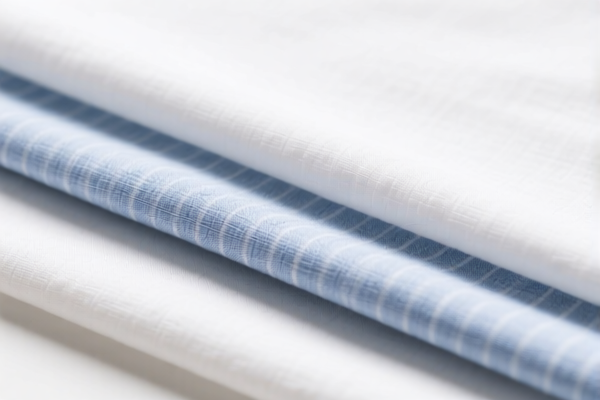
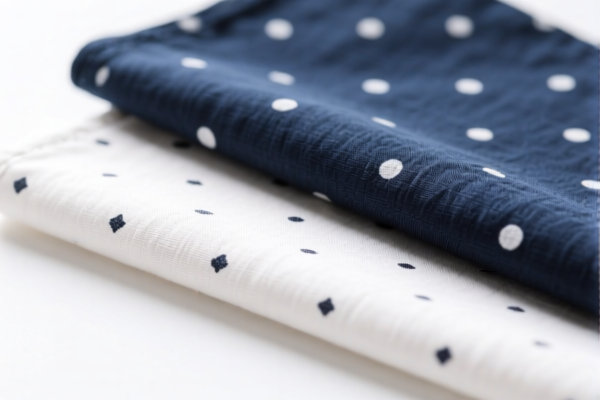
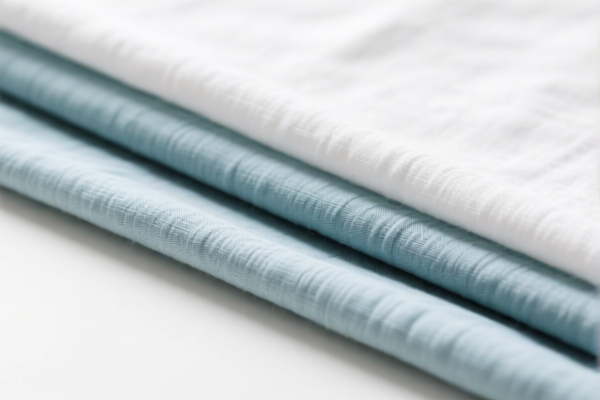
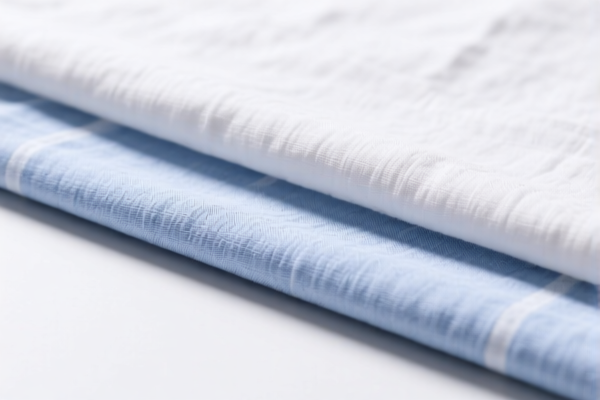
AI Analysis
👕 Rayon Blended Poplin (粘胶混纺府绸/平纹布)
🌐 HS Code Reference & Customs Clearance Guide | 2026 Latest Tariff Analysis | Professional Clearance Strategy
📌 I. Product Definition & Classification: Do You Really Know "Rayon Blended Poplin"?
Rayon Blended Poplin is a versatile woven fabric widely used in apparel, home textiles, and industrial applications. In international trade, it is primarily classified under Chapter 52 (Cotton) or Chapter 55 (Man-made Staple Fibers) depending on the specific fiber composition and weaving structure. The term "Poplin" generally refers to a plain weave fabric with fine crosswise ribs, but legally, customs classification depends strictly on:
- Primary Fiber Content: Is it blended with Cotton (Ch. 52) or other synthetic/staple fibers (Ch. 54/55)?
- Weave Structure: Is it classified strictly as "Poplin" (often grouped with broadwoven fabrics) or "Plain Weave" (平纹)?
- Processing State: Is it grey (unbleached/unfinished), bleached, dyed, or printed?
⚠️ Key Distinction Point:
- If the fabric contains Cotton mixed with Viscose/Rayon → Look at Heading 5210.
- If the fabric is primarily Man-made Staple Fibers (like Viscose staple) mixed with synthetics or other fibers → Look at Heading 5516 or 5514.
- If the fabric is mixed with Continuous Filament Synthetics (like Polyester filament) → Look at Heading 5408.
📦 II. HS Code Classification Details (2026 Latest Tariff Authority Comparison)
Based on the provided data, here are the four specific HS Codes for Rayon Blended Poplin/Woven Fabrics, categorized by fiber composition and material type.
| HS Code | Product Description & Summary | Key Classification Feature |
|---|---|---|
| 5210.51.60.20 | Rayon-Cotton Woven Poplin: Viscose blended with Cotton, plain weave/poplin structure. | Cotton Blend: Primary classification is Cotton (Ch. 52). Specifically matches "Cotton woven fabric of poplin weave." |
| 5210.51.40.20 | Rayon-Cotton Woven Poplin: Material is Viscose fiber blended with Cotton, form is Poplin. | Cotton Blend: Focuses on the "Poplin" form within the Cotton-Viscose blend category. |
| 5516.92.00.10 | Rayon Woven Poplin (Dyed): Dyed man-made staple fiber fabric of poplin weave. | Staple Fiber Blend: Primary material is Man-made Staple Fiber (Viscose), likely blended with other synthetics, and Dyed. |
| 5516.91.00.10 | Rayon Woven Poplin (Plain/Poplin): Material is Man-made Staple Fiber, form is Plain Weave/Poplin. | Staple Fiber Blend: Primary material is Man-made Staple Fiber, form is Plain Weave (often includes Poplin). |
| 5408.31.20.10 | Rayon Blended Grey Fabric: Fits the category of fabrics mainly or wholly mixed with Synthetic Continuous Filaments. | Filament Blend: This is a specific case where Rayon is mixed with Synthetic Filaments (e.g., Polyester Filament), classified as "Grey" (unfinished) or specific filament blends. |
🔍 Key Reminder:
- Ch. 52 vs. Ch. 55/54: If Cotton is present, it usually falls under Ch. 52. If it's purely Rayon (Viscose) mixed with other man-made fibers (not cotton), it falls under Ch. 55 (Staple) or Ch. 54 (Filament).
- "Poplin" vs. "Plain Weave": In many tariff schedules, Poplin is a type of Plain Weave. However, some specific subheadings distinguish "Poplin" (5210.51) from general "Plain Weave" (5210.49). Always check the specific textile definition.
- State of Processing: Codes like5516.9...often imply "Other" dyed/printed varieties, while5408.3...might refer to specific grey or unfinished states depending on national subheadings.
💰 III. 2026 Latest Tariff Rate Details (Including Surcharges & Policy Add-ons)
✅ Applicable Country: United States (US)
✅ Origin: China (CN)
✅ Effective Time: Current rates include Section 301, Section 122, and Base Tariffs.
🎯 1. Cotton-Based Blends: 5210.51.60.20 & 5210.51.40.20
These codes fall under Cotton Woven Fabrics containing <85% by weight of cotton, weighing ≤200g/m², dyed/plain weave/poplin.
| Item | Content |
|---|---|
| Code | 5210.51.60.20 or 5210.51.40.20 |
| Base Tariff (MFN) | 10.0% - 12.2% (varies by exact subheading detail) |
| Section 301 Surcharge | +25.0% (Standard US-China trade war tariff) |
| Section 122 Surcharge | +10.0% (Specific policy add-on, likely related to certain textile/footwear categories or specific trade actions) |
| Total Tariff Rate | 45.0% - 47.2% |
| Tax Calculation | CIF Value × Total Rate |
| De Minimis Exemption | ❌ NOT Eligible (Section 301 and additional surcharges generally apply regardless of value) |
| Legal Basis | HTSUS 5210.51 → Section 301 Footnotes → Section 122 Regulations |
📌 Explanation for 5210.51.60.20 (47.2%):
- Base: 12.2%
- Sec 301: 25.0%
- Sec 122: 10.0%
- Total: 47.2%
This is the highest burden for cotton-blended poplin.📌 Explanation for 5210.51.40.20 (45.0%):
- Base: 10.0%
- Sec 301: 25.0%
- Sec 122: 10.0%
- Total: 45.0%
Slightly lower base tariff, but still heavily impacted.
🎯 2. Man-Made Staple Fiber Blends: 5516.92.00.10 & 5516.91.00.10
These codes fall under Woven Fabrics of Man-Made Staple Fibers, other.
| Item | Content |
|---|---|
| Code | 5516.92.00.10 or 5516.91.00.10 |
| Base Tariff (MFN) | 12.0% |
| Section 301 Surcharge | +25.0% |
| Section 122 Surcharge | +10.0% |
| Total Tariff Rate | 47.0% |
| Tax Calculation | CIF Value × 47% |
| De Minimis Exemption | ❌ NOT Eligible |
| Legal Basis | HTSUS 5516.9... → Section 301 Footnotes → Section 122 Regulations |
📌 Note:
- Both5516.91(Plain/Other) and5516.92(Dyed/Other) carry the same high tariff burden when originating from China.
- The key difference is the state of dyeing or specific fiber mix nuances, but the tax rate is identical at 47.0%.
🎯 3. Synthetic Filament Blend (Grey/Unfinished): 5408.31.20.10
This code is for Woven Fabrics of Synthetic Filaments, mainly mixed with Rayon/Viscose.
| Item | Content |
|---|---|
| Code | 5408.31.20.10 |
| Base Tariff (MFN) | 14.9% |
| Section 301 Surcharge | +25.0% |
| Section 122 Surcharge | +10.0% |
| Total Tariff Rate | 49.9% |
| Tax Calculation | CIF Value × 49.9% |
| De Minimis Exemption | ❌ NOT Eligible |
| Legal Basis | HTSUS 5408.31 → Section 301 Footnotes → Section 122 Regulations |
📌 Critical Warning:
- This is the HIGHEST tax rate among all listed options: 49.9%.
- This often applies to fabrics where Synthetic Filament (e.g., Polyester) is the primary structural element, even if Rayon is blended.
- Misclassification here can lead to significant overpayment or audit risks if the fabric is actually a staple fiber blend.
🛠️ IV. Customs Clearance Practical Advice (Battle-Tested Pitfall Avoidance)
✅ 1. Documentation Checklist (Non-Negotiable)
| Document | Must Provide | Description |
|---|---|---|
| ✅ Commercial Invoice | ✔️ | Must clearly state "Rayon Blended Poplin" or "Viscose Woven Fabric," including composition % (e.g., 60% Viscose, 40% Cotton). |
| ✅ Packing List | ✔️ | Detail weight, dimensions, and number of rolls. |
| ✅ Certificate of Origin (CO) | ✔️ | Critical for proving China origin (triggers surcharges) or claiming exemptions if shipped from a third country (though limited for China-origin goods). |
| ✅ Lab Test Report | ✔️ | Fiber Composition Analysis is mandatory. Customs will test to verify if it's Cotton-blended (Ch. 52) or Staple-blended (Ch. 55) or Filament-blended (Ch. 54). |
| ✅ Product Photos | ✔️ | Show weave structure, selvage, and any labels. Helps confirm "Poplin" vs. "Plain Weave." |
| ✅ Shipping Mark | ✔️ | Ensure marks match invoice exactly. |
✅ 2. Declaration Strategy (Key Mantras)
🔥 “Fiber Content Determines Chapter, Weave Structure Determines Subheading, Origin Determines Surcharge!”
| Scenario | Correct Declaration | Error & Consequence |
|---|---|---|
| Cotton + Viscose Blend | Use 5210.51.xx.xx | Misdeclaring as 5516 → Potential penalty for misclassification + incorrect tax base. |
| Viscose + Polyester Filament | Use 5408.31.xx.xx | Misdeclaring as 5516 → Underpayment (49.9% vs 47%) → Audit & Back Taxes. |
| Grey vs. Dyed | Specify "Dyed" or "Grey" in description | Confusion between 5516.91 and 5516.92 → Delays for customs inspection. |
| Poplin vs. Plain Weave | Use 5210.51 (Poplin) if applicable | Misdeclaring as 5210.49 (Other) → Different tax rates possible, risk of audit. |
✅ 3. Special Handling for High-Tariff Items
| Situation | Advice |
|---|---|
| High Duty Cost (47-50%) | Consider Supply Chain Restructuring: Can the blending or weaving be done in a third country (e.g., Vietnam, Bangladesh) to change the "Country of Origin"? Note: Simple transshipment does not change origin; substantial transformation is required. |
| Section 122 & 301 | These are non-negotiable for China-origin goods. No GSP or general exemptions apply. Budget for these costs. |
| De Minimis (Section 321) | Do not attempt to use the $800 de minimis exemption for these HS codes if the total value exceeds limits or if the carrier refuses. Section 301 goods are heavily scrutinized at this level. |
🌍 V. Global Market Comparison (2026 Snapshot)
| Market | Recommended HS Code | Base Tariff | Additional Surcharges (China Origin) | Total Effective Rate |
|---|---|---|---|---|
| 🇺🇸 USA | 5210.51... / 5516.9... / 5408.3... |
10-15% | +25% (Sec 301) +10% (Sec 122) | 45% - 49.9% |
| 🇨🇳 China (Import) | Same HS Codes | 5-10% | None | 5-10% |
| 🇪🇺 EU | Same HS Codes | 6-12% | None (WTO Most-Favored-Nation) | 6-12% |
| 🇬🇧 UK | Same HS Codes | 6-12% | None | 6-12% |
| 🇨🇦 Canada | Same HS Codes | 5-12% | None (CUSMA benefits may apply if originating) | 0-12% |
📌 Conclusion:
- The US market is the most expensive due to the combination of MFN, Section 301, and Section 122 tariffs.
- Canada and EU offer significantly lower barriers for these textiles.
- If exporting to the US, accurate fiber analysis is the single most critical step to avoid misclassification penalties.
📌 VI. Common Errors & Pitfall Guide (Lessons Learned)
❌ Mistake 1: Calling all "Rayon Fabrics" the same HS Code.
👉 Result: Rayon blended with Cotton (Ch. 52) is taxed differently than Rayon blended with Polyester Filament (Ch. 54). Misclassification leads to audit.
❌ Mistake 2: Ignoring the "Section 122" Surcharge.
👉 Result: Budgeting only for 35% (10% base + 25% Sec 301) misses the extra 10%, leading to budget shortfalls. Total is ~45-50%.
❌ Mistake 3: Declaring "Poplin" without specifying Fiber Content.
👉 Result: Customs cannot determine Chapter 52 vs. 55 vs. 54. Shipment held for inspection → Delay + Storage Fees.
❌ Mistake 4: Assuming "Grey Fabric" gets a lower tax.
👉 Result: While base tariffs might sometimes differ, the Section 301 and 122 surcharges are applied on top, making the total rate equally punitive for all processing stages.
✅ Correct Practice:
"Viscose-Cotton Woven Poplin, Dyed, 60% Viscose/40% Cotton, 200g/m², HS 5210.51.40.20"
🎯 VII. Conclusion: Professional Declaration Saves Money!
🎯 Remember the Mantra:
🔹 "Cotton Blend = Ch 52, Staple Blend = Ch 55, Filament = Ch 54."
🔹 "US Tariff = Base + 25% + 10%. Total ~47-50%."
🔹 "Lab Test is Mandatory. No Lab Test, No Clearance."
📌 Pro Tip:
If your supplier is in China, negotiate DDP (Delivered Duty Paid) terms with a forwarder who specializes in high-tariff textiles to manage the 45-50% tax burden efficiently. For non-US markets, these fabrics are highly competitive due to lower tariff barriers.
✨ Professional Customs Clearance Starts with Accurate Classification!
💼 Your Profit Margin Depends on Every Percentage Point of Tariff!
Customer Reviews
About HS Code Classification
The Harmonized System (HS) is an internationally standardized nomenclature developed by the World Customs Organization (WCO) to classify traded products. Over 200 countries use the HS system as the basis for customs tariffs, trade statistics, and import/export regulations.
Each HS code follows a hierarchical structure:
- Chapter (2 digits) — Broad category of goods (e.g., Chapter 84: Machinery and Mechanical Appliances)
- Heading (4 digits) — More specific grouping within the chapter
- Subheading (6 digits) — Internationally standardized breakdown, used by all WCO member countries
- National subdivisions (8-10 digits) — Country-specific extensions for further classification, such as US HTSUS 10-digit codes
Correct HS code classification is essential for smooth customs clearance, accurate duty payment, and compliance with trade regulations. Misclassification can lead to customs delays, overpayment of duties, or penalties.
When importing from CN to US, the applicable tariff rates may include:
- Most-Favored-Nation (MFN) rate — The standard duty rate applied to WTO members
- General rate — Applied to countries without trade agreements
- Trade remedy duties — Additional tariffs such as Section 301 (anti-dumping), Section 232 (national security), or countervailing duties
The information provided on this page is for reference purposes only. For official classification, please consult with your local customs authority or a licensed customs broker.