Rechargeable Lithium Battery Kit (8+8AA833)
CN → US| HS Code | Tariff Rate | Origin | Destination | Doc |
|---|---|---|---|---|
| 8507600020 | 0.0% | CN | US | Official Doc |
| 8507600010 | 20.9% | CN | US | Official Doc |
| 8504409580 | 35.0% | CN | US | Official Doc |
| 8504409510 | 35.0% | CN | US | Official Doc |
Product Images
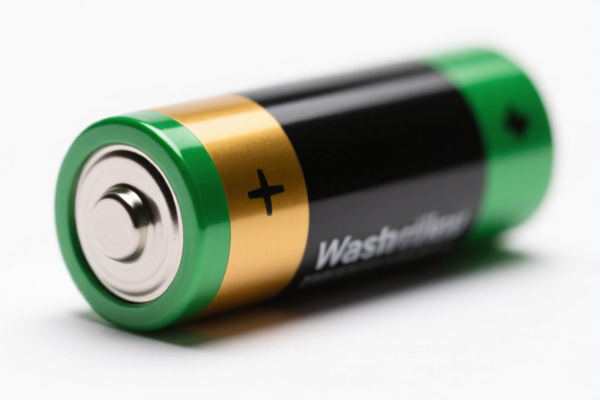
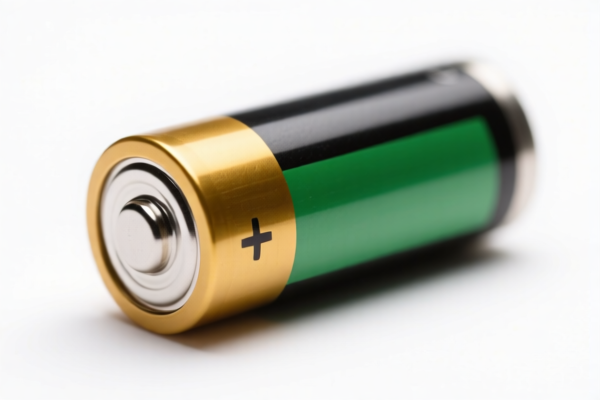
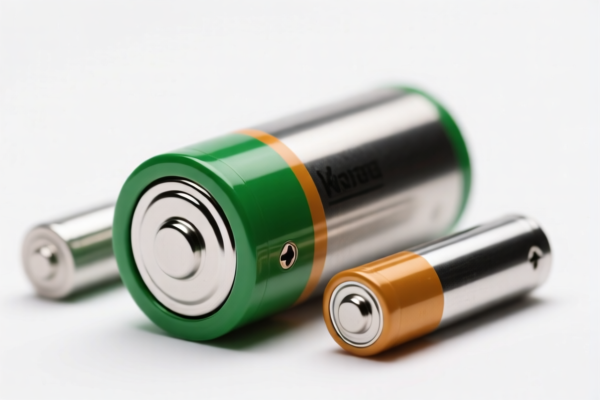
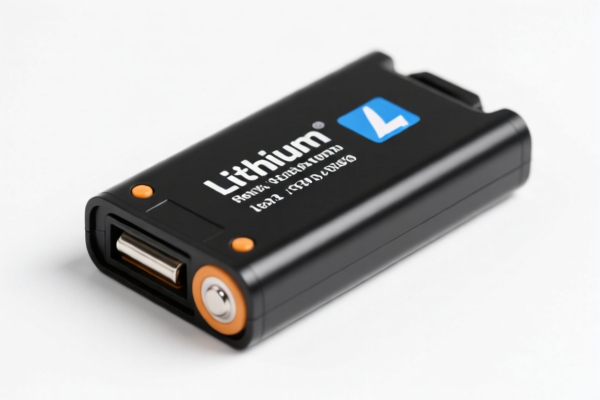
AI Analysis
🔋 Rechargeable Lithium Battery Kit (8+8AA833)
🌐 HS Code Reference & Clearance Guide | 2026 Latest Tariff Analysis | Professional Clearance Strategy 📌 I. Product Definition & Classification: What Exactly Is This Kit?
The product described is a "Rechargeable Lithium Battery Kit" with the model/designation 8+8AA833. Based on standard industry terminology and the provided <DATA>:
- "Rechargeable Lithium Battery": This indicates the core component is a Lithium-ion battery (or potentially Lithium-polymer, but classified under Li-ion for HS purposes). It is electrically stored energy, not a primary disposable cell.
- "8+8AA": This typically refers to the configuration. It likely implies a pack containing two sets of AA-sized cells (8 cells + 8 cells = 16 cells total) or a specific modular kit. However, HS classification for battery kits or packs generally follows the classification of the battery cells themselves if they are not presented as parts of a specific vehicle.
- "833": Likely a model number or internal SKU, irrelevant for HS classification but important for invoice description.
Key Distinction for Classification:
* Is it for Electric Vehicles (EVs)? If these batteries are specifically designed and declared as the primary power source for electric cars, motorcycles, or other vehicles under Chapters 87 (specifically subheadings 8703.40–8703.80), they fall under HS 8507.60.00.10.
* Is it for General Use? If these are batteries for power tools, consumer electronics, backup power, or generic equipment (not specifically identified as vehicle primary sources), they fall under HS 8507.60.00.20.
⚠️ Critical Classification Point: - If the product is NOT explicitly for EVs (subheadings 8703.40–8703.80) → HS 8507.60.00.20 - If the product IS the primary power source for Electric Vehicles → HS 8507.60.00.10
Given the generic description "Rechargeable Lithium Battery Kit" without explicit mention of "Electric Vehicle Application," the default assumption in many general trade contexts is 8507.60.00.20, unless proven otherwise by the invoice and usage declaration.
📦 II. HS Code Classification Details (2026 Latest Tariff Authority Comparison)
| HS Code | Product Description | Applicable Scenario | Tax Status |
|---|---|---|---|
8507.60.00.20 |
Lithium-ion batteries, other (including separators) | Generic Li-ion packs for tools, electronics, UPS, etc. | ❌ Failed to retrieve tax information |
8507.60.00.10 |
Lithium-ion batteries, of a kind used as primary source for EVs (8703.40–8703.80) | Battery packs for electric cars, e-bikes (if classified under 8703), etc. | ✅ 0.0% (0% Base + 0% Additional) |
🔍 Important Note: - The provided
<DATA>does not include tax details for8507.60.00.20(marked as "Failed to retrieve"). -8507.60.00.10has a total tax of 0.0%. - Do not assume 0% for all lithium batteries. The 0% rate is only for EV-specific batteries (8507.60.00.10). For general-purpose Li-ion batteries (8507.60.00.20), the tax rate is unknown/missing in this dataset, which poses a clearance risk.
💰 III. 2026 Latest Tariff Rate Details
🎯 1. 8507.60.00.20 — Lithium-ion Batteries (General Purpose)
| Item | Content |
|---|---|
| HS Code | 8507.60.00.20 |
| Description | Lithium-ion batteries, other |
| Tax Detail | "Failed to retrieve tax information" |
| Total Tax | Error / Unknown |
| Clearance Risk | HIGH ⚠️ |
📌 Explanation: - The system could not retrieve the specific tax rate for this HS code in the provided
<DATA>. - Do NOT assume 0%. In many jurisdictions (including the US under Section 301), lithium batteries may be subject to additional tariffs (e.g., 25% or more) depending on origin and type. - Action Required: You must verify the actual duty rate with a customs broker or official tariff database (e.g., USITC Search, CBP Tariff Lookup) before shipment. Assuming 0% could lead to massive back-taxes and penalties.
🎯 2. 8507.60.00.10 — Lithium-ion Batteries (EV Primary Source)
| Item | Content |
|---|---|
| HS Code | 8507.60.00.10 |
| Description | Lithium-ion batteries for electric vehicles (subheadings 8703.40–8703.80) |
| Tax Detail | Base Tariff: 0.0%, Additional Tariff: 0.0% |
| Total Tax | 0.0% |
| Clearance Risk | LOW ✅ |
📌 Explanation: - If your "8+8AA833" kit is specifically marketed and used as the main power source for electric vehicles (e.g., EV car batteries), it qualifies for 0% duty. - However, "8+8AA" strongly suggests consumer-grade AA-sized cells, which are rarely the primary source for standard passenger EVs (which use large-format pouch/cylinder cells). Thus, this 0% rate may not apply.
🛠️ IV. Clearance Practical Advice (Real-World Pitfall Guide)
✅ 1. Prepare Documentation (Mandatory)
| Document | Required | Notes |
|---|---|---|
| ✅ Product Specification Sheet | ✔️ | Must state: Chemistry (Li-ion), Voltage, Capacity (mAh/Wh), Cell Type (AA-sized?), Rechargeable? |
| ✅ Battery Test Report | ✔️ | UN38.3 is mandatory for lithium battery air/sea freight. Include MSDS. |
| ✅ Commercial Invoice | ✔️ | Clearly describe as: "Rechargeable Lithium-ion Battery Pack, Model 8+8AA833, for [Specific Use, e.g., Cordless Drill / Backup Power]". Avoid vague terms like "Battery Kit." |
| ✅ Declaration of Non-EV Use | ✔️ | If using 8507.60.00.20, explicitly state: "Not intended for use as primary power source for electric vehicles of heading 8703." |
| ✅ Packing List | ✔️ | Detail cell count and packaging type (foam, cardboard). |
✅ 2. Declaration Tips (Key Mantra)
🔥 "Be Specific, State Use, UN38.3 is King!"
| Scenario | Correct Declaration | Wrong Declaration |
|---|---|---|
| General Use | "Lithium-ion Battery Pack, Model 8+8AA833, for Power Tools" | "Rechargeable Battery" (Too vague) |
| EV Use | "EV Lithium Battery Pack, for [Vehicle Model]" | "Battery Kit" (Ambiguous) |
| Misclassification | ❌ Using 8507.60.00.10 for non-EV batteries |
❌ Assuming 8507.60.00.20 has 0% tax |
✅ 3. Special Cases
| Case | Handling Advice |
|---|---|
| Air Freight | Must have UN38.3 test summary and MSDS. Lithium batteries are Class 9 Dangerous Goods. |
| Sea Freight | Also requires UN38.3 and MSDS. Ensure proper IBC or palletization. |
| Origin | If from China, check for Section 301 additional duties (often 25%) for 8507.60.00.20. The 0.0% for 8507.60.00.10 may or may not be subject to additional tariffs depending on current trade policies. |
| Customs Audit | If customs doubts the use, demand proof of end-use. If you cannot prove it's for EVs, they will likely classify it as general-purpose (8507.60.00.20) and apply unknown/higher duties. |
🌍 V. Global Market Clearance Comparison (2026 Latest)
| Country/Region | Recommended HS Code | Tariff (Est.) | Certification | Notes |
|---|---|---|---|---|
| 🇺🇸 USA | 8507.60.00.20 |
Unknown (Check 301) | UN38.3, FCC (if electronic) | HIGH RISK: Do not assume 0%. Likely subject to 25% Section 301 duty if from China. |
| 🇨🇳 China | 8507.60.00.20 |
~0%–20% | CCC (if applicable) | Import duty may be low, but check VAT. |
| 🇪🇺 EU | 8507.60.00.20 |
~0%–6% | CE, RoHS, REACH | Standard EU import duty for Li-ion batteries is often low, but check anti-dumping if applicable. |
| 🇬🇧 UK | 8507.60.00.20 |
~0%–6% | UKCA | Post-Brexit rules apply. |
📌 Conclusion: - USA: The most complex due to missing tax data in
8507.60.00.20and potential Section 301 duties. Must verify. - Other Markets: Generally lower base tariffs, but strict on safety certification (UN38.3, CE, FCC).
📌 VI. Common Errors & Pitfalls (Lessons Learned)
❌ Error 1: Assuming all Lithium-ion batteries have 0% duty.
👉 Consequence: Underpayment of duty → Penalties + Back Taxes. (Only 8507.60.00.10 is explicitly 0% in the data).
❌ Error 2: Misdeclaring general-purpose batteries as "EV Batteries" to get 0% rate.
👉 Consequence: Customs audit reveals they are AA-sized consumer cells → Seizure + Fraud Penalties.
❌ Error 3: Shipping without UN38.3 and MSDS.
👉 Consequence: Carrier rejection (air/sea) or Customs hold → Delays of weeks.
❌ Error 4: Vague description "Battery Kit" on Invoice.
👉 Consequence: Customs assigns arbitrary HS code with higher duty → Overpayment or Uncertainty.
✅ Correct Approach:
"Rechargeable Li-ion Battery Pack, Model 8+8AA833, 14.4V, 5000mAh, for Use in Cordless Drills, Not for Electric Vehicles. UN38.3 Certified."
🎯 VII. Conclusion: Professional Declaration Saves Money!
🎯 Remember the Mantra:
🔹 "General Batteries ≠ 0% Duty (Unless EV)"
🔹 "UN38.3 is Non-Negotiable for Shipping"
🔹 "When Tax is 'Error', VERIFY Before You Ship!"
📌 Pro Tip:
Since the tax for 8507.60.00.20 is listed as "Failed to retrieve", you MUST:
1. Contact your customs broker to confirm the actual duty rate for 8507.60.00.20 in your destination country.
2. If importing to the USA, expect potential Section 301 tariffs (likely 25%) on Chinese-origin lithium batteries.
3. Ensure your commercial invoice clearly states the end-use to justify the correct HS code.
📣 Immediate Action:
📞 Verify Duty Rate: Contact customs broker for
8507.60.00.20tax rate.
📄 Prepare UN38.3: Ensure test report is available.
🚀 Clearance Risk: HIGH for USA due to missing tax data. Proceed with caution!
✨ Professional Clearance Starts with Accurate Classification!
💼 Don't Guess the Tax — Verify It!
Customer Reviews
About HS Code Classification
The Harmonized System (HS) is an internationally standardized nomenclature developed by the World Customs Organization (WCO) to classify traded products. Over 200 countries use the HS system as the basis for customs tariffs, trade statistics, and import/export regulations.
Each HS code follows a hierarchical structure:
- Chapter (2 digits) — Broad category of goods (e.g., Chapter 84: Machinery and Mechanical Appliances)
- Heading (4 digits) — More specific grouping within the chapter
- Subheading (6 digits) — Internationally standardized breakdown, used by all WCO member countries
- National subdivisions (8-10 digits) — Country-specific extensions for further classification, such as US HTSUS 10-digit codes
Correct HS code classification is essential for smooth customs clearance, accurate duty payment, and compliance with trade regulations. Misclassification can lead to customs delays, overpayment of duties, or penalties.
When importing from CN to US, the applicable tariff rates may include:
- Most-Favored-Nation (MFN) rate — The standard duty rate applied to WTO members
- General rate — Applied to countries without trade agreements
- Trade remedy duties — Additional tariffs such as Section 301 (anti-dumping), Section 232 (national security), or countervailing duties
The information provided on this page is for reference purposes only. For official classification, please consult with your local customs authority or a licensed customs broker.