Rechargeable Lithium Battery Kit 8+8AA
CN → US| HS Code | Tariff Rate | Origin | Destination | Doc |
|---|---|---|---|---|
| 8504409580 | 35.0% | CN | US | Official Doc |
| 8507600010 | 20.9% | CN | US | Official Doc |
| 8548000000 | 35.0% | CN | US | Official Doc |
Product Images
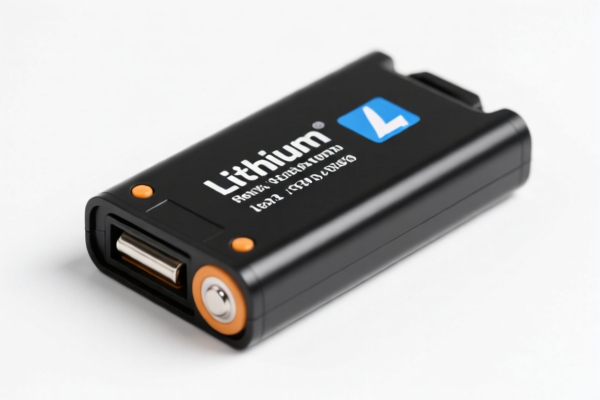
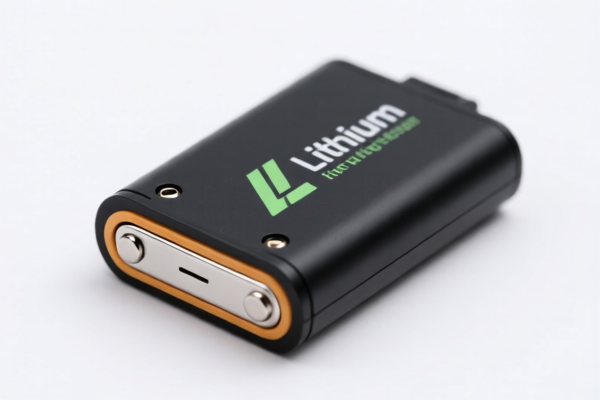
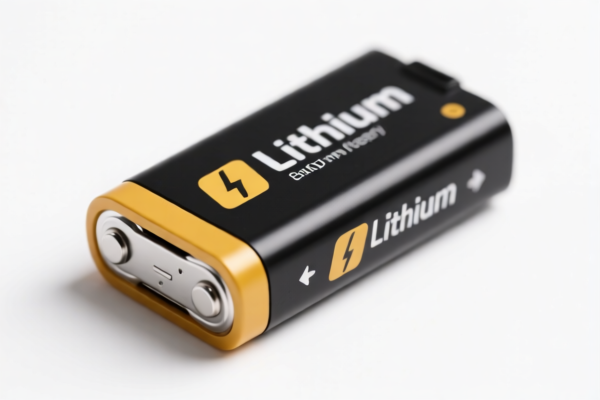
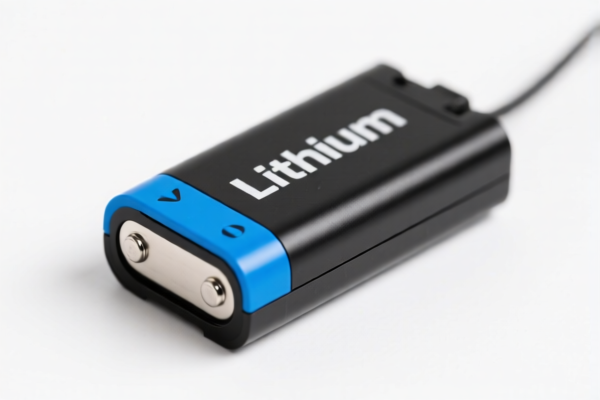
AI Analysis
🔋 Rechargeable Lithium Battery Kit 8+8AA
🌐 HS Code Reference & Customs Clearance Guide | 2026 Latest Tariff Analysis | Professional Entry Strategies
📌 I. Product Definition & Classification: What Exactly is a "Battery Kit"?
A Rechargeable Lithium Battery Kit (specifically 8+8AA format) consists of multiple lithium-ion cells housed in AA-sized casings, often packaged together with a charger or accessories. In international trade, the classification hinges on whether the product is viewed as a standalone energy storage device or a component/part of another machine.
⚠️ Key Classification Conflict:
- If classified strictly as the battery unit itself → 8507.60.00.10 (Lithium-ion accumulators)
- If classified as a converter/storage system or electrical part due to packaging/usage context → 8504.40.95.80 or 8548.00.00.00
📦 II. HS Code Classification Details (2026 Latest Tariff Authority Comparison)
| HS Code | Product Description | Applicability Scenario | Material/Usage Match |
|---|---|---|---|
8507.60.00.10 |
Lithium-ion Accumulators (Rechargeable) | Direct match for "Rechargeable Lithium Battery". Fits the material (Lithium) and function (Rechargeable). | ✅ High Precision |
8504.40.95.80 |
Static Converters; Other Electrical Transformers & Inductors | Classified under "Other" for power conversion/storage. Used when the kit is viewed as a broader energy conversion unit or if specific battery codes are disputed. | ⚠️ Broad/Residual |
8548.00.00.00 |
Electrical Machinery Parts; Electrical Residuals | Classified as an electrical component/part. Used if the batteries are deemed parts of a larger motor/device system rather than standalone batteries. | ⚠️ Generic/Residual |
🔍 Critical Insight:
-8507.60.00.10is the most accurate description for standalone rechargeable lithium batteries. It explicitly matches "Lithium" and "Rechargeable".
-8504.40.95.80and8548.00.00.00are often used in broader interpretations or when the product is bundled in ways that suggest power conversion or generic electrical parts. They serve as "catch-all" or "other" categories.
💰 III. 2026 Latest Tariff Rate Breakdown (Including Surcharges & Policy Add-ons)
✅ Applicable Country: United States (US)
✅ Origin: China (CN)
✅ Effective Time: November 10, 2025 onwards (including subsequent imports)
🎯 1. 8507.60.00.10 —— Rechargeable Lithium-Ion Batteries
| Item | Content |
|---|---|
| Base Tariff | 3.4% (Ad Valorem) |
| Section 301 Surcharge | +7.5% (Additional tariff under USITC Footnote 9903.88.01) |
| IEEPA Surcharge | +10% (On Chinese/HK products, effective Nov 10, 2025) |
| Total Tax Rate | 20.9% |
| Tax Calculation | CIF Value × 20.9% |
| De Minimis Eligibility | ❌ Not Eligible (deny_de_minimis) |
| Legal Basis Path | IEEPA:9903.01.25 → IEEPA:9903.01.24 → USITC:8507.60.00.10 → FOOTNOTE:9903.88.01 |
📌 Explanation:
- This code has the lowest total tax rate (20.9%) among the three options.
- It directly aligns with the product name "Rechargeable Lithium Battery," reducing the risk of misclassification disputes.
- The 7.5% surcharge is part of the ongoing trade measures, and the 10% IEEPA surcharge is a new/additional layer for Chinese-origin goods.
🎯 2. 8504.40.95.80 —— Static Converters / Other Electrical Machinery
| Item | Content |
|---|---|
| Base Tariff | 0% (Ad Valorem) |
| Section 301 Surcharge | +25% (Additional tariff under USITC Footnote 9903.88.01) |
| IEEPA Surcharge | +10% (On Chinese/HK products, effective Nov 10, 2025) |
| Total Tax Rate | 35.0% |
| Tax Calculation | CIF Value × 35.0% |
| De Minimis Eligibility | ❌ Not Eligible (deny_de_minimis) |
| Legal Basis Path | IEEPA:9903.01.25 → IEEPA:9903.01.24 → USITC:8504.40.95.80 → FOOTNOTE:9903.88.01 |
📌 Explanation:
- Classified as a "Static Converter" or residual category for power conversion/storage.
- The 0% base rate is offset by a higher 301 surcharge (25%), leading to a higher total tax (35.0%).
- This classification is less precise for simple batteries but may be used if the kit includes complex charging circuits that redefine it as a "converter."
🎯 3. 8548.00.00.00 —— Electrical Machinery Parts
| Item | Content |
|---|---|
| Base Tariff | 0% (Ad Valorem) |
| Section 301 Surcharge | +25% (Additional tariff under USITC Footnote 9903.88.01) |
| IEEPA Surcharge | +10% (On Chinese/HK products, effective Nov 10, 2025) |
| Total Tax Rate | 35.0% |
| Tax Calculation | CIF Value × 35.0% |
| De Minimis Eligibility | ❌ Not Eligible (deny_de_minimis) |
| Legal Basis Path | IEEPA:9903.01.25 → IEEPA:9903.01.24 → USITC:8548.00.00.00 → FOOTNOTE:9903.88.01 |
📌 Explanation:
- Classified as an "Electrical Part."
- Like8504.40.95.80, it carries a 0% base rate but a 25% 301 surcharge, resulting in a 35.0% total tax.
- This is a generic fallback if the batteries are considered parts of a larger device rather than standalone energy storage units.
🛠️ IV. Customs Clearance Practical Advice (Real-World Pitfall Avoidance)
✅ 1. Required Documentation Checklist (All Must Be Provided)
| Document | Mandatory? | Explanation |
|---|---|---|
| ✅ Product Specification Sheet | ✔️ | Must detail cell chemistry (Li-ion), capacity (mAh), voltage (1.2V/1.5V), and rechargeable status. |
| ✅ Product Photos (Including Label) | ✔️ | Clear view of "Rechargeable," "Lithium," and model numbers. |
| ✅ Commercial Invoice | ✔️ | Must explicitly state "Rechargeable Lithium Battery Kit" and HS Code. |
| ✅ Packing List | ✔️ | Show quantity (8+8 units) and any included accessories (e.g., charger). |
| ✅ MSDS (Material Safety Data Sheet) | ✔️ | CRITICAL for lithium batteries. Required for air freight and many sea freight routes. |
| ✅ UN38.3 Test Report | ✔️ | Mandatory for shipping lithium batteries. Proves safety during transport. |
| ✅ Third-Party Certification | ✔️ | UL, CE, or FCC (if charger is included) to prove compliance. |
✅ 2. Declaration Tips (Key Rules of Thumb)
🔥 “Be Specific on ‘Lithium’ and ‘Rechargeable’ to Secure Lower Taxes!”
| Scenario | Correct Declaration | Incorrect Approach |
|---|---|---|
| Standalone Battery Kit | 8507.60.00.10 (20.9% Tax) |
Declaring as 8504.40.95.80 → 35% Tax (Overpayment!) |
| Battery + Charger Bundle | Declare batteries under 8507.60.00.10, charger separately if possible, or entire kit under 8507 if integrated. |
Declaring entire kit as 8548 (Electrical Part) → 35% Tax. |
| Generic "Power Bank" Label | Avoid vague terms. Use "Rechargeable Lithium-Ion Accumulator." | Using "Energy Storage Device" → May trigger 8504 or 8548 → 35% Tax. |
| Non-Lithium (e.g., Ni-MH) | If mislabeled as Lithium but is Ni-MH, it may qualify for different rates, but fraud penalties apply. | Do not misdeclare material. |
✅ 3. Special Cases Handling
| Situation | Recommendation |
|---|---|
| Batteries with Built-in Charger (All-in-One Unit) | If the charger is integral and inseparable, customs may still view the battery as the primary component. However, if the device is primarily a converter/charger, 8504.40.95.80 might be argued. Recommendation: Stick to 8507.60.00.10 if the core function is energy storage. |
| OEM/Custom Kits | Provide client order + design specs to prove the product’s primary identity as a battery. |
| High-Value Kits | Consider applying for an Advance Ruling from US Customs to lock in the 8507 classification and avoid audit disputes. |
| Air Freight | Ensure UN38.3 and MSDS are physically attached to the shipment label. |
🌍 V. Global Customs Comparison (2026 Latest)
| Country/Region | Recommended HS Code | Tariff Rate | Certification Required | Notes |
|---|---|---|---|---|
| 🇺🇸 USA | 8507.60.00.10 |
20.9% (China Origin) | FCC (if charger), UN38.3 | Best Option: Lowest tax among choices. |
| 🇨🇳 China | 8507.60.00.10 |
~5-10% | CCC (if charger) | Lower duties, but check import regulations. |
| 🇪🇺 EU | 8507.60.00.00 |
~0-6% | CE, RoHS, WEEE | No major surcharges like US IEEPA. |
| 🇬🇧 UK | 8507.60.00.00 |
~0-6% | UKCA, RoHS | Post-Brexit rules apply. |
| 🇦🇺 Australia | 8507.60.00.00 |
~5-10% | RCM | Standard import GST applies. |
📌 Conclusion:
- USA imposes significant surcharges (301 + IEEPA) on Chinese lithium batteries.
-8507.60.00.10is the optimal classification for cost savings (20.9% vs. 35.0%).
- Misclassifying as "Electrical Parts" (8548) or "Converters" (8504) increases costs by 14.1 percentage points.
📌 VI. Common Errors & Pitfalls (Lessons from the Field)
❌ Error 1: Declaring "Battery Kit" without specifying "Lithium" or "Rechargeable"
👉 Consequence: Customs may assign a residual code like 8548.00.00.00 → 35% Tax instead of 20.9%.
❌ Error 2: Omitting UN38.3 and MSDS
👉 Consequence: Shipment rejected or delayed at port. Lithium batteries are hazardous goods (Class 9).
❌ Error 3: Using "Power Bank" for AA-sized rechargeable batteries
👉 Consequence: Mismatch between description and HS Code definition. "Power Bank" usually refers to portable chargers (HS 8504.40), which may attract higher tariffs.
❌ Error 4: Not disclosing "8+8" quantity clearly
👉 Consequence: Valuation errors. Customs may estimate value higher than declared → Penalties.
✅ Correct Practice:
"Rechargeable Lithium-Ion Battery Kit, AA Size, 16 Cells Total, 1.2V, 2000mAh, with Charger, Model XYZ, UN38.3 Certified, HS 8507.60.00.10"
🎯 VII. Conclusion: Precise Classification Saves Money!
🎯 Remember This Rule:
🔹 "Lithium + Rechargeable = 8507.60.00.10 (20.9%)"
🔹 "Other/Parts = 8504/8548 (35.0%)"
🔹 Difference: 14.1% Tax Savings per Shipment!
📌 Pro Tip:
If your product is originally from Vietnam, Malaysia, or Thailand, you may be eligible for IEEPA Exemptions (reducing the 10% surcharge). However, for China-origin goods, the 20.9% rate on 8507.60.00.10 is the most competitive and compliant option.
📣 Immediate Action:
📞 Contact a licensed customs broker.
📄 Prepare UN38.3 Test Report and MSDS.
🏷️ Label products clearly as "Rechargeable Lithium Battery".
🚀 Clear customs smoothly, reduce costs, and maximize profit!
✨ Professional Customs Clearance Starts with Accurate Classification!
💼 Every Percent Saved is Pure Profit!
Customer Reviews
About HS Code Classification
The Harmonized System (HS) is an internationally standardized nomenclature developed by the World Customs Organization (WCO) to classify traded products. Over 200 countries use the HS system as the basis for customs tariffs, trade statistics, and import/export regulations.
Each HS code follows a hierarchical structure:
- Chapter (2 digits) — Broad category of goods (e.g., Chapter 84: Machinery and Mechanical Appliances)
- Heading (4 digits) — More specific grouping within the chapter
- Subheading (6 digits) — Internationally standardized breakdown, used by all WCO member countries
- National subdivisions (8-10 digits) — Country-specific extensions for further classification, such as US HTSUS 10-digit codes
Correct HS code classification is essential for smooth customs clearance, accurate duty payment, and compliance with trade regulations. Misclassification can lead to customs delays, overpayment of duties, or penalties.
When importing from CN to US, the applicable tariff rates may include:
- Most-Favored-Nation (MFN) rate — The standard duty rate applied to WTO members
- General rate — Applied to countries without trade agreements
- Trade remedy duties — Additional tariffs such as Section 301 (anti-dumping), Section 232 (national security), or countervailing duties
The information provided on this page is for reference purposes only. For official classification, please consult with your local customs authority or a licensed customs broker.