Refined Lamb Skin Leather (Hairless) for Car Interior
CN → US| HS Code | Tariff Rate | Origin | Destination | Doc |
|---|---|---|---|---|
| 4112003060 | 12.0% | CN | US | Official Doc |
| 4112006000 | 12.0% | CN | US | Official Doc |
| 4114207000 | 36.6% | CN | US | Official Doc |
| 4105300000 | 12.0% | CN | US | Official Doc |
| 4114100000 | 38.2% | CN | US | Official Doc |
| 4105109000 | 12.0% | CN | US | Official Doc |
Product Images

AI Analysis
🚗 Refined Lamb Skin Leather (Hairless) for Car Interior
🌐 HS Code Reference & Customs Clearance Guide | 2026 Tariff Decoded | Premium Auto-Grade Clearance Strategy
📌 I. Product Definition & Classification: Is Your "Lamb Skin" Really Just "Skin"?
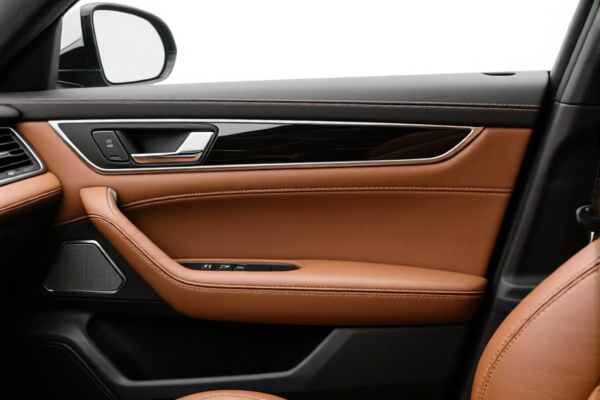
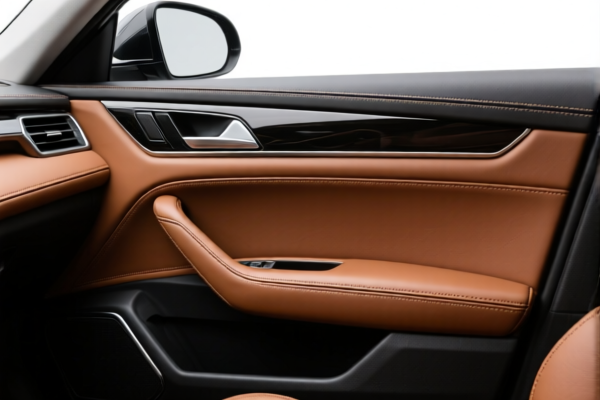
Refined Lamb Skin Leather (Hairless) is the premium upholstery material of choice for luxury automotive interiors, high-end furniture, and designer apparel. Unlike raw hides, this product has undergone tanning, retanning, and finishing processes, ensuring it is hairless, soft, and durable.
In international trade, the classification depends on two critical factors: 1. Material Composition: Is it pure sheepskin/goatskin? 2. Surface Treatment: Is it plain, chrome-tanned, or coated (e.g., patent, pigskin finish, suede)?
⚠️ Critical Classification Distinction:
- Standard Tanned/Split Lamb Skin (No heavy coating) → Falls under 4105 / 4112 series.
- Patent/Coated/Rubbed Leather (Specialized finish, high gloss, or specific texture) → Falls under 4114 series.
- Misclassification Risk: Declaring coated leather as "plain tanned" often leads to 25% additional penalties (Section 301) plus potential audits.
📦 II. HS Code Classification Details (2026 Official Tariff Reference)
| HS Code | Product Description | Application Scenario | Surface Treatment |
|---|---|---|---|
4105.10.90.00 |
Refined Sheep/Goat Skin (Chrome Tanned), Hairless | Standard car seat covers, gloves, soft linings | ✅ Plain, no heavy coating |
4105.30.00.00 |
Sheep/Goat Skin, Tanned, Hairless (Other) | General automotive upholstery, furniture | ✅ Tanned, Hairless |
4112.00.30.60 |
Sheep Skin, Further Processed, Hairless | High-grade, treated hides ready for cutting | ✅ Further processed, Hairless |
4112.00.60.00 |
Sheep Skin, Refined/Treated, Hairless | Premium leather for luxury car interiors | ✅ Refined, No Wool |
4114.10.00.00 |
Patent/Pigskin Leather (Sheep-based) | High-gloss car dashboards, sport seats | ✅ Coated/Patent Finish |
4114.20.70.00 |
Patent/Capped Leather (Sheep-based) | Specialized coated leather for luxury trim | ✅ Heavy Coating/Lacquer |
🔍 Key Insight:
- Plain/Chrome Tanned (Codes4105&4112) → Lower Base Tariff (2%), but still subject to Section 122 & 301.
- Patent/Coated (Codes4114) → Higher Base Tariff (3.2% or 1.6%), but crucially higher 301 Duty (25%).
- Auto Industry Note: If your leather is glossy (patent) or has a thick top-layer coating, Customs may insist on 4114, instantly raising your total duty from 12% to 36%+.
💰 III. 2026 Tariff Rate Breakdown (Detailed Tax Clauses)
✅ Target Market: United States (US)
✅ Origin: China (CN)
✅ Effective Date: Active for all imports since Nov 2025
📉 Tax Structure: Base Tariff + Section 301 (Add-on) + Section 122 (Retaliation)
🎯 1. Standard Refined Lamb Skin (Codes: 4105.10.90.00, 4105.30.00.00, 4112.00.30.60, 4112.00.60.00)
Applies to plain, chrome-tanned, or lightly treated hairless leather.
| Tax Component | Rate | Legal Basis | Impact |
|---|---|---|---|
| Base Tariff | 2.0% | HTSUS General Rates | Standard import duty |
| Section 301 Add-on | 0.0% | USITC Section 301 List 1-4 (Certain exclusions) | ✅ Exempt (For this category) |
| Section 122 Tariff | 10.0% | 122 Policy (Retaliation) | ❌ Mandatory (Countervailing) |
| Total Effective Rate | 12.0% | 12% of CIF Value |
📌 Explanation:
- Why 12%? The "Base" is low (2%), but the 10% "122 Clause" (often linked to specific agricultural or retaliatory measures) is applied.
- No 25% Surcharge: Standard sheepskin leather often avoids the heavy 25% Section 301 penalty if it is not classified as "Patent Leather" or "Coated."
- Risk: If Customs deems the "refined" process as creating a "finished good" rather than a "raw material," they may reclassify to 4114.
🎯 2. Patent / Coated Refined Lamb Skin (Codes: 4114.10.00.00, 4114.20.70.00)
Applies to glossy, lacquered, or heavily coated leather (common in high-end car dashboards).
| Tax Component | Rate | Legal Basis | Impact |
|---|---|---|---|
| Base Tariff | 1.6% - 3.2% | HTSUS Specific Rates (Coated) | Higher base due to processing |
| Section 301 Add-on | 25.0% | USITC Section 301 List (High Priority) | ❌ Mandatory (Heavy Penalty) |
| Section 122 Tariff | 10.0% | 122 Policy | ❌ Mandatory |
| Total Effective Rate | 36.6% - 38.2% | 36.6% to 38.2% of CIF Value |
📌 Explanation:
- Why 36.6%+? The "Coated/Patent" classification triggers the 25% Section 301 penalty PLUS the 10% 122 Clause.
- High Cost Alert: A $100 shipment of Patent Leather could incur $38.20 in taxes vs. $12.00 for plain leather.
- Legal Path:IEEPA:9903.01.25(301) +USITC:4114.xxxxx+122 Clause.
🛠️ IV. Customs Clearance实操建议 (Practical Clearance Strategy)
✅ 1. Documentation Checklist (Non-Negotiable)
| Document | Requirement | Why It Matters |
|---|---|---|
| ✅ Detailed Product Spec | ✅ Must | Must explicitly state: "Chrome Tanned," "Hairless," "No Patent Coating." If "Patent" or "Lacquer" is listed, you pay 38%. |
| ✅ Process Flow Chart | ✅ Must | Show tanning, splitting, and finishing steps. Prove it is not coated. |
| ✅ Material Test Report | ✅ Must | Third-party lab report confirming surface composition (e.g., "No lacquer layer"). |
| ✅ Invoice Description | ✅ Must | Use "Refined Sheep Skin (Hairless)" NOT "Patent Leather" unless true. |
| ✅ HS Code Pre-Ruling | ✅ Recommended | Request a binding ruling from US Customs before shipping to lock in 12% rate. |
✅ 2. Declaration Strategy (The "Golden Rule")
🔥 Rule: "Define the Finish, Don't Guess the Code!"
| Scenario | Correct Declaration | Wrong Declaration | Consequence |
|---|---|---|---|
| Plain/Chrome Tanned | HS: 4112.00.30.60Name: "Refined Sheep Skin, Hairless" |
HS: 4114.10.00.00 (Over-declaring) |
✅ Safe (12% duty) |
| Glossy/Coated | HS: 4114.20.70.00Name: "Patent Lamb Skin Leather" |
HS: 4112.00.30.60 (Under-declaring) |
⚠️ Penalty + 38% Duty |
| Ambiguous Finish | Provide Lab Report proving "No Coating" | Claim "Standard Leather" without proof | ❌ Seizure or 25% Audit Duty |
✅ 3. Special Handling for Auto Parts
| Situation | Strategy |
|---|---|
| OEM Car Manufacturer | Declare as "Finished Leather for Automotive Use" but emphasize "Non-Patent". |
| Mixed Batches | Separate shipments: Ship plain skin (4112) and coated skin (4114) in different containers to avoid mixed taxation. |
| Sample vs. Commercial | Samples must still declare the correct HS Code; do not ship as "Gift" to evade 36% duty. |
🌍 V. Global Market Comparison (2026)
| Region | Recommended HS Code | Base Tax | Section 301/122? | Total Effective Rate |
|---|---|---|---|---|
| 🇺🇸 USA | 4112 (Plain) / 4114 (Coated) |
2.0% - 3.2% | ✅ 10% (122) + 25% (301 if coated) | 12% or 38.2% |
| 🇪🇺 EU | 4112 / 4114 |
3.5% - 5.0% | ❌ No 301/122 | ~5-8% |
| 🇨🇳 China | 4112 / 4114 |
2.0% - 3.0% | ❌ No Add-ons | ~3-5% |
| 🇯🇵 Japan | 4112 / 4114 |
3.0% - 4.5% | ❌ No Add-ons | ~4-6% |
📌 Conclusion:
- USA is the Most Expensive Market for this product due to the 122 Clause (10%) and potential 301 Clause (25%).
- Coated Leather is 3x More Expensive to import into the US than Plain Leather.
- Strategy: Avoid "Patent/Lacquer" finishes if targeting the US market; use "Matte/Chrome/Tanned" finishes to stay in the 12% bracket.
📌 VI. Common Mistakes & Pitfalls (Learn from Others)
❌ Mistake 1: Calling "Glossy Leather" as "Refined Leather" to avoid 25% duty.
👉 Result: Customs audit, 25% retroactive tax, and fines.
👉 Fix: Be honest. If it's glossy, declare 4114. If it's matte, declare 4112.
❌ Mistake 2: Ignoring the "Hairless" requirement in the description.
👉 Result: If "Hairy" or "Raw" is implied, it might be classified under 4103 (different tariff).
👉 Fix: Explicitly state "Hairless" or "Bare" in the invoice.
❌ Mistake 3: Assuming all "Lamb Skin" is the same.
👉 Result: Missing the 4114 distinction for coated goods.
👉 Fix: Check surface texture. Glossy/Coated = 4114.
✅ Best Practice:
Invoice Description:
"Refined Sheepskin Leather (Hairless), Chrome Tanned, No Patent Coating, 1.2mm Thickness, for Automotive Upholstery, Model X-2026."
🎯 VII. Final Conclusion: Precision is Profit
🎯 The Bottom Line:
🔹 "Plain Skin = 12%" (Base 2% + 122 10%)
🔹 "Patent/Coated Skin = 38.2%" (Base ~3% + 301 25% + 122 10%)
🔹 One word change (Patent vs. Plain) = $26,200 extra tax on $100k shipment!
📌 Pro Tip:
If your leather is coated, consider supply chain relocation (e.g., sourcing from Vietnam or Thailand) to avoid the 25% Section 301 surcharge on Chinese-origin goods.
📣 Action Required:
📞 Consult a Customs Broker to verify the "Patent vs. Plain" status of your leather.
📄 Request a Pre-Ruling from US Customs (CBP) to secure the 12% rate.
🚀 Optimize your product line: Focus on Matte/Chrome finishes for the US market to maximize margins!
✨ Accurate Classification = Lower Costs = Higher Margins!
💼 Your Leather, Your Profit. Get the HS Code Right.
Customer Reviews
About HS Code Classification
The Harmonized System (HS) is an internationally standardized nomenclature developed by the World Customs Organization (WCO) to classify traded products. Over 200 countries use the HS system as the basis for customs tariffs, trade statistics, and import/export regulations.
Each HS code follows a hierarchical structure:
- Chapter (2 digits) — Broad category of goods (e.g., Chapter 84: Machinery and Mechanical Appliances)
- Heading (4 digits) — More specific grouping within the chapter
- Subheading (6 digits) — Internationally standardized breakdown, used by all WCO member countries
- National subdivisions (8-10 digits) — Country-specific extensions for further classification, such as US HTSUS 10-digit codes
Correct HS code classification is essential for smooth customs clearance, accurate duty payment, and compliance with trade regulations. Misclassification can lead to customs delays, overpayment of duties, or penalties.
When importing from CN to US, the applicable tariff rates may include:
- Most-Favored-Nation (MFN) rate — The standard duty rate applied to WTO members
- General rate — Applied to countries without trade agreements
- Trade remedy duties — Additional tariffs such as Section 301 (anti-dumping), Section 232 (national security), or countervailing duties
The information provided on this page is for reference purposes only. For official classification, please consult with your local customs authority or a licensed customs broker.