Reflective Car Body Decorative Tape
CN → US| HS Code | Tariff Rate | Origin | Destination | Doc |
|---|---|---|---|---|
| 3919905010 | 40.8% | CN | US | Official Doc |
| 3919101010 | 41.5% | CN | US | Official Doc |
| 5903102090 | 35.0% | CN | US | Official Doc |
| 5903102010 | 35.0% | CN | US | Official Doc |
| 3921110000 | 40.3% | CN | US | Official Doc |
Product Images

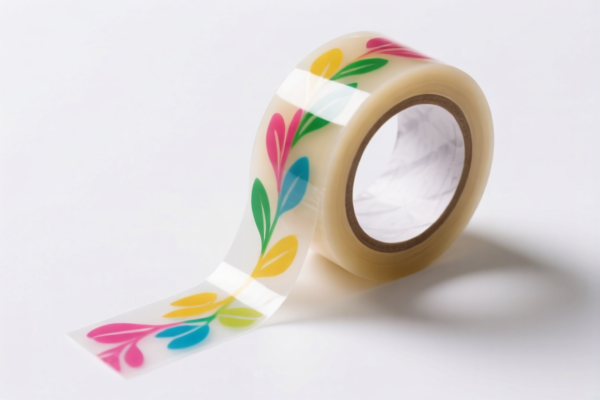
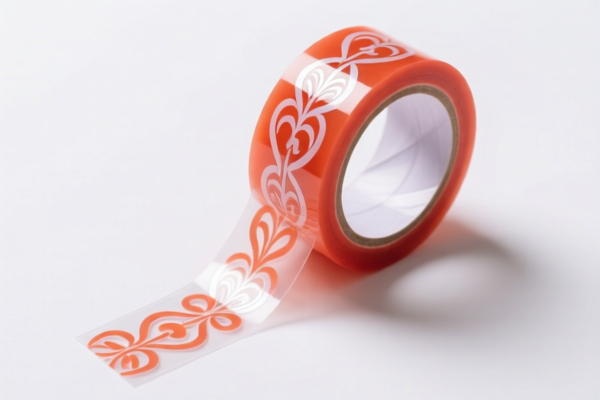
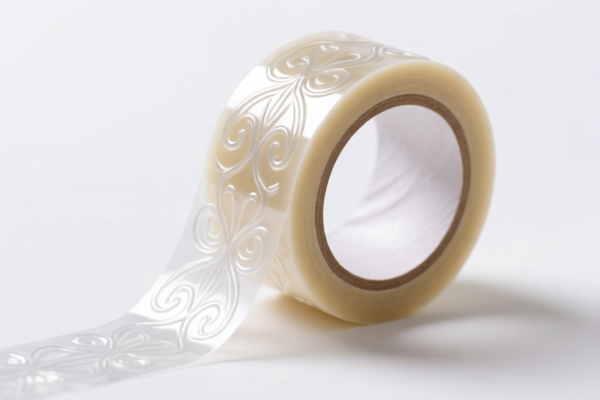
AI Analysis
🚗 Reflective Car Body Decorative Tape: The Ultimate Clearance Guide & Tariff Breakdown
🌐 HS Code Reference & Customs Strategy | 2024/2026 Tariff Analysis | Professional Compliance Guide
📌 Part 1: Product Definition & Classification – Is it Tape, Film, or Textile?
Reflective Car Body Decorative Tape is a versatile automotive accessory used for styling, safety marking, and visibility enhancement. In international trade, its classification depends strictly on its material composition and manufacturing process. It is not a single HS code but falls into three distinct categories based on structure:
1. Self-Adhesive Plastic Sheets (Tape Form)
Raw plastic film coated with reflective material and adhesive, rolled or cut into strips.
Key Feature: Plastic base, self-adhesive backing, simple film structure.
2. Impregnated/Coated Fabric or Film
Textile fabrics or plastic films that have been impregnated with plastic substances or coated with functional layers to create reflectivity.
Key Feature: Involves a "coating/impregnation" process on a substrate (fabric or film).
3. Plastic Bands/Strips
Simple plastic bands or strips used for binding or decoration, without complex coating processes.
Key Feature: Basic polymer form, often simpler than coated films.
⚠️ Critical Distinction:
- If the product is a simple self-adhesive plastic film/sticker, it usually falls under Chapter 39 (Plastics).
- If the product is a textile or film that has been coated/impregnated with plastic for reflectivity, it often falls under Chapter 59 (Impregnated Textiles/Films).
- The adhesive nature alone does not determine the code; the base material and processing method do.
📦 Part 2: HS Code Classification Matrix (Based on Provided Data)
| HS Code | Product Description (Summary) | Material/Structure | Total Tax Rate | Tax Detail Breakdown |
|---|---|---|---|---|
| 3919.90.50.10 | Reflective material stickers, plastic material, self-adhesive sheet/film | Plastic, Self-adhesive film | 40.8% | Base: 5.8% Additional: 25.0% Section 301/122: 10% |
| 3919.10.10.10 | Reflective material stickers, plastic/film material, self-adhesive patch | Plastic/Film, Self-adhesive patch | 41.5% | Base: 6.5% Additional: 25.0% Section 301/122: 10% |
| 5903.10.20.90 | Reflective material stickers, plastic/polymer coating, impregnated/coated textile/film | Plastic/Polymer coating, Impregnated/Coated Textile or Film | 35.0% | Base: 0.0% Additional: 25.0% Section 301/10% |
| 5903.10.20.10 | Reflective material stickers, functional coated film/fabric, impregnated/coated plastic characteristics | Functional Coated Film/Fabric, Impregnated/Coated Plastic Characteristics | 35.0% | Base: 0.0% Additional: 25.0% Section 301/10% |
| 3921.11.00.00 | Reflective material stickers, plastic (polymer film), band/film type | Plastic (Polymer Film), Band/Film type | 40.3% | Base: 5.3% Additional: 25.0% Section 301/10% |
🔍 Key Takeaway:
- Chapter 39 (Plastics) codes carry a higher base duty (5.3%–6.5%) but are common for simple adhesive tapes.
- Chapter 59 (Impregnated/Coated) codes have 0% base duty, resulting in a lower total tax (35.0%) despite the same additional tariffs.
- Misclassification Risk: Declaring a coated textile tape as a simple plastic tape (Chapter 39) may lead to overpayment, but declaring a simple plastic tape as a coated textile (Chapter 59) may lead to customs rejection or penalties for inaccurate description.
💰 Part 3: 2024/2026 Tariff Rate Breakdown (US Imports from China)
✅ Applicable Country: United States (US)
✅ Origin: China (CN)
✅ Effective Date: Post-2025 (Based on provided data including Section 122/301 tariffs)
🎯 1. Chapter 39 Codes (Plastic-Based Adhesive Tapes)
A. 3919.90.50.10 & 3921.11.00.00
| Item | Content |
|---|---|
| Base Duty | 5.3% – 5.8% (ad valorem) |
| Section 301/Additional Duty | +25.0% |
| Section 122/Other Additional | +10.0% |
| Total Effective Rate | 40.3% – 40.8% |
| Calculation Basis | CIF Value × Total Rate |
| De Minimis Exemption | ❌ Not Eligible |
| Legal Basis Path | HTSUS 3919/3921 → Section 301 Footnote 9903.88.01 → Section 122 IEEPA |
📌 Explanation:
- These codes are for plastic-based self-adhesive films/stickers.
- The 25% Section 301 tariff is applied to most plastic articles from China.
- The 10% Section 122 tariff (or similar additional duty) further increases the cost.
- Total ~40.8% is a significant cost factor.
B. 3919.10.10.10
| Item | Content |
|---|---|
| Base Duty | 6.5% |
| Section 301/Additional Duty | +25.0% |
| Section 122/Other Additional | +10.0% |
| Total Effective Rate | 41.5% |
| Calculation Basis | CIF Value × 41.5% |
| De Minimis Exemption | ❌ Not Eligible |
📌 Explanation:
- Slightly higher base duty (6.5%) compared to other Chapter 39 codes.
- Still subject to the same additional tariffs.
- Most expensive option among the provided HS codes.
🎯 2. Chapter 59 Codes (Impregnated/Coated Textiles/Films)
C. 5903.10.20.90 & 5903.10.20.10
| Item | Content |
|---|---|
| Base Duty | 0.0% |
| Section 301/Additional Duty | +25.0% |
| Section 122/Other Additional | +10.0% |
| Total Effective Rate | 35.0% |
| Calculation Basis | CIF Value × 35.0% |
| De Minimis Exemption | ❌ Not Eligible |
| Legal Basis Path | HTSUS 5903 → Section 301 Footnote 9903.88.01 → Section 122 IEEPA |
📌 Explanation:
- These codes apply to products where plastic is impregnated or coated onto a textile or film substrate.
- The 0% base duty makes these codes cheaper by 5–6.5% compared to Chapter 39 codes.
- Crucial: You must prove the product meets the definition of "impregnated/coated" (e.g., functional coating on fabric/film) to qualify for this lower rate.
🛠️ Part 4: Customs Clearance Practical Advice
✅ 1. Documentation Checklist (Non-Negotiable)
| Document | Required? | Purpose |
|---|---|---|
| Product Specification Sheet | ✔️ | Details material (plastic/fabric), coating type, adhesive, reflectivity level |
| Photos (Front, Back, Cross-Section) | ✔️ | Proves structure: Is it a simple film or a coated textile? |
| Composition Statement | ✔️ | Explicitly state: "Base Material: [Polyester/Plastic], Coating: [Polyurethane/Reflective Glass Beads]" |
| Commercial Invoice | ✔️ | Must match HS Code description exactly (see below) |
| Packing List | ✔️ | Shows dimensions, weight, and quantity |
| Certificate of Origin (CO) | ✔️ | Required to confirm Chinese origin for tariff calculation |
| Third-Party Test Report | ✔️ | Optional but recommended to prove reflectivity and coating durability |
✅ 2. Declaration Strategy (Key to Cost Saving)
🔥 "Material Defines Code, Coating Defines Chapter 59!"
| Scenario | Recommended HS Code | Why? | Risk if Wrong |
|---|---|---|---|
| Simple Self-Adhesive Plastic Sticker | 3919.90.50.10 or 3921.11.00.00 |
It is a plastic film with adhesive. No complex coating/impregnation on textile. | High risk of audit if declared as Chapter 59. |
| Reflective Tape with Fabric Backing + Plastic Coating | 5903.10.20.90 or 5903.10.20.10 |
The plastic is coated/impregnated onto a textile/film substrate. | Lower tax (35%) vs (40-41.5%). If under-declared, customs may reclassify and charge back-tariff + penalty. |
| Reflective Patch with Plastic Base | 3919.10.10.10 |
Specific sub-heading for self-adhesive patches of plastic/film. | Must ensure it is not a coated textile. |
📌 Pro Tip:
If your product is reflective tape made of polyester fabric coated with reflective micro-prisms or glass beads and a plastic layer, argue for Chapter 59 to save ~6% in duties. Ensure your product description emphasizes "coated textile" or "impregnated film."
✅ 3. Avoid Common Pitfalls
| Mistake | Consequence | Solution |
|---|---|---|
| Vague Description: "Car Tape" | Customs may classify under highest duty rate or reject. | Use precise terms: "Reflective Coated Polyester Fabric Tape" or "Self-Adhesive Plastic Film Sticker." |
| Ignoring Origin Marking: "Made in China" on packaging | Delays, fines, or seizure. | Ensure all products and packaging clearly state country of origin. |
| Under-Valuing | Customs audit, penalties, seizure. | Declare accurate CIF value. Do not undervalue to save duty. |
| Confusing "Adhesive" with "Textile" | Misclassification. | Adhesive is secondary; base material determines the chapter. |
🌍 Part 5: Global Market Comparison (2024/2026)
| Market | Recommended HS Code | Est. Total Duty | Key Certification | Notes |
|---|---|---|---|---|
| 🇺🇸 USA | 5903.10.20.90 (if coated) |
35.0% | ASTM D4956 (Reflectivity) | High tariffs. Chapter 59 is optimal if product qualifies. |
| 🇨🇳 China | 3919.90.50.10 |
5.8% - 6.5% | GB/T 18833 (Traffic Marking) | Lower base duty. No additional Section 301 tariffs. |
| 🇪🇺 EU | 3919.90.00 or 5903.90.91 |
0% - 6.5% | ECE R104 (Reflective Materials) | Generally lower tariffs. Check for REACH compliance. |
| 🇬🇧 UK | 3919.90.00 |
6.5% | UKCA Marking | Post-Brexit, align with UK tariff schedule. |
| 🇦🇺 Australia | 3919.90.00 |
5% | RCM | Moderate tariffs. |
📌 Conclusion:
- USA is the most challenging market due to Section 301/122 tariffs.
- Chapter 59 codes offer a ~6% savings in the US if the product structure allows.
- China, EU, UK, and Australia have significantly lower total duties.
📌 Part 6: Final Recommendations & Action Plan
🎯 Step 1: Product Analysis
- Identify Base Material: Is it plastic film, polyester fabric, or PVC?
- Identify Process: Is it simply laminated (Chapter 39) or coated/impregnated (Chapter 59)?
- Select HS Code: Use the table above to choose the most accurate code.
🎯 Step 2: Documentation Preparation
- Prepare a Technical Data Sheet highlighting material composition and manufacturing process.
- Ensure Commercial Invoice description matches the HS Code.
🎯 Step 3: Customs Strategy
- For US Imports: If your product is a coated textile/film, argue for Chapter 59 (
5903.10.20.90/10) to save 6% in duties. Provide evidence of coating/impregnation. - For Plastic-Only Products: Accept the ~40-41% duty for Chapter 39 codes. Ensure accurate declaration to avoid penalties.
🎯 Step 4: Compliance
- Apply for Advance Ruling from US Customs (CBP) if the product structure is ambiguous. This provides legal certainty.
- Stay updated on Section 301 exclusions (if any apply to specific reflective materials).
🎯 Conclusion: Precision Saves Money!
🎯 Remember the Golden Rule:
"Base Material Determines Chapter 39 or 59. Coating Defines Chapter 59. Accuracy Saves 6% Duty!"
📌 Final Tip:
- Chapter 39: Simple Plastic Tape → ~40-41% Tax
- Chapter 59: Coated/Impregnated Textile/Film → 35% Tax
- Never Guess! Use technical specs to justify your HS Code.
✨ Professional Customs Clearance Starts with Accurate Classification!
💼 Your Bottom Line Depends on the First 8 Digits of Your HS Code!
Customer Reviews
About HS Code Classification
The Harmonized System (HS) is an internationally standardized nomenclature developed by the World Customs Organization (WCO) to classify traded products. Over 200 countries use the HS system as the basis for customs tariffs, trade statistics, and import/export regulations.
Each HS code follows a hierarchical structure:
- Chapter (2 digits) — Broad category of goods (e.g., Chapter 84: Machinery and Mechanical Appliances)
- Heading (4 digits) — More specific grouping within the chapter
- Subheading (6 digits) — Internationally standardized breakdown, used by all WCO member countries
- National subdivisions (8-10 digits) — Country-specific extensions for further classification, such as US HTSUS 10-digit codes
Correct HS code classification is essential for smooth customs clearance, accurate duty payment, and compliance with trade regulations. Misclassification can lead to customs delays, overpayment of duties, or penalties.
When importing from CN to US, the applicable tariff rates may include:
- Most-Favored-Nation (MFN) rate — The standard duty rate applied to WTO members
- General rate — Applied to countries without trade agreements
- Trade remedy duties — Additional tariffs such as Section 301 (anti-dumping), Section 232 (national security), or countervailing duties
The information provided on this page is for reference purposes only. For official classification, please consult with your local customs authority or a licensed customs broker.